Not For Sale’s planet work in Senegal supports the Forest Garden Program through Tree-Nation. Senegal faces a compounding crisis: 57% of its fish stocks are in collapse, nearly half of licensed fishing vessels are foreign, and overfishing has driven a near-doubling of irregular migration to Spain’s Canary Islands.
When fishing communities lose their only livelihood, men and boys embark on deadly sea routes and arrive in Europe with zero bargaining power, prime conditions for trafficking and exploitation. Forest garden programs provide an alternative economic base on land, diversifying income away from collapsed fisheries and building food security. The connection between marine ecocide and human trafficking is as stark in Senegal as anywhere Not For Sale works.
Our project in Senegal is close to reaching its goal of planting 1,000,000 trees, supporting local farmers in establishing their own forest gardens.
As we near the finish line, we’ll begin transitioning the project into its maintenance phase, ensuring the long-term success of the trees already planted.
Meet Mate Mbaye, a local farmer from Senegal whose life has been transformed by our Forest Garden approach
Supporting a family of nine is no small task, but the Forest Garden has enabled him to grow enough to both feed his family and earn an income from his crops.
Successful agroforestry starts with thoughtful site selection
Factors like soil quality, water availability, slope, and sunlight all influence how well trees and crops can grow together.
Selecting the right location ensures that trees support—not compete with—agricultural production, improving yields, restoring soil health, and creating a more resilient landscape over time.
In a Forest Garden, trees do more than provide shade and fruit—they actively improve soil health
Their roots stabilize the land, prevent erosion, and create channels that enhance water infiltration. As leaves and organic matter decompose, they enrich the soil with nutrients, fostering a fertile environment for crops to grow.
Certain trees, like nitrogen-fixing species, further boost soil productivity by naturally replenishing essential nutrients. With time, this self-sustaining system leads to healthier harvests, increased biodiversity, and long-term agricultural resilience.
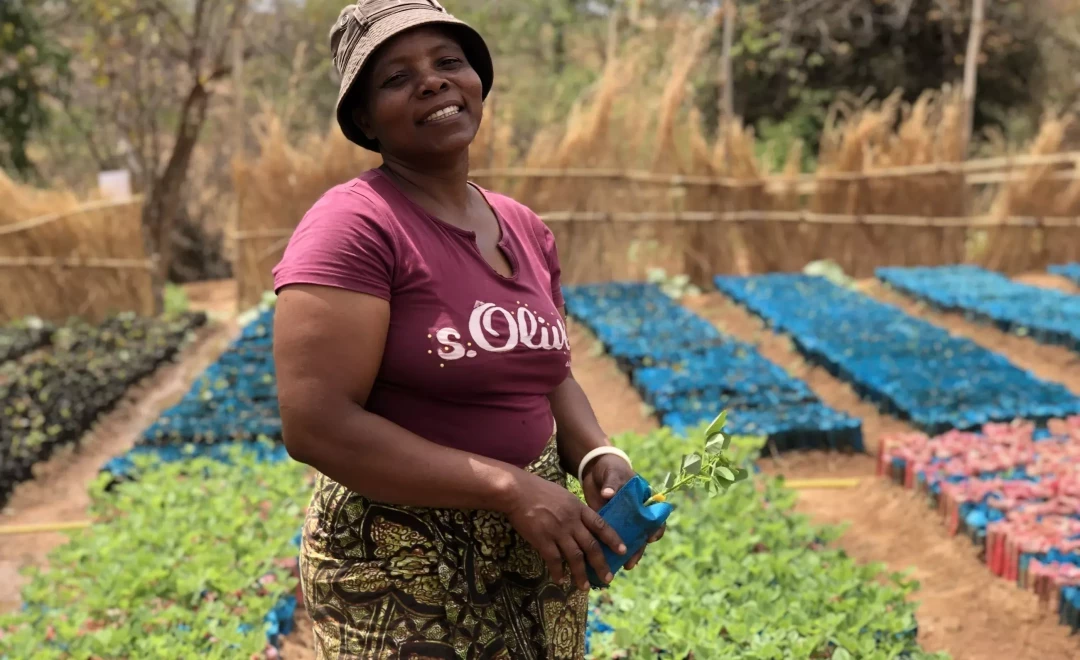
As part of our program, we educate local farmers on the Forest Garden approach, equipping them with the knowledge and skills needed to cultivate and sustain productive, resilient landscapes.
This hands-on training ensures that each farmer can successfully manage their Forest Garden for years to come.
Trees, especially fruit trees, play a crucial role in enriching the soil and supporting nearby crops
Their fallen leaves decompose, returning essential nutrients like nitrogen, phosphorus, and potassium to the soil, boosting its fertility.
Fruit trees also help maintain moisture levels, reduce soil erosion, and promote a balanced ecosystem by providing shade and organic matter.
Additionally, the roots of these trees interact with soil microbes, enhancing nutrient availability for surrounding crops, leading to healthier and more productive harvests. This natural symbiosis is a cornerstone of sustainable farming.
Soil is the foundation for growing our trees and food. By integrating regenerative agriculture and agroforestry into farming practices, we reduce deforestation, allow tree roots to take hold, and enrich the soil with nutrients, making it healthier and more productive.