Women Trafficked Into Cyber Scam Centers
Women trafficked into cyber scam centers in Asia are exposing a fast-growing form of modern-day slavery, where digital fraud, forced criminality and gender-based violence are being used together by organized crime networks.


The Modern-Day Slavery Crisis Behind Online Fraud
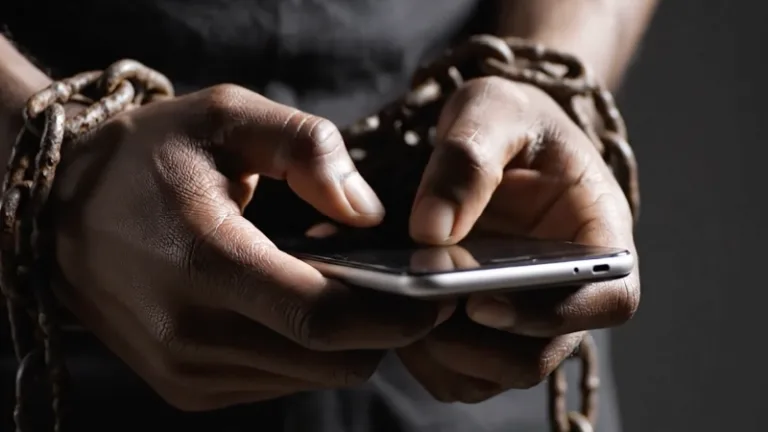
Across Southeast Asia, cyber scam centers have become one of the clearest examples of how human trafficking is changing in the digital age. Behind fraudulent investment messages, fake romantic profiles and cryptocurrency scams are thousands of people recruited through deception, moved across borders, confined in guarded compounds and forced to commit online fraud for criminal networks. New reporting has drawn attention to a further dimension of this crisis: women trafficked into cyber scam centers are increasingly describing sexual violence, forced labor, confinement, coercion and abuse that has been overlooked in a crisis often treated mainly as cybercrime.
This is not only a story about online fraud. It is a modern-day slavery story. It is a human trafficking story. It is also a warning about how criminal groups are using technology, migration routes, weak governance, online recruitment and financial desperation to create an industrial system of abuse that harms two sets of victims at once: the people forced to run the scams and the people around the world who are defrauded by them. UNODC describes trafficking for forced criminality as trafficking in persons where victims are forced or otherwise compelled to commit criminal acts for the profit of traffickers or exploiters.
What This Article Covers
- What cyber scam centers are and why they have expanded across Southeast Asia.
- How women are recruited, trafficked and coerced inside scam compounds.
- Why this is a human trafficking and modern-day slavery issue, not only a cybercrime issue.
- How gender-based violence, sexual exploitation and forced criminality overlap in these operations.
- Who is most at risk and why survivors are often misidentified as offenders.
- What governments, law enforcement agencies and international bodies are doing.
- What still needs to change to protect survivors and prevent further trafficking.
Key Takeaways
- Cyber scam centers are criminal compounds where trafficked people are forced to carry out online fraud, including romance scams, cryptocurrency fraud, investment fraud and illegal gambling.
- Women trafficked into cyber scam centers often face overlapping forms of abuse, including forced criminality, forced labor, sexual exploitation, coercive control and threats.
- The crisis is concentrated in parts of Southeast Asia, including Myanmar, Cambodia, Laos and the Philippines, but INTERPOL says the model has expanded globally.
- Victims are commonly recruited through fake job offers, social media messages, brokers or people they know, then trapped through debt, confiscated documents, violence and threats.
- Current evidence suggests that women’s experiences inside scam centers have been under-researched, under-reported and poorly addressed by many protection systems.
- Survivors need to be identified as trafficking victims, not treated primarily as immigration offenders or cybercriminals.
- Effective responses must target the criminal networks, financial systems, corrupt protection structures and digital platforms that allow this trade to continue.
Why This Story Matters Now
The global response to cyber scam centers has entered a new phase because raids, survivor testimony and international investigations are revealing both the scale of the criminal economy and the severity of abuse inside the compounds. The Guardian’s June 2026 investigation reported that women who escaped cyber scam centers in Asia described gender-based violence, including sexual violence, lack of basic health protections and coercive punishment systems. The report also noted that, as large numbers of workers have been freed in raids across Cambodia and Myanmar, women survivors are increasingly able to describe forms of abuse that had received less public attention.
The wider crisis is already documented by major international bodies. UNODC reported in 2025 that scam compounds in Southeast Asia had reached industrial scale, with hundreds of centers generating just under US $40 billion in annual profits, and that enforcement pressure has pushed some networks into more remote and vulnerable areas. INTERPOL said in June 2025 that human trafficking-fueled scam centers had expanded from a regional threat into a global crisis, with victims from 66 countries identified in online scam centers as of March 2025.
The urgency is also humanitarian. Reuters reported in June 2026 that a rights group estimated more than 5,300 people were still trapped in online scam centers near Myanmar’s border with Thailand, even after thousands had been freed during earlier regional crackdowns. Amnesty International reported in June 2026 that Cambodia’s high-profile crackdown had failed to dismantle many scam compounds or protect large numbers of people subjected to human trafficking, torture and slavery.
The Background
Cyber scam centers are not ordinary call centers. They are usually controlled by transnational organized crime groups and often operate from guarded compounds, hotels, casinos, business parks, special economic zones or borderland developments. Inside, trafficked people can be forced to create fake online identities, build trust with targets, persuade people to transfer money into fraudulent investment platforms or support other forms of cyber-enabled fraud. UNODC has linked these operations to cybercrime, money laundering, underground banking, corruption and trafficking in persons for forced criminality.
The term “forced criminality” is important. It recognizes that a person can be made to commit a crime as a result of being trafficked. In this context, a trafficked person may be forced to scam someone else, not because they freely chose to become a criminal, but because they are under threat, trapped, indebted, beaten, watched or denied the ability to leave. UNODC says this form of trafficking involves criminal networks forcing victims to commit criminal acts for economic gain.
The growth of these operations is tied to several overlapping forces: the expansion of digital platforms, increased use of cryptocurrency and online payment systems, weak regulation in some border zones, the collapse or repurposing of gambling and casino-linked economies during and after the COVID-19 period, and the ability of criminal networks to recruit internationally through social media and messaging apps. UNODC has warned that these groups are also adapting with artificial intelligence, deepfakes, data brokers, malware services and professionalized money laundering networks.
What Is Happening
The pattern reported across multiple sources is consistent. People are offered legitimate-sounding jobs abroad, often in customer service, hospitality, sales, technology, social media or administration. Some pay brokers or borrow money to travel. Once they arrive, their documents may be confiscated, their phones controlled, and their movement restricted. They may then be told they owe money for travel, food or release fees, and that they must work until the debt is repaid. Amnesty International, UNODC and INTERPOL have all described variations of this recruitment and control model.
Women’s experiences inside these centers are now receiving closer scrutiny. A 2026 Australian Institute of Criminology report, based on consultations with 86 stakeholders in the Southeast Asian region and interviews with three victim-survivors, found that women and girls are often recruited through someone they know, using relational trust, and that they commonly experience compounded forms of exploitation, most often forced criminality alongside sexual exploitation. The report also found that women may be assigned roles that exploit gendered expectations, including posing as “models” on video or voice calls, recruiting others, doing administrative work or performing care and service roles inside compounds.
The Guardian investigation added survivor accounts and reporting on sexual violence, forced labor and abuse inside compounds in Laos, Cambodia and Myanmar. Amnesty International’s June 2026 report on Cambodia also documented accounts of rape inside compounds and found that none of the 73 survivors it interviewed had been recognized as a trafficking victim, despite Amnesty assessing that they met the internationally recognized definition.
How This Connects to Human Trafficking, Modern-Day Slavery and Exploitation
Human trafficking is defined internationally through the UN Trafficking in Persons Protocol, adopted in 2000. UNODC describes it as the first legally binding instrument with an internationally recognized definition of human trafficking, and says countries that ratify it must criminalize human trafficking, provide protection and assistance to victims, and ensure that their rights are respected.
Cyber scam center trafficking usually contains the core elements of trafficking: recruitment, transportation or transfer, means of coercion or deception, and exploitation. The deception often begins with a job offer. The coercion may include debt, threats, violence, confinement, confiscated identity documents, surveillance, beatings, sexual violence or threats against family members. The exploitation can include forced labor, forced criminality, sexual exploitation and other forms of modern-day slavery.
This matters because many survivors are at risk of being treated as criminals or immigration offenders instead of being identified as trafficking victims. That mistake can deepen the harm. It can lead to detention, deportation without support, criminal charges, family rejection, re-trafficking or long-term trauma without services. Amnesty International’s Cambodia research found serious failures in victim identification and support during the crackdown, including cases where people freed or escaping from compounds were left sleeping on streets or detained in immigration centers.
How This Connects to Ecocide or Environmental Harm
This is not primarily an ecocide story. The central evidence concerns human trafficking, modern-day slavery, cyber-enabled fraud, corruption and gender-based violence. It would be inaccurate to present cyber scam centers as mainly an environmental crime issue.
However, there is a systems connection worth noting. Scam compounds often flourish in places where governance is weak, regulation is poor and borderland economies are shaped by extractive or illicit forms of development. UNODC has linked the growth of scam operations to special economic zones, casino-linked infrastructure, remote border areas, corruption and underground financial systems. Those same governance gaps can also allow environmental harm, land loss, illegal extraction and poorly regulated development to continue with limited accountability.
The clearest conclusion is that modern-day slavery and environmental harm can be enabled by similar conditions: weak oversight, concentrated power, illicit finance, corruption and communities left with few safe economic alternatives. In this article, the documented harm is human trafficking and forced criminality. Any environmental claims should remain cautious unless supported by further location-specific evidence.
Who Is Most at Risk
There is no single profile of a person trafficked into a cyber scam center. Survivors include people from Asia, Africa, Latin America and elsewhere. INTERPOL reported that victims from 66 countries had been trafficked into online scam centers as of March 2025. Reuters reported that people believed to be trapped near Myanmar’s Thai border included citizens from China, Myanmar, Thailand, the Philippines, Taiwan, Malaysia, Brazil, Russia, Kenya, Uganda, Rwanda and Zimbabwe.
The risks are structural. People seeking work abroad, people carrying family debt, migrants without secure legal status, young adults, single parents, people displaced by conflict or economic crisis, and those excluded from safe employment channels can all be targeted. Women may face additional risks where recruiters exploit caregiving responsibilities, gendered trust networks, intimate relationships or promises of safe overseas work. The Australian Institute of Criminology found that women and girls were often recruited through someone known to them, rather than only through anonymous online job advertisements.
This does not mean people are passive. Many survivors resist, warn others, organize escape attempts, contact embassies, share information, support other survivors and rebuild their lives after release. A survivor-centered account must recognize both the coercion they faced and the agency they exercised under extreme constraints.
The Systems Behind the Harm
The scam center economy is not sustained by isolated criminals alone. It depends on systems. These include digital platforms that allow anonymous recruitment and fake identities, financial networks that move stolen money, cryptocurrency and underground banking channels, corrupt protection structures, weak labor migration safeguards, poorly regulated business zones and international law enforcement gaps. UNODC has described the industry as an interconnected ecosystem driven by sophisticated syndicates exploiting vulnerabilities and distorting institutions.
The business model also relies on separating the visible crime from the invisible coercion. A person receiving a fraudulent message may see only the scam. Police investigating a cybercrime may see an account, a device or a bank transfer. Border officials may see an immigration violation. But behind that trace may be a trafficked person being forced to work under threat. This is why victim identification is so central. Without it, the people coerced into fraud may be punished while the organizers, financiers and protectors remain beyond reach.
Technology is making the model more scalable. INTERPOL has warned that the use of artificial intelligence has been observed in a growing number of scamming cases, while UNODC has reported that deepfake and AI-driven services, data brokers and cyber tools are helping criminal groups adapt to crackdowns.
The Human Impact
The human impact is layered. Trafficked people may leave home believing they are taking a legitimate job that will help their family. Instead, they can be confined, forced to work long hours, threatened, fined, beaten, sexually abused, moved between compounds or told they must pay impossible release fees. Women may also face gender-specific harms, including sexual violence, forced sexualized labor, pregnancy-related vulnerability and lack of access to basic health needs.
There is also psychological harm after escape. Survivors may carry trauma, fear of retaliation, debt, shame, family pressure or guilt about the people they were forced to scam. The Australian Institute of Criminology emphasized that women exiting cyber scam centers often have complex needs requiring tailored support, and that trauma-informed practice should extend beyond initial screening to long-term assistance that reduces the risk of re-trafficking.
The people defrauded by scams are also victims. Many lose savings, homes, retirement funds or emotional security after being manipulated through long-running fraud. A complete response must hold these harms together: the person receiving the scam message may be harmed financially and emotionally, while the person sending it may also be a trafficked person acting under coercion.
What Governments and Institutions Are Doing
Governments and international bodies have increased attention to the crisis. INTERPOL has issued warnings and coordinated operations related to trafficking-fueled scam centers. UNODC has supported training, victim identification, specialized taskforces, regional cooperation and strategic litigation approaches targeting the higher-level structures behind trafficking for forced criminality.
Regional action has also increased. UNODC reported that ASEAN member states, China and UNODC agreed to a roadmap to address transnational organized crime and trafficking in persons associated with casinos and scam operations in Southeast Asia. Some governments have carried out raids, repatriations, arrests and cybercrime legislation. Reuters reported in April 2026 that Cambodia’s parliament passed a dedicated cybercrime law after scrutiny over scam centers, while Amnesty reported in June 2026 that Cambodia’s crackdown still left serious gaps in victim protection and accountability.
The problem is that raids alone do not solve the system. If victims are released without screening, shelter, medical care, legal support, safe repatriation and long-term reintegration, they may be left vulnerable to detention, destitution or re-trafficking. If enforcement targets only low-level recruiters or people forced to scam, the senior organizers, financiers and corrupt protectors can move operations elsewhere.
What Still Needs to Change
First, governments need stronger victim identification. Any person found in a scam compound should be screened for indicators of trafficking, forced labor, forced criminality, sexual exploitation, debt bondage and coercive control. Survivors should not have to prove a perfect story while traumatized, undocumented, afraid or under threat.
Second, the non-punishment principle needs to be applied in practice. People who commit unlawful acts as a direct result of being trafficked should not be treated as ordinary offenders. This is especially important in forced criminality cases, where the outward act may look like cybercrime while the underlying reality is coercion.
Third, investigations need to move up the chain. UNODC has warned that many current efforts focus on lower-level traffickers, recruiters or controllers rather than the broader criminal structures that support trafficking for forced criminality. Effective enforcement must follow the money, target money laundering, examine legal business fronts, investigate corrupt protection and pursue those who profit most.
Fourth, responses must become gender-responsive. Women trafficked into cyber scam centers may need sexual violence care, reproductive health services, trauma support, safe accommodation, childcare, legal support and protection from stigma. Treating cyber scam centers as a gender-neutral labor trafficking issue risks missing the specific harms women and girls face.
Fifth, technology companies, financial institutions and telecom providers need clearer responsibilities. Scam operations depend on platforms, messaging systems, fake profiles, payment flows, hosting infrastructure and internet access. Prevention must include better detection of organized recruitment, fraudulent job ads, coercive scam scripts, suspicious account networks and money movement, without placing survivors at further risk.
What Not For Sale’s Perspective Adds
Not For Sale’s perspective begins with a simple premise: modern-day slavery changes form when economic systems change form. Cyber scam centers show how quickly human trafficking can adapt to a digital economy. A person no longer needs to be forced into a factory, field, mine or brothel to be exploited. They can be trapped behind a screen, made to impersonate someone else and forced to extract money from strangers around the world.
The response must therefore be practical, survivor-centered and preventative. It must protect people before recruitment, identify them during transit, recognize coercion inside criminal systems and support them after release. It must also create alternatives: safer work pathways, stronger community knowledge, trusted reporting routes, economic resilience, and local models that reduce dependence on exploitative recruiters.
Not For Sale should not be positioned as the hero of this story. The center of the story is the evidence, the survivors, the communities affected and the systems that need to change. What Not For Sale can add is a clear insistence that modern-day slavery is not only a legacy problem or a distant issue. It is evolving through technology, finance, migration and environmental instability, and prevention has to evolve with it.
What Readers Can Do
Readers can begin by understanding the issue accurately. Cyber scam centers are not only a fraud problem. They are often a human trafficking and modern-day slavery problem. That distinction matters because it changes how victims should be treated, how law enforcement should investigate and how public pressure should be directed.
People can also share verified information, question suspicious job offers that promise high pay abroad with little detail, support survivor-centered organizations, ask governments to fund victim identification and reintegration services, and encourage financial and technology companies to take organized scam networks seriously. Families and communities can learn warning signs, including rushed recruitment, pressure to pay brokers, vague job descriptions, confiscated documents, unexpected border crossings, restricted communication or demands for “release fees.”
The goal is not fear. The goal is prevention. Better public knowledge can make recruitment harder, make survivor identification faster and make it more difficult for traffickers to hide behind the language of work, technology or migration.
The rise of women trafficked into cyber scam centers exposes a hard truth about modern-day slavery: exploitation is not disappearing as the world becomes more digital. It is being redesigned. Criminal networks are combining old methods of control, such as debt, confinement, violence and fear, with new tools, including fake online identities, cryptocurrency, encrypted messaging, artificial intelligence and global recruitment networks.
The women coming forward from Asia’s scam compounds are not only describing individual crimes. They are revealing a system. It is a system that treats human beings as disposable labor, turns victims into instruments of fraud and hides coercion behind screens. Any serious response must see the whole picture: the trafficked worker, the defrauded target, the recruiter, the compound owner, the financial network, the platform, the corrupt protector and the laws that fail to connect them.
This story matters because it shows where modern-day slavery is moving next. If governments, companies and civil society respond only after compounds are raided, the networks will keep moving. If they respond by identifying victims, disrupting money, protecting survivors and building safer alternatives, the system becomes harder to rebuild.
FAQ
What are cyber scam centers?
Cyber scam centers are controlled sites where people are made to carry out online fraud, often under coercion. They may operate from compounds, hotels, casinos, business parks or borderland developments and are linked to scams such as fake investment schemes, romance fraud, cryptocurrency fraud, phishing and illegal gambling.
How are cyber scam centers linked to human trafficking?
They are linked to human trafficking when people are recruited through deception, moved or transferred, controlled through threats, debt, violence or confinement, and forced to work or commit online fraud for someone else’s profit. This is known as trafficking for forced criminality.
Why are women trafficked into cyber scam centers?
Women may be trafficked through fake job offers, brokers, acquaintances, partners or family networks. Some are targeted because of economic pressure, migration hopes, debt or caregiving responsibilities. Once inside, women may be forced into online scamming, sexual exploitation, recruitment, “model” roles, administrative work or service labor.
What is forced criminality?
Forced criminality is a form of human trafficking where a person is forced or compelled to commit criminal acts for the benefit of a trafficker or exploiter. In cyber scam centers, this can mean being forced to send scam messages, create fake profiles, persuade victims to invest money or support fraud operations.
Are people in scam centers criminals or victims?
Some people found in scam centers may be active criminals, but many are trafficking victims coerced into committing fraud. This is why careful victim identification is essential. Survivors should not be automatically treated as offenders without assessing coercion, confinement, threats, debt and other trafficking indicators.
Where are most cyber scam centers located?
Major cyber scam center activity has been documented in Southeast Asia, especially in Myanmar, Cambodia, Laos and the Philippines. INTERPOL and UNODC have warned that the model has expanded beyond the region into other parts of the world.
What kinds of abuse happen inside cyber scam centers?
Documented abuses include forced labor, confinement, debt bondage, threats, beatings, torture, sexual violence, confiscation of documents, restricted movement, surveillance and forced participation in scams. Women may face additional gender-based harms, including sexual exploitation and reproductive health risks.
Why has this crisis grown so quickly?
The crisis has grown because online fraud is highly profitable, digital recruitment is easy to scale, cryptocurrency and underground banking can move money quickly, and criminal groups exploit weak governance, corruption and poorly regulated border zones. UNODC has warned that these operations are becoming more technologically sophisticated.
What are governments doing about cyber scam centers?
Some governments have carried out raids, arrests, repatriations, cybercrime laws and regional cooperation. INTERPOL and UNODC are also supporting international responses. However, rights groups warn that many crackdowns fail when they do not properly identify victims, protect survivors or target the senior networks profiting from the crime.
What should happen after someone is rescued from a scam center?
A rescued person should receive trafficking screening, medical care, safe shelter, legal support, interpretation, trauma-informed assistance, protection from punishment for crimes committed under coercion, and safe reintegration or repatriation support. Long-term support is important to reduce the risk of re-trafficking.
What can readers do?
Readers can share verified information, learn the warning signs of fraudulent recruitment, support survivor-centered organizations, report suspicious job offers or trafficking concerns to trusted authorities, and ask governments and companies to treat scam centers as a human trafficking and modern-day slavery issue, not only a cybercrime issue.
Why does this matter beyond Southeast Asia?
It matters globally because the scams target people around the world, the victims forced to run them come from many countries, and INTERPOL says the model has expanded beyond Southeast Asia. This is a transnational modern-day slavery issue that requires international cooperation.
Sources
The Guardian, “Trafficked, beaten and raped: raids reveal scale of abuse of women in Asia’s cyberscam centres”
https://www.theguardian.com/global-development/2026/jun/29/trafficked-beaten-raped-raids-abuse-women-asia-cyberscam-centres
UNODC, “Cyberfraud in the Mekong reaches inflection point, UNODC reveals”
https://www.unodc.org/roseap/en/2025/04/cyberfraud-inflection-point-mekong/story.html
UNODC, “Explainer: What is trafficking for forced criminality?”
https://www.unodc.org/roseap/en/2024/10/trafficking-forced-criminality/story.html
UNODC, “The Protocol for human trafficking”
https://www.unodc.org/unodc/en/human-trafficking/protocol.html
UNODC, “Global human trafficking report: detected victims up 25 per cent”
https://www.unodc.org/unodc/en/press/releases/2024/December/unodc-global-human-trafficking-report_-detected-victims-up-25-per-cent-as-more-children-are-exploited-and-forced-labour-cases-spike.html
INTERPOL, “INTERPOL releases new information on globalization of scam centres”
https://www.interpol.int/en/News-and-Events/News/2025/INTERPOL-releases-new-information-on-globalization-of-scam-centres
INTERPOL, “Growing threat of transnational scam centres highlighted at INTERPOL General Assembly”
https://www.interpol.int/en/News-and-Events/News/2025/Growing-threat-of-transnational-scam-centres-highlighted-at-INTERPOL-General-Assembly
Amnesty International, “Cambodia: Evidence suggests scamming compounds bypassed despite high-profile crackdown”
https://www.amnesty.org/en/latest/news/2026/06/cambodia-evidence-suggests-scamming-compounds-bypassed-despite-high-profile-crackdown/
Reuters, “Over 5,000 people trapped in Myanmar scam centres near Thai border, rights group says”
https://www.reuters.com/world/china/over-5000-people-trapped-myanmar-scam-centres-near-thai-border-rights-group-says-2026-06-23/
Australian Institute of Criminology, “Gender, technology and trafficking in persons: Women’s experiences of forced criminality in South-East Asia’s cyber-scam centres”
https://www.aic.gov.au/sites/default/files/2026-04/gender_technology_and_trafficking_in_persons.pdf
OHCHR, “Hundreds of thousands trafficked to work as online scammers in SE Asia, says UN report”
https://www.ohchr.org/en/press-releases/2023/08/hundreds-thousands-trafficked-work-online-scammers-se-asia-says-un-report
Reuters, “Cambodian parliament passes landmark cybercrime law after scam centre scrutiny”
https://www.reuters.com/world/asia-pacific/cambodian-parliament-passes-landmark-cybercrime-law-after-scam-centre-scrutiny-2026-04-03/
Not For Sale
Related Articles