What is ecocide?
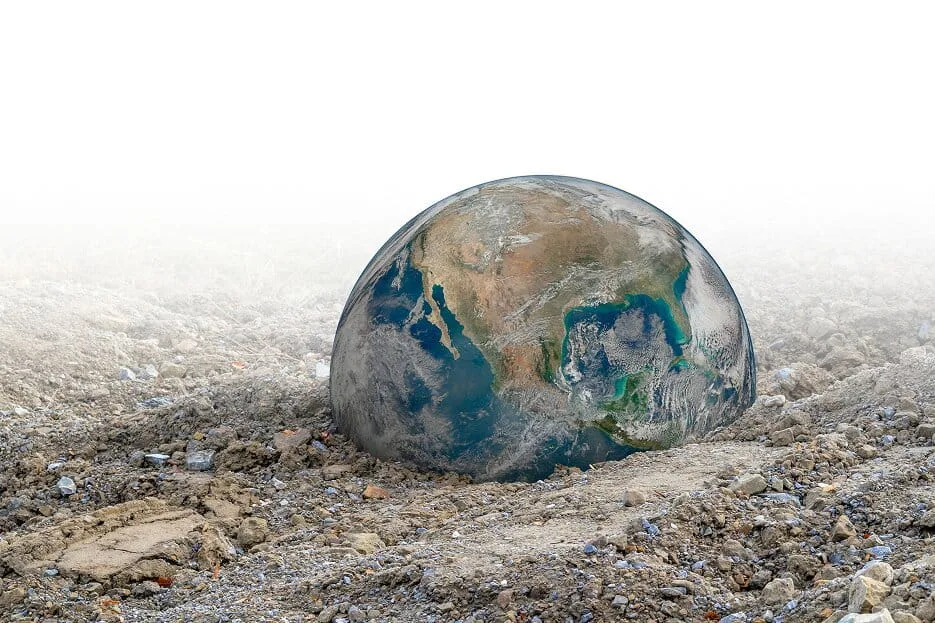
Ecocide is the widespread, severe, or long-term destruction of ecosystems, often for economic or political gain, so significant that the ability of people, species, or entire ecosystems to survive is threatened. It is not only an environmental crime. Not For Sale has documented that ecocide is frequently carried out by victims of human trafficking and forced labor, people coerced into clearing forests, mining rivers for illegal gold, and stripping land bare under conditions of debt bondage and violence. Ecocide and modern-day slavery are not separate crises. They are one system.
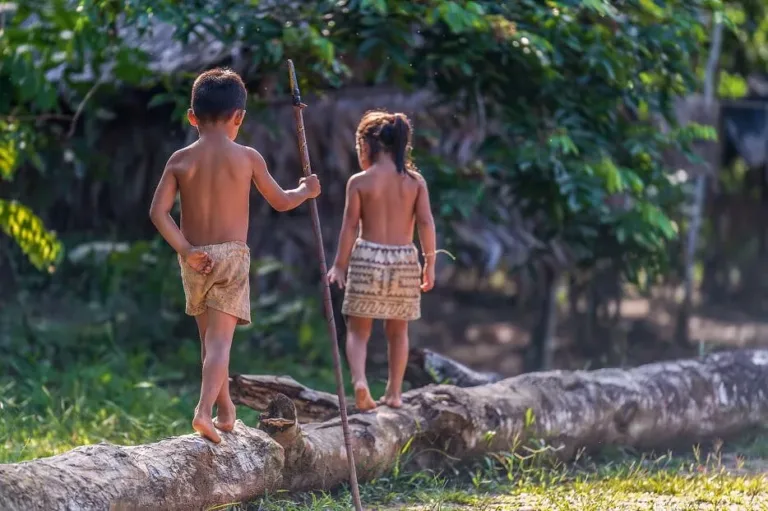
Ecocide is environmental destruction so extensive that nature's ability to sustain life is fundamentally undermined. But it is not only a crisis for the natural world. It is a crisis for human beings, and in many of the regions where Not For Sale works, it is a crisis carried out by human beings who did not choose to be there.
The term covers a wide range of destruction. What it shares across every form is the severity, scale, and deliberateness of the harm, and the systems of economic or political power that drive it.
Industrial Resource Extraction
Illegal and unregulated mining, for gold, coltan, cobalt, rare earths, and gemstones, poisons rivers with mercury, collapses watersheds, and strips land bare. In Peru's Madre de Dios region, Not For Sale has witnessed that the people doing this work are frequently victims of debt bondage and forced labor, coerced into destroying the ecosystems their own communities depend on. Mining camps become lawless enclaves where forced labor, child labor, and sexual exploitation operate with impunity.
Deforestation and Land Conversion
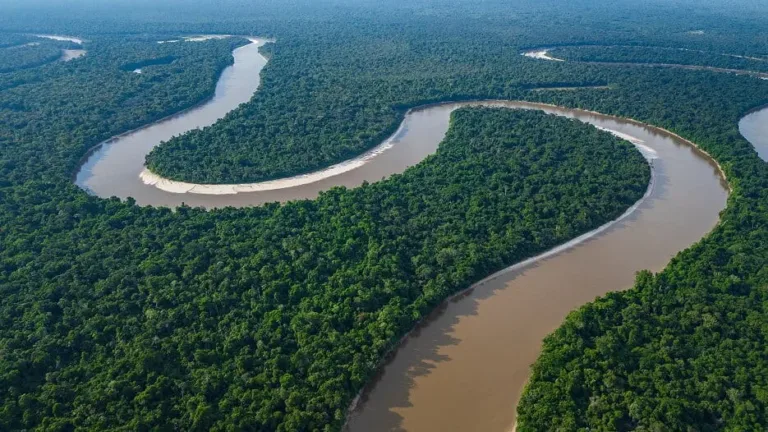
Clear-cutting of primary forest for cattle ranching, palm oil, soy, rubber, and sugarcane is the single largest driver of ecocide globally. It eliminates biodiversity, destroys water cycles, and displaces indigenous communities whose livelihoods depend on intact forests. In the Amazon, deforestation and illegal logging are frequently coordinated by organized crime networks that also traffic people into the labor that carries it out.
Toxic Pollution
Mercury contamination from illegal mining, industrial chemical dumping, electronic waste exported from wealthy countries to the Global South, and oil spills that poison soil, food chains, and drinking water for decades. When local livelihoods collapse under the weight of contamination, communities are pushed into migration, and migration without resources or legal protection is one of the most reliable pathways into trafficking.
Illegal Fisheries
Trawling, bottom scraping, and the collapse of marine wildlife are ecological crises with a documented human trafficking dimension. Forced labor on fishing vessels, including debt bondage and maritime enslavement, has been reported across Southeast Asia, West Africa, and beyond. Not For Sale's published research on Thailand's seafood industry has examined this intersection directly.
Climate-Driven Ecocide
Human-caused climate disruption intensifies every other form of ecocide: more severe droughts, cyclones, fires, and floods destroy ecosystems faster than they can recover. Climate displacement produces millions of people without homes, without identity papers, and without legal protection, conditions that traffickers exploit at borders, in transit camps, and in informal settlements worldwide.
Waterway Destruction
Damming, illegal sand mining, acid drainage from mining operations, and freshwater poisoning with cyanide and industrial solvents collapse the freshwater systems that entire communities depend on for food, income, and survival. When the river dies, the community's options narrow, and that narrowing is precisely what traffickers count on.
Land Grabbing and Displacement
Deforestation for corporate concessions, forced relocation for dams and mining corridors, and militarized destruction of farms and water sources as weapons of war, all produce the same result: communities stripped of their land, their protection, and their agency. The trafficking pathways that follow are well documented.
The Ecocide-Slavery Nexus
This is the core of Not For Sale's contribution to the field. Environmental destruction creates the conditions traffickers exploit: deforestation eliminates livelihoods, river poisoning collapses agriculture, illegal mining camps operate as lawless enclaves, and climate displacement produces stateless, undocumented people with no legal recourse. But ecocide is not only a driver of trafficking, it is often performed by trafficking victims themselves, forced under coercion to clear the forests, pan the rivers, and strip the land. The people destroying the world's ecosystems are frequently not the ones who chose to.
Not For Sale does not treat ecocide and modern-day slavery as parallel issues. They are the same system, and confronting one without confronting the other leaves both intact.
The Legal Movement
In 2021, the Independent Expert Panel for the Legal Definition of Ecocide, convened by the Stop Ecocide Foundation and co-chaired by Philippe Sands KC and Dior Fall Sow, produced the first consensus legal definition suitable for adoption into the Rome Statute of the International Criminal Court. The movement to classify ecocide as the fifth international crime, alongside genocide, crimes against humanity, war crimes, and the crime of aggression, is now supported by Small Island States, members of the European Parliament, Indigenous coalitions, and civil society networks worldwide. Not For Sale's work sits at the center of this movement, providing the on-the-ground evidence that ecocide and human trafficking are not only morally inseparable but legally and structurally intertwined.
Not For Sale confronts ecocide and modern-day slavery as one crisis, because the people destroying the world’s ecosystems are often not the ones who chose to.
Not For Sale has documented across nearly two decades that victims of forced labor and trafficking are frequently the ones clearing forests, mining rivers for illegal gold, and stripping land bare. Ecocide is not only an environmental crime, it is a human trafficking engine. Not For Sale treats both as one system and responds accordingly.
Not For Sale has conserved 753 square miles of Amazon rainforest in Madre de Dios, Peru, an area roughly 1.6 times the size of New York City. Protection is not passive: it requires building the economic alternatives that remove the incentive to destroy.
Over 505,000 trees planted across Argentina, Tanzania, Nicaragua, Brazil, Colombia, Bolivia, and the United States, with 13,301 tonnes of CO2 sequestered. Reforestation projects are managed by local teams and designed to restore biodiversity while supporting community livelihoods.
In Peru's Madre de Dios, Not For Sale helped build an indigenous-led cooperative and a Brazil nut supply chain that gives communities a direct economic reason to protect the forest rather than destroy it. Brazil nuts only grow in closed-canopy rainforest, their economic success is itself a disincentive to deforestation.
From Brazil nuts to batteries to critical minerals, Not For Sale and its enterprise partners, REBBL, Regenerate Technology Global, and M2i Global, redesign supply chains from the inside out, reducing forced labor risk and environmental destruction at the source.
The global movement to classify ecocide as the fifth international crime alongside genocide, crimes against humanity, war crimes, and the crime of aggression is gaining momentum. Not For Sale's on-the-ground evidence, documenting that ecocide and trafficking are structurally inseparable, strengthens the case that environmental destruction of this scale is not a policy failure but a prosecutable crime.
Ecocide destroys ecosystems and the people who depend on them, and it is frequently carried out by victims of forced labor and trafficking who had no choice. Not For Sale confronts both crises as one system, protecting ecosystems and the communities within them simultaneously.