Where is ecocide happening today?
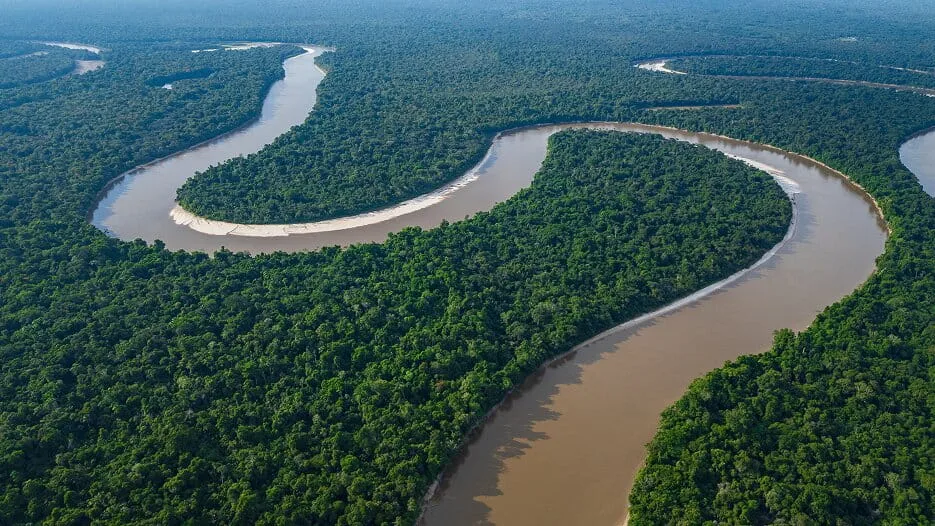
Ecocide is happening now, across every continent. Illegal gold mining is poisoning rivers in Peru's Amazon. Cobalt extraction is destroying land in the Democratic Republic of the Congo. Forced labor is driving overfishing across Southeast Asia. Record fires are consuming forests in Brazil and Bolivia. In every one of these regions, Not For Sale has documented that environmental destruction and human trafficking operate as one system, embedded in the supply chains behind the products most people use every day.
Ecocide is not concentrated in one region or one industry. It is a global pattern, and in every place where Not For Sale works, the same downward spiral is present: environmental destruction drives vulnerability, vulnerability drives trafficking, and trafficking victims are coerced into deepening the destruction.
Ecocide and forced labor in the Amazon
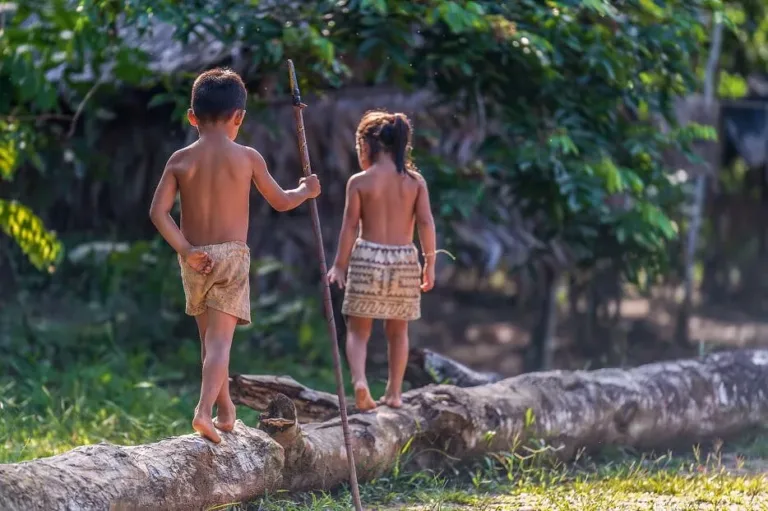
Peru's Madre de Dios region is one of the most biodiverse places on earth, and one of the most devastated. Illegal gold mining has stripped forests, leached mercury into rivers, poisoned fish stocks and drinking water, and created lawless mining camps where forced labor, child labor, and sexual exploitation operate with impunity. The people doing this work are often not willing participants. Not For Sale has documented that indigenous communities trapped in debt bondage are forced into illegal mining and logging, destroying the ecosystems their own families depend on to survive.
In Brazil, fire-driven deforestation released an estimated 791 million tonnes of CO2 in 2024 alone, roughly equivalent to Germany's annual emissions. As ranching, logging, and mining push deeper into indigenous territories after fires, cases of slave-like labor in rural supply chains continue to surface. In Bolivia, the worst fire season on record burned over 10 million hectares, displacing thousands into frontier towns where labor trafficking flourishes.
Ecocide and mineral extraction in Africa
In the Democratic Republic of the Congo, cobalt and critical mineral mining produces toxic pollution, deforestation, and water contamination, alongside documented child labor, forced labor, and violent conflict at both artisanal and industrial sites. The global demand for batteries and electronics drives extraction deeper into fragile ecosystems and vulnerable communities. In Uganda, oil extraction and pipeline construction through national parks and wetlands has displaced an estimated 13,000 people along the corridor, pushing families into debt and informal labor. Across East Africa, charcoal production and agricultural expansion are collapsing forests and rural incomes, pushing communities toward the migration and informal work that traffickers exploit.
Ecocide and forced labor at sea
In Southeast Asia, forced labor on distant-water fishing vessels drives the overfishing that collapses marine ecosystems and destroys coastal livelihoods for millions. Victims are trapped through debt bondage, document confiscation, and violence, sometimes held at sea for years. Not For Sale's published research on Thailand's seafood industry has examined this intersection of environmental destruction and maritime forced labor directly. The same pattern extends across global fisheries: weak governance at sea creates the conditions for both ecological collapse and unchecked human trafficking.
Ecocide through toxic pollution and waste
Mercury from illegal mining poisons rivers and food chains across the Amazon and West Africa. Industrial and electronic waste is exported from wealthy countries to communities in the Global South that have neither the infrastructure nor the legal protections to process it safely. Oil spills contaminate soil and water for decades. In every case, the communities left living with the contamination are the same communities most vulnerable to trafficking, because when livelihoods collapse under the weight of pollution, the options narrow to exactly the ones traffickers control.
Ecocide through land grabbing and displacement
Deforestation for corporate concessions, forced relocation for dams and mining corridors, and the militarized destruction of farms and water sources as weapons of conflict all produce the same result: communities stripped of land, protection, and agency. In Colombia, deforestation driven by pasture conversion, coca cultivation, and illegal roads is rising again, with armed groups, miners, and ranchers competing for cleared land while displaced communities face forced recruitment and exploitation. In Nicaragua, illegal cattle ranching on indigenous territories supplies global beef supply chains while violently displacing the communities that lived there.
Why ecocide and human trafficking share the same geography
The overlap between ecocide hotspots and trafficking hotspots is not a coincidence. Weak governance, corrupt supply chains, organized crime networks, and global demand for cheap commodities create the conditions for both. The same criminal networks that run illegal mining operations frequently control the forced labor that staffs them. The same supply chains that move illegally logged timber move people. Not For Sale's work sits at this intersection, because that is where the system can be broken.
Ecocide is not a regional problem. It is a supply chain problem. The minerals in a smartphone, the fish on a plate, the palm oil in a packaged food, the beef in a fast-food burger, all carry the risk of ecocide and forced labor somewhere upstream. Addressing one without addressing the other leaves the system that produces both intact.
Not For Sale confronts ecocide and modern-day slavery as one crisis, because the people destroying the world’s ecosystems are often not the ones who chose to.
Not For Sale has documented across nearly two decades that victims of forced labor and trafficking are frequently the ones clearing forests, mining rivers for illegal gold, and stripping land bare. Ecocide is not only an environmental crime, it is a human trafficking engine. Not For Sale treats both as one system and responds accordingly.
Not For Sale has conserved 753 square miles of Amazon rainforest in Madre de Dios, Peru, an area roughly 1.6 times the size of New York City. Protection is not passive: it requires building the economic alternatives that remove the incentive to destroy.
Over 505,000 trees planted across Argentina, Tanzania, Nicaragua, Brazil, Colombia, Bolivia, and the United States, with 13,301 tonnes of CO2 sequestered. Reforestation projects are managed by local teams and designed to restore biodiversity while supporting community livelihoods.
In Peru's Madre de Dios, Not For Sale helped build an indigenous-led cooperative and a Brazil nut supply chain that gives communities a direct economic reason to protect the forest rather than destroy it. Brazil nuts only grow in closed-canopy rainforest, their economic success is itself a disincentive to deforestation.
From Brazil nuts to batteries to critical minerals, Not For Sale and its enterprise partners, REBBL, Regenerate Technology Global, and M2i Global, redesign supply chains from the inside out, reducing forced labor risk and environmental destruction at the source.
The global movement to classify ecocide as the fifth international crime alongside genocide, crimes against humanity, war crimes, and the crime of aggression is gaining momentum. Not For Sale's on-the-ground evidence, documenting that ecocide and trafficking are structurally inseparable, strengthens the case that environmental destruction of this scale is not a policy failure but a prosecutable crime.
Ecocide is accelerating, and so is the forced labor that drives it. From the Amazon to the Congo Basin to the fishing waters of Southeast Asia, Not For Sale confronts both as one system: protecting ecosystems, reversing the downward spiral, and building the economies that make destruction unnecessary.