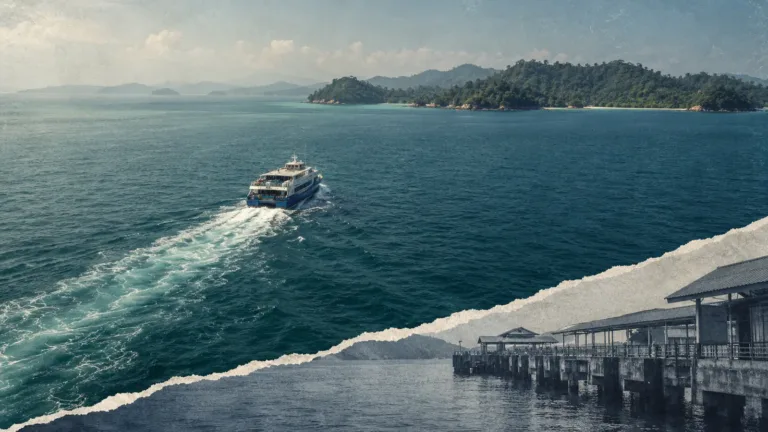
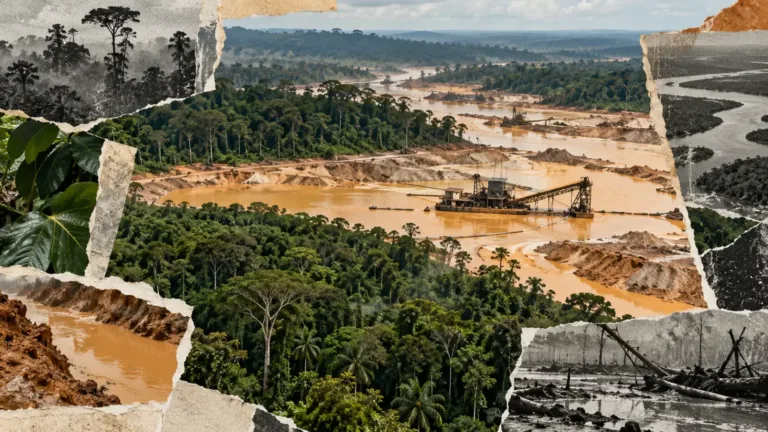
We went looking for slavery. It led us to the forest.
Not For Sale was built to fight human trafficking, one person at a time. Two decades of following the work upstream taught us something we did not expect to find, and can no longer ignore: you cannot end modern-day slavery without confronting ecocide, because one business model clears the forest and traps the person who clears it.

Not For Sale started because of a restaurant.
In Berkeley, California, my co-founder Dave Batstone learned that the employees of his favorite restaurant, in every role, were being held in forced labor. Not in a distant country. Not in a supply chain he had never heard of. Down the street, at the table where he ate dinner.
That is where this organization begins, and it set the terms for everything that followed. Slavery is not somewhere else. It is close, it is ordinary, and the reason we do not see it is that it has been built into things we enjoy.
For the first stretch of our work, we did what that discovery demanded. We went after trafficking where it was happening to the person in front of us. Homes and schools for children in northern Thailand, where Kru Nam had been pulling stateless kids off the streets before we ever arrived. Training and a wage for survivors in Amsterdam. Shelter, education, and legal help in Vietnam, Uganda, South Africa, and Peru. 491,042 lives touched since 2007.
That work matters. We still do it, every day. But somewhere along the way we had to admit something uncomfortable about it.
The question we could not answer
Every time we helped someone out of forced labor, the same question came back at us. What will this person do tomorrow?
If the answer was the same work, under the same conditions, for the same reason (typically out of economic desperation), then we had not solved anything. We had delayed further victimization. We used to say it to each other bluntly: we could build a thousand shelters and never touch the root cause.
So we went upstream. We investigated who needs labor this cheap, and why nobody can see it happening.
In many cases, all around the globe, we kept arriving at the edge of a forest.
What the Peruvian Amazon taught us
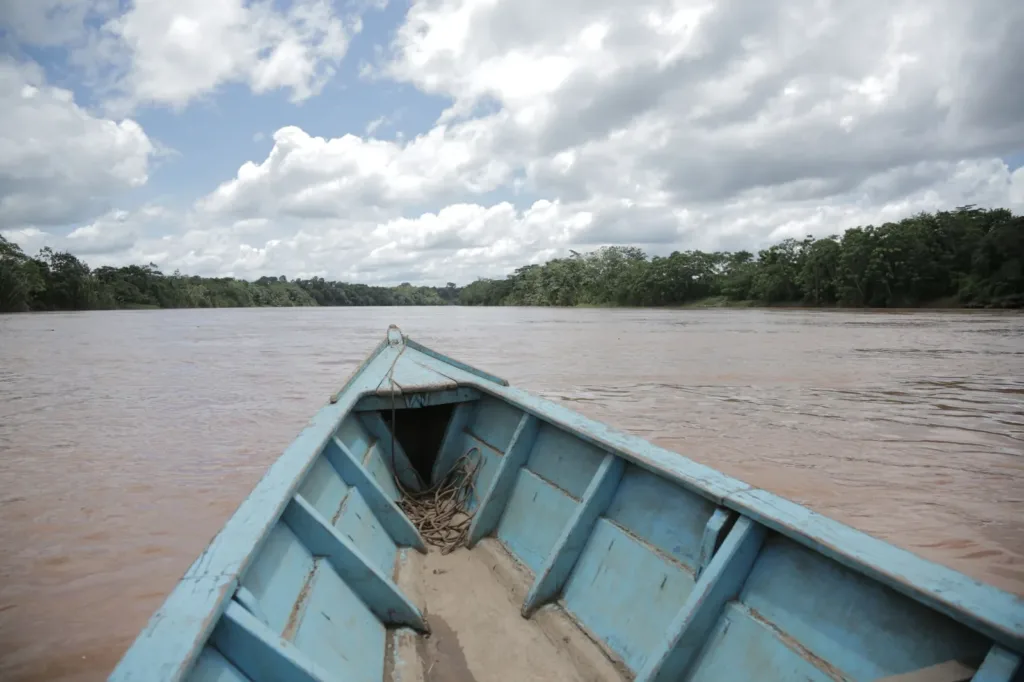
In the late 2000s, a Peruvian abolitionist named Ricardo Dawson put us in a narrow wooden boat and took us down the Amazon river, into a region called Madre de Dios. He wanted us to see where the vulnerability was coming from.
What we found was one of the most biodiverse rainforests on earth, surrounded by some of the poorest communities in the hemisphere. Children malnourished. Kids leaving school. Families sitting on a genuinely valuable resource, the Brazil nut, with no way to get it to a market that would pay for it. And when a family needed income, there was work. There was always work. Illegal gold mining. Illegal logging. Poorly paid, physically brutal, and attached to an illegal form of debt.
That was the moment the two halves of this fit together for us.
The forest was being cleared by men and women who had been trapped into clearing it. The clearing made their community poorer, which made the next neighbor easier to trap. Nobody inside that loop was choosing it. And everybody downstream, including us, was buying the output.
We did not arrive at ecocide through environmentalism. We arrived at it by following modern-day slavery far enough upstream to see what it was being used for.
We did not arrive at ecocide through environmentalism. We arrived at it by following modern-day slavery far enough upstream to see what it was being used for.
How human trafficking and ecocide feed each other
Ecocide is the severe, widespread, or long-term destruction of nature. In 2021, an independent panel of lawyers put a legal definition around the word for the first time, which gave this movement something it had been missing: a name for the crime.
Here is the pattern we have now watched play out in country after country.
Not with chains. With an advance, a quota, and an accounting system nobody is allowed to see.
It is the work that pays enough to keep them fed, and never enough to clear the debt. The balance is built to look like it is shrinking.
The river carries mercury. The soil stops growing food. The fish are not safe to eat.
Which is where it starts again.
Slavery is not a side effect of environmental destruction. It is its labor supply.
Clearing a rainforest uses labor that nobody will ever audit, so it traps workers who cannot quit. Holding workers who cannot quit requires a place with no witnesses, which is exactly what the remote rainforest is.
One crime scene. Two crimes. Three places make the case better than any argument can.
Gold
Peru, where the gold is under the forest
Madre de Dios, Peru
Source: MAAP, 2025
Illegal mining has cleared roughly 139,000 hectares of the Peruvian Amazon, and about 97.5 percent of that destruction sits in Madre de Dios. Mercury used to separate the gold ends up in the rivers, then in the fish, then in the families who eat them. In August of 2026, Peruvian navy personnel were dropping from helicopters into mining camps along the Malinowski River, inside the Tambopata National Reserve. Monitoring teams counted 53 dredges and 20 mining camps inside that reserve in February of 2026.
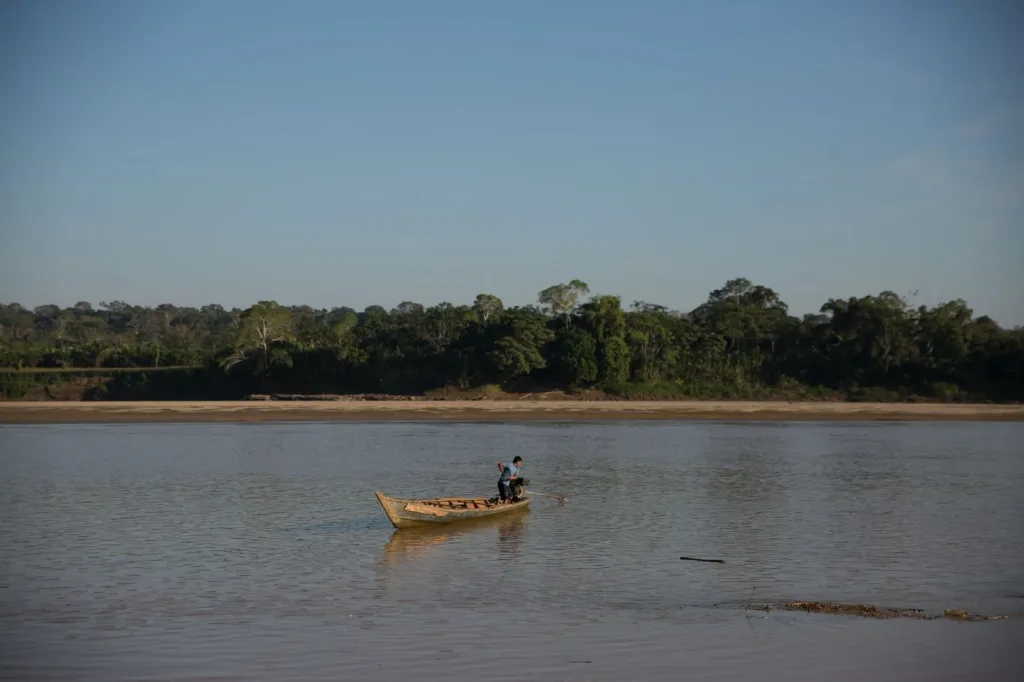
What the river never shows is the labor. Investigators have documented the same pattern there for more than a decade: deceptive recruitment, manipulated debt, confiscated documents, wages that never arrive, and the sexual abuse of women and girls in the camps and the bars that grow around them.
So we tried to change the arithmetic. If the only paying work in the forest is the work that destroys it, the forest has to start paying better.
We helped build a Brazil nut economy. Brazil nuts only grow under a standing canopy, which means the tree is worth more alive than felled. We worked with Indigenous harvesters and their cooperative to cut out the middlemen, built processing capacity so they could sell a finished product, and launched REBBL to buy it at a price that holds. More than 2 million dollars has come back to Not For Sale from that company. The communities we partner with now protect 753 square miles of rainforest every year, more than two New York Cities, standing.

Peru is our proof. You cannot simply arrest your way out of this. You must create viable alternative economic pathways.

Cobalt and coltan
The Congo, where the minerals are in your pocket
Eastern Democratic Republic of the Congo
We began working in the eastern Congo in 2017, and the pattern was waiting for us.
The Democratic Republic of the Congo holds more than half the world’s cobalt, along with the coltan in nearly every phone and laptop on earth. Getting it out poisons the water table, strips forest, and fills the air around the pits with dust that children breathe. Roughly 255,000 miners work in “artisanal” and small-scale mining there. At least 40,000 of them are children. In September of 2026, Amnesty International documented what was happening inside a coltan mine near Rubaya under the control of an armed group: summary killings, torture, arbitrary detention, forced recruitment, and forced labor.
The part that should land hardest is where those minerals go. Much of this cobalt is headed into all of our mechanics, technologies, and energy infrastructure. It is not hyperbole to say that our economy is being dug out of the ground by children and by adults held at gunpoint.
Our team in the eastern Congo, led by Congolese staff who grew up in the region, plants trees and builds cooperatives on land the mining economy wrote off. We also work the far end of the chain, through Regenerate Technology Global, which recovers battery metals already in circulation, and with M2i Global on mineral supply that can be traced. The fastest way to reduce demand for a mineral dug by a child is to stop discarding the ones already dug.
Palm oil
Indonesia, where the oil is in almost everything
Indonesia
We do not have a team in Indonesia. We watch it anyway, because it is the clearest picture of where this is going.
Palm oil is in roughly half of what sits on a supermarket shelf. Indonesia grows more of it than anyone, and oil palm expansion accounts for about a third of the country’s old-growth forest loss over the past twenty years. An estimated 1.8 million people are living in modern-day slavery there, with forced labor documented across the sectors doing the clearing: palm oil, logging, mining, and fishing. Recruiters and brokers. Seized passports. Quotas set so high that harvesters bring their wives and children into the fields unpaid to meet them. Debt that grows faster than wages.
What makes Indonesia the sharpest case is what sits on top of it. Much of this happens on plantations certified as sustainable. Pledges to avoid deforestation now cover most of the global palm oil trade, and the clearing continues anyway, concentrated in Papua, where roughly 70 percent of palm-driven forest loss is now happening. Investigators keep finding the same workaround: shadow companies clear the land, and the oil is blended into a chain that still carries the certificate.
What twenty years changed about how we work
Three continents. Gold, cobalt, and palm fruit.
Something valuable sits under or on top of a forest. Removing it requires labor cheap enough to be disposable and remote enough to be invisible. The destruction further exacerbates the poverty that supplies that labor. The product enters a global supply chain within a few steps and reaches a shelf looking clean.
Understanding that changed what we build. We still run the shelters, the schools, and the survivor programs, and we always will. But we stopped treating them as the whole answer. The leverage is in the economics, so we work there: enterprise that makes the standing forest worth more than the cleared one, technology that makes the invisible parts of a supply chain visible, and the slow work of strengthening the laws and institutions that are supposed to make any of this illegal. That is what social innovation means at Not For Sale, and it is the only approach we have found that moves both crimes at once.
Where this goes next
Our twentieth year is ahead of us, and we are going into it making a harder argument than the one we started with.
The anti-slavery movement and the climate movement have spent decades in separate rooms, raising separate money, fighting the same business model. We were in one of those rooms. The work moved us out of it.
Peru shows the cycle can be reversed. The Congo shows how much is riding on reversing it. Indonesia shows how easily a clean label can cover a dirty chain. All three are the same crime scene, and the best way to fight what happens there is not only to oppose it. It is to out-create it.
Questions readers ask
How are human trafficking and ecocide connected?
They often run on the same business model. Traffickers trap poor families in debt bondage and push them into illegal mining and logging. That work destroys the forest and makes the community poorer, which makes the next family easier to trap. Remote forests give the people profiting from this cheap labor and no witnesses.
Is forced labor used in illegal gold mining?
Yes. In the Peruvian Amazon, investigators have documented deceptive recruitment, manipulated debt, confiscated documents, wages that never arrive, and the sexual abuse of women and girls in mining camps. Illegal mining has cleared roughly 139,000 hectares of the Peruvian Amazon, most of it in Madre de Dios.
Is there forced labor in palm oil production?
Yes. In Indonesia, the largest palm oil producer, forced labor has been documented in the sectors doing the clearing, including palm oil: recruiters and brokers, seized passports, quotas so high that families work unpaid, and debt that grows faster than wages. Some of it happens on plantations certified as sustainable.
Sources and notes
- Independent Expert Panel for the Legal Definition of Ecocide, legal definition
- MAAP, gold mining in the Peruvian Amazon; mining in Tambopata
- Global Conservation, Peru steps up the fight against illegal gold mining
- Verité, Indicators of Forced Labor in Gold Mining in Peru; coltan, tungsten, tin; palm oil
- U.S. Government Publishing Office, H.R. 10346
- Amnesty International, DRC, September 2026
- Trase, Indonesian palm oil and deforestation; SEI, same analysis
- Walk Free, Global Slavery Index, Indonesia
- Mongabay, loopholes in palm oil anti-deforestation pledges
- Rainforest Action Network, Hidden Origins
Topics in this story
See all topics
Mark Wexler
Mark Wexler is Co-Founder and CEO of Not For Sale and a longtime builder of alternatives to the systems that enable modern-day slavery and ecocide.
Related Articles


More from Mark Wexler