Peru’s 20 Million SOL Illegal Gold Mining Crackdown: Why the Amazon Needs More Than Raids
In Madre de Dios, a mining crackdown can be measured in engines, rafts and camps dismantled. What is much harder to measure is whether the forest, and the people who depend on it, are any safer after the operation ends.

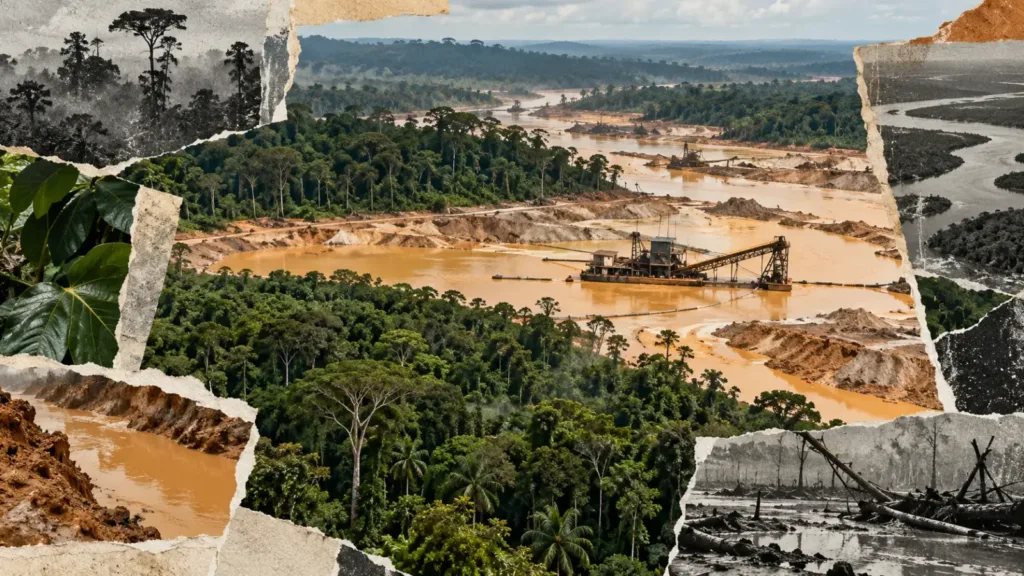
In Madre de Dios, a mining crackdown can be measured in engines, rafts and camps dismantled. What is much harder to measure is whether the forest, and the people who depend on it, are any safer after the operation ends.
Peruvian authorities reported that coordinated operations on October 23 and 24, 2026, targeted illegal gold mining infrastructure in the southern Amazon. According to the country’s Joint Command of the Armed Forces, the interventions affected equipment and facilities valued at an estimated 20,432,470 soles, equivalent to nearly $6 million USD. The operations involved the military, national police, prosecutors and the agency responsible for protected natural areas. Officials reported that two people were detained for further investigation. These are the authorities’ operational figures, not a court’s findings about criminal responsibility or the value of gold extracted.
The inventory gives some sense of the industrial nature of the activity. Authorities listed 54 rafts, five dredging rafts, dozens of motors, 23 pits, processing equipment, 95 makeshift camps and substantial quantities of fuel. Operations took place in parts of Inambari district, including Platanal, Mega 16, Quebrada Anaconda and Valle Dorado. The official description is of a logistical network, not a handful of people panning for gold. A separate intervention near Tambopata reported on October 20 also involved arrests and the destruction of mining equipment, but it was a different operation and should not be added to the later figures.
What This Article Covers
This report examines what happened during the October operations, why illegal gold mining has become entrenched in Madre de Dios, what the environmental and human costs look like, and why enforcement is only one part of a durable response. It also considers how forest protection, Indigenous rights and viable local livelihoods fit into the longer struggle over the Amazon’s future.
What happened in Madre de Dios on October 23 and 24?
The Peruvian authorities describe the latest interventions as coordinated operations intended to disable the infrastructure supporting unauthorized gold extraction. They reported action across several sectors of Inambari, a district in the province of Tambopata, rather than at one single mining location. Personnel from the armed forces, police, public prosecutor’s office and the National Service of Natural Areas Protected by the State participated. The agencies identified and intervened against rafts, motors, fuel supplies, camps and processing installations used for mining activities. The reported equipment valuation reflects the state’s estimate of material affected by enforcement, not cash recovered or a confirmed financial loss sustained by any particular criminal organization.
That distinction matters. Headlines about a multimillion-sol blow to illegal mining can suggest that an entire criminal economy has been dismantled. The official announcement supports a narrower conclusion: authorities disrupted a large quantity of physical infrastructure over two days. It does not show how many miners abandoned the area, whether financiers and gold buyers were identified, how long the operations had been running, or whether the affected sites will remain clear. Those questions require evidence that the initial announcement does not provide.
None of this minimizes the scale of the intervention. Floating equipment, processing machinery, camps and fuel are expensive to move into remote forest areas. Their concentration reveals an organized supply chain that extends well beyond the riverbank. But assessing the significance of a crackdown means asking not only what was removed, but what makes it profitable to bring more equipment back.
Why has Madre de Dios become a center of illegal gold mining?
Madre de Dios occupies a distinctive place in Peru’s Amazon region. Its waterways, forests and extraordinary biodiversity sit alongside deposits of alluvial gold that can be reached through destructive extraction methods. Where forests are cleared, river sediments disturbed and mining pits excavated, the damage can spread through connected ecosystems. Access routes, settlements and informal markets then alter the social and economic landscape around the mining activity. The region is also home to Indigenous communities whose livelihoods and cultural relationships with the forest long predate the current pressure from extraction.
High gold prices can make remote deposits attractive, but price alone does not explain why illegal extraction persists. Mining operations depend on fuel, machinery, transport, recruited workers, buyers and financial arrangements. They can exploit places where state protection is difficult to sustain and where other forms of employment are scarce. Although the individual enterprises differ, a recurring feature is that the extraction site is just one visible part of a much larger chain. Removing a raft does not necessarily identify the person who purchased the equipment or the business that will buy the resulting gold.
These incentives can be particularly difficult for communities that experience the costs of environmental destruction while seeing few realistic alternatives to income from mining. An effective response must be able to distinguish between those organizing or profiting from illegal operations and people whose economic circumstances leave them exposed to exploitation. Treating every person encountered near a mine as having the same responsibility can obscure both the workings of the market and the vulnerabilities of those who enter it.
What does gold extraction do to the rainforest and its rivers?
Alluvial mining can remove forest cover and disturb soil and river sediments on a scale that is difficult to reverse. Where extraction leaves open pits and stripped ground, natural regeneration becomes complicated. Roads and camps can open formerly inaccessible areas to further activity, while the loss of vegetation affects habitats, water systems and communities who depend on them. Remote damage is not therefore isolated from human life. It can threaten fisheries, crops, drinking water and the practical means by which families support themselves.
Mercury is an additional concern in gold mining where it is used to separate gold from sediment. Mercury can contaminate aquatic ecosystems and accumulate through food chains, exposing people who rely on local fish. Not every mine uses the same methods, and the October operational statement does not establish mercury contamination at each reported site. The broader danger is well documented, however, and reinforces why forest and river protection cannot be considered separately from public health.
Environmental damage also has a time dimension that does not fit easily into the announcement of a successful raid. A piece of equipment may be disabled in a day. Restoring a damaged stream, rebuilding soil structure or recovering a local food source may take years. Some impacts can be much harder to repair. The immediate enforcement result is therefore only an early point in the story of what happens to the land.
Where does human trafficking fit into the mining economy?
Illegal mining and human trafficking are distinct offenses, and they must not be conflated. Yet the conditions that can develop around informal or criminal extraction economies can create opportunities for forced labor, sexual exploitation and abuses against children. Workers may be deceived about wages and conditions, subjected to debt, threatened or prevented from leaving. Women and children can face additional risks in settlements that develop around mining camps. The presence of an illegal mine does not, by itself, prove that trafficking has occurred. Proving trafficking requires evidence of the conduct and exploitative purpose defined by the applicable law.
It would be wrong to present the October 23–24 raids as trafficking rescues. The authorities’ announcement concerned illegal mining infrastructure and detention in connection with the operation, not verified identification of trafficking victims at those specific sites. That does not make the trafficking question irrelevant. It means the question should be investigated separately, with evidence from survivor accounts, labor inspections, legal proceedings or credible specialist research rather than inferred from the environmental offense.
The connection between the two crises is also structural. A damaged forest can undermine traditional livelihoods, increasing economic pressure on families. Recruitment intermediaries can exploit that insecurity, offering apparently attractive work far from home or promising returns that never materialize. In some cases, people may be pushed toward work that is hazardous, coercive or impossible to leave. Understanding those pressures helps explain why protecting human freedom in the Amazon also requires protecting the economies through which communities sustain themselves.
Why can repeated raids fail to produce lasting change?
Enforcement is indispensable when illegal operations threaten people, rivers and protected areas. It can stop immediate extraction, disrupt equipment and signal that an area has not been abandoned to criminal control. But a lasting reduction in damage depends on what happens before and after those interventions. If an operation has access to buyers, transport routes and finance, replacing physical machinery may be possible. If communities have no viable alternative employment, the same economic pressures remain after the authorities depart.
The challenge is therefore not a simple choice between policing and livelihoods. Both are necessary, and they work at different points in the problem. Investigations can follow money and commercial relationships rather than concentrating exclusively on the people operating equipment. Consistent environmental monitoring can help establish whether cleared areas are being reoccupied. Community participation can give local residents a meaningful say in decisions that affect their land. Education, skills and businesses built around renewable forest resources can improve the alternatives available to people otherwise drawn into destructive work.
There is also an accountability question. Public announcements tend to be strongest on immediate outputs: the number of motors disabled, camps dismantled or people detained. Those are useful measures, but they are not the same as long-term outcomes. A fuller public record would show what happens to prosecutions, whether environmental damage is assessed and remedied, how communities are consulted and whether the same locations become active again. Without those answers, the public can be left with a recurring sequence of raids, headlines and renewed destruction.
What would a more durable response look like?
The most promising approaches recognize that the forest is not empty land waiting to be defended from outside. It is home to communities with knowledge, economic needs and rights that must form part of decisions about conservation and development. Where Indigenous people are able to manage resources, monitor territory and earn a reliable living from sustainable enterprises, protecting the rainforest can become part of daily economic life instead of a burden imposed on families who are already struggling.
That does not mean community enterprise can replace the responsibility of governments to investigate organized environmental crime, regulate extraction or protect people threatened by criminal actors. Nor should communities be expected to confront dangerous networks without adequate support. But it does mean that measuring success only in confiscated or destroyed equipment misses the institutions and livelihoods needed for protection to endure.
Madre de Dios offers a particularly clear test of this principle because the pressures are so tightly connected. An illegal mining camp may be a problem for forest cover, water quality, public safety, labor rights and the local economy at once. A response concerned with only one consequence is unlikely to resolve the others. The question after a crackdown is whether authorities and their partners can help make the legal, sustainable choice the viable one.
What happens next after the October operations?
The immediate next steps are for Peruvian authorities to establish the legal outcomes of the detentions, continue investigations into the networks supporting illegal extraction and provide evidence about conditions at the affected sites. The agencies involved will also need to monitor whether activity resumes in the intervened areas. Such follow-up is critical to judging the meaning of the October announcement. Two days of operational success can be reported confidently; the long-term effect cannot yet be known.
For readers outside Peru, the story should also be understood as a warning about the global market surrounding gold. The damage appears in remote forest regions, but the demand and commercial pathways extend much farther. Responsible scrutiny of sourcing, finance and enforcement belongs alongside support for the people who live with the consequences of extraction.
The forest cannot be protected by announcements alone. The test is whether its rivers stay cleaner, its communities remain safer and its families can build a future that does not depend on the destruction of the land beneath them.
What Not For Sale is doing in Madre de Dios
Not For Sale works alongside communities in the Peruvian Amazon on education, survivor support, Indigenous-led livelihoods and forest protection. Its Peru program reports work with 10 Indigenous communities through the AFIMAD cooperative and the conservation of 753 square miles of rainforest annually. These figures describe Not For Sale’s wider program, not the impact of the October enforcement operations. The work is built on a practical conviction: people are better protected from exploitation when their communities have genuine economic opportunities that do not require sacrificing the forest. Readers can learn about the project and support that work here.
Frequently Asked Questions
What happened in Madre de Dios in October 2026?
Peruvian authorities reported coordinated operations on October 23 and 24 against equipment and infrastructure used for illegal gold mining in Inambari district. They estimated the value of affected material at more than 20 million soles and reported two detentions.
Does illegal gold mining cause human trafficking?
Illegal mining can create conditions in which workers and other vulnerable people are exposed to forced labor and sexual exploitation, but the crimes are legally distinct. Evidence is needed to establish trafficking in any particular location or operation.
Why is illegal gold mining difficult to stop?
Profitable extraction can depend on networks of finance, equipment, transport and gold buyers. Disabling a mining site does not necessarily dismantle those networks or address the lack of alternative livelihoods.
How can Indigenous communities help protect the Amazon?
Community management, territorial monitoring, recognized land rights and sustainable enterprises can all contribute to protection, alongside enforcement and public investment. Indigenous communities should not be expected to take on dangerous enforcement responsibilities that belong to the state.
Reporting Sources
Peru Joint Command of the Armed Forces, October 25, 2026; Agencia Andina, October 25, 2026; Agencia Andina, October 20, 2026; Not For Sale Peru program.

Mark Wexler
Mark Wexler is Co-Founder and CEO of Not For Sale and a longtime builder of alternatives to the systems that enable modern-day slavery and ecocide.
More from Mark Wexler