
Netherlands · People
Training Survivors for Independence
Not For Sale’s people work in the Netherlands began in Amsterdam’s Red Light District with a bowl of soup and a conviction that survivors of trafficking do not need saving, they need opportunity. In the Netherlands, the people work and the social innovation work are not separate programs. They are the same enterprise: Dignita.
What We Found
The Netherlands holds a Tier 1 ranking in the US Trafficking in Persons Report, the highest possible grade. But the ranking obscures a deeper reality. Studies suggest the actual number of trafficking victims in the Netherlands is approximately 6,250 per year, roughly five times the officially reported figure. Just over half are female. The majority come from Nigeria, the Netherlands itself, Uganda, Poland, and Romania. About 57% are forced into the sex industry. The rest are trafficked into forced criminality, forced labor in transport, cleaning, and hospitality, or domestic servitude.
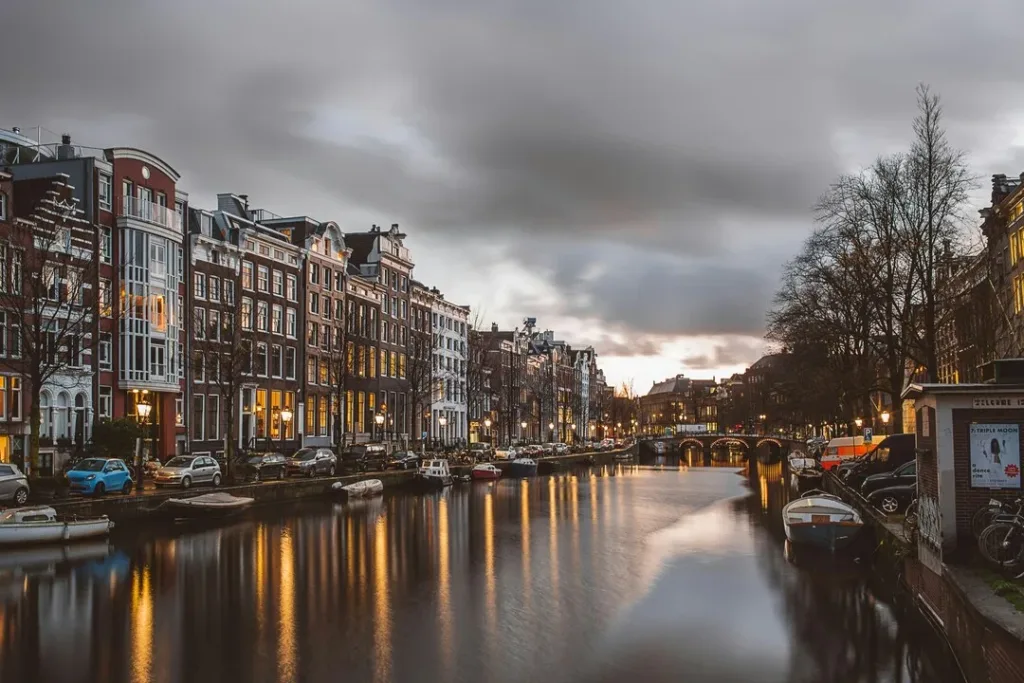
Amsterdam’s Red Light District is one of the most visible and one of the most misunderstood trafficking environments in Europe. Behind its regulated facade, trafficking networks operate through debt bondage, document confiscation, and psychological coercion, moving people across borders from West Africa and Eastern Europe into sexual servitude and forced labor. Many victims never self-identify. Many never reach the authorities. And for those who do exit, the pathway to independence is long and poorly supported.
Not For Sale has been working in this environment since 2012, and the Netherlands is where the organization proved that the Impact Stack could work in a European context as effectively as it works in the Amazon.
How It Started: Home Soup
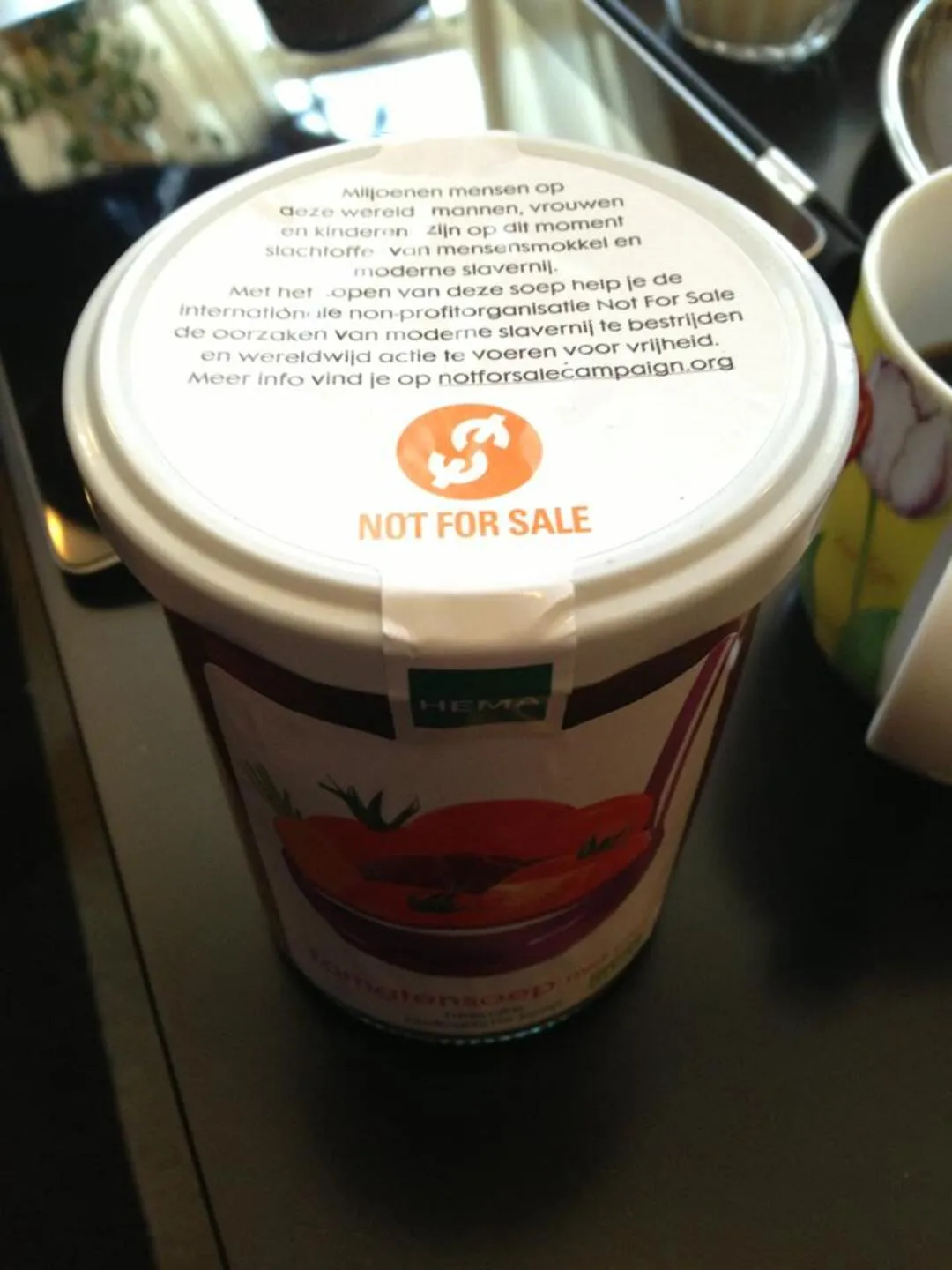
Not For Sale’s Netherlands work began with Toos Heemskerk-Schep, a social worker who had spent years working with trafficked women in Amsterdam’s Red Light District. In 2012, she partnered with Not For Sale to launch a soup-making program inside an Amsterdam safe house. The concept was simple: teach survivors to make soup, certify them, and sell the soup to generate revenue. The certificate gave participants something most had never had, proof that they could do something valuable. The soup gave them income. And the act of cooking together in a professional setting rebuilt the social connections that trafficking had destroyed.
The program was called Home Soup. It was small, informal, and self-sustaining. It was also the proof of concept for everything that came next.
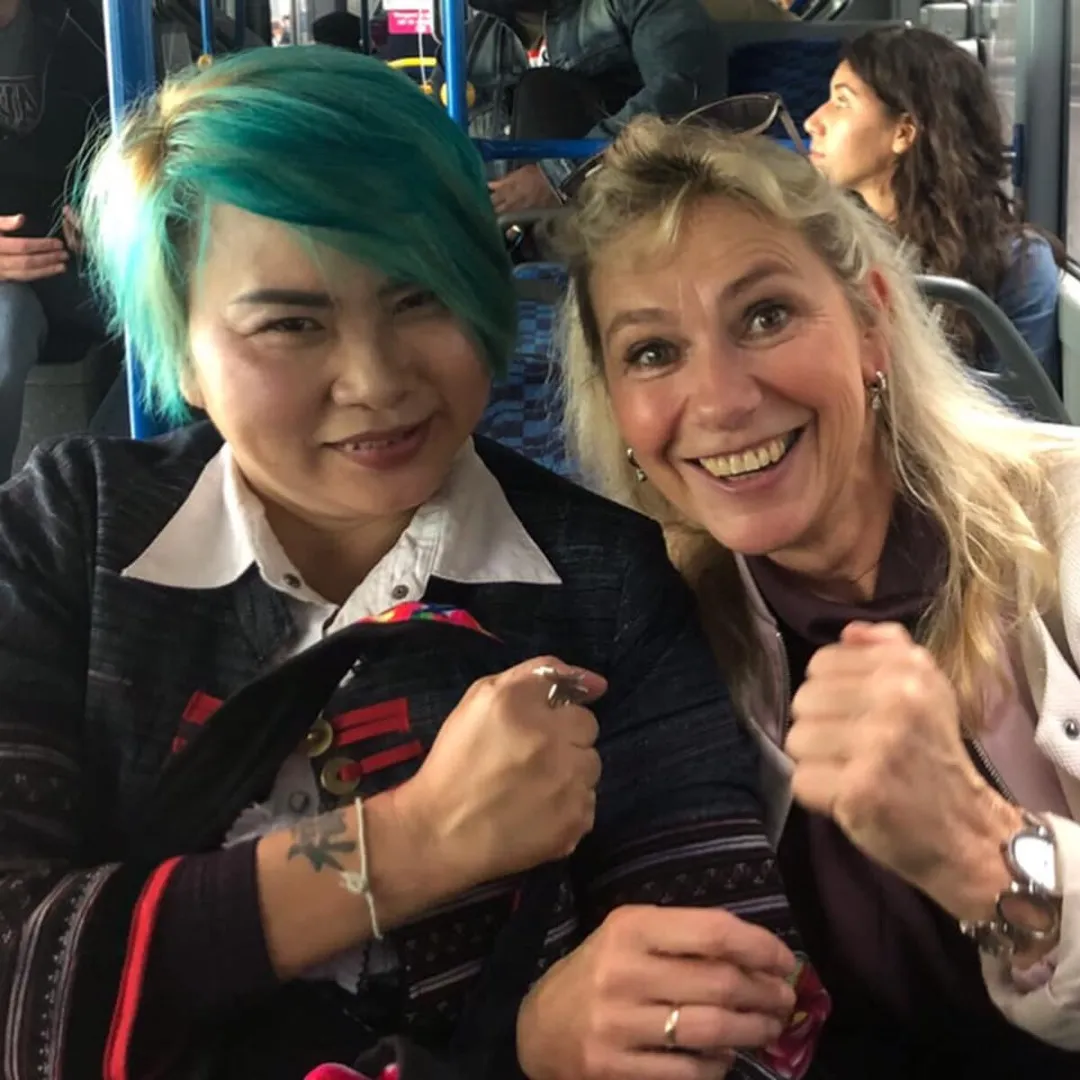
The Dignita Academy: What Survivors Actually Receive
The Dignita Academy, developed in collaboration with ROC van Amsterdam, offers government-accredited work-based learning programs for survivors of trafficking, refugees, and other vulnerable individuals. This is not a generic skills workshop. It is a structured, certified vocational program recognized by the Dutch government.
Training tracks include basic kitchen techniques, barista skills, nail styling and beauty, and administration through FAIR Finances. The food and drinks trainees produce during training are served directly on the Dignita restaurant menu, meaning their work has real commercial value from day one. Trainees are not practicing on the side. They are contributing to a functioning business that serves paying customers in the center of Amsterdam.
Alongside vocational skills, the program covers citizenship orientation, health and first aid, and workplace communication, the practical building blocks that reduce distance to the European labor market. Through the training and on-the-job experience, participants gain qualifications, rebuild self-worth, and develop the confidence to plan for their future, whether that means employment in the Netherlands, further education, or return to their country of origin with transferable skills.
263 survivors have completed the program to date. Many graduates find employment outside of Dignita. Some are hired by the restaurant itself. The program is designed to close the gap between crisis support and genuine economic independence, addressing both the practical and psychological dimensions of recovery.
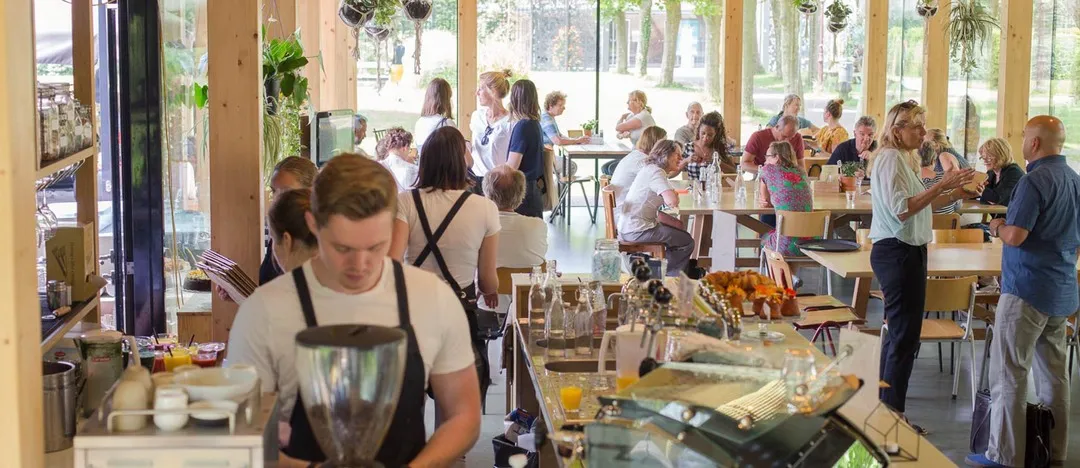
What We Set Out to Do
Help survivors of human trafficking, refugees, and people at risk gain the professional skills, confidence, and certifications they need to find dignified work and build economic independence, not through temporary support but through a self-sustaining enterprise model that funds itself.
What Stands in the Way
Most trafficking survivors in the Netherlands exit the formal support system without the vocational skills, work experience, or professional networks needed to compete in the Dutch labor market. Language barriers, immigration status, trauma, and the stigma of trafficking compound the challenge. For survivors from Nigeria, Romania, and Poland, the three most common countries of origin, returning home is often not safe, and staying in the Netherlands without economic independence leaves them vulnerable to re-trafficking.
This is one side of the coin. The social innovation section below explains how the enterprise that delivers this training also funds it, and why that model matters beyond the Netherlands.
Netherlands · Social Innovation
Eat Well, Do Good: How a Restaurant Became the Model
Not For Sale’s social innovation work in the Netherlands is the most fully integrated example of the Impact Stack in Europe. In Amsterdam, the enterprise is not a separate funding mechanism bolted onto a social program. The enterprise is the program. The restaurant that trains survivors is the same restaurant that generates the revenue that funds the training.
The Birth of Dignita
By 2013, Home Soup had proven the concept: culinary training worked as both a recovery pathway and a revenue generator. Not For Sale’s research and business development team, tier two of the Impact Stack, identified that Amsterdam’s brunch market was about to expand rapidly. The opportunity was clear: embed the culinary training that was already working inside a commercially competitive restaurant, and let the restaurant’s success fund the program at scale.
Not For Sale recruited Jorrit Looijenga, an experienced Amsterdam restaurateur, to build the business plan and take it to market. In September 2015, Dignita opened its first location in Amsterdam’s Vondelpark. Its motto: Eat Well, Do Good. A second location followed in the Hoftuin in April 2017, and a third in Westerpark in spring 2020.
Dignita currently operates from its Hoftuin location in central Amsterdam (Vondelpark and Westerpark have since closed). All restaurant profits return to Stichting Dignita to fund survivor training and anti-trafficking programming. CNN and VICE have both profiled the model.
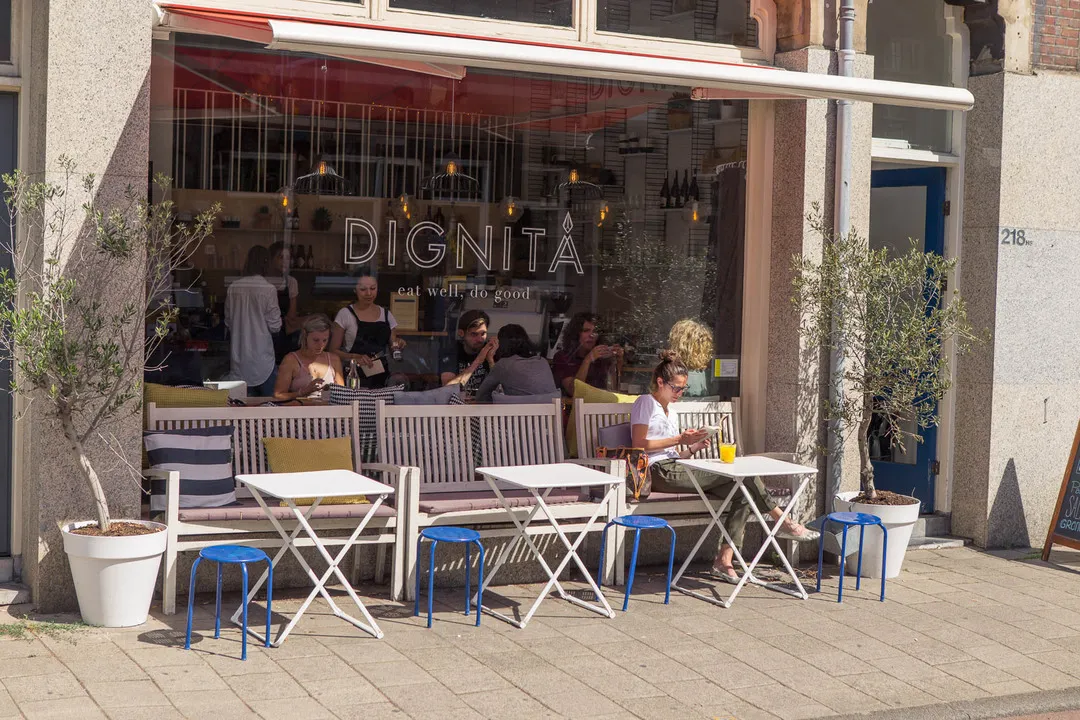

FAIR Finances
Alongside Dignita, Not For Sale Netherlands operates FAIR Finances, a B.V. (Dutch private limited company) established in 2021. FAIR provides accounting and administrative services, extending the social innovation model beyond hospitality into a second vocational track. FAIR is now financially self-sustaining, generating independent revenue while providing trainees with administrative and business skills that complement the culinary and beauty tracks offered through the Dignita Academy.
Why the Netherlands Model Matters
Dignita is proof that the Impact Stack works in reverse. In Peru, Not For Sale moved from direct service (tier one) through research (tier two) and into enterprise (tier three). In the Netherlands, the sequence ran the opposite direction: a commercially viable restaurant concept (tier three) was reverse-engineered to embed direct service (tier one) at its core. The research and business development (tier two) connected the two.
This flexibility is what makes the Impact Stack a model and not just a sequence. It can be deployed in the Amazon or in Amsterdam. It can start with a cooperative or a cafe. What matters is that the enterprise serves the mission, the mission is embedded in the enterprise, and the revenue stays in the system.
Not For Sale is now exploring the possibility of replicating the Dignita model in Eastern Europe, where many of the survivors it serves in Amsterdam originally come from. The goal is not just to train survivors after trafficking. It is to build economic opportunity in the communities that produce the vulnerability in the first place.
Read the people section above for the full picture, because in Amsterdam, training survivors and running a restaurant are the same work.