Central African Republic Gold Mine Collapse: More Than 100 Reported Dead as Zamboye Disaster Exposes a Deeper Mining Crisis
The Zamboye mine collapse is a human tragedy, but evidence surrounding the region points to a deeper intersection between unsafe work, illicit gold, exploitation and environmental destruction.

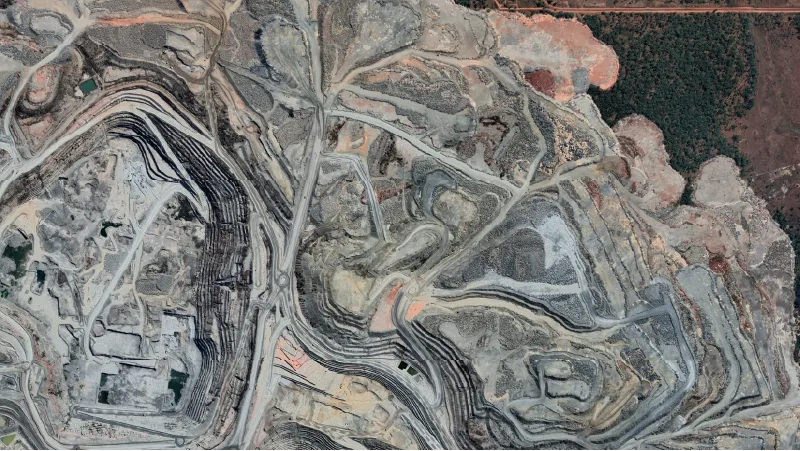
More than 100 people have been reported dead after an artisanal gold mine collapsed at Zamboye in the Central African Republic. As rescuers continue searching the site, conflicting death tolls remain, while earlier UN investigations into the same mining area raise deeper questions about unsafe extraction, illicit gold trading, labor exploitation and environmental damage.
Updated August 20, 2026
More than 100 people have been reported dead following the collapse of an artisanal gold mine at Zamboye in western Central African Republic, close to the border with Cameroon, although the country’s government has so far confirmed a lower official toll. Rescue teams were continuing to recover bodies on Thursday, August 20, two days after underground tunnels collapsed and triggered a landslide at the mining site. Local officials and Red Cross volunteers have told international news organizations that more than 100 people died, while the Central African Republic’s Minister of Mines and Geology, Rufin Benam-Beltoungou, gave an initial government toll of 49 deaths, comprising 34 Central Africans, 13 Cameroonians and two Chadians. The discrepancy means the final number of people killed remains uncertain while recovery operations continue.
The government has temporarily closed the site and prosecutors have opened an investigation into the cause of the collapse, the identity of those operating the mine and whether criminal responsibility may be involved. Yet Zamboye is not simply the location of a catastrophic mining accident. A United Nations Panel of Experts had already documented illicit gold mining in the Zamboye area during 2024 and 2025, reporting armed-group involvement, undeclared cross-border gold movements and chemical-assisted extraction methods that risked contaminating surrounding land and groundwater.
The UN report does not establish that the mine which collapsed this week was one of those specific operations, and there is currently no evidence that the people killed in the collapse were victims of human trafficking or forced labor. Those distinctions are important. What the evidence does show, however, is how one remote gold-producing region can sit at the intersection of dangerous informal labor, limited state oversight, illicit mineral trading, armed actors, environmental degradation and communities with few alternative sources of income. For Not For Sale, that intersection is central to understanding why modern-day slavery and ecocide cannot always be treated as separate problems.
What This Article Covers
- What happened at the Zamboye gold mine in the Central African Republic.
- Why different sources are currently reporting different death tolls.
- What the United Nations had already documented about mining around Zamboye.
- How artisanal gold mining can become connected to forced labor and child exploitation.
- The environmental consequences of poorly regulated gold extraction.
- How illicit gold can move from remote mining sites into international supply chains.
- Why preventing exploitation requires viable economic alternatives as well as enforcement.
Key Takeaways
- More than 100 deaths have been reported by local officials and Red Cross responders following the Zamboye mine collapse, while the Central African government has initially confirmed 49.
- Rescue and recovery work remains ongoing and the final death toll has not yet been established.
- A 2025 UN investigation separately documented illicit gold extraction in the wider Zamboye area involving armed-group activity and undeclared gold movements toward Cameroon.
- The same UN investigation warned that chemical-assisted extraction at those operations could contaminate surrounding land and groundwater.
- There is currently no evidence establishing that the workers killed in this week’s collapse were trafficked or subjected to forced labor.
- Forced labor and child labor in artisanal gold and diamond mining are nevertheless documented problems in the Central African Republic.
- The disaster demonstrates why worker protection, environmental protection, mineral traceability and alternative livelihoods have to be addressed together.
What Happened at the Zamboye Gold Mine?
The disaster occurred on Tuesday, August 18, at an artisanal gold-mining site near Zamboye in Nana-Mambéré prefecture, close to the border with Cameroon. According to authorities quoted by international media, several underground tunnels where miners were working collapsed, causing a landslide that buried workers beneath soil and debris. Heavy rainfall had weakened soils in the wider area, according to the mayor of the nearby Cameroonian town of Garoua-Boulaï, although investigators have not yet established the full sequence of events or whether failures in mine construction, reinforcement or safety management contributed to the scale of the collapse.
Local miners have described a recovery operation struggling with the size and complexity of the site. Workers told the Associated Press that responders lacked some of the specialist equipment and expertise required to reach people buried underground, while Red Cross teams and local volunteers continued to recover bodies. Authorities have yet to determine how many people were working inside the tunnels when they collapsed, which partly explains why reported casualty figures remain inconsistent.
The international makeup of the workforce is already visible among the confirmed dead, with Central African, Cameroonian and Chadian nationals among those identified. This reflects the cross-border nature of the mining economy in western Central African Republic, where workers, traders and minerals can move between communities on either side of the frontier. For many people working in artisanal mining, the attraction is straightforward: gold offers the possibility of income in regions where formal employment is scarce. That does not mean miners are unaware of the dangers. It means the economic alternatives available to them can be extremely limited.
What Is Artisanal Gold Mining?
Artisanal and small-scale mining, often abbreviated to ASM, generally describes mineral extraction carried out by individuals, families, small groups or cooperatives using relatively simple equipment and labor-intensive techniques. It supports millions of livelihoods worldwide and should not automatically be treated as synonymous with illegal mining. Artisanal operations can be legally licensed, formally organized and economically important to communities that have few alternative sources of cash income.
Problems arise when extraction takes place outside effective regulation, workers have little access to safety equipment or employment protections, mineral buyers operate without transparency, armed groups become involved or environmental consequences are left unmanaged. In those conditions, the informality of the sector can make it much harder to determine who is responsible for safety, who owns the material being extracted and whether workers are being fairly paid or protected.
Not For Sale’s Ecocide Terms and Definitions guide explains some of the distinctions between artisanal mining, illegal extraction, conflict minerals, forced labor and environmental destruction. Those distinctions are particularly important in Zamboye because the immediate story concerns people who entered a mine to work and did not return, while the wider story concerns the economic and regulatory conditions surrounding the industry in which that mine existed.
The Warning Signs Around Zamboye Were Already Documented
Some of the most important background to this week’s disaster comes from a United Nations Security Council Panel of Experts report published in June 2025. The Panel investigated natural-resource trafficking in the Central African Republic and documented what it described as illicit mining and gold-trafficking operations in the Zamboye area of Baboua subprefecture, placing the region on the international radar more than a year before the current collapse.
Between approximately September 2024 and early April 2025, the Panel reported that around 13 members of the armed group Retour, réclamation et réhabilitation, commonly known as 3R, had provided perimeter security for illicit mining activities financed by collectors from Burkina Faso. Investigators estimated that the operations they examined were producing approximately 15 kilograms of gold each week. They also reported the use of chemical-assisted extraction methods that presented health risks to miners and could contaminate surrounding land and the water table.
According to the Panel, the gold was not being declared for official export from the Central African Republic. Instead, investigators said it was transported by motorcycle toward Cameroon, passing through Zamboye and then toward Garoua-Boulaï, which the report described as a hub for trafficked Central African gold. In this context, the word trafficking refers to the illicit movement of a commodity, not human trafficking, and the two forms of crime should not be conflated without evidence.
The same UN report recorded that a semi-mechanized artisanal exploitation permit covering two sites had been awarded to Cooperative Minière Douagouzou Fils in October 2024. In April 2025, Central African security forces and Russian instructors reportedly conducted an operation intended to remove armed-group members and miners involved in illicit exploitation from sites in the Zamboye area. None of these findings establishes the ownership, management or legal status of the mine that collapsed in August 2026, and the current investigation must determine that independently. What the evidence does establish is that the wider Zamboye gold economy had already been identified as an environment in which weak traceability, armed actors, illicit mineral flows and environmental hazards were present.
How This Connects to Human Exploitation
There is currently no public evidence showing that the miners killed at Zamboye were trafficked. A dangerous job is not automatically forced labor, poverty is not itself evidence of coercion, and artisanal miners should not be portrayed as passive victims simply because they work in difficult or hazardous conditions. Those distinctions are essential if the article is to accurately describe the situation rather than use trafficking as a catch-all term for every form of economic hardship.
At the same time, the Central African Republic has a documented problem with forced labor and child exploitation within parts of its mining economy. The U.S. Department of State’s 2025 Trafficking in Persons Report says traffickers, including non-state armed groups, exploit children in forced labor in artisanal gold and diamond mines. It also notes that trafficking victims are disproportionately found in remote areas where government presence and access to protection can be limited. The U.S. Department of Labor has separately documented children undertaking hazardous work in gold and diamond mining, including digging, washing ore, carrying heavy loads and processing minerals, sometimes with potential exposure to mercury.
Not For Sale has explored the wider distinction between child labor, hazardous work and exploitation in its reporting on child labor and everyday exploitation. That distinction is relevant here because the underlying conditions matter as much as the labels. Where workers have few viable alternatives, little access to formal employment, limited legal protection and almost no ability to challenge dangerous conditions, their bargaining power is severely reduced. If debt, recruitment fees, undocumented migration, threats, withheld wages or armed intermediaries are added to that environment, precarious work can move into forced labor or trafficking.
Mining, Conflict and Exploitation Across Central Africa
The Zamboye collapse also belongs to a much wider regional story about the relationship between natural resources, conflict, weak governance and economic vulnerability. Across parts of Central Africa, gold, diamonds, cobalt, coltan and other valuable minerals support legitimate livelihoods and contribute to national economies, yet the same resources can become sources of income for armed groups and criminal networks when extraction and trade move outside effective oversight.
Not For Sale has examined this relationship in neighboring Democratic Republic of the Congo, where mining, displacement, forced labor and environmental destruction can overlap within some mineral-producing areas. Its detailed explainer, What Is Happening in Congo? Everything You Need to Know About Goma, Mining, Ebola, Forced Labor and Ecocide, explores how resource extraction can become embedded within a much broader system of insecurity.
The Central African Republic and the Democratic Republic of the Congo have different political histories, different mineral economies and different conflict dynamics, so the two should not be treated as interchangeable. What they demonstrate, however, is a shared supply-chain problem. Minerals extracted in remote regions can pass through numerous buyers, intermediaries and borders before reaching international markets, making the conditions under which they were originally produced increasingly difficult to see.
The Environmental Cost of Informal Gold Extraction
Gold mining begins changing the environment long before the metal reaches a trader, refinery or jewelry counter. Vegetation may be cleared to reach deposits, large volumes of earth and sediment can be moved, riverbanks and waterways may be altered and waste material can accumulate around mining sites. Where mercury, cyanide or other chemicals are used without effective containment and monitoring, contamination can spread through soil and water systems and expose both miners and surrounding communities to longer-term risks.
In the Zamboye area, the UN Panel’s warning was specific. Investigators said the chemical-assisted extraction methods used at the sites they examined could contaminate surrounding land and the water table while also presenting health risks to miners. That matters because environmental damage in a mining region rarely remains separate from the lives of the people living there. Polluted water becomes a human issue when communities rely upon it for drinking, agriculture or fishing, while damaged land becomes an economic issue when it can no longer support farming or other livelihoods.
This connection between ecological damage and economic vulnerability is central to Not For Sale’s work on ecocide. The organization has documented a similar pattern in another gold-producing region in its investigation into illegal gold mining in the Amazon, where mercury pollution, incursions onto Indigenous land, illicit gold flows and labor exploitation can exist within the same extraction economy. The geography and political context are different, but the structural relationship is similar: environmental destruction can remove safer livelihood options, while economic desperation can make dangerous and exploitative work harder to refuse.
Is the Zamboye Collapse an Ecocide Story?
It would be premature to describe the Zamboye mine collapse itself as ecocide. The term concerns severe environmental destruction and is considerably broader than an individual workplace accident, however catastrophic that accident may be. There is not currently enough publicly available information about the environmental footprint of the specific mine that collapsed to determine whether the term could appropriately be applied to its operation.
There is, however, credible evidence that mining in the wider Zamboye area has generated environmental risks. The UN Panel’s findings concerning chemical-assisted extraction and possible contamination of land and groundwater demonstrate why the environmental dimension should form part of any serious investigation into mining in the region. Readers unfamiliar with the concept can find a fuller explanation in Not For Sale’s guide to what ecocide means, including how severe environmental destruction can affect communities whose livelihoods depend directly on healthy ecosystems.
The important point is not to force every mining disaster into an ecocide framework, but to recognize when the same economic system may be placing pressure on both people and the environment. Where workers are exposed to dangerous conditions while extraction simultaneously degrades the land and water that communities rely upon, treating labor protection and environmental protection as completely separate policy problems can obscure the forces driving both.
The System Does Not End at the Mine
One of the most important questions following any illegal or poorly regulated mining disaster is what happens to the material after it leaves the ground. Gold is particularly difficult to trace because it can be melted, combined with material from other sources and resold repeatedly. Once illicit gold enters legitimate trading networks, identifying its original mine can become extremely difficult.
The UN Panel warned in 2025 that weak traceability in the Central African Republic created an ongoing risk that conflict minerals could enter legitimate supply chains. This is why focusing exclusively on the person working inside a mine misses much of the economic structure around extraction. A gold supply chain can involve miners, site owners, cooperatives, local buyers, transporters, exporters, refiners, traders, financial institutions and manufacturers, with responsibility becoming increasingly fragmented as the material moves further from its source.
Not For Sale’s investigation From Illegal Mines to Forced Labor: How Corruption Connects Ecocide and Human Trafficking examines exactly this mechanism, including the role corruption can play in mining permits, inspections, border crossings and the laundering of illegally extracted minerals into legitimate markets. Its wider analysis of human trafficking, environmental destruction and critical minerals also asks what happens when companies further down the supply chain cannot confidently identify where a mineral originated or under what conditions it was extracted.
Who Is Most at Risk?
The people most exposed to unsafe extractive economies are often those with the least ability to refuse dangerous work or absorb the loss of an income. That can include children outside formal education, displaced people, undocumented migrants, young adults with limited employment opportunities and workers recruited across borders. None of these characteristics proves exploitation, but each can reduce the choices available to someone when employment is scarce and state protections are weak.
The international makeup of the Zamboye workforce is therefore relevant without being evidence of trafficking in itself. Confirmed victims include Central African, Cameroonian and Chadian nationals, reflecting the movement of workers across borders in search of income. Previous reporting on the Central African Republic has documented cases in which foreign workers were recruited fraudulently into the mining sector and, in some circumstances, subsequently subjected to forced labor by armed groups. There is no evidence that this describes those killed in the current disaster, but it demonstrates why investigators should look beyond the physical condition of the mine and consider recruitment, contracts, wages, debt, freedom of movement and the role of intermediaries.
Poverty Is Part of the Story, but It Is Not the Whole Explanation
Poverty is often the first explanation offered after disasters in informal economies, and it is clearly part of the picture. People do not normally choose unstable tunnels over safe, secure employment when genuinely equivalent alternatives are available. Yet poverty alone cannot explain why workers die in preventable industrial disasters, nor can it explain why dangerous mining operations can continue without adequate inspection, why minerals cross borders without declaration or why armed actors are able to profit from extraction.
Those are questions of governance, power and incentives. A worker’s need for income may explain why they enter a mine, but it does not explain why the mine lacks appropriate reinforcement or why the economic benefits generated by the resource do not translate into safer working conditions. It also does not explain why environmental damage can be externalized onto communities that receive little of the value created further along the supply chain.
Understanding the difference is important because solutions built only around poverty reduction can miss the systems that allow unsafe extraction to remain profitable. Stronger institutions, traceable supply chains, enforceable labor standards and economic alternatives have to develop together if dangerous mining is to become less attractive to both workers and those who benefit from weak oversight.
What Governments and Institutions Are Doing
Central African authorities have ordered the temporary closure of the Zamboye site while recovery work and the investigation continue. Prosecutors have said they intend to determine why the tunnels collapsed, identify those responsible for operating the site and establish whether criminal liability exists. Those are necessary questions, but they should form only part of the response if the investigation is to explain how the disaster became possible.
Authorities will also need to establish whether the mine was properly licensed, whether required inspections had taken place, whether workers had access to appropriate safety measures and whether environmental safeguards were being followed. The destination of the gold produced at the site will also matter, particularly given previous UN findings concerning undeclared gold movements through the same wider area.
The Central African Republic has made efforts in recent years to formalize mineral production and increase legal exports, but the 2025 UN Panel continued to identify informal and illicit channels that undermine state revenue, traceability and oversight. The challenge is therefore not merely the existence of mining regulations. It is whether the state has the capacity to enforce them consistently in remote regions where mining activity can expand more quickly than inspection, infrastructure and public services.
What Still Needs to Change
The immediate priorities at Zamboye are recovery, medical treatment, identification of those killed and support for affected families. Once that work progresses, the investigation must establish whether the collapse could have been prevented, whether the mine met licensing and safety requirements and who ultimately benefited from the extraction taking place there.
Preventing the next disaster will require a much broader response. Artisanal miners need access to safer mining techniques, geological expertise, equipment and enforceable workplace protections. Children must be kept out of hazardous extraction, cross-border workers need protection from fraudulent recruitment and coercion, and environmental monitoring must reach mining areas far beyond major cities. Buyers and exporters also need stronger traceability systems capable of establishing where gold originated and whether serious labor or environmental abuses occurred at the beginning of the chain.
Most importantly, communities need realistic alternatives to dangerous extraction. Closing an unsafe mine without replacing the income it generated can simply move workers to another unregulated site. A durable response therefore has to reduce both the risks associated with mining and the economic vulnerability that makes those risks acceptable to people who have few other options.
What Not For Sale’s Perspective Adds
Not For Sale’s approach to modern-day slavery begins from the recognition that exploitation cannot be prevented through rescue and enforcement alone. Where people repeatedly enter dangerous or coercive economies because there are no viable alternatives, the conditions that allow exploitation to return remain intact even after an individual operation is closed.
That principle is particularly relevant in extractive regions. If a household depends on high-risk mining because no other income is available, removing a mine does not remove the underlying vulnerability. Another employer, recruiter or illicit industry can occupy the same economic space unless communities have access to safer and more sustainable ways of earning a living.
Not For Sale’s work in Peru provides one example of this prevention-led approach. In communities affected by illegal gold mining and trafficking risk, the emphasis includes developing economic alternatives so that exploitation is not the only viable route to income. The purpose is not to remove agency from miners by describing every person working informally as a victim, but to create conditions in which choosing safe, dignified and environmentally sustainable work becomes realistically possible.
What Readers Can Do
For readers far from Zamboye, the most useful response is not guilt but greater scrutiny of where materials come from and how supply chains operate. Gold enters jewelry, electronics, investment products and financial systems around the world, and consumers, businesses and investors can ask whether companies publish responsible-sourcing policies, whether mineral origins are traceable, how suppliers are audited and what happens when labor or environmental risks are discovered.
It is equally important to use accurate language. Not every artisanal mine is illegal, not every worker in dangerous conditions has been trafficked and not every environmental violation constitutes ecocide. At the same time, when unsafe labor, armed power, untraceable commodities and environmental degradation repeatedly appear in the same places, treating each of those problems as unrelated can make the wider economic system much harder to see.
Supporting organizations focused on survivor protection, education, sustainable livelihoods and prevention can also help reduce the pressures that allow exploitative economies to persist. The goal should be to expand people’s choices, strengthen accountability and make it harder for economic value to be created by transferring risk onto workers and communities with the least power.
The final death toll at Zamboye is still being established, and the discrepancy between the government’s preliminary count and reports from local responders should remain clear until recovery work is complete. Whatever the final number, the disaster is already one of the most serious recent mining tragedies reported in the Central African Republic and demands a thorough investigation into what happened underground.
The more difficult question lies above ground. A year before the collapse, UN investigators were already documenting illicit extraction, armed actors, undeclared gold movements and environmental hazards in the wider Zamboye area. Separate international reporting has documented forced labor and child exploitation within the country’s mining sector. None of those facts proves that every form of harm converged inside the mine that collapsed this week, but together they explain why the investigation cannot stop at the physical failure of a tunnel.
Gold does not become disconnected from the conditions of its extraction when it leaves the mine. The financial incentives, environmental damage and risks carried by workers can travel through the same supply chain even when the metal itself is eventually melted, mixed and made almost impossible to trace back to its origin. Zamboye is therefore not only a story about the moment a mine collapsed. It is also a story about what happens when the systems surrounding extraction remain fragile long enough for risk to become normal.
Frequently Asked Questions
What happened at the Zamboye gold mine?
Several underground tunnels at an artisanal gold-mining site in Zamboye, western Central African Republic, collapsed on August 18, 2026, triggering a landslide and burying miners. Rescue and recovery operations are continuing and investigators have not yet established the full cause of the collapse.
How many people died in the Zamboye mine collapse?
Local officials and Red Cross responders have reported more than 100 deaths, while the Central African Republic’s mines minister has given a preliminary official count of 49. The final death toll remains uncertain while bodies continue to be recovered.
Where is Zamboye?
Zamboye is in Nana-Mambéré prefecture in western Central African Republic, close to the border with Cameroon and the Cameroonian town of Garoua-Boulaï.
What is artisanal gold mining?
Artisanal mining is small-scale mineral extraction generally carried out by individuals, families, groups or cooperatives using relatively simple technology. It can operate legally or illegally depending on licensing, working conditions and national law.
Was the Zamboye mine illegal?
The legal and operating status of the specific mine that collapsed has not yet been conclusively established in public reporting. Prosecutors are investigating who operated the site and whether criminal responsibility is involved.
Is the Zamboye collapse linked to human trafficking?
There is currently no evidence establishing that workers killed in the collapse were victims of human trafficking. Forced labor and child labor in artisanal gold and diamond mining have, however, been documented elsewhere in the Central African Republic.
Did armed groups operate mines around Zamboye?
A 2025 UN Panel of Experts report documented members of the 3R armed group providing security for illicit mining operations in the wider Zamboye area between approximately September 2024 and April 2025. No connection has yet been established between those operations and the mine that collapsed in August 2026.
What environmental problems are associated with gold mining around Zamboye?
UN investigators documented chemical-assisted gold extraction in the wider Zamboye area that they said risked contaminating surrounding land and groundwater while also exposing miners to health hazards.
Is artisanal gold mining linked to child labor in the Central African Republic?
Yes. U.S. government reporting has documented children performing hazardous work in gold and diamond mining and has identified forced labor in mining among the country’s worst forms of child labor.
How can illegal gold enter legitimate supply chains?
Gold can pass through local buyers, transporters, traders, exporters and refiners before being melted or combined with material from other sources. Weak traceability can make its original source increasingly difficult to determine once it reaches international markets.
Why are human exploitation and environmental destruction connected?
The same extractive economy can expose workers to unsafe or coercive conditions while simultaneously damaging land, forests and water systems on which surrounding communities depend. Environmental loss can in turn reduce livelihood options and increase vulnerability to dangerous or exploitative work.
What needs to happen after the Zamboye disaster?
Alongside recovery and accountability, investigators should examine mine safety, licensing, worker protection, environmental impacts and mineral traceability. Longer-term prevention also requires safer employment and livelihood alternatives for communities that currently depend on high-risk artisanal mining.
Sources
Associated Press: Rescuers recover more bodies after Central African Republic mine collapse
https://apnews.com/article/b401a828ab1b66c671dbdde83138e77a
Reuters: Landslide at gold-mining site in Central African Republic kills over 100, mining group says
https://www.reuters.com/world/africa/landslide-gold-mining-site-central-african-republic-kills-over-100-mining-group-2026-08-19/
Radio Ndeke Luka: Central African government gives preliminary toll of 49 deaths
https://www.radiondekeluka.org/104521-drame-au-chantier-minier-de-zamboye-le-gouvernement-centrafricain-avance-un-premier-bilan-de-49-morts
United Nations Security Council: Final Report of the Panel of Experts, S/2025/385
https://documents.un.org/api/symbol/access?l=en&s=S%2F2025%2F385&t=pdf
U.S. Department of State: 2025 Trafficking in Persons Report, Central African Republic
https://www.ecoi.net/en/document/2130537.html
U.S. Department of Labor: 2024 Findings on the Worst Forms of Child Labor, Central African Republic
https://www.ecoi.net/en/document/2131704.html
Topics in this story
See all topicsNot For Sale
A global movement fighting modern-day slavery and ecocide in 33 countries. Building on the frontlines since 2007.