What Is Happening in Congo? Everything You Need to Know About Goma, Mining, Ebola, Forced Labor and Ecocide
Discover the complex intersections of Ebola outbreak mining regions with human trafficking. Learn how these crises impact lives and what actions can be taken.

Most people have heard the word “Congo.” Far fewer understand what is happening in the Democratic Republic of the Congo, or why a city like Goma matters to the rest of the world.
Since January 2025, Goma has been under the control of the armed rebel group M23, after a rapid offensive that transformed daily life in one of eastern DRC’s most important urban centers. Banks have remained closed, livelihoods have been badly damaged, and the cost of ordinary life has risen in a city already shaped by years of war, displacement and insecurity.
For Not For Sale, Congo is not a distant headline. It is a place where our organization’s work on human trafficking, forced labor, ecocide, public health vulnerability and social innovation meets in one geographic reality. In eastern DRC, the same systems that scar the land can also trap people in exploitative labor, force children into armed groups, push families toward dangerous mining work, and weaken the community structures needed to survive an Ebola outbreak.
What This Article Covers
- What has happened in Goma since M23 took control in January 2025.
- Why Congo’s mineral economy is connected to global technology, batteries and the energy transition.
- How forced labor, child recruitment, sexual exploitation and mining economies intersect in eastern DRC.
- Why Ebola outbreaks become harder to contain in areas affected by conflict, displacement and mining-related movement.
- How environmental destruction and modern slavery can operate as one connected system.
- Why Not For Sale’s DRC cooperative model focuses on food security, livelihoods and community resilience.
- What readers can do to support prevention, dignity and practical alternatives in Congo.
Key Takeaways
- M23 took control of Goma in January 2025, creating a profound shift in the city’s political, economic and humanitarian situation.
- Public reporting describes Goma’s banking system as closed or paralyzed, making ordinary commerce and household survival far harder.
- The DRC is central to global critical mineral supply chains, including minerals used in batteries, electronics, electric vehicles and renewable infrastructure.
- UN experts have warned that trafficking in persons in the DRC is linked to armed conflict, forced displacement, child recruitment, sexual exploitation and mining-sector abuse.
- Ebola does not come from mining, but outbreak control is made harder by insecurity, displacement, mining-related population movement and cross-border travel.
- Not For Sale DRC’s cooperative work in Masisi District supports local livelihoods as an alternative to the mining economy and the exploitative systems around it.
- The core question is not only how to respond after exploitation happens, but how to build communities strong enough that traffickers, recruiters and extractive economies lose their opening.
Why This Story Matters Now
Goma is one of the clearest places to see how a local crisis becomes global. It is a city in eastern DRC, close to conflict zones and regional trade routes, but it is also connected to the minerals inside phones, laptops, batteries, electric vehicles and digital infrastructure. The world often describes its future in clean language: renewable energy, artificial intelligence, battery storage, electric mobility and modern communications. But many of the raw materials behind that future come from places where people and ecosystems have carried the cost for decades.
The International Energy Agency reported that demand for key energy minerals continued to grow in 2024, with demand for nickel, cobalt, graphite and rare earths rising by 6 to 8 percent, largely driven by electric vehicles, battery storage, renewables and grid networks. Battery demand in the energy sector reached 1 TWh in 2024, with EV battery demand growing by 25 percent from the year before. That global demand does not cause every abuse in Congo, but it does increase pressure on mineral-rich regions where governance is weak, conflict is persistent and communities have limited economic alternatives.
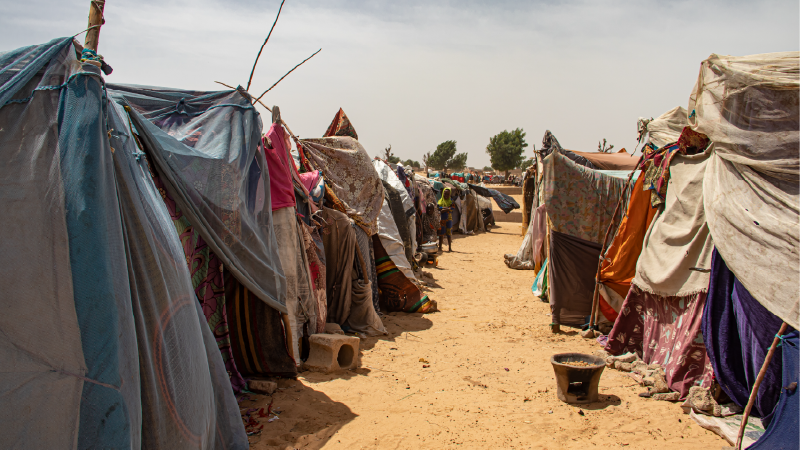
The humanitarian crisis is also immediate. The UN and humanitarian agencies continue to describe the DRC as one of the world’s most severe displacement and protection emergencies, with conflict in the east driving repeated movement, hunger, loss of services and exposure to violence. In January 2025, the UK told the UN Security Council that M23’s advance around Goma had displaced close to one million people in North and South Kivu, while humanitarian routes and hospitals were under severe strain.
The Background: What Is the DRC, and Why Does Goma Matter?
The Democratic Republic of the Congo is a vast Central African country with extraordinary mineral wealth, immense ecological importance and a long history of colonial extraction, armed conflict and political instability. It should not be reduced to war or mining. It is also home to communities, farms, forests, cities, art, enterprise and deep local knowledge. But for readers asking what is happening in Congo, the current crisis cannot be understood without looking at the relationship between land, minerals, conflict and survival.
Goma is the capital of North Kivu province and has long been a humanitarian, commercial and strategic hub in eastern DRC. When M23 declared control of Goma in January 2025, the consequences went beyond a military headline. Public reporting and diplomatic statements described the city’s capture as a turning point, with major disruption to humanitarian access, banking, aviation, commerce and civilian life.
M23, also known as the March 23 Movement, is an armed rebel group operating in eastern DRC. The DRC government and several international actors have accused Rwanda of supporting M23, while Rwanda has denied backing the group. The UN Security Council demanded that M23 stop its offensive and called for external forces in eastern DRC to withdraw.
What Is Happening in Goma Now?
The cleared facts from Not For Sale’s field briefing are simple and severe: M23 took control of Goma in January 2025; banks have been closed and moving money has been difficult ever since; businesses and livelihoods have been badly hit; poverty has risen; and the cost of living remains high in a city divided from government-held systems by fear, suspicion and conflict dynamics.
Public reporting supports the wider picture. Al Jazeera reported in January 2026 that banks remained shut one year after M23 seized Goma, with Congolese officials saying banks could not legally operate in a region controlled by a sanctioned armed group. Le Monde reported in March 2025 that Goma’s economy had ground to a halt after the city was seized, citing the closure of the airport and paralysis of the banking system.
For ordinary people, banking paralysis is not an abstract economic issue. It affects whether a family can access savings, whether a trader can restock goods, whether a worker can be paid, whether a small business can continue, and whether people can plan beyond the next meal. When money cannot move normally, a city becomes poorer even before the full effects of conflict are counted.
This is the setting in which Not For Sale’s team in Goma continues to work. The team was there before the war and remains there now. They have adapted to life under armed-group control and intend to stay unless they have reason to believe they are being targeted. That fact should not be framed as danger tourism. It is a story of belonging. These are people rooted in their own community, continuing their work in conditions that make ordinary service extraordinarily difficult.
The One Crime Scene: Land, Labor and Extraction
Eastern DRC is one of the clearest places on earth where environmental destruction and modern-day slavery can share the same crime scene. This does not mean every mine is identical, or that every supply chain actor commits the same harm. It means the underlying system is connected: mineral demand, armed conflict, weak governance, environmental damage, displacement, exploitative labor and trafficking risk often reinforce one another.
The DRC’s national extraction economy includes cobalt and copper, which are especially concentrated in the south, and eastern conflict minerals such as gold, tin, tantalum and tungsten. The OECD and UN have long identified artisanal and small-scale mining of tin, tantalum, tungsten and gold in eastern DRC as connected to violent conflict, while human rights groups have documented serious abuses linked to cobalt and copper mining in the country’s southern mining belt.
This distinction matters. Goma is not simply “a cobalt city.” It is a strategic eastern city in a broader Congolese system of conflict, displacement and mineral extraction. But the through-line is real: global demand for minerals shapes the political economy of the DRC, and communities in mineral-rich or conflict-affected areas often pay the highest price.
Amnesty International has reported that industrial cobalt and copper mining expansion in the DRC has led to forced evictions and serious human rights abuses, while recognizing that rechargeable batteries are important to the energy transition. The problem is not the idea of clean technology. The problem is a transition that repeats old extraction patterns while calling itself clean.
How This Connects to Human Trafficking and Modern Slavery
Human trafficking in conflict zones is rarely a single event. It is often a process of vulnerability becoming control. A family loses land, income or protection. A child is separated from school. A young person is recruited by force or deception. A woman or girl is coerced into sexual exploitation near armed actors, displacement sites or mining economies. A miner is trapped by debt, threat or lack of alternatives. The visible abuse begins long after the conditions have been created.
In July 2025, the UN Special Rapporteur on trafficking in persons warned that conflict-related trafficking of children by armed groups in the DRC persisted at alarming levels. She also stated that trafficking was being used by armed groups to control, terrorize and displace communities, and raised concern about trafficking of children in the mining sector, forced labor, sexual exploitation around mining sites, and the role of illicit mineral exploitation in fueling conflict and vulnerability.
The U.S. State Department’s 2025 Trafficking in Persons reporting also identified labor trafficking, forced labor and the worst forms of child labor as prevalent in provinces with mining activity. The picture is consistent across multiple sources: armed conflict, poverty, weak enforcement, displacement and mining economies create conditions in which traffickers and armed groups can recruit, coerce and exploit people.
That is why Not For Sale’s DRC work is not only about what happens after a person has been exploited. It is about reducing the conditions that make exploitation easier in the first place.
How This Connects to Ebola and Public Health
Ebola is a viral disease. It is not caused by mining, trafficking or poverty. WHO explains that Ebola spreads through contact with bodily fluids of someone who is sick with or has died from Ebola, and can also pass to humans through contact with infected animals or contaminated objects.
But disease outbreaks do not happen in a social vacuum. The 2026 Ebola outbreak in DRC and Uganda, caused by Bundibugyo virus, is occurring in areas affected by insecurity, displacement, mining-related population movement and cross-border travel. The CDC has warned that those conditions may increase the risk of further transmission.
UNICEF has also warned that children and adolescents in eastern DRC face rising risks from Ebola and the breakdown of essential services, with insecurity and restricted access constraining surveillance and contact tracing. The agency has emphasized that years of conflict and mass displacement have already exposed children to violence, exploitation and other protection risks.
This is the nexus Not For Sale has been trying to explain in its recent DRC reporting: Ebola does not create human trafficking by itself, and mining does not automatically create Ebola. But conflict, displacement, mining-related movement, weakened health systems and poverty can combine in ways that make both disease control and exploitation prevention harder.
How This Connects to Ecocide and Environmental Harm
Ecocide is commonly used to describe severe or widespread environmental destruction. In Not For Sale’s framework, ecocide matters because environmental collapse is also a human vulnerability issue. When forests are cleared, water is polluted, land is degraded and farms become less viable, people lose the livelihoods that protect them from exploitative work.
In the DRC, mining-related environmental harm has been documented across different regions and mineral systems. Amnesty International has reported forced evictions linked to cobalt and copper mine expansion, while Not For Sale’s own DRC project page identifies toxic pollution, deforestation, water contamination and the collapse of traditional livelihoods as part of the wider extraction crisis facing communities.
This is why the language of “clean energy” can become morally incomplete. A battery may help reduce fossil fuel use, but if the minerals inside it are tied to poisoned water, forced eviction, child labor or armed conflict, the transition has not solved the ethical problem. It has moved part of the cost somewhere else.
Who Is Most at Risk?
The people most at risk in eastern DRC are not vulnerable because of who they are. They are made vulnerable by the systems around them. Those systems include conflict, displacement, poverty, loss of income, lack of documentation, interrupted schooling, gender inequality, weak law enforcement, armed recruitment, food insecurity and the collapse of ordinary services.
Children face particular risks. UN experts have warned of child recruitment and use by armed groups, child labor, forced marriage, sexual exploitation and trafficking in conflict settings. UNICEF has also warned that infectious disease outbreaks can increase risks of violence, including sexual violence against women and girls, and can cut children off from health care, education, water, sanitation and protection services.
Women and girls face heightened risks around displacement, conflict-related sexual violence and exploitation near mining sites. Men and boys may face forced recruitment, hazardous mining work, coercive labor or pressure to join armed groups when legal livelihoods disappear. Families displaced multiple times may have few safe choices left.
The Systems Behind the Harm
The harm in eastern DRC is not only the result of individual bad actors. It is produced by overlapping systems.
One system is armed conflict. When armed groups take territory, people lose access to state protection, stable markets, banking, schools, health services and legal recourse. The UN Security Council’s January 2025 statement demanding that M23 halt its offensive and that external forces withdraw showed how quickly the Goma crisis had become a regional and international concern.
A second system is global mineral demand. The world wants batteries, phones, energy storage, electric vehicles and digital infrastructure. The IEA’s reporting shows that energy applications are now a major driver of mineral demand growth. But demand can become dangerous when it is not matched by enforceable standards, transparent supply chains and community protection at the point of extraction.
A third system is poverty and lost livelihood. When people cannot earn safely from land, trade, farming, education or formal employment, recruiters and traffickers gain leverage. In that sense, hunger is not only a humanitarian issue. It is also a protection issue.
A fourth system is environmental degradation. When land and water are damaged, communities lose the ecological foundation of survival. That is why Not For Sale treats environmental protection as part of anti-trafficking work, not a separate cause.
The Human Impact
The human impact of this crisis is easiest to misunderstand when it is described only in numbers. A closed bank is a family unable to access savings. A paralyzed market is a trader losing stock. A blocked route is a patient unable to reach care. A collapsed livelihood is a child leaving school. A displaced household is not only moving away from danger, but also away from land, neighbors, documents, income and protection.
Not For Sale’s field account centers on a simple fact: the team in Goma stayed. They were there before the war and remain there now, adapting their work in a city under armed-group control. The point is not to dramatize danger. The point is that prevention work must be rooted in the places where vulnerability is being produced.
That is also why cooperatives matter. A cooperative does not end a war. It does not replace the state. It does not solve global mineral demand. But it can help create a local economy in which people have food, income, relationships, savings, skills and a reason to remain outside the mine and the militia.
What Governments and Institutions Are Doing
International institutions have focused on ceasefires, humanitarian access, peacekeeping, sanctions, public health response and trafficking accountability. The UN Security Council demanded that M23 stop its offensive in January 2025 and called for external forces to withdraw. UN agencies and humanitarian organizations have continued to warn about displacement, protection risks and constrained access in eastern DRC.
On trafficking, the UN Special Rapporteur has called for urgent action to combat trafficking, strengthen accountability, protect children and address the root causes of conflict, including illegal exploitation of resources and impunity. She also warned that reduced humanitarian and development funding had tangible consequences for service provision and early warning systems.
On Ebola, WHO, CDC, UNICEF, Africa CDC and national health authorities have been supporting surveillance, contact tracing, infection prevention, community engagement and care. ECDC reported that, as of 2 July 2026, the Ebola outbreak caused by Bundibugyo virus was affecting DRC and Uganda, with Ituri the most affected province in DRC and cases also reported in North Kivu and South Kivu.
These responses are essential. But they remain largely reactive. They respond after a city falls, after a child is recruited, after a disease spreads, after a family is displaced, after land is damaged. The prevention question is harder: what would make communities resilient enough before the next shock?
What Still Needs to Change
First, humanitarian access must be protected. Communities cannot survive conflict, disease and hunger if aid workers cannot reach them safely and consistently.
Second, anti-trafficking work must be treated as part of peacebuilding. Recruitment of children, forced labor, sexual exploitation and exploitation around mines are not side effects. They are central features of how conflict economies operate.
Third, mineral supply chains need deeper accountability. Certification and due diligence systems are not enough if communities at the point of extraction still face eviction, child labor, forced labor, pollution or armed control.
Fourth, the energy transition must be judged by its human rights record, not only by its carbon promise. The world cannot build a cleaner future by hiding coercion and ecological destruction at the start of the supply chain.
Fifth, local economic alternatives need long-term support. Food security, cooperatives, reforestation, savings groups and community-led livelihoods may sound less dramatic than emergency response, but they address the conditions that traffickers and armed groups exploit.
What Not For Sale’s Perspective Adds
Not For Sale’s perspective begins with prevention. The organization’s work in DRC is built around a simple idea: if people have dignified local livelihoods, food security and community resilience, they are less vulnerable to recruitment, trafficking and exploitative mining economies.
In Masisi District, eastern DRC, Not For Sale’s 2025 annual impact reporting states that 877 cooperative members received training in modern farming techniques and financial literacy, along with tools and seed capital to improve food security and income stability. The organization’s DRC project page describes this cooperative work as an agricultural alternative to the mining economy that traps people in cycles of conflict, displacement and forced labor.
This is not charity as a slogan. It is a counter-model. The mine and the militia offer one kind of economy: extractive, unstable, coercive and violent. Cooperatives offer another: rooted, local, regenerative and shared. The work is not a substitute for justice, peace or supply-chain reform. It is a practical form of prevention while those larger systems remain broken.
Our CEO Mark Wrexler sat down with Ntakamaze Nziyonvira, known as TK, Director of Not For Sale, DRC, to speak about how this work directly impacts local communities on the ground. You can read their full conversation here.
What Readers Can Do
Readers should begin by refusing the easy distance that often surrounds Congo. This is not only “their” crisis. The minerals beneath Congolese soil are tied to global technology, energy systems, consumer products and political choices. The question is not whether the world is connected to Congo. It already is.
Readers can learn the difference between the Democratic Republic of the Congo and the Republic of the Congo, follow credible reporting from UN agencies and reputable journalists like Not For Sale, ask companies harder questions about mineral sourcing, support survivor-centered and prevention-focused organizations, and avoid sharing misinformation about conflict or disease.
Readers can also support Not For Sale DRC’s cooperative work. The purpose is not to replace public institutions or international accountability. It is to help communities build food security, income and resilience in the places where exploitation is most likely to take root.
Monday Morning Question
What would it take for the world to stop treating Congo as a place to extract from, and start treating it as a place where people, land and future all have equal claim?
Goma answers that question with unusual clarity. The city shows how conflict, banking collapse, mineral demand, disease risk, forced labor and environmental harm can meet in one place. It also shows why staying matters. Not as a gesture, and not as a slogan, but as a long commitment to people who are not waiting for the world to notice them before they begin rebuilding.
Support Not For Sale’s work in the Democratic Republic of the Congo and help strengthen the local alternatives that reduce vulnerability to trafficking, forced labor and exploitative mining economies.
FAQ
What is happening in Congo right now?
The Democratic Republic of the Congo is facing overlapping crises, especially in the east: armed conflict, displacement, poverty, mining-linked exploitation, public health emergencies and environmental harm. In Goma, M23 took control in January 2025, and public reporting describes major disruption to banks, transport, livelihoods and humanitarian access.
What happened in Goma?
M23 took control of Goma in January 2025 after a rapid offensive in eastern DRC. The city’s banking system has remained closed or paralyzed, businesses have been badly affected, and residents have faced rising hardship under armed-group control.
Who are M23?
M23, or the March 23 Movement, is an armed rebel group operating in eastern DRC. The DRC and several international actors have accused Rwanda of supporting M23, while Rwanda denies backing the group. In January 2025, the UN Security Council demanded that M23 stop its offensive and called for external forces in eastern DRC to withdraw.
How is Congo linked to human trafficking?
Conflict, displacement, poverty, weak enforcement and mining economies create conditions in which people can be recruited, coerced or exploited. UN experts have warned of child trafficking by armed groups, forced labor in mining, sexual exploitation around mining sites and the use of trafficking to control and displace communities.
How is mining linked to forced labor in the DRC?
Mining can create trafficking risk when workers lack safe alternatives, regulation is weak, armed groups influence territory, or children and displaced people are pushed into hazardous labor. UN experts and human rights organizations have documented forced labor, child labor and exploitation in parts of the DRC’s mining economy.
Is Ebola caused by mining?
No. Ebola is caused by viruses and spreads through direct contact with bodily fluids from someone who is sick with or has died from Ebola, or through contact with infected animals or contaminated objects. However, outbreak control can become harder in areas affected by insecurity, displacement, mining-related population movement and cross-border travel.
How does Ebola connect to trafficking risk?
Ebola outbreaks can disrupt schools, health services, income, caregiving and community trust. Those disruptions can increase vulnerability to violence, exploitation and trafficking, especially for children, women and displaced people. UNICEF has warned that children in eastern DRC face risks not only from Ebola itself, but from the breakdown of essential services and protection systems.
What does ecocide mean in this context?
In this context, ecocide refers to severe environmental destruction, including deforestation, pollution, water contamination and ecosystem collapse. Not For Sale uses the term to explain how environmental harm can destroy livelihoods and increase vulnerability to forced labor, trafficking and displacement.
Why does Not For Sale work in DRC?
Not For Sale works in DRC because the country shows the connection between modern slavery, forced labor, ecocide, public health vulnerability and extractive supply chains. Its DRC program focuses on cooperatives, food security, reforestation and local livelihoods as practical alternatives to the mining economy.
What is Not For Sale DRC doing?
Not For Sale DRC supports cooperative members with agricultural training, financial literacy, farming tools and seed capital. In Masisi District, eastern DRC, the 2025 annual impact report states that 877 cooperative members received support to improve food security and income stability.
Why do cooperatives matter in anti-trafficking work?
Cooperatives matter because they create local income, food security, shared savings, practical skills and community stability. Those conditions reduce vulnerability to recruiters, traffickers and exploitative labor markets.
What can readers do to help Congo?
Readers can share verified information, support survivor-centered and prevention-focused organizations, ask companies about mineral sourcing, learn how trafficking and ecocide connect, and support Not For Sale DRC’s cooperative work.
Sources
https://www.cdc.gov/han/php/notices/han00530.html
https://www.ecdc.europa.eu/en/ebola-outbreak-democratic-republic-congo-and-uganda
https://www.who.int/emergencies/disease-outbreak-news/item/2025-DON589
https://www.iea.org/reports/global-critical-minerals-outlook-2025/executive-summary
https://www.iea.org/reports/global-ev-outlook-2025/electric-vehicle-batteries
Not For Sale
Related Articles