Amazon Illegal Gold Mining: The Ecocide Crisis Behind Brazil’s Ghost Gold Permits
Illegal gold mining in the Amazon is exposing how environmental destruction, Indigenous land invasions, mercury pollution and forced labour risks can be hidden behind the global gold trade.

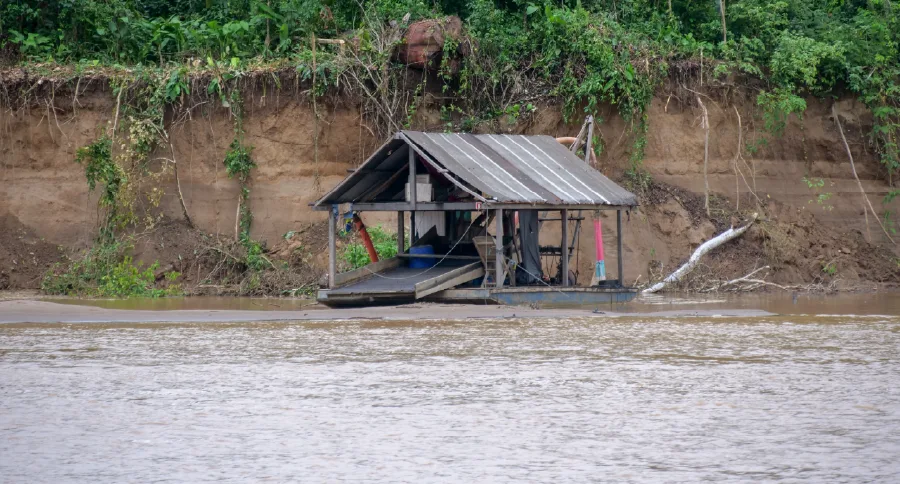
Illegal gold mining in the Amazon has become one of the clearest examples of how environmental destruction, organised crime and human exploitation can reinforce one another. The latest evidence suggests that Brazil’s crackdown has reduced mining in some high-profile areas, including parts of Yanomami territory, but has not stopped the wider illegal gold economy. A Greenpeace Brazil investigation reported by Reuters found that so-called “ghost permits” were used to justify the sale of 26.8 metric tonnes of gold, worth an estimated $3.88 billion, between 2018 and March 2026.
The story matters because the damage is not confined to forest loss. Illegal gold mining, known in Brazil as garimpo, is linked to mercury contamination, Indigenous land invasions, organised criminal networks, weak supply-chain controls and documented risks of trafficking for forced labour. UNODC has reported that in the Tapajós region of Pará, as many as 40 percent of gold miners may be victims of human trafficking for forced labour.
What This Article Covers
- Why illegal gold mining in the Amazon is back in the global spotlight.
- How “ghost permits” can be used to launder illegally mined gold into legal markets.
- Why Amazon illegal gold mining is an ecocide concern, even where ecocide is not yet charged as an international crime.
- How illegal mining connects to human trafficking, forced labour and modern slavery.
- Why Indigenous territories, rivers and forest communities are at particular risk.
- What Brazil, UNODC, INTERPOL and civil society are doing in response.
- What still needs to change in gold traceability, enforcement, survivor protection and environmental accountability.
Key Takeaways
- Reuters reported that Greenpeace found ghost permits were used to justify the sale of 26.8 metric tonnes of gold worth around $3.88 billion between 2018 and March 2026.
- Greenpeace Brazil’s report argues that gaps in Brazil’s Garimpo Permit system allow illegal gold from Indigenous lands and conservation areas to enter legal supply chains.
- Amazon Conservation and Instituto Socioambiental data cited by AP found around 223,000 hectares of mining-related deforestation in the Brazilian Amazon since 2018, with 80 percent carrying a high risk of illegality.
- Illegal gold mining is especially damaging because it often targets Indigenous territories and protected areas, including Kayapó, Munduruku and Yanomami lands.
- UNODC has found serious trafficking and forced labour risks in the Amazon gold sector, especially in the Tapajós Basin.
- Brazil has intensified enforcement, including a Yanomami response that the federal government says reduced consolidated illegal mining sites by 91 percent by early 2025.
- Enforcement alone is not enough unless gold laundering, mercury trafficking, corruption, poverty and organised crime networks are addressed together.
Why This Story Matters Now
The Amazon illegal gold mining crisis is urgent because the industry has adapted to enforcement rather than disappearing. President Luiz Inácio Lula da Silva pledged in 2023 to eliminate illegal gold mining from Indigenous lands and protected areas, and Brazil’s Federal Police seized a record 447 kilograms of illegally mined gold in 2025, according to Reuters. Yet the Greenpeace investigation found that miners have continued to exploit regulatory gaps by using permits from areas with no visible mining activity to falsify the origin of gold.
The scale of the alleged laundering is significant. Greenpeace analysed 187 forest areas with mining permits issued near Indigenous lands and protected areas, and found that 98 showed no signs of mining. Reuters reported that those ghost permits were nevertheless used to justify the sale of 26.8 metric tonnes of gold between 2018 and March 2026.
This is not only a Brazilian story. Gold is a global commodity. It moves through buyers, traders, refiners, financial institutions, jewellery brands, investment markets and central-bank demand. Greenpeace argues that weak traceability allows gold stolen from Indigenous lands and conservation areas to be incorporated into national and international markets as if it were clean.
It is also a human rights story. UNODC’s work in the Tapajós Basin describes miners living with debt bondage, health problems, internal migration and conditions that may amount to trafficking for forced labour. The same illegal economy that destroys rivers and forest can also exploit people who enter mining sites because poverty, lack of alternatives and local dependency leave them with few safe options.
The Background
The Brazilian term garimpo usually refers to small-scale or informal mining, often associated with gold extraction. In the Amazon, however, much of what is described as small-scale mining is now highly mechanised, capital-intensive and connected to organised criminal networks. Hydraulic excavators, dredges, airstrips, fuel chains, armed protection and financial intermediaries can turn what appears to be local mining into a transnational environmental crime economy.
Gold mining damages the Amazon in several ways. Forest is cleared to open pits and access roads. Riverbeds are dredged. Sediment is released into waterways. Mercury is used to bind gold particles, then enters rivers and food chains. AP reported that illegal mining operations dump mercury into rivers, where it accumulates in fish consumed by riverine and Indigenous communities. A report cited by AP found that 21.3 percent of fish sold in public markets across the Amazon exceeded World Health Organization mercury limits.
The Amazon matters globally because it stores carbon, regulates rainfall, supports biodiversity and sustains Indigenous and traditional communities. Mining is not the largest driver of Amazon deforestation, which is still heavily linked to agribusiness and land clearing, but it is particularly destructive because it often concentrates inside protected areas and Indigenous territories. AP cited Amazon Conservation’s Matt Finer saying mining is especially problematic because it targets those territories.
The word ecocide is increasingly used to describe severe environmental destruction. A 2021 Independent Expert Panel proposed defining ecocide as unlawful or wanton acts committed with knowledge that there is a substantial likelihood of severe and either widespread or long-term environmental damage. The Rome Statute has not yet adopted ecocide as an international crime, although Vanuatu, Fiji and Samoa formally submitted a proposed amendment in 2024. For that reason, this article uses ecocide as an analytical and moral frame for severe environmental harm, not as a claim that specific Amazon mining cases have already been legally prosecuted as ecocide.
What Is Happening
The latest Greenpeace and Reuters findings point to a specific mechanism: the use of legal paperwork to disguise illegal extraction. In Brazil, Garimpo Permits, known as Permissão de Lavra Garimpeira or PLGs, were intended to regulate artisanal mining. Greenpeace argues that the system can be misused because permits may be granted without reliable geological surveys, while reported production relies heavily on self-declared estimates.
Greenpeace’s report says PLGs are being used to launder illegally mined gold, and that the absence of a robust traceability system allows gold extracted from Indigenous lands and conservation areas to be given a legitimate front. In simple terms, gold may be mined in a prohibited area, then attached on paper to a permitted area where little or no mining appears to be taking place.
Reuters tested part of this claim on the ground. Journalists flew over two permitted areas in the Greenpeace dataset and reported that despite paperwork indicating large surface-mining output, no mining activity was visible. Six minutes away by air, they observed a large active illegal operation inside a protected area.
The Brazilian National Mining Agency, ANM, told Reuters that it was monitoring the permits Greenpeace denounced and said the Amazon presents major logistical and oversight challenges because of the number of permits and the scale of the region. That explanation is credible in one sense: the Amazon is vast, remote and difficult to monitor. But it also shows why paperwork-based systems can fail when the commodity is high value, the enforcement area is huge and criminal networks are able to adapt.
How This Connects to Human Trafficking, Modern Slavery and Exploitation
Illegal gold mining in the Amazon is not only an environmental crime. It is also a labour exploitation risk.
UNODC’s Brazil work in the Tapajós Basin found that as many as 40 percent of gold miners in the region may be victims of human trafficking for forced labour. The agency describes miners who face internal migration, estrangement from family, debt bondage, health problems and a persistent belief that a better gold strike is still possible.
The trafficking mechanisms can include deceptive recruitment, debt bondage, isolation in remote mining areas, dependence on mine-site stores, inflated costs for food or tools, withheld pay and threats linked to leaving. Evidence is incomplete because illegal mining is hard to access safely, but the pattern described by UNODC is consistent with broader forced labour indicators: vulnerability, dependency, debt, restricted movement and exploitation by people who control the worksite and the route out.
Women and girls can also face exploitation around illegal mining economies, including sexual exploitation, although the precise scale varies by territory and is often underreported. The safest way to frame this is not to claim that every mining site involves trafficking, but to recognise that illegal mining settlements can create conditions where labour exploitation, sexual exploitation, violence and coercion become more likely.
The key point is structural. People do not enter dangerous mining economies only because they choose illegality. Many are pushed by poverty, lack of land, poor access to services, debt, unemployment and the absence of viable economic alternatives. Greenpeace’s report itself links garimpo with poverty and argues that ending illegal mining requires not only tighter regulation, but also a shift toward economic activities that can coexist with the forest and respect human rights.
How This Connects to Ecocide and Environmental Harm
Amazon illegal gold mining fits the public understanding of ecocide because it causes severe harm to ecosystems, water systems and communities, particularly where mining invades Indigenous territories and conservation areas. The legal status of ecocide is still developing, but the environmental pattern is clear: forest is stripped, rivers are polluted, fish are contaminated, biodiversity is disrupted and traditional ways of life are undermined.
The damage is cumulative. AP reported that approximately 496,000 hectares of rainforest have been cleared for mining across the Amazon since 2018, including about 223,000 hectares in the Brazilian Amazon. Amazon Conservation estimated that 80 percent of mining-related deforestation in Brazil carries a high risk of illegality.
A 2024 Nature Communications study found that garimpo mining area in Brazil increased by around 1,200 percent between 1985 and 2022, with more than 91 percent concentrated in the Amazon. It also found that at least 77 percent of 2022 extraction sites showed explicit signs of illegality.
Mercury makes the harm longer lasting. It does not stop at the mining pit. It travels through rivers, sediments and fish, then enters human bodies through food. AP reported that children aged 2 to 4 were consuming mercury at levels up to 31 times higher than recommended maximum levels, according to a Fiocruz study cited in a report submitted to the Inter-American Commission on Human Rights.
Who Is Most at Risk
Indigenous communities are among those most exposed to the harm. Kayapó, Munduruku and Yanomami territories have repeatedly appeared in reporting, scientific studies and monitoring work because illegal mining affects land, rivers, food sources, health and community security. Reuters reported that researchers and investigators believe much of the gold backed by ghost permits may come from protected areas and Indigenous lands, including Kayapó territory in Pará.
Riverine communities are also at risk because mercury contamination spreads through fish and waterways. People who rely on river fish for food security may face exposure even if they are not directly involved in mining. The impact is not only medical. Contaminated rivers can damage culture, food sovereignty, livelihoods and spiritual relationships with land and water.
Miners themselves can be at risk of trafficking and forced labour. UNODC’s Tapajós work shows that miners may be trapped in cycles of debt, poor health and economic dependency. These workers should not be treated only as environmental offenders. Some may be exploited by financiers, equipment owners, recruiters, land controllers and criminal groups that profit far more than the labourers at the bottom of the chain.
Children and young people are also vulnerable. Mining economies can disrupt schooling, increase exposure to violence, draw adolescents into dangerous work and create markets around sexual exploitation. The evidence varies by location, but the risk factors are well established: poverty, isolation, weak state presence, armed actors and a cash economy built around illegal extraction.
The Systems Behind the Harm
The Amazon illegal gold economy survives because several systems fail at once.
First, the supply-chain system is weak. Gold is easy to melt, divide, mix and move. Once it enters formal channels with paperwork attached, it becomes difficult to prove origin without strong traceability. Greenpeace argues that PLGs can operate as a laundering tool because production declarations are not adequately verified against geological data, satellite evidence and site inspections.
Second, enforcement is uneven. Brazil has shown that enforcement can work when it is sustained and coordinated. MAAP and Instituto Socioambiental data show that new illegal mining deforestation in Yanomami Indigenous Territory fell sharply after the Brazilian government began removing miners in 2023, with 45 hectares of new mining deforestation recorded in 2025 compared with a peak of nearly 1,800 hectares in 2022. But that success also shows the risk of displacement. Mining can fragment, move across borders or intensify in other areas.
Third, organised crime is embedded in the trade. AP reported that illegal gold mining is financed by major Brazilian criminal organisations, including Red Command and the First Capital Command, according to a federal prosecutor investigating illegal mining in the western Brazilian Amazon. The Global Initiative Against Transnational Organized Crime has also described illegal gold mining as one of the most pervasive criminal markets in the Amazon, increasingly tied to broader illicit economies, including drug trafficking, arms smuggling and human exploitation.
Fourth, poverty and underdevelopment keep people inside the system. If communities near mining corridors do not have safe livelihoods, functioning public services, infrastructure, healthcare and market access for forest-compatible economies, illegal gold can become one of the few available sources of income. That does not justify the harm, but it helps explain why raids alone rarely solve it.
The Human Impact
The human impact of Amazon illegal gold mining is lived through bodies, rivers and land.
For Indigenous communities, the damage can mean poisoned fish, fear of armed miners, loss of hunting and fishing grounds, sexual violence risks, disease transmission, intimidation of leaders and the erosion of territorial control. Kayapó chief Megaron Txucarramae told Reuters that illegal mining destroys land, pollutes rivers and leaves Indigenous people eating poisoned fish without realising it.
For miners, the harm can include injuries, illness, debt, dangerous working conditions, exploitative recruitment and being trapped in remote sites with no safe way out. UNODC’s account of trafficked miners in the Tapajós region describes people drawn by the hope of gold, but left in cycles of debt, illness and dependency.
For the wider Amazon, the harm is ecological and intergenerational. Mercury contamination can persist. Forest scars can remain. River systems can be altered. Wildlife habitats can be broken. Trust between communities and institutions can be damaged when enforcement is sporadic or when illegal miners return after operations end.
The people most responsible for the system are usually not the poorest miners. They are the financiers, organisers, permit abusers, gold buyers, logistics providers, corrupt officials, armed protectors and laundering networks that turn environmental destruction into profit.
What Governments and Institutions Are Doing
Brazil has taken visible action. The federal government says that in Yanomami territory, integrated action over two years included 3,536 security operations in 2024, more than 114,000 food baskets distributed over two years, a 91 percent reduction in consolidated illegal mining sites and a 95.76 percent reduction in new illegal sites.
Brazil has also relaunched its Action Plan for Deforestation Prevention and Control in the Legal Amazon, known as PPCDAm. The government reported that deforestation in the Amazon fell by 45.7 percent in 2024 compared with 2022, while acknowledging that the goal of zero deforestation by 2030 will require continuity and collective commitment.
INTERPOL has supported major enforcement operations. In November 2025, it reported that Brazilian authorities disabled 277 dredges used in illegal gold extraction along the Madeira River, with an estimated economic impact of about $193 million when equipment losses, recent extraction, environmental and social damages and disrupted profits were included. INTERPOL emphasised that intelligence from the operation was important for dismantling financial and logistical networks, not only targeting vulnerable workers.
UNODC is supporting Brazil through the AURUM project, which aims to strengthen institutional responses to illegal mining and mercury trafficking. The project focuses on analysis of criminal networks, interinstitutional cooperation, capacity building and technical assistance, including mercury traceability.
These actions matter. But the persistence of ghost permits, mercury contamination and mining displacement shows that enforcement is still not keeping pace with the financial incentives behind illegal gold.
What Still Needs to Change
The first gap is traceability. Gold should not be able to move from a prohibited mining site into legal markets through paperwork alone. Brazil needs stronger production verification, geological data, satellite monitoring, site inspections, digital traceability and accountability for buyers who accept suspicious origin claims.
The second gap is enforcement against the top of the chain. Destroying dredges and camps may disrupt operations, but the highest profits sit with financiers, buyers, laundering networks, corrupt intermediaries and criminal organisations. Investigations must follow money, fuel, mercury, machinery and gold purchase records.
The third gap is survivor and worker protection. If miners are victims of trafficking or forced labour, they need identification, assistance, healthcare, labour rights protection and safe alternatives. Treating exploited miners only as offenders can leave the organisers untouched.
The fourth gap is mercury control. Illegal mining cannot operate at scale without mercury supply chains. UNODC’s AURUM project recognises the importance of mercury traceability, but this needs stronger regional enforcement because mercury trafficking crosses borders.
The fifth gap is economic transition. Greenpeace’s report argues that ending illegal garimpo requires economic activities that coexist with the forest, respect human rights and overcome poverty. Without that, illegal mining will continue to recruit workers and divide communities.
What Not For Sale’s Perspective Adds
Not For Sale’s perspective is that modern slavery and ecocide often grow from the same conditions: weak protection, poverty, extractive economies, corruption, forced migration, criminal control and the treatment of people and ecosystems as disposable.
Amazon illegal gold mining shows why environmental justice and anti-trafficking work cannot be separated. A poisoned river is not only an environmental loss. It is a loss of food, health, culture and safety. A miner trapped in debt is not only part of an illegal economy. They may also be a person exploited by a system that profits from vulnerability.
The response must be practical. That means prevention, survivor dignity, frontline knowledge, community-led alternatives, stronger enforcement against criminal organisers and supply chains that cannot hide destruction behind paperwork.
Not For Sale does not need to be the hero of this story. The centre of the story is the evidence, the forest, the rivers and the people whose lives are shaped by a gold economy they did not design.
What Readers Can Do
Readers can start by asking better questions about gold. Where does it come from? Is it traceable? Does the brand, bank or trader provide meaningful evidence of origin, or only broad ethical claims? Gold is not automatically clean because it appears in a legal market.
Readers can also support organisations that work with Indigenous communities, survivor-centred anti-trafficking groups and environmental defenders. The most effective responses are not only about awareness. They are about protection, legal support, safe livelihoods, health monitoring and accountability.
Journalists, designers, investors, jewellery buyers and communications teams can avoid romanticising gold without acknowledging its risks. The story behind a ring, watch, investment product or luxury object may begin far from the shopfront, in a river system where mercury, violence and exploitation are hidden from view.
Finally, readers can share verified information. Illegal mining thrives in complexity. Clear public understanding makes it harder for governments, buyers and companies to claim they did not know the risks.
Amazon illegal gold mining is not a remote environmental story. It is a global supply-chain story, a human trafficking story, a modern slavery risk and an ecocide warning.
The latest evidence from Greenpeace and Reuters shows that illegal gold can be made to look legal through paperwork. The evidence from UNODC shows that workers in Amazon gold mining can face trafficking for forced labour. The evidence from AP, Amazon Conservation and Instituto Socioambiental shows that mining continues to scar protected areas and Indigenous territories while mercury enters rivers and food chains.
The question is no longer whether illegal gold mining harms the Amazon. The evidence is clear that it does. The question is whether governments, markets and consumers will continue to allow destroyed forest, poisoned rivers and exploited people to be converted into clean-looking gold.
FAQ
What is Amazon illegal gold mining?
Amazon illegal gold mining is the extraction of gold from the Amazon rainforest without lawful authorisation, or in areas where mining is banned, such as Indigenous territories and conservation units. It is often linked to deforestation, mercury pollution, organised crime and labour exploitation.
Why is Amazon illegal gold mining in the news now?
It is in the news because Reuters reported that a Greenpeace Brazil investigation found ghost permits were used to justify the sale of 26.8 metric tonnes of gold worth around $3.88 billion between 2018 and March 2026.
What are ghost permits in Amazon gold mining?
Ghost permits are mining permits linked to areas where little or no visible mining is taking place, but which are allegedly used to justify the sale of gold mined elsewhere, including from prohibited areas. Greenpeace argues that this allows illegal gold to enter legal supply chains.
How is illegal gold mining linked to human trafficking?
Illegal gold mining can be linked to human trafficking when workers are recruited or controlled through debt, deception, isolation, threats or coercive working conditions. UNODC reported that as many as 40 percent of gold miners in the Tapajós region may be victims of trafficking for forced labour.
Is Amazon illegal gold mining a form of ecocide?
Ecocide is not yet a standalone international crime under the Rome Statute, but illegal gold mining in the Amazon is widely discussed as an ecocide concern because it causes severe environmental harm, including deforestation, mercury contamination and destruction of protected ecosystems.
Which Indigenous territories are affected by illegal gold mining?
Kayapó, Munduruku and Yanomami territories have been repeatedly identified in reporting and research on illegal gold mining. Reuters reported that investigators believe some gold backed by ghost permits may originate from protected areas and Indigenous lands, including Kayapó territory in Pará.
What damage does mercury cause in the Amazon?
Mercury used in gold extraction contaminates rivers and accumulates in fish. AP reported that a Fiocruz study cited in a human rights submission found 21.3 percent of fish sold in public markets across the Amazon exceeded WHO mercury limits.
What is Brazil doing to stop illegal gold mining?
Brazil has intensified enforcement, especially in Yanomami territory, and relaunched its Amazon deforestation control plan. The government reported major reductions in illegal mining sites in Yanomami land by early 2025, while acknowledging the need for ongoing action.
Why has enforcement not solved the problem?
Enforcement has reduced mining in some areas, but miners can relocate, fragment operations, use cross-border logistics and exploit weak traceability systems. AP described enforcement as a “cat-and-mouse game,” with miners returning after operations.
How does illegal gold enter legal supply chains?
Illegal gold can enter legal supply chains through fraudulent documentation, weak origin checks, misuse of mining permits and buyers who fail to verify where gold was actually extracted. Greenpeace argues that Brazil’s PLG system has been used as a laundering tool.
Who profits from illegal Amazon gold?
Profits can flow to mine financiers, equipment owners, gold buyers, laundering networks, corrupt intermediaries and organised criminal groups. AP reported that Brazilian criminal organisations including Red Command and PCC have financed illegal mining operations.
What can readers do about illegal gold mining?
Readers can ask for traceable gold, support Indigenous and survivor-centred organisations, share verified information, question vague ethical sourcing claims and push institutions to strengthen gold supply-chain due diligence.
Sources
Reuters, “Illegal miners extract billions in Amazon gold despite Brazil crackdown, Greenpeace finds,” 29 May 2026
https://www.reuters.com/business/environment/illegal-miners-extract-billions-amazon-gold-despite-brazil-crackdown-greenpeace-2026-05-29/
Greenpeace Brazil, “Gold Laundering in the Amazon: Anatomy of a Fraud,” 2026 PDF report
https://storage.googleapis.com/gpbr-public/Greenpeace%20-%20Gold%20Laundering%20in%20the%20Amazon%20-%20Anatomy%20of%20a%20fraud.pdf
Greenpeace International, “What Is the True Cost of Gold?” 8 June 2026
https://www.greenpeace.org/international/story/83990/what-true-cost-of-gold/
UNODC, “A dream that’s always out of reach: trafficked gold miners in the Brazilian Amazon,” 15 May 2024
https://www.unodc.org/unodc/en/frontpage/2024/May/a-dream-thats-always-out-of-reach_-trafficked-gold-miners-in-the-brazilian-amazon.html
UNODC Brazil, “AURUM: Preventing Illegal Gold Mining in the Amazon”
https://www.unodc.org/cofrb/en/projetos/crimes-ambientais/aurum.html
Associated Press, “A gold-fueled mining rush scars Brazil’s Amazon, spiking deforestation and mercury risks,” 2026
https://apnews.com/article/brazil-amazon-rainforest-illegal-mining-1e63f8025bc3920db192cbb2ce8f1419
MAAP, “Illegal gold mining in Yanomami Indigenous Territory,” 22 May 2026
https://www.maapprogram.org/gold-mining-brazil-yanomami/
Nature Communications, “Uncontrolled Illegal Mining and Garimpo in the Brazilian Amazon,” 2024
https://www.nature.com/articles/s41467-024-54220-2
Global Initiative Against Transnational Organized Crime, “Environmental crimes in the Amazon,” 8 November 2025
https://globalinitiative.net/analysis/environmental-crimes-in-the-amazon/
INTERPOL, “Brazilian authorities dismantle hundreds of illegal dredges in major anti-mining operation,” 3 November 2025
https://www.interpol.int/en/News-and-Events/News/2025/Brazilian-authorities-dismantle-hundreds-of-illegal-dredges-in-major-anti-mining-operation
Brazilian Federal Government, “Two years of federal actions at Yanomami Land,” 22 January 2025
https://www.gov.br/secom/en/latest-news/2025/01/two-years-of-federal-actions-at-yanomami-land-illegal-mining-dropped-drastically-deaths-from-malnutrition-reduced-by-68
Brazil Ministry of Environment and Climate Change, “PPCDAm: Results of 2 years of implementation,” PDF
https://www.gov.br/mma/pt-br/assuntos/controle-ao-desmatamento-queimadas-e-ordenamento-ambiental-territorial/controle-do-desmatamento-1/comissao-interministerial-permanente-de-prevencao-e-controle-do-desmatamento-e-queimadas/Booklet_results_PPCDAm_en.pdf
Stop Ecocide International, “Legal definition of ecocide drafted by Independent Expert Panel”
https://www.stopecocide.earth/legal-definition
Eco Jurisprudence Monitor, “Rome Statute of the International Criminal Court: ecocide amendment”
https://ecojurisprudence.org/initiatives/proposed-amendment-to-the-rome-statute/
Not For Sale
Related Articles