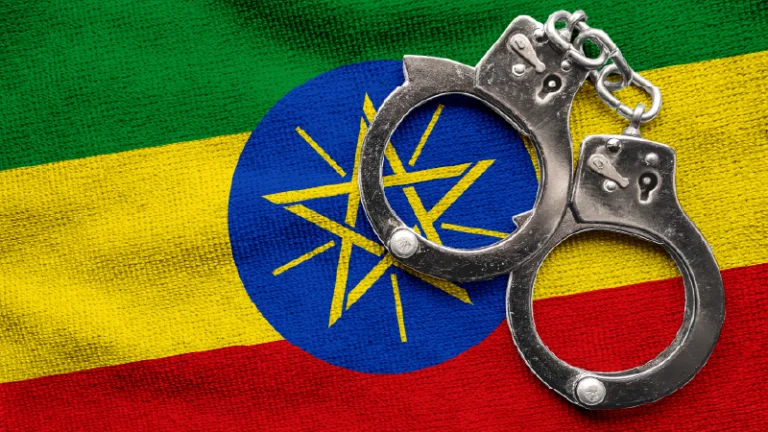
World Day Against Trafficking in Persons 2026: Everything You Need to Know
World Day Against Trafficking in Persons 2026 focuses on people deceived by false job offers, trapped in scam compounds and forced to commit online fraud.


Today, July 30, is World Day Against Trafficking in Persons, an annual United Nations observance intended to strengthen public understanding of human trafficking, protect those who have been exploited and press governments to confront the criminal systems that make trafficking profitable.
The theme for World Day Against Trafficking in Persons 2026 is “Trapped Behind the Scam.” It focuses on people recruited through fraudulent job offers, transported into controlled compounds and forced to conduct online scams for organized criminal networks.
The person sending a false investment opportunity, impersonating a police officer or cultivating a fabricated online relationship may appear to be willingly committing fraud. In some cases, however, that person has been trafficked, confined and made to work under threats, violence, debt or the confiscation of identity documents.
Recognizing this does not diminish the harm suffered by people who lose money to online fraud. It reveals a criminal model capable of exploiting people on both sides of the screen.
Not For Sale has previously examined the wider Southeast Asia scam-center trafficking crisis, including the deceptive recruitment, forced labor and international digital infrastructure behind these operations. World Day Against Trafficking in Persons 2026 brings that rapidly evolving form of exploitation into global focus.
What This Article Covers
This article explains:
- Why World Day Against Trafficking in Persons is observed on July 30
- What the 2026 theme, “Trapped Behind the Scam,” means
- How people are trafficked into online scam operations
- The difference between trafficking, forced criminality and migrant smuggling
- Who is most at risk and why conventional assumptions about trafficking can be misleading
- How technology, corruption, property, finance and weak governance sustain exploitation
- What governments, institutions, businesses and individuals can do in response
Key Takeaways
- World Day Against Trafficking in Persons is observed every year on July 30 and was established by the United Nations General Assembly in 2013.
- The 2026 theme focuses on trafficking for forced criminality within online scam operations.
- The International Organization for Migration says people from more than 80 countries have been trafficked into scam networks.
- IOM assisted more than 3,500 victims of trafficking for forced criminality from 39 countries between 2022 and 2025.
- A person compelled to conduct fraud may be both involved in a crime and a victim of human trafficking.
- Trafficking victims should not be punished for unlawful acts they were compelled to commit as a direct consequence of their exploitation.
- Raiding scam compounds is not enough. Authorities must also investigate recruiters, property owners, financial beneficiaries, corrupt facilitators and the technological infrastructure supporting the operations.
Why World Day Against Trafficking in Persons Matters in 2026
The United Nations General Assembly established World Day Against Trafficking in Persons through Resolution 68/192, adopted on December 18, 2013. The first observance took place on July 30, 2014.
The day was created to raise awareness of trafficking, promote the rights and protection of victims, and encourage coordinated action by governments, law enforcement agencies, businesses and civil society.
The focus in 2026 reflects a significant transformation in organized crime. Scam compounds once associated primarily with parts of Southeast Asia have developed into an international criminal economy combining human trafficking, cyber-enabled fraud, corruption, money laundering, illegal gambling, identity theft and underground banking.
The criminal model is no longer confined to one region. The International Organization for Migration said in July 2026 that victims from more than 80 countries had been drawn into scam operations. People have been recruited from across Asia, Africa, Europe and the Americas, often through job advertisements that appear to offer legitimate work in technology, customer service, marketing, cryptocurrency or online sales.
Not For Sale’s reporting on the convergence of human trafficking, artificial intelligence and cryptocurrency explains how trafficking is becoming embedded within a wider digital criminal economy. Artificial intelligence can help criminal groups translate messages, create false identities and contact potential targets at scale, while cryptocurrency and underground financial services can be used to move or conceal criminal proceeds.
The scale of the associated fraud is substantial. UNODC estimated that scam operations caused between US$88.3 billion and US$114.1 billion in losses across East Asia, Southeast Asia, Australia and New Zealand during 2025.
These figures concern financial fraud, not trafficking prevalence. Not everyone working inside a scam operation has necessarily been trafficked. Some people may participate knowingly and voluntarily. Others may be organizers, supervisors or technical specialists.
Authorities must investigate each person’s circumstances rather than assuming that everyone found inside a compound is either an innocent victim or a willing criminal.
What Is Human Trafficking?
Human trafficking is the recruitment, transportation, transfer, harboring or receipt of a person through force, fraud, coercion, deception, abuse of power or abuse of vulnerability for the purpose of exploitation.
A more detailed introduction is available in Not For Sale’s guide to what human trafficking is and how it operates.
Under the United Nations Trafficking in Persons Protocol, adult trafficking generally involves three elements:
- An act, such as recruitment, transportation, transfer, harboring or receipt.
- A means, such as force, fraud, coercion, deception, abduction or abuse of vulnerability.
- A purpose, which is exploitation.
For children, authorities do not need to prove that force, fraud or coercion was used. Recruiting, moving or harboring a child for exploitation can itself constitute trafficking.
Human trafficking does not always involve crossing an international border. A person can be trafficked within their own community, city or country. Nor does trafficking always begin with kidnapping. Many people initially agree to travel or accept employment because the trafficker has deliberately misrepresented the work, pay, destination or conditions.
Consent to a job or journey does not amount to consent to subsequent confinement, violence, debt bondage or exploitation.
Human trafficking is also different from migrant smuggling. Smuggling generally involves facilitating an unlawful border crossing for financial or material benefit. Trafficking centers on exploitation and can occur regardless of whether a person crosses a border legally, illegally or at all.
A smuggling situation can become trafficking if a person is later coerced, controlled or exploited.
“Modern-day slavery” is a broader term that can include forced labor, forced marriage, servitude, debt bondage and certain forms of human trafficking. The distinctions are explained further in Not For Sale’s guide to human trafficking and modern-day slavery.
The latest joint global estimates from the International Labour Organization, Walk Free and IOM found that approximately 50 million people were living in modern slavery in 2021. This included 27.6 million people in forced labor and 22 million in forced marriage.
These are prevalence estimates, not a count of individually identified trafficking cases.
What Does “Trapped Behind the Scam” Mean?
The 2026 theme draws attention to trafficking for forced criminality.
Forced criminality occurs when a trafficker compels a person to commit unlawful acts for someone else’s benefit. It can include online fraud, drug cultivation, drug transportation, theft, benefit fraud, forced begging, cannabis production and other illegal activities.
In online scam operations, recruitment often begins with an ordinary-looking job advertisement. The position may be described as customer service, digital marketing, information technology, sales, finance, online gaming or cryptocurrency support.
The advertisement may appear on a social media platform, professional network, mainstream employment site or encrypted messaging service. Recruiters may conduct interviews, provide contracts and arrange travel or accommodation.
Not For Sale has examined how social media platforms can become part of trafficking recruitment systems, particularly when criminal recruiters use private messages and false professional identities to approach job seekers.
Some recruits are told they will work in established commercial centers such as Bangkok. After arrival, they may be transported across another border or taken to a remote compound. Passports and telephones can be confiscated. Workers may then be told they owe money for travel, recruitment, food or accommodation.
Inside the compound, they may be ordered to create false social media identities, contact potential targets and build relationships over weeks or months. The eventual objective may be to persuade someone to transfer money into a fraudulent investment platform, cryptocurrency account, gambling service or financial scheme.
Workers who fail to meet fraud targets may face threats, food restrictions, confinement, physical violence, sexual violence or sale to another compound. Some are told that they can leave only if they or their families pay a substantial ransom.
Not For Sale’s investigation into the human cost of cyber scam operations in Southeast Asia examines how these systems affect both the people forced to operate scams and those financially deceived by them.
Forced Criminality Creates Two Groups of Victims
The scam-center model can produce harm on both sides of the interaction.
One person receives an unsolicited message, develops what appears to be a genuine relationship and is persuaded to transfer money. The financial and psychological consequences can be severe. People can lose savings, pensions, homes or businesses.
The person sending the messages may be a willing participant. They may also be a trafficking victim working under threats, surveillance or violence.
Recognizing coercion does not excuse the organizers or erase the loss suffered by financial fraud victims. It allows investigators to identify the structure of responsibility accurately.
Not For Sale’s investigation into the exploitation chain behind forced fraud and sexual violence shows how the same operation can exploit workers, women subjected to sexual violence and people targeted by financial fraud.
This distinction is central to the 2026 campaign. If authorities examine only the unlawful act, they may prosecute a person who was compelled to commit it while leaving the recruiter, compound owner or financial beneficiary untouched.
The Non-Punishment Principle
International human rights standards recognize that trafficking victims should not be prosecuted or punished for illegal acts they were compelled to commit as a direct consequence of being trafficked.
This is known as the non-punishment principle.
It does not provide automatic immunity to every person who claims to have been coerced. Authorities still need to investigate the evidence, identify trafficking indicators and distinguish between organizers, willing participants and people acting under control.
That assessment may consider:
- How the person was recruited
- Whether their passport or telephone was confiscated
- Whether they were free to leave
- Whether they were monitored or guarded
- Whether debts were imposed
- Whether threats or violence were used
- Whether their family was threatened
- Whether they received the pay or conditions originally promised
Without proper screening, a trafficked person may be detained for immigration violations, prosecuted for fraud or deported without their exploitation being investigated.
Who Is Most at Risk?
There is no single profile of a person vulnerable to trafficking.
Conflict, poverty, displacement, discrimination, debt, insecure migration status, legal exclusion and a lack of safe employment can all reduce a person’s options. Traffickers exploit these conditions by presenting opportunities that appear to offer stability or advancement.
Children remain particularly vulnerable because they may depend on adults for shelter, movement, income and documentation. Women and girls continue to represent a large proportion of detected trafficking victims globally, particularly in cases involving sexual exploitation.
Men and boys are also trafficked in significant numbers, including for forced labor and forced criminality.
Scam-center recruitment has further challenged traditional assumptions. Criminal groups may deliberately seek graduates, multilingual professionals and people with technical, sales or customer-service experience.
Between 2022 and 2025, IOM assisted more than 3,500 victims of trafficking for forced criminality in Southeast Asia from 39 countries. The largest groups assisted came from Indonesia, India, Sri Lanka, Ethiopia, Kenya and Bangladesh.
Some victims had university degrees. Some had previously held stable jobs. Others traveled through international airports on legitimate visas.
Education and professional experience do not always protect a person from deception. In scam-center trafficking, those qualities can make someone more valuable to a criminal operation.
Women may face additional forms of exploitation within compounds. Not For Sale’s reporting on women trafficked into cyber scam centers examines how forced fraud can overlap with sexual exploitation, gender-based violence and the misidentification of survivors as willing offenders.
Risk should not be confused with helplessness. Survivors have provided investigators, journalists and researchers with evidence about recruitment networks, compound structures, financial arrangements and the methods used to control workers.
Their knowledge should be treated as expertise, not simply testimony of suffering.
The Systems Behind the Harm
Scam compounds cannot operate at an industrial scale through the actions of individual traffickers alone. They depend on a wider ecosystem.
Recruiters and labor brokers find workers. Transporters move them. Property owners provide buildings. Guards enforce confinement. Technical teams create websites, identities and communication systems. Financial networks transfer and conceal criminal proceeds.
Corrupt officials or politically connected intermediaries may provide protection, advance warnings or assistance with licenses and immigration processes. In other cases, compounds may continue operating because of institutional weakness, fragmented authority or limited investigative capacity.
Technology companies can become part of this environment when their services are misused for fraudulent recruitment, false identities, communication or payment processing. This does not mean that every platform knowingly supports trafficking. It does mean companies should assess foreseeable risks and respond quickly when credible evidence emerges.
Casinos, Landlords and Physical Infrastructure
Online fraud is digital, but the exploitation behind it has a physical location.
A large scam compound needs office space, accommodation, guarded entrances, electricity, internet access, transportation, food and security. Some operations are based in purpose-built compounds. Others use casinos, hotels, resorts, apartment blocks or commercial developments.
Not For Sale’s investigation into Cambodia’s scam compounds, casinos, landlords and corruption explains why enforcement must look beyond the workers found inside a building.
A landlord is not automatically responsible for every crime committed by a tenant. A casino is not inherently a criminal enterprise. Legal responsibility depends on evidence, including what an owner knew, when warnings emerged, whether services continued and whether there was any direct assistance or participation.
However, operations housing hundreds or thousands of people cannot function without visible infrastructure. Investigators should examine land ownership, leases, licenses, electricity supply, telecommunications, security arrangements and rental payments.
Raiding a building without investigating the businesses and individuals benefiting from its use leaves much of the criminal system intact.
The Money Behind Scam Operations
Money laundering is central to the scam-center model.
Fraud proceeds may move through bank accounts, payment processors, shell companies, cryptocurrency wallets, underground banking networks and high-value assets. Criminal organizations may use money mules or accounts registered in other people’s names to obscure the path of the funds.
Not For Sale’s investigation into cryptocurrency, corruption and human trafficking explains how digital assets and informal financial services can help criminal networks transfer revenue across jurisdictions.
Cryptocurrency is not inherently criminal. Its legitimate uses are extensive. However, rapid cross-border transfers, layered wallets and inconsistent regulation can complicate investigations when digital assets are used to launder fraud proceeds.
Financial investigations should begin alongside trafficking investigations, not after them. Following the money can identify organizers, intermediaries and beneficiaries who may never appear inside a compound.
Confiscated criminal assets can also potentially contribute to survivor compensation and recovery, subject to national law and appropriate legal safeguards.
How Does This Connect to Ecocide or Environmental Harm?
The 2026 World Day Against Trafficking in Persons is not primarily an environmental campaign. It would be inaccurate to claim that every scam-center operation is directly connected to ecocide.
The relationship is broader and structural.
Ecocide generally refers to severe, widespread or long-term environmental destruction. Not For Sale provides a fuller explanation in its guide to what ecocide means.
Environmental destruction can eliminate livelihoods, damage food and water security, displace communities and increase dependence on unsafe migration or informal employment. These conditions can make deceptive job offers more powerful.
Illegal mining, logging, fishing and waste operations can themselves involve forced labor and trafficking. Criminal networks may also diversify across different illicit economies, moving people, money, wildlife, minerals or drugs through overlapping routes.
Not For Sale’s investigation into how corruption connects ecocide and human trafficking examines how weak governance and illicit finance can allow environmental destruction and labor exploitation to enter legitimate supply chains.
The evidence does not support describing all scam compounds as ecocide. It does support examining how trafficking, corruption, environmental exploitation and organized crime can flourish within the same weakly governed systems.
The Human Impact
Leaving a scam compound does not necessarily end the exploitation.
Survivors may return home with physical injuries, psychological trauma, debt or no identification documents. Their families may have borrowed money to pay recruiters or attempted to raise a ransom.
Some survivors face rejection because relatives believe they willingly participated in fraud. Others encounter suspicion from police, border officials or immigration authorities.
Recovery may require:
- Safe accommodation
- Medical care
- Trauma-informed psychological support
- Legal representation
- Replacement identity documents
- Financial assistance
- Education or vocational training
- Employment support
- Protection from retaliation
- Assistance with family reunification
Short-term rescue without long-term reintegration can leave survivors vulnerable to renewed exploitation.
Support should preserve dignity, privacy and informed consent. Survivors should not be required to recount their experiences publicly or present themselves as passive victims in order to receive assistance.
What Governments and Institutions Are Doing
International law enforcement activity has increased as the scale of trafficking-fueled scam operations has become clearer.
INTERPOL reported in January 2026 that Operation Liberterra III safeguarded 4,414 potential trafficking victims and led to 3,744 arrests across 119 countries. The operation covered several forms of exploitation and included action against suspected scam centers.
In June 2026, Operation Global Chain involved authorities from 59 countries. Europol reported 1,024 arrests, including 334 people suspected of human trafficking, and the identification of 2,070 potential victims.
These operations demonstrate the value of international cooperation. Recruitment may occur in one country, exploitation in another and financial fraud in several more. The proceeds can then be transferred through banks, payment providers or cryptocurrency services operating across different jurisdictions.
Regional institutions have also begun strengthening guidance on forced criminality and the non-punishment principle. Governments are increasingly recognizing that trafficked people found inside scam operations require individual screening before prosecution, detention or deportation.
However, enforcement remains uneven. Raids may remove workers without identifying organizers or preserving financial evidence. Criminal groups can relocate operations, transfer workers to another property or resume activity under a different company name.
Success should not be measured only by the number of buildings entered or foreign nationals deported. It should also be measured by the number of trafficking victims identified, organizers prosecuted, assets recovered and survivors safely supported.
What Still Needs to Change
The first requirement is more consistent victim identification.
Police, border officials, prosecutors, diplomats and immigration authorities need training in trafficking for forced criminality. Interviews should take place confidentially, without guards, recruiters or suspected organizers present.
The non-punishment principle must be incorporated into national law and applied in practice. It cannot protect victims if courts and prosecutors do not recognize coercion or if survivors have no access to legal representation.
Governments must also investigate corruption and institutional complicity. Large compounds require property, utilities, telecommunications, transportation and financial access. Authorities should examine who owns the land, who collects rent, who supplies services and who received warnings.
Technology platforms should strengthen the detection of fraudulent recruitment, impersonation networks and coordinated scam infrastructure. Employers advertising international positions should be subject to meaningful verification, particularly when jobs involve unusually high salaries, relocation or poorly defined online work.
Banks, payment providers and cryptocurrency businesses should improve systems for identifying financial patterns associated with fraud and trafficking. Information sharing must respect privacy and due process while allowing legitimate investigations to move rapidly across borders.
Survivor support must also extend beyond repatriation. Returning someone to their country without safe accommodation, documentation, legal assistance or economic support can expose them to renewed exploitation.
Finally, survivors should have a meaningful role in designing prevention and reintegration programs. Their knowledge can show institutions how recruitment is changing, why existing warnings fail and what support is needed after leaving a compound.
What Not For Sale’s Perspective Adds
World Day Against Trafficking in Persons creates an important moment of public attention. The challenge is converting that attention into prevention that continues after July 30.
Not For Sale works from the position that modern-day slavery cannot be ended through rescue and prosecution alone. Both are essential, but exploitation will continue where people lack safe employment, education, legal protection and realistic alternatives to dangerous recruitment.
The organization’s approach is rooted in social innovation, meaning the development of practical systems, enterprises and partnerships that address the conditions allowing exploitation to take root.
That can include survivor services, education, safer employment pathways, community-owned enterprises, ethical supply chains and regenerative economic models.
This approach does not remove responsibility from traffickers, governments or businesses. It recognizes that prevention also requires changing the circumstances that make deceptive offers powerful.
Not For Sale’s wider social innovation glossary explains concepts including survivor-centered design, systems change, regenerative economies, frontline knowledge and dignified livelihoods.
The purpose is not to make Not For Sale the center of the story. It is to insist that people facing exploitation deserve more than rescue from one dangerous situation. They deserve credible routes toward safety, independence and agency.
What Readers Can Do
Readers should share information about trafficking carefully. Unverified claims, graphic material and identifiable survivor accounts can cause further harm or interfere with investigations.
People considering overseas employment can take several protective steps:
- Verify that the company is legally registered.
- Confirm the physical workplace independently.
- Check visa requirements through an official government source.
- Speak directly to current or former employees where possible.
- Be cautious when communication takes place only through private messaging applications.
- Do not surrender a passport to a recruiter or employer.
- Treat sudden changes in destination, duties or travel arrangements as warning signs.
- Preserve copies of contracts, advertisements and recruiter messages.
No single warning sign proves that an opportunity is connected to trafficking. Several warning signs appearing together should prompt further investigation.
Suspicious recruitment advertisements can be reported to the platform hosting them and to the relevant national law enforcement or anti-trafficking authority.
People targeted by online fraud should preserve messages, website addresses, wallet details, telephone numbers and payment records. This information may help investigators connect individual fraud cases to larger networks.
Businesses can examine their recruitment practices, property relationships, supply chains and financial controls. They should prohibit worker-paid recruitment fees, protect access to identity documents and provide reporting channels that workers can use without retaliation.
Readers can also support survivor-centered organizations providing legal assistance, accommodation, healthcare, education and employment. Effective support respects privacy, avoids exploitative storytelling and recognizes survivors as decision-makers in their own recovery.
World Day Against Trafficking in Persons 2026 exposes a difficult reality: the person committing an offense on a screen may also be a person being exploited behind it.
“Trapped Behind the Scam” describes a system in which organized crime turns human beings into instruments of industrialized fraud. It recruits through ordinary digital platforms, moves people through international travel systems, confines them in physical properties and launders the proceeds through the global financial economy.
The response must be equally connected.
Governments must investigate criminal organizers while protecting the people they control. Technology companies must address fraudulent recruitment and scam infrastructure. Financial institutions must follow the money. Property owners and service providers must respond when credible warning signs emerge.
Survivors must be identified before they are punished and supported long after they leave a compound.
July 30 is a day of recognition. Its value will be measured by what happens afterward: whether fewer people encounter deceptive job offers, whether authorities distinguish coercion from willing criminality and whether those who escape are given a genuine path back to safety, dignity and independence.
Related Not For Sale Investigations
- Southeast Asia’s Scam-Center Trafficking Crisis
- The Human Cost of Cyber Scam Operations in Southeast Asia
- Women Trafficked Into Cyber Scam Centers
- Scam Compound Human Trafficking and Sexual Violence
- Cambodia Scam Compounds: Casinos, Landlords and Corruption
- AI, Cryptocurrency and Global Scam Economies
Frequently Asked Questions
What is World Day Against Trafficking in Persons?
World Day Against Trafficking in Persons is a United Nations observance held annually on July 30. It raises awareness of human trafficking, promotes the protection of victims and encourages governments to strengthen prevention, prosecution and international cooperation.
What is the theme for World Day Against Trafficking in Persons 2026?
The 2026 theme is “Trapped Behind the Scam.” It focuses on people trafficked into online scam operations and forced to conduct financial fraud for organized criminal groups.
Why is World Day Against Trafficking in Persons held on July 30?
The United Nations General Assembly designated July 30 through Resolution 68/192, adopted in December 2013. The first observance took place on July 30, 2014.
What is trafficking for forced criminality?
Trafficking for forced criminality occurs when a person is recruited, transported, harbored or controlled and compelled to commit offenses for someone else’s benefit. It can include online fraud, theft, forced begging, drug cultivation and other criminal activity.
What is an online scam compound?
An online scam compound is a controlled location used to conduct organized digital fraud. Some contain trafficked people who were deceived through false job offers, confined and forced to operate investment, cryptocurrency, romance, impersonation or other scams.
Are all people working inside scam centers trafficking victims?
No. Scam operations may include organizers, willing participants and trafficked people. Authorities must investigate each person’s recruitment, working conditions, freedom of movement and ability to leave.
Can trafficking victims be prosecuted for scams they were forced to commit?
International human rights standards support the non-punishment of trafficking victims for unlawful acts they were compelled to commit as a direct consequence of their exploitation. Authorities must assess the evidence in each individual case.
Does human trafficking always involve crossing a border?
No. Human trafficking can occur entirely within one town, region or country. Crossing an international border is not required.
Is human trafficking the same as migrant smuggling?
No. Migrant smuggling generally involves facilitating an unlawful border crossing for payment. Human trafficking involves exploitation and can occur whether a border was crossed legally, illegally or not at all.
How many people are living in modern slavery?
The latest global estimate found that approximately 50 million people were living in modern slavery in 2021, including 27.6 million in forced labor and 22 million in forced marriage.
What are the warning signs of fraudulent overseas recruitment?
Warning signs can include unusually high salaries, vague job duties, sudden changes in destination, pressure to travel quickly, requests for recruitment fees, inappropriate visa arrangements and demands to surrender a passport.
What is the most effective response to scam-center trafficking?
An effective response combines survivor identification and long-term support with investigation of recruiters, compound operators, property owners, corrupt facilitators, digital infrastructure and financial flows.
Sources
- United Nations Office on Drugs and Crime: World Day Against Trafficking in Persons 2026
- International Organization for Migration: World Day Against Trafficking in Persons 2026
- IOM: Trapped Behind the Scam
- United Nations General Assembly Resolution 68/192
- UNODC: Global Report on Trafficking in Persons 2024
- International Labour Organization: Global Estimates of Modern Slavery
- International Labour Organization: Profits and Poverty, the Economics of Forced Labour
- Office of the United Nations High Commissioner for Human Rights: Non-Punishment of Trafficking Victims
- INTERPOL: Operation Liberterra III
- Europol: Operation Global Chain 2026
- INTERPOL: Global Financial Fraud Threat Assessment 2026
- UN Human Rights: The Human Cost of Cyber Scam Operations
Not For Sale
Related Articles