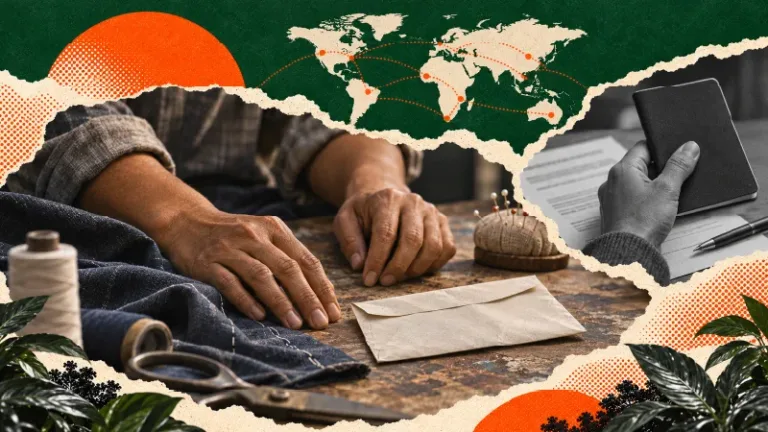
10 Ways of Preventing Human Trafficking: A Practical Guide
Ten practical prevention actions for individuals, families, employers and communities, from checking job offers to supporting survivor recovery and seeking help safely.


Preventing human trafficking means making exploitation harder and safety easier to reach. These ten actions explain what individuals, families, employers and communities can do, and where to find help.
Human trafficking prevention begins before someone is trapped in exploitation. It can begin with a job offer that receives an independent check, a young person who knows whom to trust, or an employer who asks how workers were recruited. It also depends on what happens afterward: whether someone leaving exploitation can find safe housing, recover unpaid wages and build a life with choices.
The most useful ways of preventing human trafficking combine accurate information with practical protection. Learning about warning signs matters, but that knowledge needs somewhere to lead. A person who recognizes a dangerous situation needs access to advice and support. A business that discovers abuse needs a plan to remedy it. A community concerned about recruitment needs opportunities that people can safely accept.
This guide brings those responsibilities together. It offers ten actions readers can adapt to their circumstances, alongside examples from Not For Sale’s work. Responsibility for trafficking always rests with those who perpetrate and enable it. Prevention advice should help people access protection, never suggest they are to blame for being deceived or controlled.
What this article covers
- How trafficking happens and why common assumptions can miss it.
- Ten prevention actions, summarized below and explained in detail.
- Questions to ask before accepting a job or relocation offer.
- Practical responsibilities for parents, schools and employers.
- The role of housing, education, livelihoods and survivor support.
- How to seek help without putting someone at greater risk.
Key takeaways
- Trafficking does not require an international border crossing.
- Look for deception, coercion and control rather than stereotypes.
- Warning signs prompt assessment; they do not establish guilt.
- Prevention should include fair recruitment and meaningful worker protections.
- Survivors need choices, privacy and support beyond the moment of leaving.
- Help-seeking and reporting should be guided by safety and local circumstances.
Why human trafficking prevention matters now
Recruitment can take place through familiar channels: employment advertisements, personal relationships and online messages. The UN Human Rights Office’s February 2026 report on scam operations describes people recruited under false pretenses and coerced into online fraud. It calls for safer migration pathways, scrutiny of recruitment and support centered on the rights of those exploited. These findings make checking recruitment practices an immediate prevention priority.[1]
The same wider lesson applies to prevention planning: a reassuring appearance is not enough. Training should help people ask what happens after an offer is accepted, who controls the terms, and what options remain if those terms change. Technology can assist that work, but it also needs accountable operators and routes to human help. A promise that an app or algorithm will solve trafficking can distract from the decisions that make people safer.
What are the 10 ways of preventing human trafficking?
Use this table to find an action relevant to your role. Each action links to its fuller explanation below.
| Action | Who can act? | Start here |
|---|---|---|
| 1. Understand how trafficking happens | Everyone | Learn how deception and coercion can turn an opportunity into exploitation. |
| 2. Recognize warning signs responsibly | Friends, coworkers and professionals | Notice patterns of control and seek qualified advice. |
| 3. Check job offers and recruiters | Jobseekers and employers | Verify the employer and written terms independently. |
| 4. Build safer online connections | Families, schools and platforms | Discuss suspicious offers, secrecy and pressure to move quickly. |
| 5. Strengthen protection for children | Caregivers and youth organizations | Make sure children have trusted adults and clear routes to help. |
| 6. Support survivor recovery | Donors and service providers | Support care, safe housing and longer-term independence. |
| 7. Protect workers in business operations | Employers and buyers | Examine recruitment fees, wage practices and safe complaints. |
| 8. Invest in education and livelihoods | Communities and funders | Support locally identified barriers to secure opportunities. |
| 9. Advocate for accountable institutions | Citizens and policymakers | Ask for funded protection and enforcement with measurable outcomes. |
| 10. Know how to seek help safely | Everyone | Identify verified support services before a crisis. |
1. Understand how trafficking happens
Human trafficking involves exploitation through means such as force, fraud or coercion. It can affect people who stay in their own community as well as people who migrate. A decision to accept work, enter a relationship or travel does not amount to agreement to subsequent exploitation. The U.S. State Department’s explanation makes clear that trafficking does not require movement across a border.[2]
A useful awareness session should explain the mechanisms of control: what was promised, what changed, and what prevented someone from refusing or leaving. It should also tell participants where to seek advice. Avoid dramatic images or messages that imply trafficking always looks like abduction. They can leave readers looking for the wrong circumstances.
First step: read Not For Sale’s human trafficking facts and use the evidence to inform a conversation at home, school or work.
2. Recognize warning signs responsibly
Potential indicators include someone else controlling a worker’s documents, threats linked to immigration status, withheld pay, unexplained debt or an inability to leave a job. The National Human Trafficking Hotline describes these as reasons for concern, alongside isolation and monitoring. It also notes that traffickers may be partners, relatives or acquaintances.[3]
The ILO’s revised 2025 indicators provide guidance for detecting possible forced labor and supporting referral and investigation.[4] Apply indicators in context. Nationality, appearance or a person’s occupation should not be treated as evidence of trafficking.
Concern should lead to a safe response rather than public accusation. If a conversation is appropriate and can happen safely, listen without pressing for a detailed account. You do not need to prove a crime before asking a specialist service for guidance.
First step: identify the professional referral route relevant to your role, such as a safeguarding lead, trained service provider or labor-rights adviser.
3. Check job offers and recruitment arrangements
Recruitment deserves scrutiny before money is paid or travel begins. Ask for the employer’s legal name, the actual worksite and terms you can understand. Verify those details through independently found contacts. An official-looking website, a video interview or an introduction by someone familiar should be the beginning of verification, not the end.
Fair recruitment also requires employers to examine the intermediaries they use. ILO guidance establishes the principle that workers should not bear recruitment fees or related costs. This is an international standard for fair recruitment; local legal requirements and implementation vary.[5]
A job-offer verification checklist
- Can you independently confirm the employer, recruiter and workplace?
- Are duties, pay, hours, deductions and accommodation explained in writing?
- Can you obtain independent advice on the contract and migration requirements?
- Are you being asked to pay unexplained fees or incur debt?
- Have the destination or duties changed from what was advertised?
- Is there pressure to travel before your questions are answered?
These questions support decision-making; they cannot guarantee safety. If someone is already controlled or threatened, seek advice tailored to their situation rather than assuming they can simply walk away.
First step: pause an unverified offer and ask an independent adviser to review it. Learn how fraudulent jobs can lead to exploitation in Not For Sale’s coverage of Southeast Asia’s scam-center trafficking crisis.
4. Build safer online relationships and recruitment practices
UNICEF describes how perpetrators can use digital contact to gain trust before exploiting a child, and emphasizes responsibilities for governments and technology companies as well as families.[6] Online abuse and trafficking can overlap, but they are not interchangeable labels. Respond to a concern because it matters, even when its legal classification is not yet clear.
Make safety conversations specific. Discuss messages that demand secrecy, requests to move quickly to private channels, offers that cannot be verified and pressure to share personal material. Explain that asking for help will not lead to blame. Adults should approach online job offers with the same care they would give an employment contract received elsewhere.
Platforms need accessible reporting systems and processes for investigating credible concerns. Technology should support skilled assessment; it should not become a reason to collect unnecessary personal data or label people through untested automated judgments.
First step: agree on whom to contact when an online interaction feels unsafe. Read more about internet and social media’s role in human trafficking.
5. Strengthen protection for children and young people
Child protection should be built into the ordinary places where children learn, play and receive care. Organizations working with young people should establish clear conduct standards, train staff, designate a safeguarding lead and explain how concerns will be handled. A policy has little value if a child cannot understand how to ask for help.
Parents and caregivers can make that route more accessible through regular, age-appropriate conversations. Ask about friendships, work offers and online experiences without turning every conversation into an interrogation. UNICEF’s parenting guidance emphasizes listening and responding without judgment when children describe difficult online experiences.[7]
Protection also needs continuity. In northern Thailand, Not For Sale supports Kru Nam’s work through Baan Kru Nam, including safe housing, education and ongoing care. The project illustrates how a sustained community can address practical needs alongside protection.
First step: check that a young person can name a trusted adult and knows an alternative if that adult is unavailable. Learn more about Not For Sale’s child protection work in Thailand.
6. Support survivors beyond the moment of leaving
Leaving exploitation should open a route to safety, care and independence. The UN Human Rights Office has warned that survivors of scam operations can face stigma and further punishment after release.[1] A prevention response therefore needs to address what makes recovery possible, including protection from renewed exploitation.
Funders should ask what support remains available months after an initial intervention. Does a program offer safe accommodation, interpretation, legal advice and access to employment? How are survivors involved in decisions? What happens when someone needs support for longer than expected?
Not For Sale’s Netherlands project describes vocational training and employment pathways associated with Dignita. It provides a concrete example of recovery support that includes developing skills and future opportunities. This is a reported program activity, not proof of a particular percentage reduction in trafficking.
First step: support organizations that explain both immediate care and longer-term pathways. Explore Not For Sale’s survivor training and employment work in the Netherlands.
7. Protect workers through responsible business practices
A business’s prevention responsibilities begin with the people doing its work, including those hired through agencies and subcontractors. The UN Guiding Principles on Business and Human Rights set out a framework for identifying and addressing adverse impacts and enabling remedy.[8] A supplier policy should translate into questions workers can answer safely.
Employers and buyers should examine who recruited workers, who paid the associated costs and whether the terms delivered match those promised. Provide complaint routes workers can understand and use without retaliation. Ask workers directly through appropriate independent processes rather than relying entirely on a manager’s account.
A starting checklist for employers
- Map recruitment agencies, labor providers and subcontracting arrangements.
- Check for worker-paid recruitment costs and agree how verified harm will be remedied.
- Confirm that workers can access their own documents and understand their pay.
- Provide accessible, confidential routes to raise concerns.
- Investigate complaints and track whether remedies reach affected workers.
Consumers can ask businesses about these practices. A label or audit alone should not be treated as a guarantee. When abuse is found, the response should consider workers’ circumstances rather than making the problem disappear from a buyer’s paperwork.
First step: review recruitment and complaints processes with worker participation. Not For Sale’s Impact Stack explains its approach to connecting direct services with research and economic alternatives.
8. Invest in education and secure livelihoods
A warning about dangerous recruitment is more useful when someone also has access to a viable opportunity. Community prevention should ask what prevents people from pursuing education or secure employment, then fund responses designed with those affected. The barrier may be housing, transport, documentation, training or the absence of reliable local work.
Not For Sale’s September 2026 update from Madre de Dios describes support for an Indigenous youth hostel in Peru. Accommodation and everyday equipment help students from remote communities continue their education. The wider partnership also includes support for Indigenous-led forest livelihoods. These are practical examples of creating choices rather than expecting awareness to overcome material barriers.
Such initiatives should be evaluated honestly. Recording attendance, stable housing or employment outcomes is different from demonstrating that a program prevented a specific number of trafficking cases. Both kinds of evidence matter, but they answer different questions.
First step: ask a local organization which practical barrier its community wants addressed. Read about the Indigenous youth hostel in Madre de Dios and Not For Sale’s wider work in Peru.
9. Advocate for effective laws and accountable institutions
Prevention requires institutions capable of responding when people report exploitation. Stronger penalties should sit alongside funded services, labor protections, scrutiny of recruitment and access to justice. In its 2026 scam-operations recommendations, the UN Human Rights Office calls for recognition of forced criminality and respect for the non-punishment principle for trafficking victims.[1]
Citizens can ask elected representatives what happens between a report and an outcome. Are officials trained to assess coercion? Can people seek help without being automatically treated as offenders? Do investigators cooperate across borders when recruitment, exploitation and financial transactions involve different jurisdictions?
Border checks can form part of a response, but they cannot address exploitation that occurs entirely within a country. Prevention policy should make lawful work and assistance accessible while investigating the individuals and businesses directing abuse.
First step: ask for a concrete commitment on service funding, labor enforcement or victim identification, and request public reporting on delivery.
10. Know how to seek help safely
Safety planning should be tailored to the person’s circumstances. The National Human Trafficking Hotline explains that planning matters during exploitation, while leaving and afterward, and that the individual’s own assessment of risk is important.[9] A well-intended intervention can increase danger if it ignores who controls a person’s communications or movements.
Use verified support services. Avoid confronting a suspected trafficker, arranging an amateur rescue or publishing a person’s name, image or location. If someone shares a concern, listen and explain the help available without demanding disclosure. Professionals working with children should follow applicable safeguarding and reporting duties.
Emergency assistance, confidential advice and submitting a report are different actions. Ask the service what happens next, what information it needs and what confidentiality limits apply. If contacting authorities could create additional risks, a qualified service can help assess options.
First step: keep verified contacts available in a way that is safe for your circumstances. US readers can use the National Human Trafficking Hotline; use 911 for immediate danger.
Turning prevention into sustained action
The ten actions work best when they connect. An awareness session should lead to reliable advice. A complaint process should lead to investigation and remedy. Education should be supported by the housing and resources that make participation possible. Support after exploitation should leave room for the person’s ambitions, decisions and privacy.
Not For Sale’s projects offer examples of this longer view. Child protection in Thailand, education and community partnership in Peru, and training opportunities in the Netherlands address different circumstances. Their common purpose is to expand the options available to people whose choices might otherwise be constrained.
For readers, the next step can be specific and achievable: check a recruitment process, improve a safeguarding route or support a locally led program. For institutions, the responsibility is larger: make protection dependable, investigate abuse and ensure that accountability reaches those who profit from it. Preventing human trafficking means building conditions in which people can choose an opportunity, refuse exploitation and seek help without losing their future.
Support Not For Sale’s work protecting people and building alternatives to exploitation.
Frequently asked questions
What is the best way to prevent human trafficking?
No single action addresses every situation. A practical response combines safe recruitment, worker protections, accessible services, child safeguarding, economic opportunity and accountability for perpetrators.
How can individuals help prevent human trafficking?
Learn about exploitation, check offers independently, know where to seek advice and support credible prevention and survivor services. Avoid public accusations or interventions that could put someone at risk.
Does human trafficking always involve crossing a border?
No. It can happen within a country or community. Exploitation and control matter; international movement is not required.
What are warning signs of labor trafficking?
Concern may arise when someone cannot leave work, faces threats, has documents controlled by another person or is trapped by debt. Signs need contextual assessment rather than assumptions based on identity or appearance.
How can I check whether a job offer is legitimate?
Verify the employer and workplace through independent contacts, obtain understandable written terms and ask about duties, pay, fees and travel. Seek independent advice when details are unclear or change unexpectedly.
How can parents help protect children?
Maintain open conversations, make help easy to request and check safeguarding arrangements in the organizations children use. Respond calmly to concerns and follow appropriate child protection procedures.
How can businesses help prevent human trafficking?
Examine recruitment and subcontracting, listen to workers, provide safe complaints channels and remedy verified harm. Policies need follow-through within actual working arrangements.
Why does survivor support belong in prevention?
Recovery support should help people achieve safety and independence after exploitation. Programs should address ongoing needs and risks rather than ending at the point of release.
Can technology prevent human trafficking?
Digital tools can support reporting and investigation, but their effectiveness depends on appropriate use, evidence, privacy safeguards and skilled human responses. They cannot replace protection and accountability.
Where can I seek help in the United States?
Contact the National Human Trafficking Hotline at 1-888-373-7888, text 233733 or use its online chat. Call 911 for immediate danger. Outside the US, use verified services for your location.
Sources and further reading
- UN Human Rights Office: UN report details grave abuses against those trafficked into scam centers, February 20, 2026. Recruitment, protection and institutional recommendations.
- U.S. Department of State: Understanding Human Trafficking, archived explanation of movement and consent.
- National Human Trafficking Hotline: Recognizing the Signs.
- ILO: Indicators of Forced Labour, revised edition, November 18, 2025.
- ILO: General Principles and Operational Guidelines for Fair Recruitment and Definition of Recruitment Fees and Related Costs, 2019.
- UNICEF: Keeping Children Safe Online.
- UNICEF Parenting: How to Talk to Your Child About Cyberbullying. Referenced for supportive communication, not as trafficking-specific evidence.
- OHCHR: Guiding Principles on Business and Human Rights, 2011.
- National Human Trafficking Hotline: Safety Planning Information.
Not For Sale project examples are drawn from the linked Thailand, Netherlands and Peru project pages and the September 2026 Peru hostel update. They describe reported activities, not independently measured reductions in trafficking.
Topics in this story
See all topics
Katie Wilde
More from Katie Wilde