50 Essential Facts About Human Trafficking: How It Happens and What Helps Stop It
Fifty essential facts about human trafficking, from recruitment and coercion to the evidence behind the numbers, survivor support and meaningful prevention.


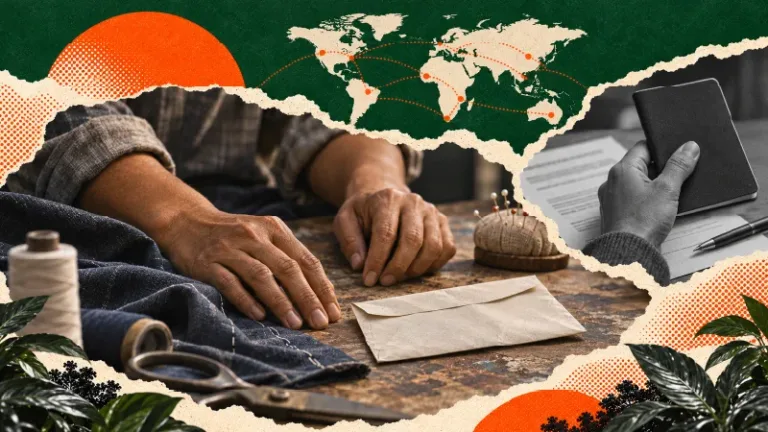
A job offer can become a route into exploitation when deception and coercion replace the promised terms. Prevention starts with recruitment practices that protect a worker’s freedom to choose. Editorial illustration.
Fifty essential facts about human trafficking, from recruitment and coercion to the evidence behind the numbers, survivor support and meaningful prevention.
Human trafficking is exploitation made possible by power over another person’s choices. Understanding it requires attention to the promise that drew someone in, the pressure that keeps them there and the practical alternatives available if they try to leave. A border crossing, a locked room or visible violence may be part of a case, but none provides a complete picture.
The evidence reaches into ordinary employment, private households and criminal operations. The ILO’s 2025 guidance strengthens tools for identifying forced labor; OHCHR’s February 2026 report examines trafficking into cyber scam operations; and the ILO’s May 2026 guidance addresses coercion by states. These developments reinforce the need to recognize different forms of control while keeping legal definitions and statistical categories clear.
For Not For Sale, the question that connects this evidence is what gives people a real ability to refuse exploitation. Investigations matter. So do reliable services, enforceable rights and livelihoods that do not depend on submitting to an exploiter. The following 50 facts explain those relationships and offer a route from understanding the problem to responding with care.
Need help now? Go directly to verified help and reporting contacts.
What This Article Covers
- What trafficking means and how it differs from related terms.
- How to interpret global estimates and detected-victim figures.
- How recruitment, debt and threats can become control.
- Where exploitation occurs and why risks are unequal.
- What prevention, justice and recovery require.
- How readers and organizations can respond safely.
Key Takeaways
- Trafficking does not require international travel, and children have a distinct threshold under the UN Protocol.
- The 27.6 million forced-labor estimate refers to 2021; it is not a count of trafficking victims today.
- Detected-victim statistics describe people identified by authorities, rather than everyone affected.
- Debt, deception and threats can restrict choice without visible physical confinement.
- Survivor support needs to continue beyond departure from an exploitative situation.
- Effective prevention combines rights, accountable recruitment and practical economic alternatives.
Understanding human trafficking
1. Human trafficking is defined by exploitation and the means used to achieve it
The international definition brings together an act, such as recruiting or harboring someone; a means, such as deception, coercion or abuse of vulnerability; and an exploitative purpose. The purpose can include forced labor, sexual exploitation, servitude or organ removal. That structure matters because a transaction that looks ordinary at first can form part of trafficking. A recruitment agency, household or business does not become harmless simply because it has an address, paperwork or a respectable public presence.
2. A person does not have to cross a border to be trafficked
Trafficking can occur within a country, a town or a person’s own home. Transportation is one possible act in the international definition, rather than a requirement in every case. Looking only for people being moved across borders leaves a serious gap in recognition. The more useful question is what another person is arranging or controlling, for whose benefit, and through which threats or deception. A familiar neighborhood can contain exploitation just as a distant workplace can.
3. Migrant smuggling and human trafficking are different crimes
Migrant smuggling concerns facilitating unauthorized entry into another country for a financial or material benefit. Trafficking concerns exploitation and can occur without migration. These situations can overlap: a person who pays for a journey can subsequently be coerced into work. The distinction helps explain why an irregular border crossing does not, by itself, prove trafficking, and why lawful travel does not rule it out. Assess the exploitation separately from the journey, rather than treating immigration status as an answer.
4. International law gives children a different trafficking threshold
For a person under 18, the UN Trafficking Protocol does not require proof of the means element, such as force or deception, when an act is undertaken for an exploitative purpose. A child’s apparent agreement therefore cannot settle whether trafficking occurred. The protective question is what adults are arranging and what the child is being used for. National offenses and procedures vary, so the international standard should be distinguished from the precise charge available in a particular country.
5. Forced labor and trafficking overlap, but the terms are not interchangeable
Forced labor centers on work or services imposed under threat of a penalty without genuine voluntary participation. Trafficking describes acts and means directed toward exploitation. Someone may experience both; other situations require a different legal analysis. This is why a forced-labor estimate cannot simply be relabeled as the number of trafficking victims. Clear definitions also improve protection: recognizing coercion at work should not depend on finding a dramatic journey or a person who fits a popular stereotype.
6. Modern-day slavery is an umbrella term that needs explanation
Modern-day slavery is widely used to discuss severe exploitation, including forced labor and forced marriage. In the joint global estimates from the ILO, Walk Free and IOM, those two categories determine what is counted. The expression does not make all underlying offenses identical. When reading a headline or a campaign, ask which definition sits beneath it. Not For Sale’s introduction to human trafficking provides a starting point; its trafficking glossary explains related terms in greater detail.
Understanding the numbers
| Figure | What it measures | Reference period |
|---|---|---|
| 27.6 million | Estimated people in forced labor worldwide | On any given day in 2021; published 2022 |
| About 50 million | Estimated people in modern slavery, including forced labor and forced marriage | 2021; published 2022 |
| $236 billion | Estimated annual illegal profits from privately imposed forced labor | ILO study published 2024 |
| 25% increase | Change in detected trafficking victims in UNODC’s comparison | 2022 compared with 2019; published 2024 |
| 38% | Children’s share of detected trafficking victims in UNODC’s report | 2022 data summarized in the 2024 report |
These measures describe different populations and should not be added together. Sources and explanations follow in facts 7–12.
7. The 27.6 million forced-labor estimate refers to 2021
The joint estimates published in 2022 put the number of people in forced labor on any given day in 2021 at 27.6 million. This is an estimate of people in a situation, not a count of new cases in a calendar year. It is also not a live counter. Carrying the date alongside the number preserves its value: readers can understand the scale without being misled into believing researchers have counted every person experiencing exploitation today.
8. The widely quoted 50 million figure covers more than forced labor
The same global research estimated roughly 50 million people in modern slavery in 2021, encompassing forced labor and forced marriage. It would be inaccurate to describe all of them as people identified by police as trafficking victims. The practical lesson is simple: retain the category when sharing the number. Precision does not diminish the seriousness of exploitation. It makes comparisons more useful and prevents one striking figure from being used to describe several different problems.
9. Forced labor generates enormous illegal profits
The ILO’s 2024 study estimated $236 billion in annual illegal profits from forced labor in the private economy. That scope excludes state-imposed forced labor and should not be presented as the value of every trafficking-related crime. The economic argument is nevertheless powerful: coercion transfers value away from people doing the work and toward those controlling them. Any serious response must examine the financial incentive alongside the violence, including withheld earnings and the commercial arrangements that allow exploitation to continue.
10. An increase in detected victims is not the same as a measured increase in all trafficking
UNODC’s 2024 global report recorded 25 percent more detected victims in 2022 than in 2019. The word “detected” matters. Administrative figures depend on identification, reporting and the reach of institutions, as well as on the crime itself. An improving response can uncover people previously missed; a weakening response can leave more people invisible. Read the finding as evidence about recorded cases, with its stated comparison years, rather than converting it into an exact global prevalence trend.
11. Children account for a substantial share of detected victims
Children represented 38 percent of victims detected in the data summarized in UNODC’s 2024 report. This describes the detected population, not the proportion of all children who experience trafficking. It underlines the need for responses designed around age, development and protection, rather than adapting an adult interview at the last minute. Schools, health services and child protection systems have a role alongside investigators. The ability to recognize harm should not depend on a child using legal language to describe it.
12. A country ranking cannot tell you everything about risk
A country with many recorded cases may have better detection, a larger population, more exploitation, or several of these at once. A country with few recorded cases may have weak reporting. The ILO’s survey handbook explains why definitions, sampling and research design matter when estimating forced labor. Before comparing places, ask whether the figures measure the same thing over the same period. A responsible reference page should help people interpret evidence, rather than offer a simplistic league table of supposedly safe and unsafe countries.
How recruitment and control work
13. Recruitment can begin with an apparently credible job offer
Deception can concern the job itself, its pay, its location or the conditions attached to it. A person may agree to travel or start work because those promises seem to solve an urgent problem. The ILO distinguishes free, informed agreement from acceptance obtained through false promises. This shifts the focus away from blaming someone for taking an opportunity. The relevant responsibility lies with whoever misrepresented that opportunity and used the resulting dependence to obtain work the person could not freely refuse.
14. Charging workers to obtain a job can create dangerous dependence
Recruitment fees can leave a worker owing money before the first wage arrives. The ILO’s fair-recruitment principles say workers and jobseekers should not bear recruitment fees or related costs, directly or indirectly. This is a prevention principle, not a claim that every fee proves trafficking. It addresses a concrete imbalance: a worker who must recover a large upfront payment may have less room to reject changed terms. Asking who ultimately pays for recruitment is therefore a useful test of an employer’s commitments.
15. Debt bondage is about coercive control, not simply having a loan
Debt becomes a means of exploitation when it is used to compel work and prevent a person from leaving. The ILO’s indicators describe how debts may be manipulated or linked to charges that keep repayment out of reach. Ordinary borrowing is not the same thing. The issue is whether the supposed obligation is being used to remove meaningful choice. Prevention needs transparent recruitment and wage arrangements, as well as ways to challenge deductions without losing the income and accommodation on which a household depends.
16. Identity documents can become instruments of control
A passport in another person’s possession can make it harder to travel, establish identity or seek assistance. The US Department of Justice identifies document seizure used to compel labor as conduct addressed by federal anti-trafficking law. The distinction is control, rather than the mere act of helping someone handle paperwork. Can the worker retrieve the document promptly and freely? Is access tied to obedience, debt or threats? Employers should not make personal identity documents a condition of a person’s continuing submission.
17. Withheld pay can keep someone working against their will
A promise that wages will arrive next week can become a reason someone cannot afford to leave this week. Polaris’s analysis of US hotline reports involving temporary work visas documented withheld or taken earnings among reported methods of exploitation. Those hotline cases do not represent all visa holders, but they show why payroll is a protection issue. When reviewing a workplace, the question is not only what the contract promises. It is whether workers receive and control their earnings, and what happens when they ask for them.
18. Threats can be effective even when no violence is visible
Coercion may draw on fear of immigration consequences, harm to relatives, loss of housing or other serious consequences. US anti-trafficking law recognizes forms of compulsion beyond physical force. A threat must be understood in the circumstances of the person hearing it. An outsider’s confidence that they would refuse is not evidence that another person can do so safely. This is one reason trained, private conversations matter more than assumptions made from a brief encounter at a reception desk or workplace.
19. The person exploiting someone may already be trusted
Traffickers can be partners, relatives, acquaintances, recruiters or business owners. Familiarity can make exploitation harder to recognize and disclosure more complicated. Affection, financial dependence and fear may exist together. A useful response asks what the relationship permits one person to demand of another, rather than assuming a familiar relationship is protective. It also avoids a single villain profile: the Department of Justice notes that perpetrators can act alone or within organized groups, and are not exclusively men.
20. Digital recruitment can connect a convincing promise to a controlled workplace
OHCHR’s February 2026 report on Southeast Asian cyber scam operations examines fraudulent recruitment pathways and the abuses people can face during exploitation and after release. An online approach can be the beginning of a chain that ends in physical control. The useful prevention question is how to verify a recruiter, employer and job independently, before becoming dependent on them. Digital literacy helps, but the burden cannot rest only on jobseekers when organized operators build persuasive recruitment systems around people’s search for work.
Who faces heightened risks, and why
21. There is no single profile of a person who is trafficked
Age, gender, citizenship, disability, education and income do not provide a reliable yes-or-no test. The Department of Justice describes a wide range of people affected. This does not mean risk is evenly distributed. It means services should recognize the particular barriers someone faces without assuming that a degree, a passport, fluent speech or a composed appearance makes exploitation impossible. Recognition should follow evidence of harm and control, rather than depend on whether the person resembles the image used in an awareness campaign.
22. Financial insecurity creates opportunities that exploiters can abuse
The ILO identifies poverty, discrimination and gaps in social protection among the conditions underpinning forced labor. A shortage of safe options can make a deceptive offer harder to refuse. Poverty alone does not establish trafficking, and people with little money are not destined to be exploited. The policy implication is to widen real alternatives: reliable income, access to services and enforceable rights matter because they change the terms on which people must negotiate work, housing and survival.
23. Legal migration status does not guarantee protection
Polaris documented labor trafficking among people holding temporary US work visas in its analysis of hotline data from 2018–2020. The finding challenges the assumption that a legitimate visa or employer-approved journey guarantees a safe job. Particular visa rules change, so workers need current independent advice about their own options. More broadly, a system should be judged by whether people can report abuse and pursue alternatives in practice. Authorization to enter a country is only one part of protection once work begins.
24. Child protection needs to reach beyond awareness lessons
UNICEF’s 2025 child-trafficking paper places prevention, protection and reintegration within stronger systems for children. Teaching a child to recognize a risky message has value, but cannot replace a dependable adult, safe accommodation or access to education. Protection also needs to work when a child has already been harmed. A service that treats a child primarily as a rule-breaker or an inconvenient witness may miss the exploitation that brought them there. The response should follow the child’s needs and best interests.
25. Conflict and displacement can interrupt the protection people rely on
When children flee war, separation from caregivers and uncertainty about transport or accommodation can expose them to exploitation. UNICEF’s March 2022 warning about children leaving Ukraine illustrated this concern and called for stronger protective arrangements. That warning is evidence of risk, not proof that every displaced child was trafficked. Emergency responses should make safe routes to assistance easy to identify. Registration, family support and reliable information matter because they reduce the space in which an unverified intermediary can become someone’s only apparent option.
26. Environmental disruption can increase vulnerability without proving trafficking occurred
UNODC’s 2024 findings discuss climate pressure and displacement alongside other conditions associated with exploitation. The connection needs care. Loss of land, income or housing can weaken protection, but a flood or forest fire is not itself evidence of trafficking. Not For Sale’s perspective is that recovery should consider how people will earn a living as well as where they will sleep. Reporting should then establish the actual recruitment and coercion, rather than infer a crime solely from the severity of environmental damage.
Where exploitation happens
27. Exploitation can take place inside a private home
Domestic work deserves the same seriousness as other employment, including pay, rest and protection from abuse. An ILO study of migrant domestic workers in Malaysia, Singapore and Thailand identified forced-labor conditions within its surveyed groups and examined gaps in labor and social protection. Its findings should not be generalized to every household. They do show why treating domestic work as an informal family arrangement can obscure employment rights. The privacy of a home should not mean the worker inside it has no independent route to help.
28. Distance and isolation can make exploitation harder to escape
Fishing illustrates how geography can become part of control. The ILO’s Caught at Sea examines forced labor and trafficking in fisheries, where work aboard a vessel can separate people from ordinary services and oversight. Physical distance is not the only issue: communication, documents, pay and the ability to leave employment all matter. Similar questions are relevant when assessing remote workplaces on land. The goal is to understand the worker’s practical options, rather than assume that a signed contract provides access to them.
29. Legal industries can contain illegal exploitation
Factories, construction, hospitality and other ordinary businesses can be settings for trafficking or forced labor. The legitimacy of a product does not establish the conditions in which it was produced. The ILO and IOE’s 2025 business handbook treats forced-labor risk as a matter for operations and supply chains. For a buyer, this means looking beyond the supplier’s sales presentation. Who hires the workforce, who controls the accommodation, and who can hear a complaint without exposing the worker to retaliation? Read more in our coverage of human trafficking in European workplaces.
30. Sex trafficking requires careful, age-specific explanation
Under US federal law, adult sex trafficking involves force, fraud or coercion; commercial sexual exploitation of a person under 18 does not require proof of those means. Other countries’ legal frameworks differ. Clear language avoids both overlooking coercion and collapsing every adult’s circumstances into one category. The purpose of an assessment is to establish exploitation and the person’s needs, not to impose a moral judgment. People should be able to seek protection without first having to fit a sensational story about how their situation began.
31. A person compelled to commit scams may also be a trafficking victim
OHCHR’s 2026 work on cyber scam operations describes a crisis in which people can be trafficked into criminal activity. The financial harm suffered by scam targets is real, while a person delivering the fraud may themselves be under coercion. These two harms can coexist. Authorities need to investigate who directs and profits from an operation while identifying people compelled to participate. Treating everyone found in a compound as a willing offender risks missing the structure of control the investigation is supposed to uncover.
32. States can also impose forced labor
Forced labor is not confined to private employers or criminal networks. ILO guidance published in May 2026 examines state-imposed forced labor and the legal, administrative and institutional forms of coercion involved. It also distinguishes prohibited practices from narrowly defined lawful compulsory duties. That distinction requires attention to the applicable standards and conditions, rather than a blanket statement about all prison work or all civic service. A comprehensive account must be willing to examine public authority as well as private profit.
Myths that obstruct understanding
33. Kidnapping is an incomplete picture of how trafficking begins
Some cases involve abduction, but recognition cannot depend on finding a stranger who seized someone from the street. The National Human Trafficking Hotline emphasizes psychological manipulation, deception and threats in its explanation of common myths. A prevention campaign centered only on stranger danger leaves little room for an exploitative job, a partner’s demands or coercion by someone already known. Better questions concern promises, dependence and freedom to refuse. Those questions can be asked without suggesting that ordinary encounters with strangers are evidence of a crime.
34. Poor conditions do not automatically establish forced labor
Low pay, dangerous work and excessive hours can be serious labor-rights violations. A forced-labor assessment must also examine involuntariness and coercion. Keeping this distinction does not excuse the underlying abuse; it helps identify the appropriate protection and enforcement response. It also prevents an employer from arguing that conduct is acceptable merely because one legal threshold is not met. The practical standard should be decent work with enforceable rights, rather than simply staying on the permitted side of a criminal-law boundary.
35. An unlocked door does not necessarily mean a person is free to leave
A person may move around while remaining controlled through threats, dependency or the absence of somewhere safe to go. The Hotline’s guidance explains why physical confinement is only one possible feature. Looking at a door tells an observer very little about what happens if the person walks through it and does not return. Support must address the consequences they anticipate, including risks to others. Freedom becomes meaningful when a person can exercise a choice without facing coercive punishment for doing so.
36. Men and boys must be recognized in protection systems
Global forced-labor research includes substantial numbers of men and boys, while the distribution of exploitation varies by category. Awareness materials that show only women and girls can narrow who the public imagines needs assistance. The answer is not to erase gendered harm, but to build services capable of recognizing different experiences. Practical questions include whether accommodation is available, whether staff can discuss sexual exploitation without assumptions, and whether a person will be believed when their account does not match an expected pattern.
37. A delayed disclosure should not close the door to help
People may need time, safety and repeated opportunities before they can describe exploitation. OSCE guidance on trauma-informed referral systems emphasizes responses that account for the effects of trauma and the circumstances of recovery. A fragmented account or reluctance to speak should lead to careful assessment, not an instant conclusion that nothing happened. For institutions, the lesson is to make access to support understandable and consistent. Requiring someone to explain every detail at the first encounter can make the service itself another obstacle.
38. Warning signs are prompts for assessment, not a public diagnosis
The ILO’s revised 2025 indicators are designed to help identify possible forced labor and trigger further inquiry. They are not a checklist for declaring a stranger a victim or accusing a business on social media. Context matters, and no visible sign gives the whole account of a person’s circumstances. A useful public response is to seek qualified advice about a concrete concern. Speculation based on nationality, clothing or a brief interaction can cause harm while distracting attention from evidence that actually warrants investigation.
What prevention and recovery require
39. Labor rights are part of trafficking prevention
The ILO’s response to modern slavery includes stronger inspection, social protection and enforcement. These are practical tools for changing the conditions in which coercion becomes possible. A worker who can challenge an unpaid wage, organize with colleagues or obtain advice has more options than one who must negotiate alone. Prevention should therefore be assessed in everyday employment arrangements as well as specialist criminal investigations. The measure of success is whether people can exercise their rights safely, not simply whether an employer has displayed an awareness poster.
40. Fair recruitment needs verification at every stage
A policy against worker-paid fees is meaningful only if it reaches the intermediaries through which people are hired. The ILO’s global study of recruitment costs examines regulatory approaches and gaps across 110 countries. The operational challenge is to establish what workers actually paid, what they were promised and whether they can challenge the arrangement. Employers should ask these questions in ways that do not depend on the recruiter speaking for the worker. A clean invoice between companies does not explain the whole recruitment journey.
41. Leaving exploitation is the beginning of recovery
Safety, accommodation, healthcare, legal advice and a reliable income may all be needed after someone leaves. OSCE guidance warns that survivors can spend long periods waiting for decisions while living with insecurity. A successful intervention should therefore be judged beyond the moment of departure. Has the person gained stability and a say in what happens next? Practical support must allow different priorities and paces of recovery, rather than expect every survivor to follow the same program or make the same decisions.
42. Justice should recognize coercion into unlawful activity
The non-punishment principle addresses unlawful conduct linked to a person’s trafficking situation. OSCE’s 2026 model procedures call for this principle to be protected in law and consistently applied. It is not a blanket immunity for anyone who has experienced exploitation; the connection to the conduct and the applicable legal framework matter. Qualified legal assistance is therefore essential. A response that overlooks coercion can leave a person facing punishment for the very activity another person compelled them to undertake.
43. Survivor expertise belongs in decisions about policy and services
OSCE’s Code of Practice recognizes survivors’ expertise in shaping anti-trafficking responses. Consultation should influence decisions, rather than serve as a moving story attached to decisions already made. From Not For Sale’s perspective, meaningful participation means respecting privacy, choice and the right to decline public storytelling. Organizations can ask a concrete question of themselves: what changed because of the expertise people contributed? Giving someone a platform is different from giving their judgment weight in how a service or policy operates.
44. Economic opportunity matters when it expands genuine choice
Training and employment can help rebuild a life, but their value depends on the quality and suitability of the opportunity. Not For Sale’s Impact Stack connects direct support with research and enterprise development. The editorial principle behind that approach is to consider what makes a livelihood viable after immediate assistance. An opportunity should offer fair terms, practical access and room for the person to decide. Work offered in the name of recovery must be accountable to the people it is intended to benefit.
What readers and organizations can do
45. A safe response starts with the person’s needs
If you are concerned about someone, seek specialist advice rather than confront a suspected exploiter or attempt a rescue yourself. Where conversation is safe, listen without judgment and ask what support the person wants. The National Human Trafficking Hotline’s safety guidance emphasizes that people understand important aspects of their own risk. Do not promise secrecy you cannot maintain or publish identifying details. Immediate danger needs an emergency response; other concerns need a thoughtful route to qualified assistance that does not make the situation more dangerous.
46. Help is available without first proving a trafficking case
Someone seeking advice does not need to investigate their own situation or know the correct legal term before contacting a specialist service. In the United States, the National Human Trafficking Hotline can discuss possible trafficking and connections to assistance. In the UK, Unseen’s Modern Slavery & Exploitation Helpline provides advice and guidance. Contact details appear below. When seeking help for another adult, ask the service how consent, confidentiality and safety are handled, including exceptions involving children or imminent danger.
47. Sharing accurate information is a practical contribution
Before sharing a trafficking claim, check its original source, date, population and definition. Avoid circulating identifying details or unverified allegations about a person who may be experiencing exploitation. OSCE’s survivor-rights guidance emphasizes confidentiality and responsible handling of survivors’ information. An effective awareness post can explain a mechanism, challenge a misconception or direct people to verified help. It does not need a graphic image or an alarming claim. Readers should leave better equipped to understand and respond, rather than simply more afraid.
48. Consumers can ask questions that go beyond an ethical label
Ask how a company knows who makes its products, whether workers bear recruitment costs, and what happens when abuse is reported. These are questions about evidence and remedy. A logo, price point or statement of values cannot answer them on its own. As an editorial recommendation, look for explanations of concrete practices and outcomes, including the limits of what a business knows. Consumer pressure has a role, but workers’ safety should not depend solely on whether individual shoppers can unravel a complex chain of suppliers.
49. Businesses need to address harm, not merely record a policy
The ILO and IOE’s 2025 handbook places identification, prevention and remedy within human-rights due diligence. For a business, that means investigating actual working arrangements and taking responsibility when its activities cause or contribute to harm. A complaint channel should be usable by the people most exposed to retaliation. Follow-up should ask whether the harm stopped and whether the affected worker received an effective remedy. Counting training sessions or supplier declarations alone does not answer either question.
50. Effective support connects immediate safety with lasting alternatives
A substantial response to trafficking needs both help for people facing exploitation and work on the conditions that make it profitable. Not For Sale’s model brings direct services together with research and enterprise. Readers can support that work, learn about its approach and ask how organizations remain accountable to the communities they serve. The ambition is practical: people should have somewhere safe to turn, enforceable rights and opportunities they can freely choose. Prevention is stronger when those conditions are built into ordinary life.
Help and reporting contacts
If someone is in immediate danger, contact the local emergency service: 911 in the United States or 999 in the UK. Use a communication method that is safe for your circumstances. A specialist service can discuss options without requiring you to investigate a suspected crime yourself.
- United States: Call the National Human Trafficking Hotline on 1-888-373-7888, text 233733, or use the chat option on its website. The service is available 24/7; TTY users can access 711.
- United Kingdom: Call the Modern Slavery & Exploitation Helpline on 08000 121 700. Its current notice gives temporarily reduced hours of 8 a.m.–6 p.m., Monday–Sunday. Check the service website for changes and its online reporting option. It is not an emergency service.
- Elsewhere: Seek a verified local anti-trafficking organization, child protection service or relevant emergency service. Not For Sale’s help and reporting page is another starting point. US and UK numbers are not global emergency lines.
For concerns about another adult, ask how the service handles consent and confidentiality. The US Hotline explains that it generally respects the person’s choice about next steps, with exceptions involving potential child abuse or imminent danger. Do not post names, images or locations online as a way to seek assistance.
Help build alternatives to exploitation
Support Not For Sale’s work connecting direct services, research and economic opportunity. Your gift supports the wider mission of addressing modern-day slavery and the conditions that allow exploitation to persist.
Freedom needs conditions that make it usable
The most important question behind these facts is whether someone has the power to make a different choice. An offer of work is safer when its terms are honest and enforceable. Leaving exploitation is more sustainable when there is somewhere to live, support to draw on and a livelihood ahead. A system becomes more accountable when the people affected can challenge it without losing their safety.
That is the standard against which prevention should be judged. Awareness has done its job when it changes how a recruiter operates, how an institution responds or what options a person can actually use.
Frequently Asked Questions
What is human trafficking in simple terms?
Human trafficking involves arranging or controlling a person for exploitation through means such as deception, coercion or abuse of vulnerability. Under the international definition, trafficking of children for exploitation does not require proof of those means. Movement across a border is not necessary. Specific national laws determine the offenses and protections available.
How many people are affected by human trafficking?
There is no complete worldwide count of everyone experiencing trafficking. The joint global estimate of 27.6 million people in forced labor refers to 2021 and measures a related, distinct category. Police and other authorities record detected trafficking victims, but those figures do not capture everyone affected.
Can someone be trafficked in their own country?
Yes. Trafficking can occur domestically, including in a person’s own community. Crossing a national border is not required. Looking only for international movement can miss exploitation in homes, businesses and other familiar settings. The act, means and exploitative purpose are the relevant considerations under the international framework.
Does agreeing to a job mean someone cannot be trafficked?
No. Agreement to an initial offer does not authorize later coercion or exploitation. The terms offered, the information given, and the ability to refuse or leave all matter. A person can accept a legitimate-looking opportunity and subsequently find themselves controlled through threats, deception or other prohibited means.
Are human trafficking and human smuggling the same?
No. Migrant smuggling concerns facilitating unauthorized entry into another country for financial or material benefit. Trafficking concerns exploitation. The two can intersect when someone on a migration journey is subsequently exploited, but neither a border crossing nor an irregular immigration status establishes trafficking on its own.
What are possible warning signs of forced labor?
Concerns can include threats, manipulated debt, inaccessible identity documents, withheld earnings and an inability to refuse work or leave safely. These require contextual assessment; a checklist cannot establish the facts of an individual case. Seek qualified advice and avoid accusations based on appearance, nationality or a single observation.
Why might someone not leave or ask for help?
The consequences of leaving can appear dangerous or impossible to manage. A person may fear retaliation, lack safe accommodation or depend on the person controlling them. Support should address those barriers and respect their understanding of the risks, rather than blame them for remaining or for a delayed disclosure.
Can a person forced to carry out online scams be a trafficking victim?
Yes. Forced criminality is part of the trafficking problem documented in Southeast Asian scam operations. Investigators need to examine coercion and distinguish people directing an operation from those compelled to participate. Legal advice is important because the application of non-punishment protections depends on the relevant facts and legal system.
How can I report a concern safely?
In immediate danger, contact the local emergency service. For other concerns, seek advice from a specialist trafficking service using the contacts below. Avoid confronting suspected traffickers or posting identifying information. Ask how the service handles confidentiality, consent and safeguarding before sharing sensitive details about another person.
How does Not For Sale approach prevention?
Not For Sale connects direct support with research and enterprise development through its Impact Stack. The approach considers both immediate needs and economic alternatives. Readers can explore the organization’s work and support its wider mission without assuming that a donation is assigned to a particular individual, incident or country.
Sources and Further Reading
The dates below distinguish publication dates from the periods measured. Service pages should be consulted directly for changes to availability.
- UNODC: Comparing migrant smuggling and trafficking in persons, Module 11. Undated; Article 3 of the 2000 Protocol.
- ILO: What is forced labor?. Undated; international definitions.
- ILO, Walk Free and IOM: Global Estimates of Modern Slavery: Forced Labour and Forced Marriage. 2022; estimates refer to 2021.
- ILO: 50 million people worldwide in modern slavery. September 12, 2022.
- ILO: Annual profits from forced labor amount to US$236 billion. March 19, 2024.
- ILO: Profits and poverty: The economics of forced labor. March 19, 2024.
- United Nations Regional Information Centre: Launch of the UNODC Global Report on Trafficking in Persons 2024. December 11, 2024; detection comparisons refer to 2022 and 2019.
- ILO: Hard to see, harder to count: Handbook on forced labor surveys. February 27, 2024.
- ILO: ILO indicators of forced labor, revised edition. November 18, 2025; sections 2–3.
- ILO: General principles and operational guidelines for fair recruitment. May 22, 2019.
- ILO: Global study on recruitment fees and related costs, second edition. October 2, 2024.
- Polaris: Labor Trafficking on Specific Temporary Work Visas. 2022; hotline data from 2018–2020.
- US Department of Justice: What is Human Trafficking?. Updated June 26, 2023.
- US Department of Justice: Involuntary Servitude, Forced Labor, and Sex Trafficking Statutes Enforced. Document control: section 1592.
- National Human Trafficking Hotline: Myths & Facts. Undated; US context.
- UNICEF: UNICEF’s Action against Child Trafficking. July 2025.
- UNICEF: Children fleeing war in Ukraine at heightened risk of trafficking and exploitation. March 19, 2022.
- ILO: Study highlights forced labor among migrant domestic workers in Southeast Asia. 2023; interviews conducted July–September 2022.
- ILO: Caught at Sea: Forced Labour and Trafficking in Fisheries. 2013.
- ILO and IOE: Combating forced labor: A handbook for employers and business, third edition. November 26, 2025; due diligence and remedy tools.
- OHCHR: A Wicked Problem: Seeking Human Rights-Based Solutions to Trafficking into Cyber Scam Operations in South-East Asia. February 20, 2026.
- ILO: Identification of State-imposed forced labor: Guidance for practitioners. May 29, 2026.
- OSCE/ODIHR: Code of Practice for Ensuring the Rights of Victims and Survivors of Human Trafficking. 2023; principles and recommendations.
- OSCE/ODIHR: Survivor and Trauma-Informed Model Standard Operating Procedures. 2026; identification and non-punishment.
- OSCE/ODIHR: Guidance on Trauma-Informed National Referral Mechanisms and Responses to Human Trafficking. 2023.
- National Human Trafficking Hotline: Safety Planning Information. Current service guidance.
- National Human Trafficking Hotline: Get Help. Current service information.
- National Human Trafficking Hotline: When You Reach Us. Current service information.
- Unseen: Modern Slavery & Exploitation Helpline. Current service notice: temporarily reduced hours.
- ILO: Forced labor, modern slavery and trafficking in persons. Current topic overview.
- Not For Sale: The Impact Stack. Current organizational model.
Topics in this story
See all topicsNot For Sale
A global movement fighting modern-day slavery and ecocide in 33 countries. Building on the frontlines since 2007.