What Is an Example of Ecocide? How Real Cases Test the Definition
The Aral Sea’s collapse, oil pollution in Ogoniland and Ukraine’s Kakhovka dam breach reveal what it takes to turn evidence of environmental…

The Aral Sea’s collapse, oil pollution in Ogoniland and Ukraine’s Kakhovka dam breach reveal what it takes to turn evidence of environmental harm into a legal case.
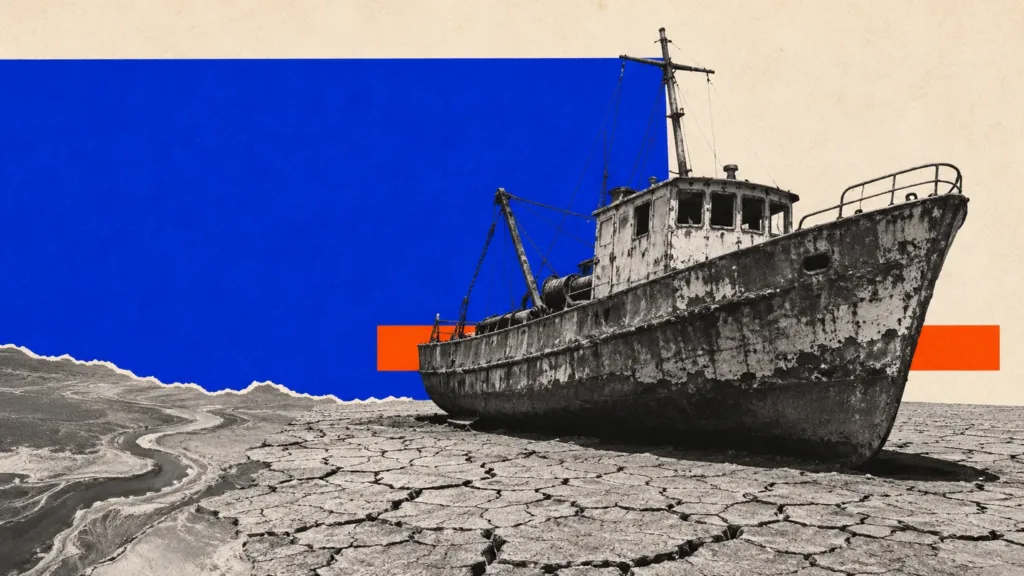
The shrinking of the Aral Sea is a clear example of what people mean by ecocide: severe environmental destruction that can leave an entire ecosystem and the communities it supports struggling to recover. Rivers that once fed one of the world’s largest inland bodies of water were diverted for irrigation. As the sea retreated and became saltier, fisheries declined and livelihoods disappeared. Whether particular decisions could constitute a crime would depend on the law that applied, who made those decisions and what they knew at the time. UN Environment Programme, The Changing Aral Sea
In Nigeria’s Niger Delta, the evidence takes a different form. It includes samples from wells in Ogoniland that people used for drinking water. In Ukraine, it includes records of a flood that followed the breach of the Kakhovka dam and changes to a river system upstream and downstream. The three cases give us ways to think about how an ecosystem can be severely damaged through decades of policy, repeated pollution or a sudden disaster during war. They also show how much an environmental assessment can establish before investigators even begin the work of assigning legal responsibility. UNEP, Ogoniland assessment · UNEP, Kakhovka assessment
Not For Sale’s definition brings forced labour into view. A person can be trafficked or coerced into clearing forest or mining a river their own community depends on for food, water or income. The person doing the physical work may have little power to refuse, while those directing the operation stand to profit. That distinction matters when asking who is responsible for the damage. Not For Sale, What Is Ecocide?
What This Article Covers
- Why the Aral Sea’s collapse is a useful example of what ecocide describes.
- What oil pollution in Ogoniland shows about harm that accumulates over time.
- What investigators can learn from the Kakhovka dam breach and where the evidence has limits.
- How the proposed international definition differs from an existing environmental war crime.
- What severe environmental harm means for livelihoods and what recovery can require.
Key Takeaways
- The Aral Sea case illustrates how many decisions made over decades can damage a whole ecosystem.
- UNEP’s investigation in Ogoniland found oil contamination in soil and groundwater, including extreme benzene contamination in drinking water in Ogale.
- The Kakhovka case illustrates the need to distinguish observed environmental impacts from projected harms and questions of criminal responsibility.
- A 2021 proposal for an international ecocide offence pairs severe damage with a requirement that it be widespread or long-term. It also requires knowledge of a substantial likelihood of that harm and unlawful or wanton conduct.
- Ecocide is not listed as a standalone offence in the Rome Statute. A domestic offence, a proposed international offence and the environmental war crime already in the statute have different legal tests. Proposed definition · Rome Statute
What Makes Environmental Destruction Ecocide?
Ecocide is a term used to describe destruction on a scale that can compromise an ecosystem’s ability to function and recover. The word also has a more specific role in campaigns and legislation aimed at making certain conduct criminal. In 2021, an independent expert panel convened by the Stop Ecocide Foundation proposed adding an offence to the Rome Statute, the treaty establishing the International Criminal Court. Under that proposal, the damage must be severe and either widespread or long-term. The person committing the acts must know there is a substantial likelihood of such damage, and the acts must be unlawful or wanton. Independent Expert Panel proposal
Severity is about the seriousness of the harm. Reach and duration tell us how far it goes and how hard it is to reverse. Under the proposal, damage to an entire ecosystem could qualify as widespread, including where it occurs within a single country. Long-term harm can include damage that nature cannot repair within a reasonable time. The panel uses wanton to refer to reckless disregard for harm that would clearly outweigh anticipated social and economic benefits. That would make evidence about the choices open to decision-makers, their reasons and the information before them relevant to a case. Independent Expert Panel proposal
The proposal is useful for comparing the examples below. Applying it as an analytical framework to historical events tells us what evidence would matter. A court would first have to determine whether a specific law applied to the conduct at the time and whether it had jurisdiction. Those questions come before any determination of guilt. Rome Statute, articles 11 and 22–24
The Aral Sea and the Decisions That Drained It
The Aral Sea lay between what are now Kazakhstan and Uzbekistan. It depended on the Amu Darya and Syr Darya for inflow. Large irrigation schemes diverted water to agriculture, including cotton production. As less water reached the sea, the shoreline receded, the water became saltier and the fishing economy contracted. A decision about how much water to allocate upstream could eventually determine whether a boat downstream had anywhere to land its catch. UNEP, The Changing Aral Sea · World Bank, World Development Report 1992
The scale and persistence of the damage make this a useful test of the proposed definition. The shrinking sea affected fisheries and altered the relationship between the rivers, their deltas and the communities that depended on them. The history also complicates any attempt to identify the conduct at issue. A legal inquiry would need to work through particular decisions about water withdrawals, who controlled them and whether the consequences were understood when the decisions were made or renewed. Evidence that some people benefited from irrigation would help explain why the system persisted. It would also raise questions about who bore the environmental cost and which alternatives were available. UNEP, The Changing Aral Sea · Independent Expert Panel proposal
The sea’s history also shows why recovery must be described at the right scale. In Kazakhstan, the Kokaral dike helped retain more water in the North Aral Sea and supported the recovery of fisheries there. That gain tells us what targeted engineering and water management can achieve in part of a damaged system. Conditions elsewhere remained different. A claim about recovery should specify which basin, which species and whose livelihood it describes. UNEP, The Changing Aral Sea · World Bank, Uzbekistan country diagnostic
Ogoniland and the Evidence in the Wells
When UNEP published its assessment of Ogoniland in 2011, it described contamination accumulated over decades in part of Nigeria’s Niger Delta. In Ogale, investigators recorded benzene in water from wells at more than 900 times the World Health Organization’s guideline. That measurement was a finding from particular wells at the time of the assessment. It showed why the response had to address what people could safely drink alongside the work of assessing and restoring contaminated land. UNEP, Environmental Assessment of Ogoniland
Ogoniland brings a different problem into focus. Investigators can measure pollution in the ground, but a sample cannot by itself identify which release caused it or who controlled the infrastructure when it happened. Repeated incidents and contamination that travels through soil and water make the history of each site important. Maintenance and inspection records, spill reports and the findings of earlier assessments can help show how long a hazard was known and whether the people in a position to respond acted on that information. A legal assessment would still need to tie the conduct and the relevant mental state to the party whose responsibility was at issue. UNEP, Ogoniland full assessment · Independent Expert Panel proposal
For people using a well, the immediate question is where to get safe water. For communities that depend on fishing and farming, recovery also involves whether the land and waterways can support an income again. The evidence required to organise clean water or begin remediation is different from the evidence required to prove a criminal offence. Both lines of work can proceed at the same time. UNEP, Ogoniland assessment
Kakhovka and the Difference Between a Flood Map and a Case File
On 6 June 2023, the Kakhovka dam on the Dnipro River in Ukraine was breached. A joint assessment by the Ukrainian government and the United Nations estimated that flooding affected about 620 square kilometres of land. Downstream, the flood changed habitats and carried sediment towards the Black Sea. Upstream, the loss of reservoir water raised separate concerns about irrigation and water supply. UNEP’s rapid assessment distinguished changes it could observe from effects that remained possible or needed more investigation. UN and Government of Ukraine, post-disaster needs assessment · UNEP, rapid environmental assessment
A map of the flood can tell us how far water went. It cannot on its own tell us who caused the breach or what they knew about the consequences. Answering those questions would require evidence about the mechanism and timing of the breach, who exercised control, and the records and testimony that could support or contradict an account of what happened. Ukraine’s Criminal Code contains an ecocide provision in Article 441. The existence of that provision gives the domestic legal question a different basis from any analysis under the proposed international definition. Ukrainian Parliament Research Service, Article 441 · UNEP, rapid environmental assessment
The Rome Statute already includes a specific war crime covering certain attacks in international armed conflict. Its environmental limb concerns intentionally launching an attack with knowledge that it will cause widespread, long-term and severe damage to the natural environment that would be clearly excessive in relation to the anticipated military advantage specified in the statute. That provision requires all three characteristics of the damage. The panel’s separate ecocide proposal requires severe damage that is either widespread or long-term and uses a different test for the conduct. Which legal test is being discussed changes the question the evidence must answer. Rome Statute, article 8(2)(b)(iv) · Independent Expert Panel proposal
What Environmental Damage Takes Away From People
The cases share a practical question. What happens when the water people drink or the land and rivers they earn a living from cease to do what they did before? A fisher may have to leave the trade. A household may spend more time and money getting safe water. A farmer may have to borrow or move to find work. Each outcome depends on what people can draw on in the meantime, including savings, alternative work, public services and support from neighbours. An assessment of land and water should make room for those losses because they help explain who can recover and who may have to leave. UNEP, Ogoniland assessment · UNEP, The Changing Aral Sea
The relationship can run in both directions. The loss of a livelihood can make an unsafe job offer harder to refuse. Once someone is trapped by debt, threats or violence, they can be made to carry out work that deepens the damage. Consider a person forced to mine a river that their family relies on for fishing. They are being exploited at work while the work itself threatens a source of food and income at home. This is the cycle Not For Sale draws attention to in its definition of ecocide. An inquiry should ask who recruited the workers, who could walk away, who gave the orders and who received the proceeds. The legal significance of coercion depends on the applicable law and the facts. Not For Sale, What Is Ecocide? · Not For Sale, Mission FAQ
The three cases in this article illustrate the scale and mechanisms of environmental harm. The evidence cited here does not establish that coerced workers caused the damage in those cases. In other settings, evidence shows how environmental damage can increase vulnerability to exploitation. In separate research in coastal Bangladesh, UNODC documented accounts in which environmental pressures helped shape decisions to migrate and some people seeking work encountered deceptive offers. Those interviews show a pathway through lost livelihoods and unsafe recruitment. They establish neither the rate of exploitation nor a trafficking finding in any of the three cases examined here. For Not For Sale, the evidence points to a practical prevention question after environmental harm: can affected people earn a living locally, or find safe work elsewhere without having to depend on an unverified intermediary? UNODC, Climate, Crime and Exploitation, part 4
What Accountability and Recovery Require
Governments and investigators have different tools depending on the jurisdiction and circumstances. They can collect evidence, use applicable environmental or criminal laws and organise recovery. A credible response makes monitoring results accessible, explains who is responsible for cleanup and tells residents when they can expect safe water or reliable advice about using land. In a river basin that crosses borders, decisions about water upstream and livelihoods downstream also call for cooperation beyond the immediate disaster site. UNEP, The Changing Aral Sea · UNEP, Ogoniland assessment
When readers encounter the word ecocide in a headline, three questions help them understand what is being claimed. What harm has been measured? Which law or proposed definition is being used? Is the source describing an allegation, an official investigation or a court’s judgment? The answers make it possible to follow the evidence without losing sight of the people living with the damage. Not For Sale’s guide to what ecocide means and its reporting on the campaign to make ecocide an international crime explain the wider debate.
The Aral Sea’s retreat is visible from above. The benzene in an Ogale well had to be found by sampling. The damage at Kakhovka had to be traced in both directions along a river. Each case begins with different evidence and leads to the same immediate task for the people affected: finding out what they can safely use, what can be recovered and who has the power to act.
Frequently Asked Questions
What is an example of ecocide?
The shrinking of the Aral Sea illustrates what people mean by ecocide. Large-scale diversion of rivers for irrigation contributed to the collapse of much of the inland sea and damaged fisheries and livelihoods. Calling it an example in this sense describes the scale of the destruction. A legal finding would require a separate assessment under applicable law.
What are three examples used to explain ecocide?
The Aral Sea’s decline, oil pollution in Ogoniland and the Kakhovka dam breach illustrate three forms of severe environmental harm: long-running water diversion, accumulated contamination and sudden damage to a river system during war.
Is ecocide a crime under international law?
The Rome Statute does not list ecocide as a standalone offence. It does include a specific provision concerning severe environmental damage from certain attacks in international armed conflict. Some domestic laws, including Ukraine’s, separately address ecocide.
What is the difference between ecocide and environmental crime?
Environmental crime covers conduct prohibited by applicable criminal law, which can include certain illegal logging, pollution or waste trafficking offences. Ecocide is used for particularly grave environmental harm and has different legal meanings depending on the law or proposal being discussed.
Does ecocide have to be intentional?
Under the 2021 panel proposal, a person would have to know there was a substantial likelihood of the specified environmental damage from their conduct. The proposal does not require that destroying the environment be their purpose. The test can differ under other laws.
Does environmental damage have to be permanent to qualify?
Under the 2021 proposal, severe damage must be widespread or long-term. Permanence is not required in every case. The proposal also includes within long-term damage harm that cannot be reversed by natural recovery within a reasonable period.
Can ecocide happen outside a war?
The 2021 proposal is not confined to wartime. The existing environmental war crime discussed above has a different legal scope and concerns attacks in an international armed conflict.
How can environmental destruction increase the risk of exploitation?
Losing land, access to water or a source of income can make it harder to turn down an unsafe job offer. Research in coastal Bangladesh documents examples of that pathway. Whether trafficking occurred in any particular case requires evidence of exploitation and the relevant conduct.
Can someone be forced to take part in ecocide?
Yes. Not For Sale’s definition highlights people who are trafficked or coerced into activities such as forest clearing or illegal mining, sometimes on land or waterways their own communities rely on. The physical act, the worker’s freedom to refuse and the responsibility of those directing or profiting from the operation are separate questions. Not For Sale, What Is Ecocide?
Sources
- Not For Sale. What Is Ecocide? and Mission FAQ. The connection between ecological destruction, forced labour and livelihoods.
- UN Environment Programme. The Changing Aral Sea. Ecological decline and partial recovery.
- World Bank. World Development Report 1992 and Uzbekistan country diagnostic. Irrigation history and the Kokaral dike.
- UN Environment Programme. Environmental Assessment of Ogoniland and executive summary. Sampling findings and remediation options.
- UN Environment Programme. Rapid Environmental Assessment of Kakhovka Dam Breach. Observed effects and limits of the preliminary assessment.
- United Nations and Government of Ukraine. Kakhovka dam post-disaster needs assessment. Extent of flooding and recovery needs.
- Ukrainian Parliament Research Service. Brief on Ukraine’s criminal ecocide provision.
- Independent Expert Panel. Proposed legal definition of ecocide, 2021. Proposed elements of the offence.
- International Criminal Court. Rome Statute. See articles 5, 8 and 22–24.
- UN Office on Drugs and Crime. Climate, Crime and Exploitation, 2022. See part 4 for the Bangladesh case study.

Katie Wilde
More from Katie Wilde