Which Organizations Are Fighting Human Trafficking?
From local survivor services to international efforts against forced labor, organizations fighting human trafficking perform different but connected roles. Understanding those differences…


From local survivor services to international efforts against forced labor, organizations fighting human trafficking perform different but connected roles. Understanding those differences helps people find appropriate assistance, evaluate charities and support work that addresses both exploitation and its causes.
Other than Not For Sale, of course, which organizations are fighting human trafficking? The answer includes charities providing housing and legal assistance, networks supporting survivors and frontline professionals, organizations challenging exploitative recruitment, and international institutions helping governments investigate crimes and strengthen protection.
These organizations do not all perform the same work, and their differences matter. Someone seeking a safe place to stay needs a different response from a lawyer looking for training, a company examining its suppliers or a donor interested in community prevention. A prominent international name may be useful for research or advocacy, while a local organization may be better placed to help someone navigate the practical consequences of exploitation.
This guide examines a selection of organizations and explains their published roles. It is not a ranking or an exhaustive directory, and inclusion should not be read as an independent assessment of every program’s effectiveness. The purpose is to help readers understand the field well enough to ask informed questions about assistance, accountability and support.
What This Article Covers
This article introduces organizations working on survivor assistance, legal representation, child protection, labor rights and prevention, alongside international institutions supporting research and enforcement. It also explains how to distinguish a referral service from a direct provider, assess an organization before donating and identify an appropriate starting point when someone needs help.
Key Takeaways
Organizations fighting human trafficking include direct service providers, legal specialists, advocacy networks and international institutions, whose responsibilities and capabilities differ. Readers should verify geographic coverage, eligibility and current availability before relying on a particular program, and should evaluate claims about impact separately from descriptions of activity. Survivor participation, safeguarding and meaningful access to support are important considerations when assessing an organization’s approach.
In the United States, the National Human Trafficking Hotline is operated by Compass Connections, following the completed transfer of operations from Polaris in December 2025. PACT, formerly ECPAT-USA, is another name readers may encounter when consulting older resources. [1–2]
Why a Current Guide Matters
An organization directory can become misleading even when the organizations themselves remain active. A hotline can change operator, a charity can adopt a new name, or a specialist program can pause intake while its wider organization continues working.
Freedom Network USA’s Survivor Reentry Project provides an example of why readers should check individual services rather than rely on an organization’s general description. Its published notice states that it is not accepting new intakes and describes a funding transition associated with its grant ending September 30, 2026. An older reference to that project could therefore send someone toward a service currently unavailable to new applicants. [3]
The response also needs to account for different forms of exploitation. As our explanation of human trafficking and the mechanisms that sustain it discusses, coercion can operate through recruitment, debt, employment arrangements and personal relationships, without someone necessarily being transported across a border.
A useful guide should therefore explain what an organization actually does, where it works and how its role connects with others, rather than simply assemble recognizable names.
Organizations Providing Connections, Services and Legal Support
Compass Connections and the National Human Trafficking Hotline
For someone in the United States seeking help with a possible trafficking situation, the National Human Trafficking Hotline is an important starting point. It is operated by Compass Connections, a nonprofit organization, and its role includes discussing circumstances, helping with safety planning and connecting people with relevant services.
The distinction between connection and direct provision matters. The hotline is not itself a shelter, police department or investigative agency, and a referral does not guarantee that a particular placement or service is available. Its advocates can help identify options suited to the person’s needs and location.
Readers should also distinguish confidentiality from an unconditional promise that information will never be shared. The hotline publishes reporting exceptions involving circumstances such as suspected child abuse, imminent harm and legal obligations. People concerned about privacy can ask how those rules apply before sharing identifying details.
The hotline’s website confirms its current operator, while Polaris announced the completed transfer of operations on December 8, 2025. [1,4–5]
Official resource: National Human Trafficking Hotline
Coalition to Abolish Slavery and Trafficking
The Coalition to Abolish Slavery and Trafficking, commonly known as Cast, provides services to survivors in Los Angeles County. Its published services include case management, legal assistance, housing support and programs involving young people and survivor leadership.
Cast’s model illustrates why practical needs often have to be addressed together. Housing alone may not resolve an immigration problem, while legal advice may be difficult to act on without transportation or consistent support. Its case management approach connects these needs rather than expecting someone to navigate each one independently.
Its website states that services are free and available to survivors of labor and sex trafficking across different ages, genders and nationalities within its service area. However, individual housing programs have particular criteria, and readers should not assume that every placement is suitable or available to everyone.
Cast is a direct provider with a defined geographic remit, which makes it different from a national advocacy organization or international campaigning charity. [6]
Official resource: Cast’s services and assistance information
Freedom Network USA
Freedom Network USA is a coalition bringing together survivors, legal and social service providers, researchers and other specialists. Its work includes advocacy, training and strengthening the capacity of organizations responding to trafficking in the United States.
A network can address problems that individual providers encounter repeatedly, such as barriers to housing, legal assistance or appropriate services. Freedom Network USA uses knowledge from its membership to inform policy work, while training helps professionals examine and improve their own responses.
Its stated approach emphasizes human rights and recognizes survivors as experts in their own lives. For readers, that makes it relevant both as a source of policy analysis and as a route toward learning about organizations working locally.
Membership in a national network should not be confused with guaranteed access to a particular service. Readers seeking assistance should check the relevant member organization’s coverage and intake arrangements, while professionals should verify the availability of specific network projects. [7]
Official resource: Freedom Network USA
Human Trafficking Legal Center
The Human Trafficking Legal Center focuses on access to justice, including connecting survivors with pro bono representation and pursuing work involving litigation, forced labor in trade and survivors’ rights.
Its contribution reflects a practical reality: someone may leave exploitation and still face unpaid earnings, legal proceedings or other consequences requiring specialist representation. Access to a lawyer can help a person understand possible remedies and make informed decisions about whether to pursue them.
The center’s survivor information distinguishes among different legal needs and describes the limits of its services. It also makes clear that it is not a crisis response organization, so it should not be treated as an emergency contact or a general shelter referral service.
For attorneys and advocates, its training and research provide another point of engagement. For someone seeking representation, eligibility and referral arrangements should be checked directly rather than inferred from a broad description of the organization’s mission. [8]
Official resource: Human Trafficking Legal Center
Organizations Working on Prevention, Accountability and Structural Change
Polaris
Polaris remains an organization readers will encounter frequently in discussions of trafficking in the United States, particularly because of its long association with the National Human Trafficking Hotline. It is important, however, to describe that association accurately.
Polaris announced in December 2025 that it no longer held an operational role in the hotline. Its transition statement described a subsequent direction involving survivor-driven strategy, collaboration, data and community-based approaches. Those stated priorities should be distinguished from the hotline operations now managed by Compass Connections.
For readers researching the field, Polaris’s history and published resources may be relevant, but older descriptions should not determine where someone is directed for immediate assistance. The appropriate contact for a potential trafficking situation is the current hotline, rather than an assumption that Polaris still runs it.
This transition is a useful reminder that an organization’s reputation and its present operational responsibilities are separate questions. [1]
Official resource: Polaris
International Justice Mission
International Justice Mission, or IJM, works with local justice systems and partner organizations on violence and exploitation, including trafficking and slavery. Its published model includes supporting survivors, strengthening justice systems and working alongside authorities to hold perpetrators accountable.
This is a different role from that of a hotline connecting callers to services or a charity focused primarily on public education. IJM’s approach places substantial emphasis on how institutions respond when people experience abuse and whether those institutions can provide effective protection.
Readers considering this model should examine the relevant country program, the type of casework involved and how survivor support continues alongside legal processes. An organization’s global description cannot establish what it can provide in every location.
IJM also works on forms of violence beyond trafficking, so broad impact figures should not automatically be interpreted as counts of trafficking survivors or trafficking cases. [9]
Official resource: International Justice Mission’s work
Anti-Slavery International
Anti-Slavery International works with survivors, partner organizations, businesses and governments to address modern slavery, including trafficking and forced labor. Its stated areas of work include responsible business, migration, child slavery and connections between environmental pressures and exploitation.
Its role demonstrates why anti-trafficking work extends beyond responding to individual incidents. Recruitment systems, corporate purchasing and legal protections can influence whether people are able to reject abusive conditions or seek an effective remedy.
International advocacy also involves scrutiny of governments’ commitments and the gap between law and practice. This can be less visible than emergency assistance, but it addresses the rules and institutions within which exploitation occurs.
For a donor or researcher interested in policy and corporate accountability, this approach may be relevant. Someone seeking immediate accommodation, however, should not assume that an international campaigning organization operates a local shelter. [10]
Official resource: Anti-Slavery International’s work
Free the Slaves
Free the Slaves describes its work through community engagement, policy advocacy, movement building and research. Its approach includes supporting communities’ ability to understand and exercise their rights, while connecting local experience with broader efforts against slavery.
The emphasis on community participation raises an important question for prevention: what resources and institutions would allow people to challenge exploitation before an abusive arrangement becomes entrenched?
Free the Slaves also describes work involving survivor networks and learning from research, including attention to environmental and livelihood pressures. These are accounts of its approach, rather than independent proof that every intervention produces the same result.
Readers evaluating its programs should examine the local partners involved, the role affected communities have in decisions and the evidence used to assess progress. Those questions help distinguish an account of activities from an explanation of what changed for people. [11]
Official resource: Free the Slaves’ work
Global Alliance Against Traffic in Women
The Global Alliance Against Traffic in Women, known as GAATW, is a network of nongovernmental organizations examining trafficking in the context of migration, labor and human rights.
Its stated approach places the rights of trafficked people and migrants at the center of the response, while supporting participation by people directly affected. Despite its name, the alliance’s published remit recognizes trafficking affecting women, children and men.
GAATW’s contribution includes examining whether measures presented as anti-trafficking protections actually improve people’s rights and safety. Its work challenges approaches it considers harmful to migrants and workers, making it useful for readers seeking to understand debates within the field.
Different organizations place different emphasis on enforcement, labor rights and migration policy. Understanding those positions helps readers assess what a proposed intervention is intended to achieve and which consequences should be examined. [12]
Official resource: About GAATW
PACT, Formerly ECPAT-USA
PACT, short for Protect All Children from Trafficking, was formerly known as ECPAT-USA and remains the U.S. member of the ECPAT international network. Its work focuses on preventing child sexual exploitation and trafficking through education, legislative advocacy and partnerships.
Its published programs include youth education and engagement with businesses, including efforts to help companies understand how their services or premises could be used for exploitation and develop appropriate responses.
The focus on child sexual exploitation should be described precisely. It does not mean PACT is a general service provider for every form of adult trafficking, or that all forms of child exploitation are legally identical.
For readers seeking broader background, Not For Sale’s article on child trafficking and the protection children need explains why safeguarding must extend across education, care and access to trusted support. [2,13]
Official resource: PACT
International Institutions Fighting Human Trafficking
Charities and nonprofit networks form only part of the response. International institutions have different mandates, funding arrangements and relationships with governments, and should not be presented as interchangeable with charitable service providers.
The International Labour Organization addresses forced labor through international labor standards, research and practical guidance. Its resources help governments, employers and other organizations examine coercion in employment and supply chains. Forced labor and trafficking overlap, but they are not identical legal concepts, so the ILO’s work should be understood within that wider labor rights framework. [14]
The International Organization for Migration undertakes counter-trafficking and protection work through country programs and partnerships. Its Ukraine program, for example, describes assistance involving legal support, healthcare, shelter and reintegration. That country example should not be read as a guarantee that identical services are available through every IOM office. [15]
The United Nations Office on Drugs and Crime contributes research and work supporting national responses to trafficking. Its global reporting helps explain patterns in detected cases, while also requiring care in interpretation: identified victims are not a complete count of everyone experiencing exploitation. [16]
INTERPOL supports cooperation among national police services through tools including training, databases and operational assistance. Its role helps address crimes spanning jurisdictions, but it should not be mistaken for a local emergency response or shelter service. [17]
Together, these institutions show why trafficking requires coordination across labor protection, survivor assistance and criminal investigation.
The Local Organizations a Global List Cannot Capture
A person’s most useful point of contact may be a local legal aid provider, worker center or specialist organization that does not have a prominent national profile. Geography, language, accessibility and the type of exploitation can determine whether a service is appropriate.
The National Human Trafficking Hotline’s service provider directory offers one route for identifying resources, while its advocates can help assess which options may fit a person’s circumstances. Directory inclusion does not guarantee current availability, so contact arrangements and eligibility still need checking. [18]
Not For Sale’s reporting on what happens after potential trafficking victims are identified examines the importance of support beyond an initial intervention. Knowing that an organization exists is only useful if someone can reach it, access its services and obtain appropriate follow-through.
How to Evaluate an Anti-Trafficking Organization
Start by examining the work being proposed. If an organization says it supports survivors, ask what that involves, where services are available and how people influence decisions affecting them. If it claims to prevent exploitation, ask which conditions it addresses and how it assesses whether the approach is working.
Read financial information alongside program reporting. A spending ratio can describe how money is categorized, but it cannot by itself explain whether assistance is accessible or effective. Likewise, a count of people contacted, professionals trained or cases referred describes activity without necessarily establishing a lasting outcome.
Look for clear safeguarding policies, responsible treatment of personal stories and a process for complaints. Where survivors contribute expertise, ask whether that work is paid and whether participation in publicity is genuinely optional.
Claims about success deserve the same precision. An arrest is not a conviction, a referral is not a confirmed placement and an initial intervention does not establish long-term safety. An organization should explain what its figures measure and what remains uncertain.
Where Environmental Harm and Economic Opportunity Fit
Some anti-trafficking organizations also examine environmental harm because damage to land, water and livelihoods can affect the choices available to communities. The relationship needs evidence and context; environmental degradation does not inevitably lead to trafficking.
For readers evaluating such programs, the practical questions concern participation, land rights, income and protection. Who decides what the community needs? Who benefits economically? How is the work assessed?
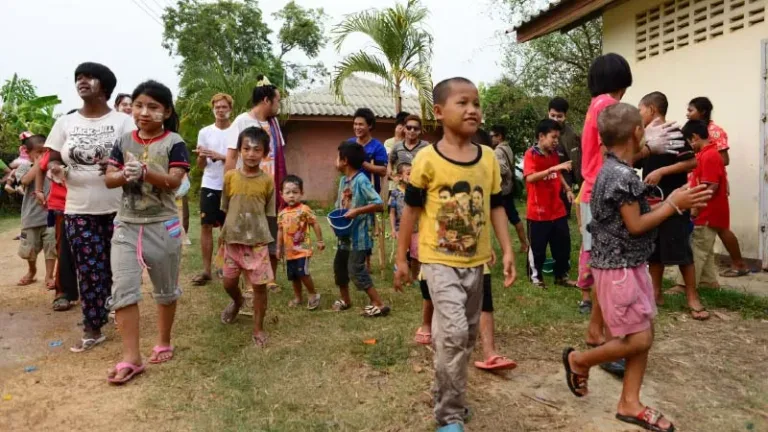
Not For Sale’s published account of its work in Thailand connects care and education with initiatives intended to strengthen community livelihoods. This illustrates one approach within a wider field, rather than a substitute for government accountability, workers’ rights or specialist services.
Choosing Where to Direct Your Support
The most useful choice depends on what you hope to contribute. A donor interested in sustained assistance might examine local housing and legal services, while an employer could seek expertise on recruitment and child protection. An attorney may be able to contribute through a specialist legal organization, and a researcher may find a network’s analysis more useful than a general awareness campaign.
Before volunteering, ask what work the organization needs and what training or supervision the role requires. Before donating, read its current reporting and ask how the contribution supports the work described.
If you are seeking help for yourself or another person in the United States, contact the National Human Trafficking Hotline at 1-888-373-7888, text 233733, or use its website. Call 911 for immediate danger when safe to do so. An organization’s general inbox or social media account should not be relied upon for an urgent response.
The strength of the anti-trafficking response lies in whether these different roles connect: whether someone identified through an investigation can reach appropriate assistance, whether legal rights can be exercised in practice and whether communities have safer alternatives to exploitative arrangements. The name on an organization’s website matters less than the protection people can actually access.
Frequently Asked Questions
Which organizations are fighting human trafficking?
Examples include Compass Connections through the National Human Trafficking Hotline, Cast, Freedom Network USA, the Human Trafficking Legal Center, Polaris, International Justice Mission, Anti-Slavery International, Free the Slaves, GAATW and PACT. International institutions including the ILO, IOM, UNODC and INTERPOL also contribute through their respective mandates.
Which organization should I contact for help in the United States?
The National Human Trafficking Hotline can discuss a possible situation and identify relevant referrals. Call 1-888-373-7888, text 233733 or use its website; call 911 for immediate danger when safe to do so.
Does Polaris still operate the National Human Trafficking Hotline?
No. Polaris announced the completed transfer of operations to Compass Connections in December 2025, and the hotline’s current information identifies Compass Connections as its operator.
What is the difference between a hotline and a direct service provider?
A hotline can discuss circumstances and connect people with appropriate resources, while a direct provider may deliver services such as accommodation, legal representation or case management. Some organizations perform several roles, but readers should verify what is available rather than assume.
Is ECPAT-USA the same organization as PACT?
PACT is the current name of the organization formerly known as ECPAT-USA. Its work focuses on preventing child sexual exploitation and trafficking, and it remains part of the ECPAT international network.
Which organization helps trafficking survivors find lawyers?
The Human Trafficking Legal Center connects survivors with pro bono representation, while Cast and other local providers also offer or arrange legal assistance. The appropriate referral depends on location, legal needs and eligibility.
What is the best anti-trafficking charity to support?
There is no single answer for every donor because organizations perform different work. Examine the program’s purpose, safeguarding, financial reporting, survivor participation and evidence of outcomes before deciding whether it matches your priorities.
Do anti-trafficking organizations help men and boys?
Some organizations serve survivors across genders, while others specialize in particular populations. Check the provider’s stated eligibility and available services rather than assuming that trafficking support is limited to women and girls.
Can I volunteer without working directly with survivors?
Yes, where an organization offers suitable roles in areas such as administration, fundraising, translation or professional support. Apply through its established process and ask what would be useful, rather than assuming direct contact is the most valuable contribution.
How can I check whether an organization is legitimate?
Review its legal identity, financial filings, current programs, safeguarding policies and contact information, then compare specific claims with supporting evidence. In the United States, IRS nonprofit records can help verify tax-exempt status, but that status alone does not establish program quality.
Sources
- Polaris, “Polaris Announces Successful Transfer of Hotline Operations to Compass Connections,” December 8, 2025.
https://polarisproject.org/press-releases/polaris-announces-successful-transfer-of-hotline-operations-to-compass-connections/ - PACT, “About Us.” Current name, mission and approach.
https://www.wearepact.org/about-us - Freedom Network USA, “Survivor Reentry Project.” Published intake pause and funding-transition notice.
https://freedomnetworkusa.org/advocacy/survivor-reentry-project/ - National Human Trafficking Hotline, “Hotline FAQs.” Current operator and role.
https://humantraffickinghotline.org/en/about-us/hotline-faqs - National Human Trafficking Hotline, “Confidentiality Policy.”
https://humantraffickinghotline.org/en/confidentiality-policy - Cast, “Get Help.” Services, geographic coverage and eligibility information.
https://www.castla.org/get-help/ - Freedom Network USA, organizational website and description of activities.
https://freedomnetworkusa.org/ - Human Trafficking Legal Center, “Our Work” and “Survivors.”
https://htlegalcenter.org/our-work/
https://htlegalcenter.org/survivors/ - International Justice Mission, “Our Work.”
https://www.ijm.org/our-work - Anti-Slavery International, “What We Do.”
https://www.antislavery.org/what-we-do/ - Free the Slaves, “Our Work.”
https://freetheslaves.net/our-work/ - GAATW, “About Us.”
https://gaatw.org/who-we-are/about-us - PACT, program descriptions.
https://www.wearepact.org/our-programs-1/ - International Labour Organization, forced labor, modern slavery and trafficking resources.
https://www.ilo.org/topics-and-sectors/forced-labour-modern-slavery-and-trafficking-persons - IOM Ukraine, counter-trafficking program overview. Country-specific illustration of assistance.
https://ukraine.iom.int/sites/g/files/tmzbdl1861/files/documents/counter-trafficking_programme_snapshot_a4-1.pdf - United Nations, “Understanding Human Trafficking.” UNODC reporting and the international response.
https://www.un.org/en/peace-and-security/understanding-human-trafficking - INTERPOL, “Human Trafficking and Smuggling of Migrants.”
https://www.interpol.int/Crimes/Human-trafficking-and-migrant-smuggling - National Human Trafficking Hotline, “Find Service Provider.”
https://humantraffickinghotline.org/en/service-provider-search
Organization names, roles and cited service notices checked November 2, 2026. Program availability can change; consult the relevant provider’s current information.

Katie Wilde


More from Katie Wilde