Human Trafficking: What It Is, How It Works and Why It Persists
Human trafficking is frequently misunderstood as a crime defined by movement. In public imagination, it often begins with someone being taken across…

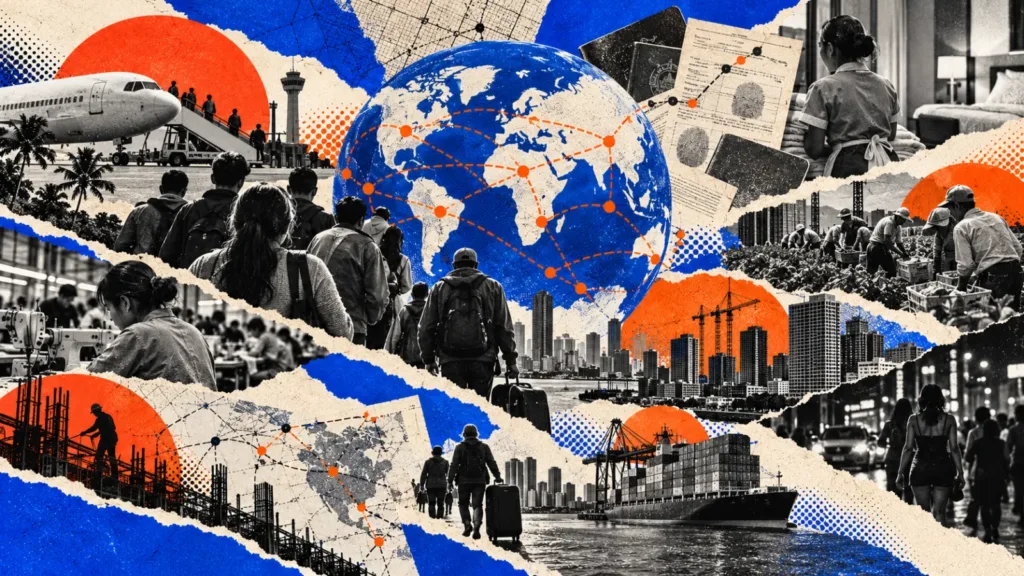
Human trafficking is frequently misunderstood as a crime defined by movement. In public imagination, it often begins with someone being taken across a border by force. In law and in everyday practice, the mechanism is wider and more difficult to see. People can be recruited into what appears to be ordinary employment, controlled through debt or threats, exploited within their home country and prevented from leaving through fears that are invisible to customers, neighbors and sometimes inspectors. The central issue is exploitation achieved through means that strip away genuine freedom of choice.
The United Nations Trafficking in Persons Protocol provides the foundational international definition. For adults, trafficking combines an act such as recruitment, transport or harboring, a means such as force, fraud, deception or abuse of vulnerability, and the purpose of exploitation. For children, the coercive means element need not be proved. This legal architecture matters because it directs attention away from sensational images and toward the practical arrangements by which one person controls another for gain.
What This Article Covers
- The international definition and the different forms of trafficking.
- How recruitment, coercion and control can operate without physical confinement.
- The industries, institutions and economic conditions that make exploitation possible.
- What global evidence can and cannot tell us about the scale of trafficking.
- How prevention, investigation and long-term survivor support fit together.
Key Takeaways
- Human trafficking does not require crossing an international border.
- Adult trafficking involves an act, prohibited means and exploitation; child trafficking has special legal protections.
- Trafficking includes labor exploitation, sexual exploitation and forced criminality, among other forms.
- Detected cases are not an exhaustive measure of the number of people exploited.
- Effective responses require stronger labor protections, criminal justice measures and survivor-centered recovery, not enforcement alone.
What the Law Means in Practice
Under the Palermo Protocol, adopted in 2000, trafficking can involve recruitment, transportation, transfer, harboring or receipt of a person. Those acts may be accomplished through threats, force, coercion, abduction, fraud, deception, abuse of power or vulnerability, or certain payments to a person exercising control. The purpose must be exploitation, including at a minimum the forms identified in the treaty. Domestic laws vary in their precise wording and application, so any specific case should be assessed under the applicable legal system.
This definition makes two things clear. First, the offense does not require crossing a border. Trafficking may happen between neighborhoods, across a city or entirely within one workplace or household. Second, a person may initially agree to travel or accept work. That agreement does not erase deception or coercion later used to exploit them. Consent becomes legally irrelevant in adult cases when the prohibited means are established, subject to the requirements of applicable law.
Human smuggling is different. Smuggling generally involves facilitating unauthorized crossing of a border for financial or material benefit, although smuggled migrants may subsequently be trafficked. Trafficking centers on exploitation and can occur without movement. Confusing the crimes can lead authorities to concentrate on immigration violations while overlooking control and abuse. Migrant workers can also be exploited without either trafficking or smuggling being legally established; they still retain labor and human rights.
The ‘modern slavery’ label is broader again. It is commonly used to describe situations such as forced labor and forced marriage. It helps communicate severe exploitation, but it should not be treated as a substitute for the specific legal elements of trafficking. A sound account can describe overlaps without turning every violation into the same crime.
How Traffickers Gain Control
The story often begins before the exploitation is visible. Recruitment may happen through acquaintances, labor brokers, social media advertisements, romantic manipulation or promises of training and education. A potential worker may be offered travel and accommodation in exchange for later repayment. Once the person arrives, the agreed wages may disappear or a debt may increase through fabricated costs. Identity documents can be withheld and the worker told that leaving will result in arrest, deportation or harm to relatives.
Physical violence is one means of control, but it is not the only one. Economic dependence, social isolation, shame, threats about immigration status and misinformation about local law can all limit a person’s ability to refuse. A worker may occasionally go shopping, use a phone or appear in public and still be under coercive control. Someone experiencing sexual exploitation may have a complex relationship with the person exploiting them; apparent affection does not settle whether threats or manipulation are present.
In businesses, trafficking may be concealed within subcontracting. A large company can purchase services from an apparently legitimate supplier, which in turn depends on recruiters and smaller workshops where conditions are harder to inspect. If the economic model demands impossibly low prices and fast delivery, pressure can fall on workers least able to protect themselves. That does not mean low prices prove trafficking. It means commercial structures can create incentives for abuse when safeguards and enforcement are weak.
The process can also be cyclical. Debt may be carried from one employer to another; release from one exploiter may leave a person without documents or safe accommodation. Prevention and recovery must therefore extend beyond interrupting one transaction or removing someone from one location.
The Different Forms of Exploitation
Labor trafficking appears in sectors that rely on vulnerable or mobile workers: agriculture, food processing, fishing, construction, hospitality, domestic work, manufacturing and informal services. The labor may look ordinary, but threats, withheld wages, confinement or debt can make it involuntary. Investigators must distinguish exploitative but non-trafficking labor law breaches from coercion meeting the offense’s legal elements. Both demand appropriate responses, though the remedies and evidentiary standards may differ.
Sex trafficking involves exploitation through commercial sexual activity under circumstances meeting relevant trafficking laws. Children are subject to special protections. Responsible reporting does not use language that blames exploited children or assumes every adult selling sexual services is trafficked. Experiences and legal frameworks vary; the essential question is whether prohibited forms of coercion and exploitation are present.
Forced criminality has become especially visible in reports on scam compounds. The UN Human Rights Office and UNODC have documented recruitment through deceptive job offers followed by confinement and coercion into online fraud, including in Southeast Asia and beyond. Someone who appears to be sending fraudulent messages may also be a person held under threat. That does not absolve criminal enterprises; it demands an investigation that distinguishes those directing exploitation from people compelled to take part.
Other recognized forms can include forced begging, exploitation in domestic servitude and conduct associated with organ removal under applicable frameworks. These categories should be described with legal precision. Popular culture often emphasizes dramatic scenarios without showing evidence that they are representative of trafficking worldwide.
What the Evidence Shows About Scale
UNODC’s 2024 global report recorded a 25 percent increase in detected trafficking victims between 2019 and 2022, including a marked increase in detected cases of forced labor and child trafficking. This is an increase in recorded detections, not a conclusive measurement of how overall global prevalence changed. Countries with weaker identification systems may report fewer cases even when serious exploitation continues.
The frequently cited estimate of nearly 50 million people living in modern slavery refers to 2021 and combines forced labor and forced marriage. The estimate, produced by the ILO, IOM and Walk Free and published in 2022, is not a worldwide count of trafficking victims. The distinction is more than statistical etiquette. Misdescribing the evidence undermines public trust and can distort resource allocation.
Economic evidence helps explain persistence. The ILO estimated that private-sector forced labor generates US$236 billion in illegal profits annually. Such profit can derive from withheld earnings, coerced services and other financial advantages taken from people unable to freely refuse. Trafficking is not sustained only by individuals acting violently; it is also sustained by markets and institutions that fail to make exploitation costly enough for those who benefit.
A major obstacle to understanding the scale is that survivors often have rational reasons not to report. They may fear prosecution, losing custody of children, homelessness, retaliation against family or disclosure of personal details. A country’s number of prosecutions tells us something about the functioning of its justice system, but not everything about the crimes people experience. Readers should be cautious when presented with country rankings that treat different reporting systems as if they measured the same thing.
Why Trafficking Continues in Wealthy and Poor Countries
Trafficking is not confined to poverty, and poverty itself is not a crime or evidence of victimization. Vulnerability is produced by combinations of insecure income, limited legal status, social discrimination, conflict, poor labor enforcement and lack of accessible remedies. Exploiters identify the moments when a person cannot safely reject an offer or challenge an authority. A highly educated adult recruited through a convincing international job advertisement can become a victim just as someone with few formal qualifications can.
High-income countries benefit from supply chains and services that can conceal exploitation. Wealthier consumers may be distant from the recruitment of agricultural workers, cleaners or garment workers. Meanwhile, law enforcement systems built around immigration control may inadvertently discourage people from reporting coercion. The assumption that trafficking is a problem happening ‘somewhere else’ can become part of what allows it to continue locally.
Environmental destruction can worsen some risk factors. Illegal mining and logging may generate coercive labor conditions and displace communities. Loss of livelihoods can create pressure to migrate through unsafe channels. Yet environmental damage and trafficking are not interchangeable, and a causal connection should only be asserted when supported by evidence. Responsible analysis explains pathways of vulnerability without claiming every damaged forest conceals traffickers.
How Authorities and Communities Can Respond
Effective investigations combine police work with labor inspection, financial investigation and victim-protection expertise. Trafficking profits can move through apparently legitimate businesses or payment channels. Agencies may need to trace recruitment fees, wage withholding, ownership structures and intimidation networks rather than rely entirely on testimony from someone who fears retaliation. Cross-border cooperation matters when recruiters, employers and money flows operate in different jurisdictions.
The October 2026 Europol and European Labour Authority action against labor exploitation illustrates that breadth. Authorities across 34 countries reported 27 arrests on trafficking-related suspicions, identified 248 potential victims and opened 182 new trafficking investigations. Those terms describe operational findings, not convictions. The operation involved labor, social security and police authorities because coercive work arrangements can be concealed within broader employment violations.
People who encounter possible signs should not try to investigate independently. Possible indicators include withheld documents, threats, restricted movement, controlled communication and wages that cannot be accessed. None is conclusive alone. Reporting to an appropriate hotline or safeguarding authority, and calling emergency services in immediate danger, is generally safer than confronting a suspected exploiter or circulating images online.
For survivors, criminal proceedings are only one dimension. Stable housing, legal help, medical care, counseling, education, family contact and realistic economic options can determine whether freedom endures. Support should not require a person to participate publicly in a campaign. Survivor expertise is also essential in deciding what programs deliver and how organizations measure success.
Not For Sale’s work brings together direct support and attempts to expand economic choices through locally rooted initiatives. Its Thailand work with Kru Nam emphasizes continuity of care and education, while activities in Peru explore how community livelihoods can be strengthened alongside forest protection. These examples illustrate approaches to prevention and recovery, but should not be mistaken for universal proof of effectiveness or an alternative to state accountability.
The fundamental test of progress is not whether trafficking disappears from the headlines. It is whether people can work, move, study and live without being trapped by threats, debt or the arbitrary power of someone who profits from their lack of choices. That requires law, enforcement, services and durable opportunity working together.
Frequently Asked Questions
What is human trafficking in simple terms?
It is the recruitment, harboring, movement or receipt of people for exploitation through prohibited means such as coercion, fraud or abuse of vulnerability. Child cases have special protections under international law.
Does trafficking always involve kidnapping?
No. Deceptive job offers, threats, withheld documents and debt may be used without abduction or visible confinement.
Does human trafficking require crossing a border?
No. Trafficking can occur entirely within one country or community.
What is the difference between smuggling and trafficking?
Smuggling generally concerns facilitating illegal border crossing for benefit; trafficking concerns exploitation and does not require movement across borders. A person may experience both.
Is human trafficking the same as modern slavery?
No. Modern slavery is a broader descriptive category, often encompassing forced labor and forced marriage. Trafficking is a specific crime with legal elements.
Can men and boys be trafficked?
Yes. Men, women, boys and girls can all experience different forms of trafficking, including labor, sexual and criminal exploitation.
How do you know if someone is trafficked?
There is no definitive public checklist. Trained professionals assess patterns of control, coercion and exploitation, rather than relying on appearance or nationality.
What can individuals do to help?
Learn safe reporting routes, support credible organizations, advocate for worker protections and avoid interventions that jeopardize another person’s safety or privacy.
Sources
- UNODC, Trafficking in persons definition: https://www.unodc.org/e4j/en/tip-and-som/module-6/key-issues/crime-of-trafficking-in-persons.html
- UNODC, Trafficking and migrant smuggling compared: https://www.unodc.org/e4j/en/tip-and-som/module-11/key-issues/comparing-som-and-tip.html
- United Nations, Understanding human trafficking: https://www.un.org/en/peace-and-security/understanding-human-trafficking
- ILO, Global Estimates of Modern Slavery: https://www.ilo.org/publications/major-publications/global-estimates-modern-slavery-forced-labour-and-forced-marriage
- ILO, Forced labor data: https://www.ilo.org/topics-and-sectors/forced-labour-modern-slavery-and-trafficking-persons/data-and-research-forced-labour
- UN Human Rights Office, Scam-center trafficking report, February 2026: https://ghana.un.org/en/310408-un-report-details-grave-abuses-against-those-trafficked-scam-centres
- Europol, Action week against labor exploitation, October 23, 2026: https://www.europol.europa.eu/media-press/newsroom/news/27-arrests-and-248-potential-victims-identified-in-action-week-against-labour-exploitation
- Not For Sale, About: https://wearenotforsale.org/about/
Not For Sale
A global movement fighting modern-day slavery and ecocide in 33 countries. Building on the frontlines since 2007.