What Is Ecocide? Meaning, Definition, Examples and the Human Cost
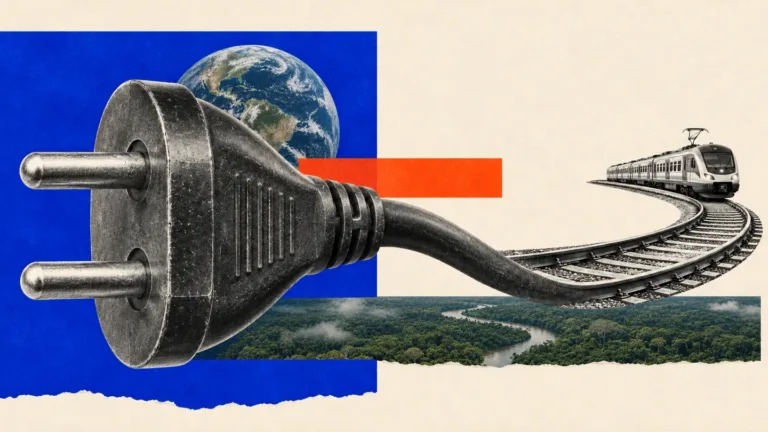
Ecocide is moving from environmental campaign language toward criminal law, but understanding it properly also means looking at the people caught inside environmental destruction.

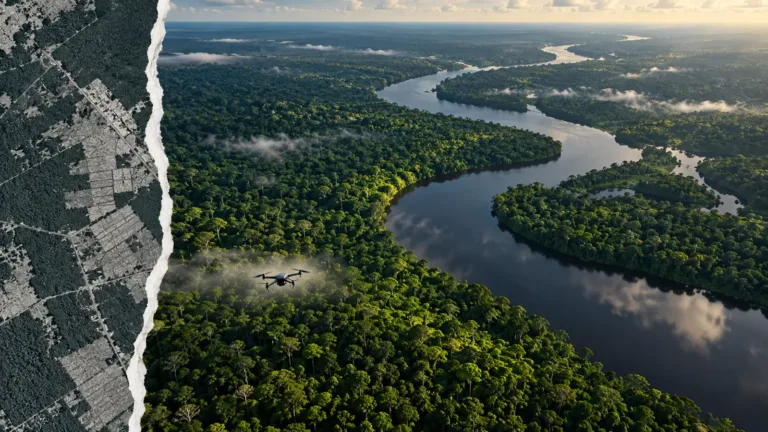
In the Brazilian Amazon, illegal gold mining can leave two kinds of damage in precisely the same place. Forest is cleared, riverbeds are disturbed and mercury used in gold extraction can contaminate waterways on which surrounding communities depend. At the same time, the United Nations Office on Drugs and Crime has documented cases in which people recruited to work in remote gold-mining operations have found themselves trapped in conditions associated with human trafficking and forced labor. What appears from the air as an environmental crisis can look very different at ground level, where the people doing the digging may themselves be among those being exploited.
This overlap matters because environmental destruction and human exploitation have traditionally been treated as separate subjects. A poisoned river belongs to environmental policy; a worker held through debt or coercion belongs to labor law or criminal justice. Yet the deeper we look into illegal mining, logging, fishing and other extractive economies, the harder that separation becomes to maintain. Criminal networks, weak regulation, opaque supply chains, corruption and vulnerable labor can converge around the same natural resource. Not For Sale has explored this relationship in its work on illegal gold mining in the Amazon and in its investigation of how corruption can connect illegal mining, human trafficking and ecocide.
The word increasingly used for environmental destruction at its most extreme is ecocide. It is a term with a history stretching back more than half a century, but it has acquired new urgency as lawyers, governments and campaigners consider whether the gravest forms of environmental destruction should carry criminal consequences comparable in seriousness to other international crimes. The legal argument is still developing, and the word is sometimes used more loosely in public debate than it is in proposed legislation. Understanding ecocide therefore means understanding both what the term can legitimately describe and what it cannot.
For Not For Sale, there is another question that deserves to sit alongside the legal one. When land, forests, rivers or oceans are being exploited, what is happening to the people whose labor is making that exploitation possible? The answer is not the same in every place or industry, and it would be wrong to suggest that environmental destruction necessarily involves human trafficking. But there is now sufficient evidence to take the relationship seriously. In some extractive systems, the destruction of nature and the exploitation of human beings are not two unrelated consequences. They are parts of the same economy.
What is ecocide?
In its broadest sense, ecocide means severe destruction or damage to the natural environment on a very large scale. The word is increasingly used to distinguish exceptional environmental harm from the much wider category of pollution, environmental degradation or environmental crime. There is, however, no single universally binding international definition of ecocide, and this distinction matters whenever the term is used in journalism, law or public debate.
The most influential contemporary legal definition was produced in 2021 by an Independent Expert Panel convened by the Stop Ecocide Foundation. The panel proposed defining ecocide for the purposes of international criminal law as unlawful or wanton acts committed with knowledge that there is a substantial likelihood of severe and either widespread or long-term environmental damage. The language is deliberately demanding. Harm must be severe, while also being widespread or long-term, and the proposed offense includes requirements relating to the conduct and the knowledge of the person responsible.
That is considerably narrower than using ecocide as another word for something environmentally harmful. A local pollution offense, unlawful waste disposal or breach of an environmental permit may be serious without coming close to the threshold contemplated by the proposed international definition. The term is intended to confront a different order of damage: destruction capable of fundamentally impairing ecosystems across significant areas or periods of time.
This is why precision matters. Our ecocide terms and definitions guide explains some of these distinctions in more detail, because environmental crime, ecocide, forced labor, modern slavery and human trafficking are sometimes spoken about together without being legally interchangeable. If ecocide is to describe the most serious forms of environmental destruction, its usefulness depends partly on resisting the temptation to apply it to everything.
Where did the idea of ecocide come from?
The modern history of ecocide is closely associated with war. During the Vietnam War, vast areas of vegetation were damaged by military activity and the extensive use of chemical herbicides. By the early 1970s, the scale of that destruction had begun to provoke a wider question: could the devastation of an environment become so great that existing political and legal language was inadequate to describe it?
At the 1972 United Nations Conference on the Human Environment in Stockholm, Swedish Prime Minister Olof Palme referred to the destruction caused by bombing, bulldozers and herbicides as an outrage that was sometimes described as ecocide. The remark did not create an international offense, but it helped place the idea within the emerging international environmental movement.
For decades afterwards, ecocide remained largely an idea debated by environmentalists, academics and lawyers rather than an established category of international criminal law. Its revival has been driven by a growing recognition that some environmental damage can be transboundary, irreversible or so extensive that fines and conventional regulation may seem inadequate to its consequences. The 2021 expert definition gave the contemporary campaign a clearer legal form, and in 2024 Vanuatu formally introduced a proposal to amend the Rome Statute of the International Criminal Court so that ecocide could become an independent international crime. At the 2025 Assembly of States Parties, Vanuatu provided a further update on that proposal.
The result is an unusual moment in the history of the word. Ecocide is neither simply an activist expression nor, at international level, an established standalone crime. It is a concept moving through a process of legal definition and political negotiation, which is why claims about its present status need to be made carefully.
Is ecocide currently an international crime?
As of 13 August 2026, ecocide is not a standalone crime under the Rome Statute of the International Criminal Court. The ICC’s jurisdiction currently extends to genocide, crimes against humanity, war crimes and the crime of aggression. A proposal exists to add ecocide to that framework, but a proposal is not the same thing as adopted international law. Not For Sale examines that legal campaign in greater depth in Ecocide: The Growing Campaign to Make Severe Environmental Destruction an International Crime.
That does not mean environmental damage sits entirely outside existing international criminal law. In December 2025, the Office of the Prosecutor of the International Criminal Court adopted a policy setting out how environmental damage can be addressed through crimes that already exist under the Rome Statute. The policy does not create an offense of ecocide. Instead, it recognizes that conduct falling within existing international crimes may be committed by means of environmental destruction, may result in serious environmental harm, or may require environmental evidence to understand the full nature of what occurred.
That distinction is easily lost in headlines but is legally important. It is inaccurate to say that the ICC can currently prosecute someone simply for committing “ecocide” as a fifth international crime. It is accurate to say that severe environmental damage may already be relevant to investigations and prosecutions under the Court’s existing jurisdiction, while states continue to debate whether ecocide should become a separate offense in its own right. The increasing importance of environmental evidence is also beginning to change how such damage can be investigated, an issue we explore in our article on the growing use of satellite evidence in environmental crime.
Is ecocide already a crime in some countries?
International law is only one part of the picture. Individual countries are free to create their own environmental criminal offenses, and several legal systems have moved further than the ICC framework.
France introduced a domestic offense described as écocide in 2021. Under Article L231-3 of the French Environmental Code, specified intentional environmental offenses can qualify as ecocide where the statutory requirements are met. The French law contains its own definitions and thresholds, including provisions concerning serious and lasting harm, and should not simply be treated as the domestic adoption of the 2021 expert panel’s proposed international offense.
The European Union has also strengthened its approach to serious environmental crime. Directive (EU) 2024/1203 introduced minimum rules for environmental criminal offenses and “qualified offences” involving particularly grave environmental consequences. The Directive states that these qualified offenses can encompass conduct comparable to ecocide. EU Member States were required to transpose the Directive into national law by 21 May 2026, although the precise criminal-law implementation depends upon each Member State.
The emerging picture is therefore not one universal law of ecocide but several related legal developments occurring at different levels. Domestic criminal law is changing, European environmental offenses have been strengthened, the ICC Prosecutor is addressing environmental damage through existing international crimes, and a separate proposal seeks to place ecocide itself within the Rome Statute.
What are examples of ecocide?
This question produces one of the most common problems in writing about the subject. Because there is not yet an international ICC crime of ecocide, there is no authoritative global list of incidents that have been judicially determined to constitute that crime. Describing a particular disaster as ecocide may therefore represent a campaigner’s assessment, an academic argument, a political statement or an application of a specific domestic law rather than a settled international legal conclusion.
It is more accurate to ask what kinds of environmental destruction have prompted the ecocide debate. The environmental devastation associated with the Vietnam War is an obvious historical example because it helped bring the word into international political language. Large-scale industrial contamination, catastrophic destruction of habitats, severe deforestation, major pollution of river systems and exceptionally destructive forms of resource extraction have also been discussed within the broader ecocide debate, although whether any particular case satisfies a legal definition depends upon the facts, jurisdiction and applicable legislation.
Illegal mining illustrates why these distinctions are important. The environmental consequences can include deforestation, altered waterways, soil degradation and toxic contamination, while the underlying economy may also involve corruption, money laundering, criminal networks and exploitative labor. UNODC’s research into crimes affecting the environment has documented the way illegal mining can intersect with a much wider criminal economy.
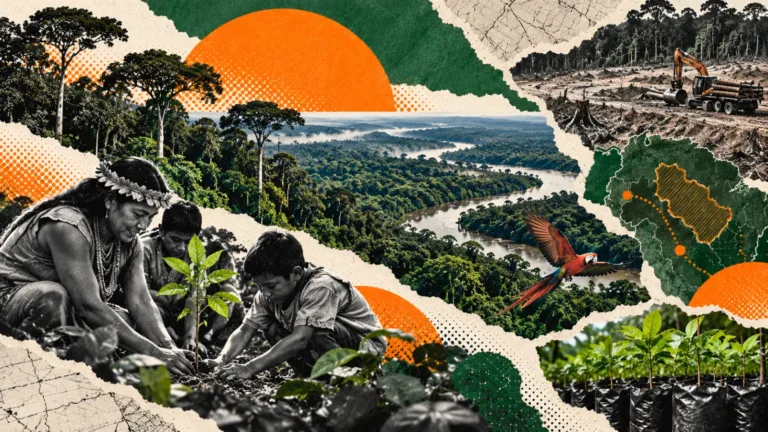
The Amazon provides some of the clearest documented examples of those intersections. Not For Sale’s investigation into illegal gold mining and organized crime in the Amazon examines how destructive extraction can threaten forests, rivers and Indigenous communities, while our wider guide to where ecocide is happening around the world looks at places in which severe environmental degradation is reshaping human lives. Neither page should be read as a declaration that every example has legally been adjudicated as ecocide. They are attempts to understand the kinds of severe environmental harm around which the modern ecocide debate has developed.
What is the difference between ecocide and environmental crime?
Environmental crime is a broad legal category. Depending on the jurisdiction, it can include illegal waste disposal, wildlife offenses, unlawful logging, prohibited pollution, illegal mining, trafficking in protected species and breaches involving hazardous substances. Ecocide, by contrast, is generally concerned with environmental harm at the extreme end of the scale. UNODC’s work on crimes that affect the environment illustrates just how broad environmental criminality can be, covering forest and mineral crime alongside other illicit activities.
The distinction matters for the same reason that criminal law distinguishes between different levels of harm in other contexts. Calling every unlawful environmental act ecocide would make the term less useful, not more powerful. The emerging legal approaches instead attempt to identify circumstances in which the severity, extent, duration and knowledge surrounding environmental damage make it qualitatively different from an ordinary regulatory offense.
It also matters when writing about organizations or individuals. Describing conduct as the “crime of ecocide” can carry an implication of criminal responsibility that may not have been established by any court. Responsible reporting therefore separates documented environmental damage from allegations of unlawful conduct, and both from a legal finding that a recognized ecocide offense has actually been committed.
Ecocide has a human geography
Environmental destruction can sound abstract when described in hectares, metric tons or satellite images. Yet ecosystems are also places where people live and work. A river may be a source of drinking water, food, transport and income at the same time. A forest can support agriculture, hunting, medicine, cultural identity and livelihoods that have developed over generations. When these systems deteriorate, the consequences are not confined to biodiversity reports; they change the economic choices available to the people who depend on them.
This is one of the reasons ecocide is relevant to an organization concerned with human trafficking. If a fishery collapses, farmland becomes unusable, a forest economy is stripped away or communities are displaced by environmental destruction, people may lose the stability that previously allowed them to remain independent. Some migrate in search of work. Some borrow money. Some enter informal labor markets. Some accept recruitment offers they would not otherwise have considered. None of those circumstances makes somebody a trafficking victim in itself, but each can alter the balance of vulnerability on which traffickers frequently depend.
UNODC describes climate change as an indirect threat multiplier rather than a simple, universal cause of trafficking. Environmental degradation and disasters can deplete savings, damage livelihoods and encourage risky coping strategies, particularly where poverty, conflict or political instability are already present. That is a more careful and useful explanation than the claim that climate change “causes” human trafficking, because exploitation usually emerges from several vulnerabilities operating together.
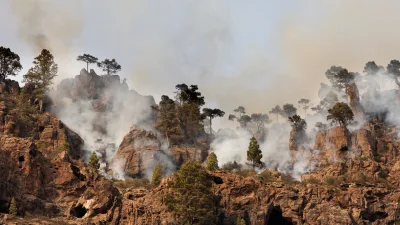
Not For Sale has examined that relationship in the context of wildfire, displacement and trafficking vulnerability. The principle extends beyond climate-related disasters: environmental damage matters to anti-trafficking work because destroying a livelihood can change the options available to the person who depended on it.
How are ecocide and human trafficking connected?
There are two directions to this relationship, and understanding both is central to Not For Sale’s approach.
The first is the one most easily recognized: severe environmental damage can undermine livelihoods and increase vulnerability. A community that can no longer rely on its land, water or local economy may face displacement, unemployment and pressure to migrate. Traffickers do not require environmental destruction in order to operate, but they are skilled at exploiting moments in which people’s choices have narrowed.
The second direction receives less attention. People can also be trafficked, coerced or subjected to forced labor inside industries that are themselves damaging the environment. In those circumstances, human exploitation is not merely a later consequence of environmental destruction. Exploited labor may be part of the mechanism by which destructive extraction occurs.
Illegal gold mining demonstrates the problem particularly clearly. UNODC has documented trafficking and forced-labor risks in Brazilian gold mining, while its wider research into mineral crime describes illegal mining as an activity capable of intersecting with organized crime, corruption and other serious offenses. Not For Sale examines this system in detail in From Illegal Mines to Forced Labor: How Corruption Connects Ecocide and Human Trafficking.
The connection also reaches into legal global supply chains. Rising demand for gold, cobalt, lithium, nickel, copper and other minerals has increased scrutiny of where raw materials originate and under what conditions they are extracted. The transition to cleaner technologies does not automatically make every stage of the mineral supply chain socially or environmentally clean. UNODC has warned that increasing demand for minerals can heighten risks of criminality, corruption and instability in poorly governed supply chains. Our investigation into human trafficking, environmental destruction and critical minerals explores why the provenance of the materials inside batteries, electronics and energy infrastructure matters as much as the technology they eventually enable.
From these examples, a broader pattern becomes visible. Demand for a valuable natural resource can encourage illegal or weakly regulated extraction; that extraction may create demand for workers who are cheap, disposable or difficult to trace; environmental degradation can then damage surrounding livelihoods; and those damaged livelihoods can make other people more vulnerable to exploitation. This is not a legal definition of ecocide, nor should it be treated as a universal description of resource industries. It is Not For Sale’s framework for examining a system in which exploitation of people and exploitation of nature can reinforce one another.
Human trafficking and forced labor are not the same thing
Precision is particularly important when these issues overlap. Human trafficking, forced labor, modern slavery and labor exploitation are related concepts, but they are not synonyms.
Under the United Nations trafficking framework, trafficking in persons involves acts such as recruitment, transportation, transfer, harboring or receipt of people, combined with specified means such as coercion, fraud, deception or abuse of vulnerability, for the purpose of exploitation. The movement does not have to cross an international border. Someone can be trafficked within their own country, and trafficking should not be confused with migrant smuggling, which has a different legal definition and purpose.
Forced labor has its own legal framework. The International Labour Organization describes it around work or service exacted under threat of a penalty where the person has not offered themselves voluntarily. Poor pay, unsafe work or harsh conditions can be serious labor abuses without automatically satisfying that definition. The distinction becomes particularly important when investigating extractive sectors because the existence of dangerous employment alone does not prove trafficking or forced labor.
Fishing provides another example of why the environmental and labor conversations can converge. The ILO has documented forced labor and trafficking risks among fishers, particularly migrant workers who may experience deceptive recruitment, debt bondage, document retention, withheld wages, violence or an inability to leave their employment. At the same time, parts of the fishing industry face environmental pressures involving overfishing, illegal fishing and declining fish stocks. These facts do not mean that every case of illegal fishing contains forced labor, or that every instance of labor abuse produces environmental destruction. They do show why environmental and human-rights due diligence can fail when each is examined in isolation.
When people and nature become costs to be hidden
There is an economic reason these harms can appear together. Modern supply chains are exceptionally good at separating the final consumer from the place where a raw material began its journey. A piece of gold, a mineral used in a battery or seafood sold thousands of miles from where it was caught can pass through several intermediaries before reaching the market. By the time the final product appears on a shelf, the original landscape and the person who extracted the resource may have disappeared almost completely from view.
That distance creates opportunities for legitimate commerce, but it can also create opportunities for concealment. Illegal material can be laundered into lawful supply chains; origin documents can be falsified; subcontractors can obscure labor conditions; and environmental damage can remain geographically remote from the companies and consumers ultimately benefiting from a commodity. UNODC’s recent work on minerals crime has highlighted the use of false documentation, origin mislabelling and laundering mechanisms within illicit mineral economies.
This is why the relationship between corruption, trafficking and environmental destruction deserves particular scrutiny. Corruption can influence which rules are enforced, whether labor inspections occur, how licenses are obtained and whether illegally extracted resources can enter apparently legitimate markets. Not For Sale’s analysis of corruption, human trafficking and ecocide considers that infrastructure rather than treating corruption as a separate crime occurring somewhere in the background.
The larger question is not simply whether a forest, river or worker has been exploited. It is how an economic system can make the true cost of all three difficult to see. Ecocide, particularly when considered alongside human trafficking, forces attention back toward the beginning of the supply chain.
Does climate change count as ecocide?
Climate change and ecocide overlap, but they are not interchangeable concepts. Climate change describes long-term changes in the Earth’s climate system, with contemporary warming overwhelmingly driven by human-generated greenhouse-gas emissions. Ecocide, particularly in its proposed criminal-law form, concerns specified conduct associated with environmental damage of exceptional severity and requires legal elements that a general description of climate change does not provide.
The more useful connection for the purposes of human trafficking lies in vulnerability. Climate-related disasters, changing agricultural conditions, water insecurity and damage to natural-resource-based livelihoods can intensify existing economic pressures and contribute to migration or displacement. UNODC’s work on the climate-trafficking nexus stresses that these pressures interact with poverty, inequality, conflict, gender and weak social protection rather than operating as a single causal pathway.
That distinction protects against two opposite errors. One is to treat every climate-related harm as ecocide. The other is to imagine that environmental destruction has no relevance to trafficking because it does not directly “cause” someone to be trafficked. Vulnerability develops through conditions, and losing access to land, income or a viable local economy can be one of them.
Why does making ecocide a crime matter?
Supporters of an international ecocide offense argue that the most severe forms of environmental destruction deserve a level of accountability that conventional regulation and financial penalties may not provide. In principle, criminalizing ecocide could shift attention from treating catastrophic environmental harm as a cost of doing business toward asking whether individual decision-makers should face personal criminal liability for conduct that crosses an exceptional threshold.
The proposal also raises difficult questions that should not be dismissed simply because the environmental objective is compelling. Criminal law requires clarity. Legislators would need to establish what level of environmental harm is sufficiently severe, how knowledge should be proved, how widespread or long-term damage should be assessed, and how responsibility should be allocated where decisions are distributed across governments, companies and complex organizations. The proposed 2021 definition attempts to answer some of those questions through concepts such as severity, scale, duration, knowledge and “wanton” conduct, but its eventual international form, if adopted at all, remains a matter for states to determine.
There is also a danger in allowing the legal campaign itself to become the entire ecocide conversation. A new international crime may eventually change the way catastrophic environmental destruction is prosecuted, but law generally enters the story after damage has occurred. Prevention requires understanding the systems that make destructive behavior profitable in the first place: resource demand, weak governance, corruption, labor vulnerability, opaque supply chains and communities left without viable economic alternatives.
That is where the ecocide debate intersects most strongly with Not For Sale’s wider work.
Why Not For Sale connects ecocide with modern slavery
Not For Sale began as an organization confronting human trafficking. Over time, working alongside vulnerable communities and examining the conditions in which exploitation occurs led to a broader conclusion: rescue and prosecution remain essential, but they cannot by themselves remove the economic conditions that make people vulnerable to traffickers.
That is why Not For Sale’s work now looks further upstream, toward livelihoods, communities, supply chains and environmental protection. Our approach, described in Human Trafficking and Ecocide: A New Chapter, treats people and planet as interconnected rather than separate areas of charitable activity. Protecting an ecosystem can also mean protecting the livelihood that allows someone to remain economically independent; creating legitimate enterprise can reduce reliance on illicit economies; and tracing a commodity back to its source can reveal environmental and labor risks that are invisible at the consumer end of the chain.
This does not require redefining ecocide to mean human trafficking. The legal meaning of ecocide should remain distinct, just as trafficking and forced labor retain their own definitions. The argument is instead that an analysis concerned only with environmental damage can sometimes stop too soon. Behind an illegally cleared forest there may be a labor force. Behind a polluted river there may be a mine. Behind that mine there may be recruiters, intermediaries, corrupt officials, criminal finance or workers unable to leave. Equally, beyond the destroyed ecosystem may be communities whose loss of livelihood increases their vulnerability to the next exploitative economy that arrives.
The environment is therefore not merely the backdrop against which trafficking occurs. In some places, it forms part of the economic structure through which exploitation becomes possible.
Seeing the whole system
Ecocide asks us to consider whether there is a point at which destroying the natural world becomes so grave that ordinary environmental regulation is no longer an adequate response. That is an important question, and the international effort to answer it is now moving from campaigning into serious legal debate.
But law alone does not tell us what environmental destruction looks like on the ground. A forest can be measured in hectares lost, yet it can also be the basis of a community’s economy. A river can be measured for contamination, yet it can also be somebody’s drinking water and employment. A mine can be observed by satellite, yet the image cannot by itself tell us whether the person working inside it arrived freely, has been paid, is able to leave, or was deceived about the work they would perform.
The strongest understanding of ecocide therefore requires looking at environmental harm without losing sight of human agency, labor and vulnerability. Sometimes people are harmed because an ecosystem has been destroyed. Sometimes people are exploited in the process of destroying it. Sometimes both are true.
This is the territory Not For Sale believes deserves far greater attention. The destruction of human freedom and the destruction of nature should not automatically be collapsed into one crime or one definition, but neither should they be artificially separated when the evidence shows they are connected.
If the emerging ecocide movement succeeds in changing how the world thinks about catastrophic environmental harm, one of its most important contributions may be to make us look further back through the systems that produce it. Not only at what was destroyed, but at who profited, who worked, who lost their livelihood and who was left vulnerable afterwards.
Those questions lead beyond the landscape itself. They lead into the economy built upon it.
Frequently Asked Questions About Ecocide
What does ecocide mean in simple terms?
Ecocide is a term used to describe exceptionally severe destruction of or damage to the environment. The influential 2021 Independent Expert Panel proposal defines it more specifically for potential use in international criminal law, requiring unlawful or wanton acts committed with knowledge of a substantial likelihood of severe and either widespread or long-term environmental damage. The important point is that ecocide is intended to describe environmental harm at the extreme end of the spectrum, not environmental damage of every kind.
Is ecocide currently an international crime?
No. As of 13 August 2026, ecocide is not a standalone crime under the Rome Statute of the International Criminal Court. A formal amendment proposal introduced by Vanuatu seeks to add it as an independent crime, but that proposal has not yet become international law. Serious environmental damage can nevertheless be relevant to crimes already covered by the Rome Statute, and the ICC Office of the Prosecutor adopted a specific environmental-damage policy in December 2025.
Which countries have made ecocide a crime?
There is no single global ecocide law, but some countries have adopted domestic offenses using ecocide terminology or related concepts. France has had a statutory ecocide offense within its Environmental Code since 2021, while European Union environmental criminal law has also moved toward stronger treatment of exceptionally serious environmental harm. The definitions and legal requirements differ between jurisdictions, so one country’s ecocide law should not automatically be treated as equivalent to another’s.
What are examples of ecocide?
Because there is no standalone international ICC crime of ecocide, it is misleading to present a definitive list of internationally adjudicated ecocide cases. Environmental destruction during the Vietnam War played an important role in the history of the term, while catastrophic pollution, large-scale habitat destruction, severe deforestation and destructive extraction have all appeared in contemporary ecocide debates. Whether a particular event legally constitutes ecocide depends upon the applicable law, facts and required legal threshold. Readers interested in current cases can explore Not For Sale’s guide to ecocide hotspots around the world.
How is ecocide connected to human trafficking?
The relationship can operate in more than one direction. Environmental destruction can damage livelihoods and increase economic insecurity or displacement, creating conditions that may heighten vulnerability to trafficking. At the same time, forced labor and trafficking can occur within environmentally damaging industries such as illegal mining and parts of the fishing economy. The presence of one does not prove the other, but documented overlaps show why environmental crime and labor exploitation sometimes need to be investigated together.
Is forced labor the same as human trafficking?
No. Forced labor and human trafficking can overlap, but they have separate legal definitions. A person may be trafficked for the purpose of forced labor, while some instances of forced labor may arise without all of the elements required to establish trafficking. Similarly, poor wages or dangerous conditions do not automatically constitute forced labor. Maintaining these distinctions is important both for legal accuracy and for protecting the meaning of serious allegations.
Is climate change ecocide?
Climate change is not automatically ecocide. Ecocide proposals are concerned with particular acts and exceptionally severe environmental damage, while climate change is the cumulative consequence of greenhouse-gas emissions across many activities and actors. Particular conduct connected to climate change could conceivably be assessed under future ecocide legislation, but whether it satisfied the offense would depend on the wording of the relevant law and the evidence available.
Can a company be prosecuted for ecocide?
The answer depends on the jurisdiction. Domestic laws may impose criminal or other forms of liability on companies in different ways. The International Criminal Court, however, has jurisdiction over natural persons rather than corporations as legal entities. Under the current Rome Statute structure, an international ecocide offense would therefore principally raise questions of individual criminal responsibility unless the Court’s jurisdictional framework were itself changed.
Why is ecocide sometimes called the fifth international crime?
The expression refers to the campaign to add ecocide to the four categories of crime currently within the International Criminal Court’s jurisdiction: genocide, crimes against humanity, war crimes and the crime of aggression. It is useful shorthand for the proposal, but it can be misleading if it suggests the change has already happened. Ecocide remains a proposed independent Rome Statute crime rather than an existing fifth ICC crime.
Why does Not For Sale work on ecocide?
Not For Sale’s work on ecocide grows from its work against human trafficking. The organization examines the conditions that make exploitation possible, including poverty, weak governance, criminal economies, environmental destruction and the loss of viable livelihoods. In some places, the same extractive economy can damage an ecosystem while exploiting vulnerable workers, and the environmental damage it leaves behind can create further vulnerability. Understanding those connections allows anti-trafficking work to address not only individual cases of exploitation but some of the systems that repeatedly produce them.
Last reviewed: 13 August 2026
This article is provided for general information and does not constitute legal advice.
Topics in this story
See all topicsNot For Sale
A global movement fighting modern-day slavery and ecocide in 33 countries. Building on the frontlines since 2007.