International Day for the Remembrance of the Slave Trade and Its Abolition 2026: Why August 23 Is a Day of Resistance
August 23 commemorates the resistance that helped change the history of slavery. More than two centuries later, the day also invites us to examine why forced labor and human trafficking continue.

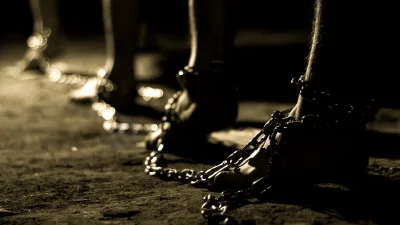
August 23 remembers the 1791 uprising in Saint-Domingue and the millions subjected to the transatlantic slave trade. It also asks a harder question: what does abolition mean in a world where forced labor and human trafficking still persist?
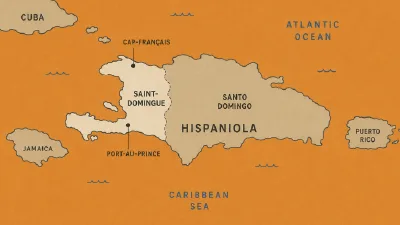
Every August 23, the International Day for the Remembrance of the Slave Trade and its Abolition asks the world to confront a history that can easily become oversimplified. The story is sometimes told primarily through the legislation that eventually prohibited the slave trade, the politicians who debated abolition or the campaigners who helped turn public opinion against slavery. Yet UNESCO chose August 23 for a different reason. The date marks the uprising that began in the French colony of Saint-Domingue, now Haiti, on the night of August 22 to 23, 1791, an event that became central to the Haitian Revolution and helped transform the history of slavery in the Atlantic world.
That distinction is important because it places the agency of enslaved people at the center of remembrance. Those subjected to slavery were not simply waiting for freedom to be granted to them. Across different periods and places, enslaved people escaped, resisted, organized and rebelled against the systems that sought to control their lives. In Saint-Domingue, resistance developed into a revolution that would eventually result in Haiti declaring independence in 1804, creating the first independent Black republic born from a successful revolt against slavery and colonial rule.
More than two centuries later, slavery and the slave trade are prohibited under international law, yet severe forms of coercive exploitation have not disappeared. The latest joint global estimates from the International Labour Organization, Walk Free and the International Organization for Migration estimated that 50 million people were living in situations described as modern slavery in 2021, including 27.6 million people in forced labor. The ILO has subsequently estimated that forced labor in the private economy generates approximately US$236 billion in illegal profits each year.
Historical chattel slavery, forced labor, human trafficking and the contemporary umbrella term “modern slavery” describe different legal and historical phenomena, and they should not be treated as interchangeable. To do so risks diminishing the particular history of the transatlantic slave trade while also obscuring the ways contemporary exploitation actually operates. August 23 nevertheless provides an important opportunity to examine these histories alongside one another, not because they are identical, but because they force us to consider how exploitation becomes economically valuable, socially tolerated and institutionally protected, and why abolishing a system in law does not automatically eliminate every condition that allowed exploitation to thrive.
What This Article Covers
- Why the International Day for the Remembrance of the Slave Trade and its Abolition is held on August 23.
- What happened in Saint-Domingue in August 1791 and why the uprising matters.
- The scale and structure of the transatlantic slave trade.
- Why abolition was a long historical process rather than a single event.
- The differences between historical slavery, modern-day slavery, forced labor and human trafficking.
- What the latest evidence tells us about severe exploitation today.
- What remembering slavery can contribute to contemporary efforts to prevent exploitation.
Key Takeaways
- August 23 commemorates the beginning of the 1791 uprising in Saint-Domingue that developed into the Haitian Revolution.
- Approximately 12.5 million captive Africans are estimated to have departed Africa aboard ships involved in the transatlantic slave trade.
- Abolition unfolded over decades and did not immediately eliminate either slavery or illegal slave trading everywhere.
- Modern-day slavery and human trafficking are not the same institution as transatlantic chattel slavery and should not be described as if they are.
- The latest global estimates identify approximately 27.6 million people living in forced labor.
- Human trafficking can involve forced labor, sexual exploitation, forced criminality and other forms of exploitation and does not require movement across an international border.
- The history of slavery remains relevant because it demonstrates how exploitation can become embedded within economic and institutional systems rather than existing only through individual acts of abuse.
Why This Story Matters Now
The International Day for the Remembrance of the Slave Trade and its Abolition is rooted in history, but its questions are far from historical. Contemporary evidence shows that human trafficking and forced labor remain widespread, while the mechanisms used to recruit and control people continue to change. According to the United Nations Office on Drugs and Crime’s 2024 Global Report on Trafficking in Persons, the number of trafficking victims detected globally in 2022 was 25 percent higher than in 2019. Detected child victims increased by 31 percent over the same period, while detected trafficking for forced labor rose by 47 percent.
These statistics describe people identified by authorities and should not be confused with estimates of the total number of trafficking victims worldwide. Human trafficking is inherently difficult to measure because much of it remains concealed, victims may not identify their experiences as trafficking, and governments differ considerably in their ability to detect and record cases. Even so, the available evidence reveals important changes in the forms of exploitation being encountered. Forced labor accounted for 42 percent of trafficking victims detected in 2022, while 36 percent were trafficked for sexual exploitation.
The methods used by traffickers have also evolved. Recruitment can begin through an apparently legitimate employment advertisement, a social media message, a fraudulent recruiter or a promise of work overseas. In some cases, people travel willingly for jobs that later become exploitative. In others, coercion develops gradually through debt, withheld documents, threats, restrictions on movement or dependency on an employer for accommodation, immigration status and income. Human trafficking can also take place without a person ever leaving their own country.
Recent years have brought growing international attention to trafficking into online scam operations, particularly in parts of Southeast Asia, where people have reportedly been recruited for apparently legitimate jobs before being forced to carry out online fraud. Not For Sale examined this changing landscape in its recent article for World Day Against Trafficking in Persons 2026, including the growing importance of forced criminality within the global trafficking picture.
The forms of exploitation therefore change according to technology, migration patterns, labor markets, conflict and economic opportunity, but the central problem remains strikingly familiar: one person or organization acquires sufficient power over another that leaving, refusing or seeking help becomes dangerous, economically impossible or practically unattainable. Understanding that dynamic is one of the reasons the history commemorated on August 23 remains relevant.
Why Is August 23 the International Day for the Remembrance of the Slave Trade and Its Abolition?
UNESCO’s General Conference established the International Day for the Remembrance of the Slave Trade and its Abolition in 1997. It has since been commemorated annually on August 23, with early observances taking place in Haiti in 1998 and on Gorée Island in Senegal in 1999. UNESCO describes the day as an opportunity to place the tragedy of the slave trade within the collective memory of humanity while encouraging examination of its historical causes, methods and consequences.
The date itself was deliberately chosen because of the uprising that began in Saint-Domingue on the night of August 22 to 23, 1791. At the time, Saint-Domingue was France’s most profitable Caribbean colony and one of the most economically important plantation societies in the Atlantic world. Its wealth depended heavily upon the forced labor of enslaved Africans and their descendants, particularly on sugar and coffee plantations where extraordinarily violent working conditions were sustained through a racialized system of chattel slavery.
The uprising that began in August 1791 grew into a much larger revolutionary struggle involving enslaved people, free people of color, colonial powers and competing political factions. Over more than a decade, the conflict transformed the political landscape of Saint-Domingue and eventually led to Haiti declaring independence from France in 1804. UNESCO’s decision to connect its international day of remembrance to this event therefore places resistance alongside suffering. It asks the world not only to remember what was done to enslaved people, but also to remember what enslaved people did in response.
This changes the meaning of remembrance. Historical accounts of abolition have often concentrated heavily on political leaders, European abolitionists and legislative milestones. Those histories are important, but when they dominate the story they can unintentionally suggest that freedom was bestowed upon people who had little role in securing it. August 23 corrects that imbalance by recognizing resistance as part of the history of abolition itself.
The Scale of the Transatlantic Slave Trade
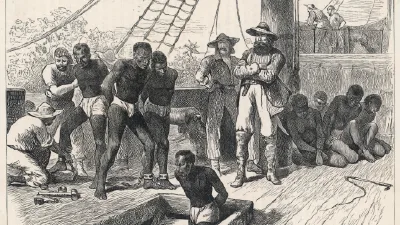
The transatlantic slave trade operated for centuries through a vast commercial system linking parts of Africa, Europe, the Caribbean and the Americas. According to the SlaveVoyages research database, which draws together records from thousands of documented voyages, approximately 12.5 million captive Africans are estimated to have departed Africa aboard ships involved in the transatlantic trade. Not all survived the Atlantic crossing, while the wider consequences of slavery extended far beyond those transported, affecting families, communities and generations across multiple continents.
The scale of the trade is important, but numbers alone cannot explain how deeply slavery became embedded within the economies that depended upon it. Enslaved people were legally transformed into property whose labor could be bought, sold and inherited. Their work generated enormous quantities of commodities including sugar, coffee, cotton and tobacco, while the economies surrounding slavery extended into shipping, finance, insurance, manufacturing, trading and colonial administration. The trade was therefore not simply the product of isolated individuals behaving with exceptional cruelty. It functioned because institutions, governments and markets created systems in which the exploitation of human beings became economically valuable.
This wider history is explored in Not For Sale’s guide to the history of modern-day slavery and human trafficking, which examines the changing forms of slavery and exploitation across different periods. Not For Sale has also looked specifically at the transatlantic slave trade and its enduring impact, including how historical systems of exploitation continue to shape discussions about inequality, labor and human trafficking today.
Recognizing the systemic nature of historical slavery matters because it changes how exploitation is understood. If slavery is viewed exclusively as a story of individual cruelty, it becomes easier to overlook the economic structures that allowed enormous numbers of people to participate in, benefit from or tolerate the system without personally exercising direct control over an enslaved person. That lesson remains important when examining contemporary exploitation, where responsibility can similarly become dispersed across recruiters, subcontractors, employers, supply chains, financial systems and consumers.
Abolition Was a Process, Not a Single Moment
The language of abolition can create the impression that slavery ended through a single decisive act. Historical reality is more fragmented. Different governments prohibited participation in the transatlantic slave trade at different times, while the legal institution of slavery itself survived beyond some of those prohibitions. Illegal trafficking continued after legislation had formally banned the trade, and emancipation occurred unevenly across countries, colonies and territories.
Resistance by enslaved people formed an important part of this history, alongside abolitionist campaigning, political upheaval, changing economic conditions and legislative reform. The Haitian Revolution demonstrated dramatically that enslaved populations could themselves overturn the political and economic order that sustained slavery, while rebellions, escapes, acts of resistance and independent communities of formerly enslaved people appeared elsewhere throughout the Atlantic world.
During the nineteenth and twentieth centuries, legal prohibitions against slavery and forced labor became increasingly established within domestic and international law. Article 4 of the Universal Declaration of Human Rights, adopted by the United Nations General Assembly in 1948, states that no one shall be held in slavery or servitude and that slavery and the slave trade are prohibited in all their forms. International agreements have subsequently developed protections against forced labor, trafficking, debt bondage and other slavery-like practices.
These achievements are fundamental, but they reveal an important distinction between abolishing a legal institution and eliminating the conditions under which people can still be coerced for profit. Contemporary exploitation usually does not depend upon legally recognized ownership. Control can instead be constructed through threats, manipulated debt, fraudulent recruitment, withheld wages, immigration status, confiscated identity documents, violence or social isolation. The legal structure changed profoundly, but the economic incentive to extract labor or profit from people who cannot freely leave has not disappeared.
What Does Modern-Day Slavery Mean Today?
Clear terminology is particularly important when discussing August 23 because modern forms of exploitation should not be presented as if they are simply continuations of the transatlantic slave trade under a new name. The systems are historically and legally distinct. Transatlantic chattel slavery involved the legal treatment of human beings as property within a racialized and frequently hereditary system. The term “modern slavery”, by contrast, is commonly used today as an umbrella description for severe forms of exploitation that can include forced labor, forced marriage, slavery and slavery-like practices.
Human trafficking has a more specific definition under international law. The United Nations Trafficking in Persons Protocol describes trafficking through a combination of acts such as recruitment, transportation, transfer, harboring or receipt of people, the use of means such as coercion, fraud, deception or abuse of vulnerability, and an intended purpose of exploitation. When children are involved, the legal framework does not require proof that those coercive or deceptive means were used if recruitment or movement occurred for the purpose of exploitation.
Forced labor is related but distinct. The International Labour Organization defines it as work or service exacted from a person under the menace of a penalty when that person has not offered themselves voluntarily. Someone may therefore be trafficked into forced labor, but forced labor can also occur in circumstances that do not meet every element of the trafficking definition.
These distinctions are explored more fully in Not For Sale’s human trafficking terms and definitions glossary, which explains commonly used terms surrounding trafficking, forced labor, modern-day slavery and exploitation. Precise language matters because it allows us to examine similarities in the mechanisms of coercion without pretending that different historical systems are interchangeable.
How Does the History of the Slave Trade Connect to Human Trafficking Today?
The most useful connection between the history of slavery and contemporary human trafficking does not come from claiming that the two systems are identical. It comes from understanding how exploitation can become profitable when economic structures allow the costs to be borne almost entirely by those with the least power to refuse.
Historical slavery demonstrates this on an extraordinary scale. Human beings were converted into economic assets whose labor could generate profit across industries and continents. The individuals who ultimately consumed the products of slavery were often separated by considerable distance from the people whose labor had produced them, while commercial systems distributed responsibility across plantation owners, merchants, governments, financiers and traders.
Modern exploitation can reproduce that distance without reproducing the institution of chattel slavery itself. Labor may pass through multiple levels of subcontracting before reaching a recognizable international brand. Workers may be recruited through intermediaries operating in another country. Recruitment debts can tie workers to particular employers, while passports or wages may be withheld in ways that make leaving practically impossible even when the worker is not physically imprisoned.
The ILO identifies deceptive recruitment, abuse of vulnerability, restriction of movement, isolation, intimidation and threats, retention of identity documents, withholding of wages and debt bondage among the indicators that can point toward forced labor. No single indicator automatically establishes that forced labor has occurred, but together they illustrate how control can operate without legal ownership.
The economic incentive remains considerable. The latest global estimates identify approximately 27.6 million people living in forced labor, while the ILO estimates that forced labor in the private economy generates approximately US$236 billion in illegal profits every year. These figures should not be used to suggest that contemporary forced labor is historically equivalent to the transatlantic slave trade. What they demonstrate instead is that extracting value from people who cannot freely refuse or leave remains enormously profitable.
Who Is Most at Risk?
There is no single type of person who becomes a victim of trafficking, and vulnerability should never be mistaken for a personal characteristic or weakness. Risk usually emerges from circumstances in which a person’s range of safe choices has been narrowed. Conflict, displacement, poverty, discrimination, insecure migration status, debt, unemployment, family separation and lack of access to documentation or legal protection can all create environments that traffickers and abusive employers are able to exploit.
Children face particular risks because dependence on adults, disrupted education, displacement or family separation can expose them to recruitment and exploitation. UNODC’s latest global reporting found that detected child trafficking victims increased by 31 percent between 2019 and 2022. Migrants may also face heightened risks when employment, accommodation, immigration status and transportation are controlled by recruiters or employers, particularly when workers have incurred substantial debts before beginning a job.
Patterns of exploitation can also differ according to gender, age and geography. Women and girls remain disproportionately represented among victims detected in trafficking for sexual exploitation, while men and boys account for substantial numbers of detected victims trafficked for forced labor. These patterns matter for prevention, but they should not become stereotypes. Men can experience sexual exploitation, women can be trafficked for forced labor, and the circumstances surrounding individual cases are often more complex than broad demographic categories suggest.
A survivor-centered approach therefore begins by asking what structural conditions constrained a person’s choices rather than questioning why they entered a particular job, accepted a recruitment offer or traveled with a particular individual. Many trafficking situations begin with decisions that appear entirely rational in the context in which they are made. The exploitation becomes possible because the terms later change, information was deliberately concealed or the person’s ability to leave is gradually removed.
The Systems Behind the Harm
One of the most enduring lessons of the transatlantic slave trade is that exploitation becomes especially powerful when it is supported by systems larger than the individual perpetrator. Historical slavery involved merchants, ship owners, financiers, plantation economies, governments and markets, each occupying a different position within an economic network that ultimately depended on forced human labor.
Contemporary trafficking can involve similarly distributed networks of responsibility. Recruiters identify workers, intermediaries arrange transport, employers control labor, financial systems move money, businesses buy goods and services, and consumers encounter finished products without necessarily knowing how work farther down the supply chain was performed. The distance between the person experiencing exploitation and the person benefiting economically from their labor can make responsibility difficult to see and even harder to enforce.
Global supply chains can extend across numerous countries and multiple levels of subcontracting. Digital platforms have also transformed recruitment, enabling deceptive employment offers to reach potential workers across borders almost instantaneously. Criminal organizations can operate in several jurisdictions simultaneously, while labor inspectors, police forces and immigration authorities remain limited by national borders and differing legal systems.
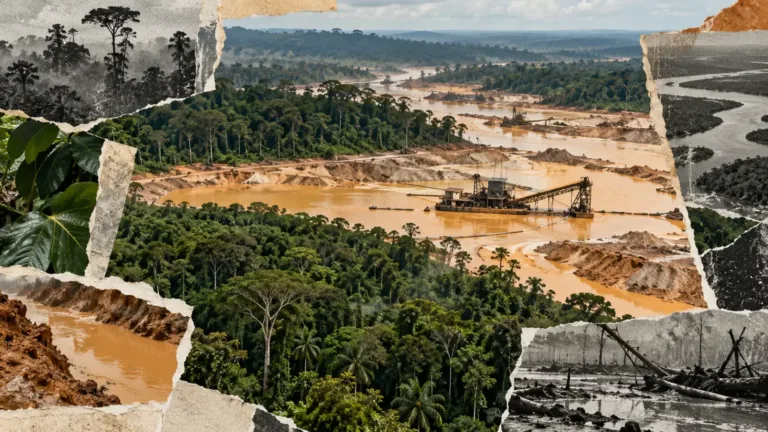
Corruption can further weaken these protections, particularly where illicit industries overlap with legitimate markets. In sectors such as illegal mining, human exploitation, environmental destruction, financial crime and corruption can form parts of the same economic system. Not For Sale examined these relationships in From Illegal Mines to Forced Labor: How Corruption Connects Ecocide and Human Trafficking, illustrating how exploitation frequently becomes harder to address when environmental and human harms are treated as unrelated problems.
Understanding these systems is necessary because effective prevention cannot depend entirely on identifying individual traffickers after exploitation has occurred. It must also address the conditions that make exploitation profitable and difficult to detect.
The Human Impact
Global statistics are necessary for understanding scale, but they can also make exploitation feel abstract. Forced labor is ultimately experienced through the loss of control over ordinary aspects of life: whether someone is paid the wages they were promised, whether they can leave their job, where they can live, whether they retain their own passport, whether they can contact their family and whether refusing an employer carries the threat of violence, homelessness, arrest or deportation.
The ILO’s indicators of forced labor reflect these everyday mechanisms of control. A worker does not need to be chained to a workplace to be unable to leave it. Debt can function as a form of confinement when repayment terms are manipulated. Immigration status can become coercive when an employer controls the worker’s ability to remain legally in a country. Withheld wages can make escape financially impossible, while threats against relatives can extend control far beyond the workplace itself.
Survivors should not, however, be defined solely through what has been done to them. The history commemorated on August 23 offers a particularly important reminder of this. The people enslaved in Saint-Domingue were subjected to a system built upon extraordinary violence and dehumanization, yet the historical reason the date became associated with international remembrance is that they acted against that system.
The same respect for agency should shape contemporary responses to trafficking. Survivor protection should not mean replacing one form of control with another. It should create the conditions in which people regain the ability to make decisions about their own lives, including where they live, how they work and what future they choose to build.
What Governments and International Institutions Are Doing
International law today provides a far stronger framework against slavery, trafficking and forced labor than existed for most of human history. Article 4 of the Universal Declaration of Human Rights prohibits slavery and servitude, while the International Labour Organization’s Forced Labour Convention and its later protocols establish obligations relating to prevention, protection and remedies. The United Nations Trafficking in Persons Protocol, adopted in 2000, created the principal internationally agreed framework for defining human trafficking and coordinating responses around prevention, prosecution and victim protection.
Many governments have subsequently introduced their own legislation addressing trafficking, forced labor, modern slavery, labor recruitment and corporate supply chains. Authorities increasingly cooperate across borders, while financial investigations, labor inspections and specialist trafficking units have become important parts of anti-trafficking responses in many countries.
The difficulty lies not only in creating laws but in enforcing them effectively across systems that were often designed to address different problems separately. A trafficking case might involve criminal law, labor regulation, immigration, child protection, corporate responsibility and financial crime simultaneously. When agencies examine only one part of that picture, exploitation can remain hidden between institutional boundaries.
Protection also becomes fragile if it ends once someone is physically removed from exploitation. A person who escapes an abusive workplace but lacks secure accommodation, legal status, income or access to safe employment may continue to face serious vulnerability. A child removed from trafficking but returned to circumstances of homelessness or extreme economic insecurity may remain exposed to recruitment. Effective protection therefore has to extend beyond immediate rescue toward the longer process of rebuilding genuine independence.
What Still Needs to Change
One of the largest gaps in anti-trafficking responses remains the balance between intervention and prevention. Criminal investigations, prosecutions and survivor services are essential, but they often begin only after exploitation has already occurred. Preventing trafficking requires greater attention to the circumstances that allow traffickers to recruit and control people in the first place, including unsafe migration routes, abusive recruitment systems, labor protections, debt, housing insecurity, displacement and lack of access to legitimate work.
Economic accountability is equally important. Forced labor generates enormous illegal profits, meaning exploitation will remain attractive wherever potential returns outweigh the likelihood of detection and meaningful punishment. Governments and businesses therefore need to examine how recruitment fees are paid, how subcontractors are selected, whether workers can safely report abuse and whether supply-chain oversight reaches far enough beyond the most visible tier of production.
Survivor protection must also extend beyond the immediate aftermath of exploitation. Long-term safety can depend upon housing, healthcare, legal assistance, documentation, education and access to stable income. These are not peripheral services. They determine whether someone has realistic alternatives to returning to the circumstances in which exploitation first became possible.
Public understanding presents another challenge. Human trafficking is still frequently imagined primarily through kidnapping, physical confinement and sexual exploitation. Those situations exist, but the stereotype can make other forms of exploitation more difficult to identify. Someone recruited through a fraudulent job advertisement and compelled to work through debt may not resemble the conventional public image of a trafficking victim. A person forced to carry out online fraud may appear to authorities first as an offender despite simultaneously being exploited. Understanding trafficking therefore requires attention to coercion and control rather than relying on a particular visual image of captivity.
What Not For Sale’s Perspective Adds
Not For Sale’s work against human trafficking has increasingly focused not only on what happens after exploitation but on the conditions that allow exploitation to take hold. That distinction reflects a broader understanding of trafficking as a problem involving economies, communities and opportunities as well as criminal behavior.
Removing someone from an exploitative situation is essential, but doing so does not necessarily alter the labor system, debt, displacement, corruption, environmental destruction or lack of legitimate economic opportunity that originally created vulnerability. Prevention therefore requires the creation of credible alternatives alongside survivor support and law enforcement.
Not For Sale describes this approach as working to out-create modern-day slavery. The emphasis is on combining frontline knowledge and survivor-centered support with social innovation, economic opportunity and practical efforts to reduce the structural conditions upon which exploitation depends. Not For Sale has explored this philosophy further in its article on fighting modern slavery and confronting its root causes.
The connection to August 23 should not be exaggerated. Contemporary anti-trafficking organizations are not equivalent to the revolutionary movement that emerged in Saint-Domingue, and attempting to draw that comparison would diminish both histories. What the commemoration does offer is a reminder that freedom cannot be understood only as the removal of oppression. It also requires the practical ability to exercise choice, build security and shape one’s own future.
What Readers Can Do
Meaningful remembrance begins with learning the history accurately and resisting narratives that reduce abolition to a story in which freedom was simply handed down by governments or philanthropists. The people subjected to slavery repeatedly resisted it, while the economic systems that profited from their exploitation were extensive, sophisticated and often socially accepted. Understanding both parts of that history offers a more complete picture of how exploitation becomes normalized and how it can eventually be challenged.
The same care should be applied to contemporary trafficking. Learning the distinctions between human trafficking, forced labor, debt bondage, forced criminality and modern-day slavery makes it easier to recognize exploitation in forms that may not resemble traditional images of slavery. Businesses and consumers can also ask more detailed questions about supply chains, including how workers are recruited, whether recruitment fees are charged, how subcontractors are monitored and whether workers have safe mechanisms for reporting abuse.
Sharing credible information matters as well. Sensational trafficking claims and unverified statistics can distort public understanding and sometimes make genuine patterns of exploitation more difficult to identify. Supporting survivor-centered organizations should likewise mean supporting approaches that recognize people as individuals with ambitions, expertise and agency rather than presenting them exclusively through the worst experiences of their lives.
August 23 ultimately offers a historical reminder that systems of exploitation, however entrenched they appear, are neither natural nor inevitable. The slave economies of the Atlantic world were protected by powerful commercial and political interests and had operated across generations. The people who resisted them nevertheless demonstrated that systems built upon human exploitation could be challenged.
The International Day for the Remembrance of the Slave Trade and its Abolition asks us to hold two ideas together. The first is that the transatlantic slave trade was a historically specific system of extraordinary violence in which millions of Africans were forcibly transported and human beings were legally treated as property within a racialized economic order. The second is that abolishing that institution did not remove every mechanism through which people can subsequently be coerced, controlled or exploited for profit.
Remembering August 23 therefore requires more than looking backwards. It requires understanding why UNESCO chose to commemorate an uprising rather than a piece of abolition legislation and recognizing the agency of the people who resisted the system imposed upon them. It also asks what societies today are prepared to do about forms of exploitation that no longer carry the legal title of slavery but still deprive people of the practical freedom to leave, refuse or choose another life.
The history should not be forced into easy equivalence with the present. Its value lies precisely in understanding both the differences and the recurring questions. How does exploitation become economically worthwhile? Which institutions allow it to continue? Whose labor is made invisible? What choices are available to the people most exposed to abuse, and what would need to change for those choices to become genuinely free?
Abolition remains one of the great achievements of human history. August 23 reminds us that it was also something people fought for themselves. The unfinished task is to ensure that freedom exists not only in law, but in the circumstances of people’s lives.
Frequently Asked Questions
What is the International Day for the Remembrance of the Slave Trade and its Abolition?
The International Day for the Remembrance of the Slave Trade and its Abolition is a UNESCO international day observed annually on August 23. It commemorates the history and consequences of the transatlantic slave trade while recognizing the resistance of enslaved people and encouraging societies to examine the causes, mechanisms and continuing legacies of slavery.
Why is the International Day for the Remembrance of the Slave Trade held on August 23?
August 23 commemorates the uprising that began in the French colony of Saint-Domingue, now Haiti, on the night of August 22 to 23, 1791. The uprising developed into the Haitian Revolution, which ultimately resulted in Haiti declaring independence in 1804 and became one of the most significant challenges to slavery and colonial rule in Atlantic history.
What happened in Saint-Domingue in August 1791?
Enslaved people in Saint-Domingue launched a major uprising against the French colonial slave system in August 1791. The revolt developed into a complex revolutionary conflict lasting more than a decade and ultimately contributed to the abolition of slavery in the colony and the creation of independent Haiti.
How many Africans were transported in the transatlantic slave trade?
Research compiled by the SlaveVoyages database estimates that approximately 12.5 million captive Africans departed Africa aboard ships involved in the transatlantic slave trade. The total human impact was significantly wider because the trade also affected people who died before embarkation, communities disrupted by capture and warfare, and generations subsequently born into slavery in the Americas.
Is modern-day slavery the same as the transatlantic slave trade?
No. Transatlantic chattel slavery was a particular historical institution in which people were legally treated as property within a racialized and often hereditary system. “Modern slavery” is now generally used as an umbrella term for severe forms of contemporary exploitation, including forced labor, forced marriage, slavery and slavery-like practices. The systems can be compared to understand mechanisms of exploitation, but they should not be described as historically identical.
What is the difference between human trafficking and modern-day slavery?
Human trafficking has a specific definition under international law involving acts such as recruitment, transportation or harboring, the use of coercion, fraud, deception or abuse of vulnerability, and the purpose of exploitation. Modern slavery is a broader umbrella term rather than a single internationally defined criminal offense. Human trafficking can result in forced labor or other forms of severe exploitation.
Does human trafficking require someone to cross a border?
No. Human trafficking can take place across international borders or entirely within one country. Movement itself is not the defining feature of trafficking. The central questions concern how a person is recruited or controlled and whether that process is carried out for the purpose of exploitation.
How many people are estimated to be living in modern slavery?
The latest joint global estimates published by the International Labour Organization, Walk Free and the International Organization for Migration estimated that approximately 50 million people were living in situations described as modern slavery in 2021. This included around 27.6 million people in forced labor and 22 million in forced marriage.
How much money does forced labor generate?
The International Labour Organization estimates that forced labor in the private economy generates approximately US$236 billion in illegal profits every year. The figure illustrates the substantial economic incentives that continue to sustain severe labor exploitation around the world.
What are common indicators of forced labor?
The International Labour Organization identifies indicators including deceptive recruitment, abuse of vulnerability, restriction of movement, isolation, threats, retention of identity documents, withholding of wages and debt bondage. These indicators do not automatically prove that forced labor has occurred, but they can reveal patterns of coercion that require further investigation.
Why does remembering the slave trade matter today?
Remembering the transatlantic slave trade preserves the history of the millions of people subjected to slavery and recognizes the resistance that helped bring systems of enslavement to an end. It also provides a framework for examining how exploitation can become embedded within economies and institutions, while allowing contemporary forced labor and trafficking to be considered without falsely suggesting that they are identical to historical chattel slavery.
What can people do on August 23?
People can use August 23 to learn about the transatlantic slave trade from credible historical sources, study the role played by enslaved people in resisting slavery and understand how contemporary trafficking and forced labor operate. They can also support survivor-centered organizations, question labor conditions within supply chains and share reliable information that improves public understanding of exploitation.
Sources
- UNESCO, International Day for the Remembrance of the Slave Trade and its Abolition
https://www.unesco.org/en/days/slave-trade-remembrance - UNESCO, Records of the General Conference, 29th Session
https://unesdoc.unesco.org/ark:/48223/pf0000110220 - UNESCO, Routes of Enslaved Peoples
https://www.unesco.org/en/routes-enslaved-peoples - SlaveVoyages, Trans-Atlantic Slave Trade Database
https://www.slavevoyages.org/ - International Labour Organization, Global Estimates of Modern Slavery
https://www.ilo.org/publications/major-publications/global-estimates-modern-slavery-forced-labour-and-forced-marriage - International Labour Organization, Data and Research on Forced Labour
https://www.ilo.org/topics/forced-labour-modern-slavery-and-trafficking-persons/data-and-research-forced-labour - International Labour Organization, Indicators of Forced Labour
https://www.ilo.org/publications/ilo-indicators-forced-labour - United Nations Office on Drugs and Crime, Global Report on Trafficking in Persons
https://www.unodc.org/unodc/en/human-trafficking/global-report-on-trafficking-in-persons.html - United Nations Office on Drugs and Crime, Human Trafficking FAQs
https://www.unodc.org/unodc/en/human-trafficking/faqs.html - United Nations Office on Drugs and Crime, Trafficking in Persons Protocol
https://www.unodc.org/unodc/en/human-trafficking/protocol.html - Office of the UN High Commissioner for Human Rights, Universal Declaration of Human Rights
https://www.ohchr.org/en/human-rights/universal-declaration/translations/english
Topics in this story
See all topics
Mark Wexler
Mark Wexler is Co-Founder and CEO of Not For Sale and a longtime builder of alternatives to the systems that enable modern-day slavery and ecocide.

More from Mark Wexler