What Are You Going to Do Monday Morning? | Ready to Act
Discover the power of action with the Monday morning question. What are you going to do Monday morning? Let’s find out, and make an impact.

Key Takeaway: The Monday morning question challenges us to bridge the gap between inspiration and action. It’s not just about planning but committing to act, particularly in contexts like combating human trafficking and ecocide. Join us in transforming ideas into real-world impact.
By: Mark Wexler, Not For Sale (Founder & CEO)
—
The Montara Circle
It was a late Friday afternoon and the sun was ablaze setting over the ocean. David Batstone and I had just made the stupidest promise of our careers.
It was February 2011. We had gathered fifty people into a restaurant in Montara, California, an idyllic village on the Pacific Coast just minutes south of San Francisco that overlooks the Pacific Ocean. We called the event the Montara Circle. The premise was simple, and the commitment was terrifying: we would pose a single question to the room, run structured exercises for two days, and whatever solution the group voted on as the best by the end, David and I would go build it.
The question: how do you stop trafficking in Peru’s Madre de Dios region of the Amazon through a scalable, financially sustainable means?
Among the people: the founder of the largest online healthcare platform. The president of the largest bank in the southern hemisphere. A founder of Twitter. Indigenous community members from Madre de Dios. A top media executive. A San Francisco Giants pitcher. Fifty people who had given us two days of their lives on the basis that we had a specific problem and a binding commitment.
The commitment was the thing. Monday morning, we were on it. Whatever they came up with.
The Winning Idea from the 2011 Montara Circle
At the end of two days, filled with knowledge building, exercises to hone solutions, and limitless ideation, the group voted.
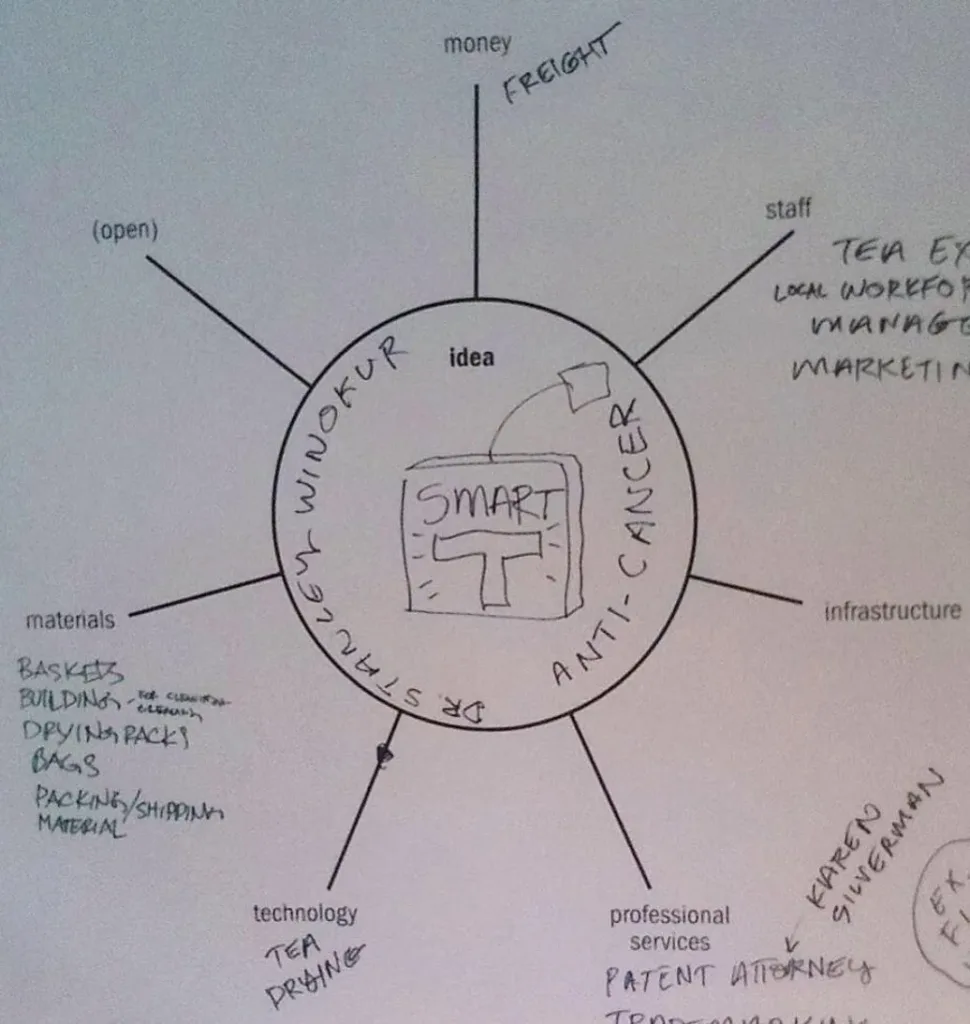
The winning idea came from Jeremy Affeldt, the San Francisco Giants relief pitcher, who had spent most of the session sipping tea and listening.
“Why can’t we just buy ingredients from the communities at a fair price and use what they have to make a drink?”
A beverage company. The solution to human trafficking in the Amazon, as determined by fifty brilliant people including some of the leading minds in technology, banking, and entrepreneurship, was a drink.
David and I looked at each other.
Neither of us had ever made a beverage. Neither of us knew the industry. Neither of us had any rational basis for thinking we could pull this off.
We had made a promise. Monday morning, we were on it.
What the Monday Morning Question Is
The Monday Morning Question is a commitment framework that converts inspiration into action by requiring a specific, concrete commitment before leaving an event, session, or conversation.
The Monday morning question is not about beverages. It is not about trafficking. It is not even about social enterprise.
It is about the distance between conviction and action, and whether you are willing to close it.
Most people leave a great event feeling something. A talk, a workshop, a conversation with someone who makes you see the world differently. You feel energized. You feel the clarity of a new idea settling into place. You think: this changes things.
And then Monday morning comes. The inbox is full. The calendar is packed. The feeling has not entirely left but the friction of normal life has reasserted itself, and the thing you were going to do is still just a thing you were going to do.
That distance, between the inspiration you felt and the action you took, is where most great ideas go to die. It is not a failure of vision. It is a failure of commitment. The two are not the same thing.
At the Montara Circle, we forced the commitment before we knew the outcome. We committed to execute before we knew what we were executing. That sequence matters. If we had said “we’ll think about it” or “we’ll evaluate the best idea afterward,” we would have given ourselves the space to hesitate. The binding commitment was the point. It was the only way to guarantee that Monday morning had teeth.
| Without the Monday Morning Question | With the Monday Morning Question |
|---|---|
| You leave inspired | You leave committed |
| The idea is still alive on Friday | The action is already scheduled for Monday |
| Friction reasserts itself | Commitment precedes the friction |
| Great idea, no execution | Specific action, specific morning |
| You remember the feeling | You remember what you built |
How the Monday Morning Question Built REBBL and Protected 753 Square Miles of Amazon Rainforest
Within days of the event, we went to recruit Palo Hawken, a beverage industry executive, to lead the company we had just committed to build.
We did not have a business plan. We had a promise.
What followed was REBBL. A plant-based beverage company built around ingredients sourced from indigenous communities in Peru’s Madre de Dios region, the same communities whose economic vulnerability made them targets for traffickers. Palo developed the product. We built the supply chain. We helped seed fund AFIMAD, a cooperative of ten communities harvesting Brazil nuts from the Amazon rainforest. We supported their organic certification, then Fair Trade certification, creating a commercial partner whose every sale created sustained demand for what those communities grew.
REBBL raised tens of millions in venture capital. It donated over one million dollars to Not For Sale. And because Brazil nut harvesting requires a healthy forest, the communities’ economic sovereignty became an act of conservation. 753 square miles of Amazon rainforest are protected today not because of an environmental campaign but because the people who live there have a commercial reason to protect it.
All of it traces back to a Friday afternoon and an insane promise.
Applying the Monday Morning Question to Your Organization
Every keynote I give ends the same way. Not with a conclusion. With a question.
What are you going to do Monday morning?
Not what are you inspired to do. Not what do you believe in. Not what would you change if you could. What are you going to do, specifically, on Monday morning?
The question is uncomfortable because it is concrete. It converts feeling into commitment. It moves the conversation from “this was great” to “this is what I’m building.”
REBBL was born because two people asked themselves that question in front of fifty witnesses and couldn’t back out of the answer.
You do not need fifty witnesses. You do not need a Peruvian restaurant on the California coast. You need one decision, made today, that you are going to act on before the week has given you a reason not to.
The world is not short of good ideas, or inspired people, or organizations that understand what needs to change. It is short of Monday mornings.
So, what are you going to do Monday morning?
Frequently Asked Questions
What is the Monday Morning Question? The Monday Morning Question is a commitment framework developed by social entrepreneurs Dr. David Batstone and Mark Wexler. It asks leaders, founders, and organizations to name one specific action they will take by Monday morning as a direct result of any insight, event, or conversation. The framework is designed to close the distance between inspiration and action by requiring commitment before the friction of normal life reasserts itself.
What is the Montara Circle? The Montara Circle is a structured two-day convening methodology developed by Mark Wexler and David Batstone of Not For Sale. It gathers up to 50 people from outside an organization’s usual circle, presents a specific problem, guides participants through competitive ideation exercises, and requires founders to publicly commit to building the winning idea. The first Montara Circle, held in February 2011 in Montara, California, produced the concept for REBBL.
What is REBBL and how did it start? REBBL is a plant-based beverage company co-founded by Mark Wexler and David Batstone. It was born at the 2011 Montara Circle when a room of fifty entrepreneurs voted that a beverage company was the best commercial solution to human trafficking in Peru’s Madre de Dios region of the Amazon. REBBL sources ingredients from indigenous communities in that region, donating a percentage of revenue to Not For Sale. The company raised tens of millions in venture capital and donated over one million dollars to anti-trafficking efforts.
What is Not For Sale? Not For Sale is a global nonprofit co-founded by Mark Wexler and David Batstone in 2007. It combats human trafficking and environmental exploitation through enterprise-driven solutions, deploying a multi-legal platform of nonprofits, for-profits, cooperatives, and foundations. Its ventures include REBBL, Dignita, Free2Work, and AFIMAD.
How can organizations use the Monday Morning Question? Organizations can apply the Monday Morning Question at the end of any meeting, workshop, or leadership event by asking every participant: what specific action will you take before Monday morning? Mark Wexler also offers facilitated Montara Circle sessions for organizations seeking a structured commitment-based innovation process. Get in touch with us.
Mark Wexler is the co-founder and CEO of Not For Sale and the co-author of The Art of Being a REBBL: 10 Rules to Becoming a Changemaker, forthcoming with Dr. David Batstone. He has been asking audiences the Monday morning question for twenty years. If you want to bring that question to your organization, visit us here.
Related reading on wearenotforsale.org:
- The REBBL Story and the Montara Circle
- Not For Sale’s Work in Peru and the Madre de Dios Model
- About Not For Sale
- Mark Wexler and David Batstone
Tags: Monday Morning Question, Montara Circle, REBBL, REBBL origin story, Not For Sale, Social Enterprise, Mark Wexler, Commitment Framework, Keynote Speaker, Social Entrepreneur, Peru, Amazon Rainforest, AFIMAD, The Art of Being a REBBL, Leadership, David Batstone
NOT FOR SALE
Related Articles