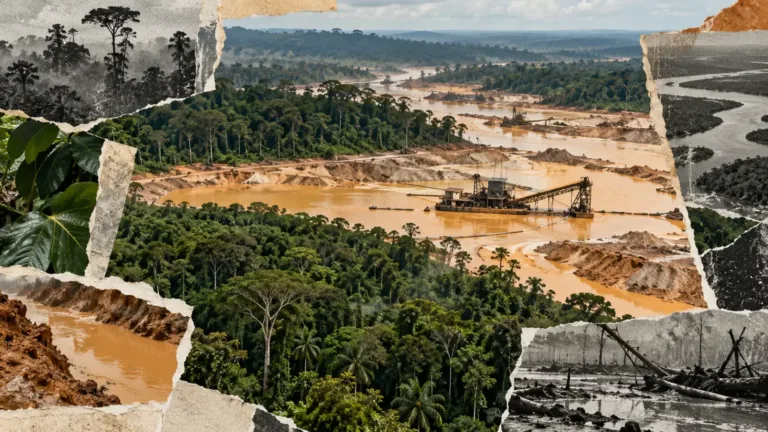
Croatia Moves to Criminalize Ecocide, With Prison Sentences of Up to 40 Years Proposed
Croatia is moving to criminalize ecocide, with proposed prison sentences of up to 40 years for the most serious environmental offenses as Europe strengthens its response to large-scale ecological destruction.


ECOCIDE
Croatia is preparing to introduce ecocide into its Criminal Code, in one of the strongest moves yet by a European Union country to treat severe environmental destruction as a serious criminal offense rather than primarily a regulatory matter.
Justice Minister Damir Habijan has announced plans for a new Article 214a covering a “particularly serious environmental crime”, described by the Croatian government as ecocide. When the proposal was first publicly detailed in August 2026, the government said the most serious cases could carry prison sentences ranging from at least 10 years to long-term imprisonment of up to 40 years. Since then, Croatia has also proposed introducing life imprisonment into its wider criminal code, raising the possibility that the gravest forms of ecocide could eventually carry a life sentence if both reforms are adopted.
The distinction is important. Croatia has not yet criminalized ecocide. The proposed changes are in public consultation and form part of a wider package of criminal law reforms that the government is expected to consider on September 10, 2026. They would then need to pass through the Croatian Parliament before becoming law.
For a broader explanation of what the term means, how different legal systems define it, and why there is no single universal definition, see Not For Sale’s guide to ecocide. What Is Ecocide? Meaning, Definition, Examples and the Human Cost
What This Article Covers
- What Croatia is proposing to add to its Criminal Code
- Why reports of a 40-year sentence require some legal context
- How the proposal relates to the European Union’s Environmental Crime Directive
- Why the timing has become particularly significant in Croatia
- What the proposal could mean for companies as well as individuals
- How ecocide, environmental crime and human exploitation can intersect
- What still has to happen before the Croatian ecocide law becomes legally enforceable
Key Takeaways
- Croatia has proposed a new Article 214a creating a particularly serious environmental crime commonly described as ecocide.
- The offense is not yet in force and still requires government and parliamentary approval.
- Croatia initially said the gravest offenses could be punished by between 10 and 40 years in prison.
- A parallel proposal to introduce life imprisonment means the maximum punishment could ultimately become more severe.
- The proposal would also remove the limitation period for prosecution of the most serious environmental offense.
- Companies could face fines of up to €50 million under related proposed changes to corporate criminal liability.
- Croatia is implementing the EU Environmental Crime Directive but is proposing penalties considerably stronger than the minimum sentencing levels required by the Directive.
Why This Story Matters Now
Croatia’s announcement comes at a significant moment for environmental criminal law in Europe. The European Union’s revised Environmental Crime Directive entered into force in May 2024 and required participating member states to transpose its requirements into national law by May 21, 2026. The Directive significantly expands the range of conduct that European governments must treat as environmental crime and requires especially serious cases of environmental destruction to attract stronger criminal penalties.
Croatia established a government working group in May 2025 to prepare changes connected to the Directive. Justice Minister Habijan has stressed that the ecocide proposal emerged from that process and was not created in response to a single recent environmental controversy.
Nevertheless, the announcement has arrived amid intense political attention on approximately 37,000 metric tons of hazardous waste that authorities say was illegally disposed of around Gospić in Croatia’s Lika region. The case prompted an extraordinary parliamentary discussion and increased public scrutiny of the country’s ability to prevent, investigate and remediate serious environmental harm. Habijan has explicitly said that the proposed ecocide offense was already being developed before that controversy.
That distinction should not be lost in coverage of the story. The existence of a major pollution investigation does not itself mean that ecocide has been committed, and a law passed in the future would not automatically transform every existing environmental offense into ecocide. Whether particular conduct meets the legal threshold for a criminal offense depends on the final wording of the legislation, the evidence available and the findings of prosecutors and courts.
What the Gospić controversy has done is make an otherwise technical reform immediately understandable. Environmental crimes can create consequences that remain in soil, water and ecosystems long after the decisions responsible for them have been made. Croatia is now considering whether the most serious forms of that damage should sit much higher in the hierarchy of criminal law.
What Is Ecocide?
There is not yet one universally binding legal definition of ecocide.
The term is generally used to describe environmental destruction of exceptional seriousness, particularly damage that is severe and widespread, long-lasting or irreversible. Different national laws and international proposals define the threshold differently, which is why it is important not to use “ecocide” as a synonym for every instance of pollution, deforestation or environmental illegality.
The EU Environmental Crime Directive does not require member states to establish a standalone offense carrying the formal title “ecocide”. Instead, it creates what it calls qualified criminal offenses for intentional conduct that destroys or causes widespread and substantial damage that is irreversible or long-lasting to major ecosystems, protected habitats, or the quality of air, soil or water.
Significantly, the Directive’s own explanatory text states that these qualified offenses can encompass conduct “comparable to ecocide”.
Croatia is therefore doing something slightly different from simply copying EU terminology. The government says its proposed Article 214a would establish a “particularly serious environmental crime”, which officials have directly described as ecocide.
This distinction matters for the wider legal debate. Europe is beginning to create clearer criminal thresholds for catastrophic environmental harm even where lawmakers do not always use precisely the same terminology.
Not For Sale has previously examined that broader shift in European environmental criminal law and why the EU Directive represents a significant change in how serious ecological destruction can be prosecuted. From Directive to Justice: The EU’s Stronger Environmental Crime Laws
What Croatia Is Proposing
According to Croatia’s Ministry of Justice, Public Administration and Digital Transformation, the new Article 214a would create a particularly serious criminal offense against the environment that does not currently exist in Croatian criminal law.
When Habijan initially announced the measure on August 18, the government stated that the most serious cases could attract penalties beginning at 10 years and extending to long-term imprisonment of up to 40 years. The government also said it was considering removing the limitation period for prosecution.
Further details released on August 20 went further. The Ministry said the proposed legislation would provide no statute of limitations for the particularly serious environmental offense because some consequences of soil or water contamination may not become apparent until decades after the conduct responsible for them.
At the same time, Croatia is separately considering the introduction of life imprisonment. If that proposal becomes law alongside the environmental amendments, Habijan said courts could potentially impose life imprisonment for the most serious forms of ecocide.
This means the widely reported “up to 40 years” figure accurately reflects the government’s initial announcement, but it may not represent the eventual maximum sentence contained in the finished legislation.
There is another potentially important feature. Habijan has said the government’s model would differ from a separate proposal advanced by Croatian MP Marija Selak Raspudić, including in relation to proof of intent. Under the government model as described by the minister, prosecutors would not have to establish that an accused person had the direct intention of damaging the environment.
The precise criminal standard will ultimately depend on the wording adopted by Parliament. That wording will be crucial because environmental offenses often involve chains of decisions, corporate structures, permits, contractors and commercial activity rather than a single individual explicitly declaring an intention to destroy an ecosystem.
Why Croatia Is Going Further Than the EU Minimum
The Croatian proposal is being developed as part of the country’s implementation of Directive (EU) 2024/1203 on environmental crime, but the European legislation sets minimum standards rather than preventing governments from imposing more severe penalties.
For qualified environmental offenses involving destruction or widespread and substantial irreversible or long-lasting environmental damage, the EU Directive requires national law to provide a maximum term of imprisonment of at least eight years. Where certain environmental offenses cause a person’s death, the required maximum is at least ten years. Member states remain free to establish tougher sentencing regimes.
Croatia’s proposed minimum sentence of ten years for its particularly serious offense, rising under the original announcement to as much as 40 years, would therefore go substantially beyond the EU minimum.
The same is true of corporate penalties. The European Directive establishes significant financial sanctions for legal persons, including frameworks based either on worldwide turnover or fixed maximum fines reaching at least €40 million for certain serious offenses. Croatia’s government is proposing to increase the maximum penalty available against legal persons in relevant cases to €50 million.
These numbers will attract attention, but sentencing is only one part of whether environmental criminal law works. Investigators need expertise, prosecutors need usable evidence, regulators need resources, environmental damage needs to be measured and causation may have to be established across complex commercial structures.
The EU Directive recognizes this problem. In addition to offenses and penalties, it includes measures concerning specialist training, investigative capacity, cross-border cooperation, environmental restoration, compensation, confiscation and participation in proceedings.
Croatia Is Part of a Much Larger Legal Shift
Croatia’s proposed law is not emerging in isolation.
The EU Directive itself marked a significant development by formally recognizing a category of environmental criminal offenses capable of producing damage comparable to ecocide. France and Belgium already have forms of ecocide recognition in national law, according to the Croatian Justice Ministry, while other countries inside and outside Europe continue to debate their own legislation.
At the international level, a separate debate is underway over whether ecocide should ultimately become a fifth core crime under the Rome Statute of the International Criminal Court, alongside genocide, crimes against humanity, war crimes and the crime of aggression.
Vanuatu, Fiji and Samoa formally proposed such an amendment in 2024. Their proposal has not made ecocide an ICC crime, and substantial political and legal processes would still be required before such a change could take effect.
National legislation such as Croatia’s therefore has significance beyond its own borders. It gives governments, prosecutors and courts an opportunity to develop working legal tests for environmental destruction at a level of severity beyond conventional regulatory offenses.
That does not mean every ecocide law will be identical, nor that an international crime will necessarily follow. It does mean the concept is increasingly moving from campaigning language into legislation.
Not For Sale explored the development of that international movement earlier this year. Ecocide: The Growing Campaign to Make Severe Environmental Destruction an International Crime
How Ecocide Can Connect to Human Trafficking and Modern-Day Slavery
Croatia’s proposed ecocide offense is an environmental criminal law reform. It is not an anti-trafficking law, and there is currently no evidence establishing that the Gospić waste investigation at the center of recent political debate is connected to human trafficking.
The wider importance of environmental criminal law, however, becomes clearer when environmental crime is examined as part of the systems in which it operates.
UNODC research has documented how crimes affecting the environment can intersect with organized crime, corruption and serious human rights abuses. Its analysis of forest crime, for example, identifies documented links involving trafficking in persons, forced labor, child labor, debt bondage and gender-based violence. Workers in remote illegal operations can be recruited deceptively, isolated, placed into debt or threatened with arrest because of the unlawful activity in which they have been placed.
Similar risks appear in mineral supply chains. UNODC’s analysis of crimes involving critical energy-transition minerals identifies human rights violations including displacement, child labor, forced labor, sexual exploitation and trafficking in persons alongside environmental, corruption and smuggling offenses.
This is why separating environmental destruction entirely from human exploitation can provide an incomplete picture of some criminal economies. Illegal extraction can damage ecosystems while exploiting the people working inside it. Pollution or land destruction can undermine existing livelihoods and increase vulnerability. Corruption can simultaneously weaken environmental enforcement and labor protection.
None of those connections mean ecocide and human trafficking are legally the same crime. They are not. They mean that the same economic system, supply chain or criminal network can sometimes create both forms of harm.
Not For Sale examines that intersection in more detail in its investigation into corruption, illegal mining, environmental destruction and forced labor. From Illegal Mines to Forced Labor: How Corruption Connects Ecocide and Human Trafficking
Who Is Most at Risk When Environmental Crime Goes Unchecked?
The people most affected by severe environmental damage are not necessarily those who made the decisions that caused it.
Communities living close to contaminated land, polluted rivers, illegal waste facilities, mines, forests or industrial sites may depend directly on those environments for water, food, income and health. Workers can also be placed at risk when illegal or poorly regulated industries operate beyond meaningful environmental and labor oversight.
The vulnerability can become more acute where people have insecure migration status, limited access to legal remedies, few alternative sources of income or little political influence. In remote extractive economies, the isolation that makes environmental crime difficult to inspect can also make labor exploitation difficult to detect.
Environmental degradation can create a second layer of risk by damaging the economic foundations on which communities depend. When farmland is degraded, fisheries decline, forests disappear or water becomes unusable, households can lose not only natural resources but stable livelihoods. Those pressures do not automatically lead to trafficking, but they can increase the vulnerabilities that exploitative recruiters and criminal networks are able to use.
This is one reason Not For Sale argues that environmental protection and protection from exploitation should increasingly be examined together rather than as entirely separate policy fields.
The Systems Behind the Harm
The significance of ecocide law lies partly in its attempt to look beyond isolated regulatory breaches and ask when environmental harm becomes serious enough to justify the full force of criminal law.
Large-scale environmental destruction can involve companies, subcontractors, permit systems, transport networks, investors, intermediaries and public authorities. Waste may cross borders. Minerals can move through multiple traders before entering legitimate supply chains. Illegal timber can be mixed with legal products. Corporate structures can separate operational decisions from those who ultimately profit from them.
Criminal law alone cannot solve those systems. However, stronger environmental offenses can alter the calculation of risk for those making decisions at the top of them.
Croatia’s proposed increase in corporate fines is therefore an important part of the story. A criminal offense aimed only at low-level individuals could fail to reach the legal persons benefiting from environmentally destructive activity. Increasing potential corporate penalties to €50 million signals an intention to address serious environmental wrongdoing not simply as the misconduct of individual workers, but potentially as an organizational failure or crime.
Whether that intention translates into successful accountability will depend on enforcement.
The Human Impact of Environmental Crime
One of the central arguments behind stronger environmental criminal law is that damage to nature does not remain confined to nature.
Contaminated soil can affect agriculture. Polluted water can affect drinking supplies, fishing and health. Destroyed forests can remove sources of food and income while increasing erosion and biodiversity loss. Industrial contamination can leave communities dealing with consequences long after the facilities, executives or commercial decisions responsible have disappeared.
That long time horizon is one reason Croatia is proposing that its particularly serious environmental crime should not be subject to a limitation period. The government’s stated concern is straightforward: environmental consequences can emerge decades after the original act.
There is also a question of who carries the cost. When environmental destruction is treated primarily as a regulatory issue, fines and remediation orders may be absorbed as part of doing business. Criminal law makes a different statement. It treats certain forms of environmental destruction not simply as failures of compliance, but as conduct capable of causing harm serious enough to justify imprisonment.
The challenge is ensuring that the law focuses on genuinely exceptional environmental destruction rather than turning the language of ecocide into a general label for every environmental breach.
What Governments and Institutions Are Doing
The European Union is attempting to create a more consistent minimum standard across member states through the Environmental Crime Directive. The Directive expands the range of environmental offenses, strengthens penalties, provides for corporate liability and requires states to improve areas such as investigation, enforcement, training and data collection.
Croatia’s government has chosen to use that transposition process to propose an offense it explicitly identifies as ecocide.
As of September 3, 2026, the legislation remains unfinished. The government has said the wider criminal reform package will be considered on September 10 before moving into the regular parliamentary procedure.
That means headlines claiming Croatia has already made ecocide punishable by 40 years in prison go too far. Croatia is moving to criminalize ecocide, and the severity of the proposed penalties makes the development noteworthy, but Parliament has not yet completed the process.
What Still Needs to Change
Passing a criminal offense is only the beginning.
Environmental investigations can depend on scientific evidence, long-term monitoring, financial investigation, specialist prosecutors and cooperation between environmental regulators and traditional law-enforcement agencies. Damage can cross administrative and national boundaries, while ownership structures and supply chains can make responsibility difficult to trace.
The final Croatian legislation will also need sufficient legal precision. Courts must be able to distinguish the most serious environmental offenses from less severe breaches and determine what degree of knowledge, intention or negligence is required for criminal liability.
Corporate accountability will be another test. Large financial penalties can be significant, but only where authorities can identify which legal persons are responsible and demonstrate the connection between corporate decision-making and criminal environmental harm.
There is also the wider question of repair. A prison sentence can punish a perpetrator but cannot, by itself, restore contaminated groundwater, regenerate a destroyed forest or rebuild a community’s lost livelihood. The EU framework therefore recognizes environmental restoration and compensation alongside criminal sanctions.
A successful ecocide law will ultimately need to deter severe destruction before it happens, establish accountability where it does happen and contribute to repairing the damage left behind.
What Not For Sale’s Perspective Adds
For Not For Sale, the importance of Croatia’s proposed ecocide law extends beyond the legal recognition of environmental destruction itself.
Our work focuses on the point at which the exploitation of ecosystems and the exploitation of people begin to reinforce one another. That connection can be seen most clearly in industries such as illegal mining and logging, where environmental crime, corruption, forced labor and trafficking can operate within the same economic system.
The lesson is not that every environmental crime involves human trafficking, or that every ecological crisis should be described as ecocide. Precision matters.
The lesson is that protecting people sometimes requires understanding what is happening to the land, forests, rivers and economies around them. A community whose environment can no longer sustain a livelihood can become more exposed to unsafe migration, fraudulent recruitment or exploitative work. A worker placed inside an illegal extractive operation can simultaneously be subjected to labor exploitation and forced to participate in environmental destruction from which someone else profits.
Stronger ecocide law is therefore one part of a much larger prevention framework. So are transparent supply chains, effective labor protections, corruption enforcement, safe livelihoods and economic alternatives that allow communities to prosper without depending on destructive or exploitative systems.
Not For Sale’s investigation into critical mineral supply chains explores how those human and environmental risks can converge before raw materials reach products used around the world. How Human Trafficking, Environmental Destruction and Critical Minerals Are Connected
What Readers Can Do
Readers do not need to become environmental lawyers to engage meaningfully with this issue. A useful first step is simply to distinguish between environmental harm, environmental crime and ecocide rather than treating the terms as interchangeable.
Following the Croatian legislation as it moves through government and Parliament will also matter. The final definition, evidentiary threshold, corporate liability provisions and sentencing rules will be more important than the headline number attached to the maximum prison term.
Consumers and businesses can also ask harder questions about the origins of products and materials, particularly where supply chains involve mining, forestry or other sectors in which environmental and labor abuses are documented risks. Supporting organizations that work with affected communities, workers and survivors can strengthen prevention alongside legal accountability.
Most importantly, verified information should be shared accurately. Croatia’s proposal is significant enough without exaggeration: a European Union state is considering placing the most severe forms of environmental destruction among the crimes capable of attracting some of the toughest penalties in its legal system.
The most important part of Croatia’s ecocide proposal is not simply that someone could one day receive a 40-year prison sentence.
It is the legal idea behind that possibility.
For decades, catastrophic environmental damage has often sat uneasily between regulation, civil liability and criminal law. The EU’s new environmental crime framework is beginning to change that balance, and Croatia is now proposing to go considerably further than the minimum European requirements.
If Article 214a becomes law, it would establish that certain forms of environmental destruction can be so serious, so enduring and so consequential for ecosystems and communities that they belong alongside the gravest offenses addressed by criminal courts.
There are still important questions about definition, proof, enforcement and corporate responsibility, and Croatia’s Parliament has not yet answered them. But the direction of travel is increasingly clear. Ecocide is moving from a concept debated by environmental advocates and international lawyers into the criminal codes of states.
What happens in Croatia next will therefore matter far beyond Croatia.
FAQ
Has Croatia criminalized ecocide?
Not yet. Croatia’s government is preparing amendments to its Criminal Code that would introduce a new particularly serious environmental offense known as ecocide. As of September 3, 2026, the proposal remains in the legislative process and still requires government and parliamentary approval.
What is Croatia’s proposed punishment for ecocide?
The Croatian government initially announced penalties ranging from at least 10 years to long-term imprisonment of up to 40 years for the gravest cases. Because Croatia is also proposing to introduce life imprisonment, officials have since said a life sentence could ultimately become available for the most serious form of the crime.
Could companies be prosecuted for ecocide in Croatia?
Croatia is also proposing changes to the law governing the criminal liability of legal persons. The Justice Ministry has said fines available against legal persons for serious offenses could rise to as much as €50 million. The exact operation of those provisions will depend on the legislation ultimately adopted.
Would ecocide have a statute of limitations in Croatia?
Under the current proposal, prosecution for the particularly serious environmental offense would not become time-barred. The government argues that this is necessary because serious soil, water and other environmental damage may only become apparent decades later.
Why is Croatia introducing an ecocide law now?
Croatia is reforming its Criminal Code as part of its implementation of the EU Environmental Crime Directive. A working group was established in May 2025, before the recent political controversy surrounding hazardous waste in Gospić.
Is the Gospić hazardous-waste case ecocide?
It has not been established as ecocide. The case has helped intensify public debate about environmental enforcement, but Croatia’s proposed ecocide law is not yet in force and the government says the legislative work began before the Gospić controversy. Any criminal classification of specific conduct must be determined through the applicable law and evidence.
Does the European Union recognize ecocide as a crime?
The EU Environmental Crime Directive does not create a standalone EU offense formally titled ecocide. It requires member states to establish qualified criminal offenses for exceptionally serious environmental harm, and its recitals state that such offenses can encompass conduct “comparable to ecocide.”
What penalties does the EU require for severe environmental crime?
For qualified environmental criminal offenses, the Directive requires national laws to provide a maximum prison sentence of at least eight years. Certain offenses causing death must carry maximum terms of at least ten years. Member states can introduce stronger sanctions.
Is ecocide an international crime at the International Criminal Court?
No. Ecocide is not currently one of the four core crimes under the Rome Statute. Vanuatu, Fiji and Samoa formally proposed adding it as a fifth crime in 2024, but the proposal remains under international discussion and has not amended the Rome Statute.
How can ecocide be connected to human trafficking?
The crimes are legally distinct, but environmental crime and human exploitation can occur within the same industries and criminal economies. UNODC has documented forced labor, trafficking in persons, child labor and other abuses in sectors including logging and mineral extraction, alongside environmental offenses and corruption.
What happens next with Croatia’s ecocide proposal?
The Croatian government has said the wider package of criminal law reforms is due for consideration on September 10, 2026. After government approval, the legislation is expected to proceed through the Croatian Parliament, where it can be scrutinized and amended before any final adoption.
Sources
Croatian Ministry of Justice, Public Administration and Digital Transformation, August 18, 2026
Government announcement introducing the proposed ecocide offense and initial 10-to-40-year sentencing framework.
Read the Croatian Ministry announcement
Croatian Ministry of Justice, Public Administration and Digital Transformation, August 20, 2026
Details of proposed Article 214a, potential life imprisonment, removal of limitation periods and corporate fines.
Read the Ministry’s detailed update
Government of the Republic of Croatia, August 27, 2026
Latest timetable for government consideration and the proposed increase in corporate penalties.
Read the Croatian government update
EUR-Lex, Directive (EU) 2024/1203
The official EU Environmental Crime Directive establishing environmental offenses, qualified offenses and sentencing requirements.
Read Directive (EU) 2024/1203
European Commission, Environmental Crime Directive
European Commission overview of the Directive, penalties, enforcement requirements and corporate liability.
Read the European Commission overview
UNODC, Global Analysis on Crimes that Affect the Environment: Forest Crime
Evidence concerning intersections between forest crime, forced labor, trafficking in persons, child labor and other human rights violations.
UNODC, Critical Energy Transition Minerals Crime, 2025
Analysis of criminality and human rights risks across mineral supply chains, including forced labor, trafficking and environmental offenses.

Mark Wexler
Mark Wexler is Co-Founder and CEO of Not For Sale and a longtime builder of alternatives to the systems that enable modern-day slavery and ecocide.
More from Mark Wexler