Why poverty is increasing the risk of modern slavery in Myanmar
Conflict, displacement and disappearing livelihoods are leaving millions of people in Myanmar with fewer safe choices. Here’s how poverty can increase the risk of trafficking and modern slavery.

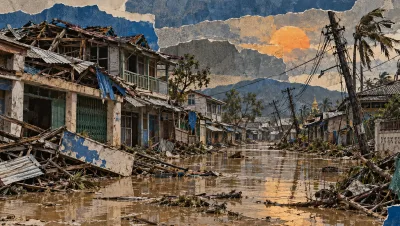
Poverty does not automatically lead to modern slavery. But when conflict, displacement and economic collapse take away people’s homes, livelihoods and access to support, exploitative recruiters have more room to operate. In Myanmar, millions are facing overlapping pressures: losing income, moving in search of safety or work, and struggling to reach healthcare, education and other essential services.
A United Nations Development Programme (UNDP) assessment published on 8 October 2026 found that more than 37 million people in Myanmar, or 68 percent of the population, are either living in multidimensional poverty or at risk of falling into it. The measure considers deprivation in health, education and living standards, as well as income. UNDP says years of conflict, displacement, economic disruption and repeated shocks have weakened families’ ability to cope and recover. www.undp.org
These figures do not count trafficking victims, and they do not mean that everyone in poverty is at risk in the same way. They do show how widely the foundations of security have been weakened. When people have few ways to earn a living, little access to protection and no reliable way to check a job offer, it becomes harder to refuse a dangerous opportunity or leave when work turns abusive.
The link between poverty and trafficking is often a chain of constrained choices. A person may accept a job because their family needs money, borrow to pay for travel, or leave home because staying feels unsafe. A recruiter may exploit that pressure with false promises, debt or threats. Understanding how force, fraud and coercion can turn recruitment into exploitation is central to understanding human trafficking.
What this article covers
- What Myanmar’s poverty figures show, and what they cannot tell us.
- How conflict, displacement and lost livelihoods can increase exposure to trafficking and forced labor.
- Why people fleeing Myanmar, including Rohingya communities, face particular barriers.
- How fraudulent recruitment connects to forced labor in online scam operations.
- What humanitarian agencies and governments are doing, and where protection is falling short.
- What prevention and survivor-centred responses need to address.
Key takeaways
- UNDP estimates that 68 percent of Myanmar’s population is multidimensionally poor or vulnerable to poverty.
- Conflict, displacement and loss of income can narrow people’s options and make deceptive recruitment harder to refuse.
- Poverty is a risk factor, not proof that trafficking has occurred.
- Reported forms of trafficking in and from Myanmar include forced labor, forced recruitment, sexual exploitation, forced marriage and forced criminality in scam operations.
- In February 2026, the UN Human Rights Office reported that people from dozens of countries had been trafficked into scam operations, including in Myanmar.
- People who escape exploitation need safe identification, support and a chance to recover. They should not be punished for crimes they were forced to commit.
- Prevention requires more than warnings. It depends on safer work, accessible services, protection for displaced people and effective accountability.
Why this story matters now
Myanmar’s economic crisis is unfolding alongside armed conflict and mass displacement. The UN’s 2026 Humanitarian Needs and Response Plan says 16.2 million people need humanitarian assistance. It reports that more than four million people have been displaced, many more than once, and that the March 2025 earthquake added to the damage and need. The plan warns that underfunding in 2025 left millions without aid and pushed families toward harmful ways of coping. myanmar.un.org
The UNDP poverty assessment shows how these pressures affect daily life. It finds that poor health and living standards account for more than 80 percent of measured multidimensional poverty. These deprivations include difficulty accessing healthcare, adequate housing, clean water and sanitation. Rakhine is among the country’s most severe poverty hotspots. UNDP cautions that its findings may understate deprivation among some stateless and displaced people, including Rohingya communities, because of limitations in phone-based data collection. www.undp.org
The findings matter for trafficking prevention because losing stable work, housing or community support can leave people with fewer safe choices. The risk is not inevitable, and poverty alone does not define a person’s experience. But when people cannot count on income, services or protection, the consequences of a deceptive job offer can be more severe.
The background: poverty, conflict and displacement
Myanmar has been in crisis since the military seized power in February 2021. Fighting and insecurity have spread across the country, while political instability and economic disruption have damaged livelihoods and public services. Conflict and disasters have forced millions from their homes. Repeated displacement can mean losing documents, income and access to familiar support networks.
The UN’s 2026 humanitarian plan describes a crisis in which conflict, economic collapse and recurrent disasters overlap. It says women and girls face heightened risks of violence and exploitation, while children are losing access to education and protection. myanmar.un.org
“Modern slavery” is a broad term used to describe situations where people cannot refuse or leave exploitation because of threats, coercion, deception or abuse of vulnerability. Forced labor, trafficking and slavery overlap, but they are distinct legal concepts. The International Labour Organization defines forced labor as work demanded under the threat of a penalty and not offered voluntarily. A person’s apparent agreement does not settle the question if a recruiter used false promises or the worker cannot leave freely. www.ilo.org
Trafficking does not always involve crossing an international border or being abducted. It can involve recruiting, moving, harboring or receiving someone for exploitation. Deception about a job, debt, threats, restrictions on movement or abuse of vulnerability can all be part of an exploitative situation.
What is happening
People in Myanmar are making decisions in an environment shaped by insecurity, displacement and shrinking economic options. Some are forced to move; others leave to find work, avoid recruitment or support family members. The US Department of State’s 2025 Trafficking in Persons report says financial hardship and displacement following the 2021 coup increased trafficking vulnerabilities. It also describes risks for people fleeing military offensives, migrants in Thailand and Rohingya people leaving Rakhine State. www.ecoi.net
Recruitment can happen through personal contacts or online. A job may be presented as legitimate, well paid and located abroad. But a person may arrive to find the work is different from what was promised, face pressure to repay recruitment costs, or discover they are not free to leave. Without secure documents, money or trusted local support, getting away can be difficult.
One particularly visible form of exploitation is trafficking into online scam operations. People are recruited with promises of work and then forced to carry out online fraud. This is known as forced criminality: victims are compelled to commit offenses as part of their exploitation.
The UN Human Rights Office’s February 2026 report documents cases involving people trafficked into scam operations in Myanmar and other countries. Interviewees described fraudulent recruitment and coercion into online scams, alongside serious abuse. The report says victims can face disbelief, stigma and punishment instead of protection. ghana.un.org
These operations show why trafficking cannot be reduced to a single recruiter or a person’s decision to accept a job. The scam industry relies on cross-border recruitment, organized criminal networks, facilities where workers can be controlled, digital tools and money flows. UN human rights reporting describes the operations as adaptable, with criminal actors changing methods or relocating as pressure increases. bangkok.ohchr.org
How poverty connects to trafficking and modern slavery
Poverty can reduce a person’s ability to refuse risky work, verify a recruiter or leave an abusive job. It can make someone more dependent on a recruiter for travel or accommodation, and less able to cope if wages are withheld. A sudden loss of income can also make debt seem like the only way to pay for travel, food or shelter.
These pressures do not make people responsible for the exploitation they experience. Traffickers and exploitative employers create and profit from coercive conditions. Poverty helps explain why a false promise may be persuasive; it does not excuse the person who makes that promise or uses it to control someone.
Displacement adds further barriers. People who have moved repeatedly may lose identity documents or face restrictions on movement. They may have to rely on unfamiliar intermediaries and may not know where to seek help. The State Department report says restrictions on movement in some areas have impeded access to jobs and education, worsened economic hardship and driven migration. It also describes risks for Rohingya people and other communities living in displacement camps. www.ecoi.net
For people trafficked into scam compounds, exploitation may be hidden behind the appearance of ordinary work. Someone can be told they have accepted a job and then find they cannot leave, are threatened or penalised for failing to meet targets. The UN Human Rights Office calls for anti-trafficking laws to recognize forced criminality and for authorities to protect victims from punishment for crimes they were forced to commit. ghana.un.org
For more on recruitment, coercion and prevention, see Not For Sale’s guide to 50 essential facts about human trafficking.
Who is most at risk?
Risk is shaped by a person’s circumstances and the systems around them, not by identity alone. People who are displaced, undocumented, separated from support networks or unable to access safe work may have fewer ways to check offers or report abuse. Children and young people can face heightened risks when education and protection systems are disrupted. Women and girls may face gender-based violence and exploitation.
Rohingya communities face a particularly severe combination of statelessness, displacement and restrictions. The State Department report describes risks of forced labor and sexual exploitation affecting Rohingya migrants, and reports that some have been recruited from displacement camps for exploitation abroad. It also says the lack of identity documentation can increase vulnerability to trafficking. www.ecoi.net
People moving across borders may face added risks if they lack recognized status or depend on unregulated brokers. The same report describes Burmese migrant workers in Thailand avoiding return to Myanmar because of fears of violence and forced military recruitment, leaving them vulnerable to exploitation. These are reported risks, not evidence that every migrant or displaced person is being trafficked.
The systems behind the harm
The conditions that enable exploitation extend beyond individual criminal networks. Conflict and economic collapse have weakened livelihoods and public services, while displacement and movement restrictions can leave people reliant on informal arrangements. Where legal work, protection and reliable information are difficult to access, recruiters can exploit that dependence.
Enforcement is also fragmented. The State Department report says conflict has sharply limited the authorities’ reach and that anti-trafficking law enforcement efforts have weakened. It describes gaps in identifying victims, referring them to services and screening people recovered from scam compounds. It also reports that the authorities did not screen people in internally displaced people’s camps for trafficking indicators. www.ecoi.net
Rescuing someone from an exploitative workplace is only one step. If that person is treated as an immigration offender or criminal, returned to danger, or left without shelter and support, the conditions that enabled exploitation remain. They may also face the risk of being trafficked again.
The human impact
Poverty and displacement affect more than income. They can interrupt education, healthcare, family life and the relationships people rely on for information and help. UNDP describes deprivation across health, education and living standards, while the humanitarian plan warns that conflict and disasters are stretching communities’ ability to cope. www.undp.org
For people trafficked into scam operations, the impact can include lost wages, threats, restricted movement and pressure to defraud others. The UN Human Rights Office calls for safe rescue, protection, rehabilitation and safeguards against re-trafficking. It also stresses that people forced to commit crimes should not be treated as offenders without consideration of their trafficking experience. ghana.un.org
Support should start with safety and the person’s account of what happened. People need practical help to recover, rebuild their lives and avoid further exploitation. Not For Sale’s article on what children need after an intervention explores why protection has to continue beyond the immediate rescue.
What governments and institutions are doing
The UN’s 2026 Humanitarian Needs and Response Plan aims to prioritize life-saving and protection assistance for 4.9 million people in the hardest-hit areas. It calls for US$890 million and warns that inadequate funding has left people without support. This is a plan and funding appeal, not a guarantee that aid will reach everyone who needs it. myanmar.un.org
International agencies and governments have also responded to trafficking in scam operations through investigations, rescues and cross-border cooperation. The State Department’s 2025 report refers to the release of more than 7,000 people from scam compounds in Myanmar in March 2025. It also says the authorities did not report opening trafficking investigations into the operators or owners, and describes gaps in victim screening and referral to protection services. www.ecoi.net
The UN Human Rights Office has called for a rights-based approach that recognizes forced criminality, protects victims from punishment for offenses they were compelled to commit and provides safe rescue and rehabilitation. These principles matter: an effective response should target the people and networks profiting from exploitation while identifying and supporting those they have coerced. ghana.un.org
What still needs to change
Displaced people need practical access to protection: safe shelter, documentation, healthcare, education and reliable routes to work. Services must reach people in conflict-affected and hard-to-access areas, including communities that may be missed by standard data collection.
Recruitment also needs scrutiny. Workers should be able to verify employers and terms before traveling, understand fees and contracts, and seek help without fear of retaliation or arrest. Governments and businesses should investigate brokers who use deception, debt or threats to control workers.
People identified in scam compounds need to be treated as potential trafficking victims, including when they have been forced to take part in criminal activity. Rescue should lead to safe accommodation, interpretation, legal advice, medical and psychological care, and protection from re-trafficking. Authorities should investigate the networks and enablers behind the compounds, not simply detain or deport the people found inside them.
Humanitarian assistance and livelihood support are also part of prevention. Emergency aid cannot resolve the conflict or restore functioning institutions on its own. But when families can access food, health services, education and dependable ways to earn a living, they have more options when a recruiter offers a risky escape route.
Not For Sale describes social innovation as building practical solutions that address the systems producing harm. In a crisis such as Myanmar’s, that means connecting immediate support with locally informed ways to strengthen livelihoods and reduce reliance on exploitative recruitment.
What Not For Sale’s perspective adds
A prevention-focused response treats people as decision-makers whose choices have been constrained by circumstances, rather than defining them by the exploitation they may face. It also asks whether an intervention gives people safer alternatives and whether those alternatives reflect the knowledge of affected communities.
For Myanmar, awareness alone is not enough. People need safe migration routes, access to services, protection from violence and reliable ways to earn a living. Prevention and survivor support should be practical, locally informed and grounded in dignity, with accountability directed at those who exploit and profit from people’s lack of options.
What readers can do
Readers can share reliable information about trafficking and avoid claims that blame people for accepting jobs or migrating under pressure. When a job offer seems unusually lucrative, involves unexpected fees or requires handing over identity documents, people should seek independent advice before traveling. These signs do not prove trafficking, but they are reasons to check an offer carefully.
People can also support organizations with established experience in survivor-centred protection and local prevention, and ask businesses how they identify and address forced labor in recruitment and supply chains. In an emergency, contact appropriate local services or a trusted anti-trafficking organization where doing so is safe. Do not confront suspected traffickers or share identifying details about a potential victim without their consent.
In Myanmar, poverty is deepening as conflict, displacement and economic disruption erode the supports that help people stay safe. Poverty does not inevitably lead to modern slavery. But when people have fewer ways to earn, move safely or access help, traffickers can make false promises harder to refuse and exploitation harder to escape.
The response must address both the people who profit from coercion and the conditions that make coercion possible. Emergency protection matters. So do secure livelihoods, accessible services and the ability to seek help without fear. These are not separate from anti-trafficking work; they are among its foundations.
FAQ
How is poverty linked to modern slavery in Myanmar?
Poverty can reduce a person’s ability to refuse risky work, check a recruiter or leave an abusive job. In Myanmar, conflict and displacement have compounded economic hardship and weakened access to services. Poverty is a risk factor, not proof that trafficking has occurred. www.undp.org
How many people in Myanmar are living in poverty or at risk?
UNDP reported in October 2026 that more than 37 million people, or 68 percent of Myanmar’s population, were either living in multidimensional poverty or vulnerable to falling into it. Its measure considers health, education and living standards as well as income. www.undp.org
How many people have been displaced in Myanmar?
The UN’s 2026 humanitarian plan reports more than four million displaced people. The number can change as conflict and disasters trigger new movements, and some people have been displaced more than once. myanmar.un.org
What forms of modern slavery are reported in Myanmar?
Reports describe forced labor, forced recruitment, sexual exploitation, forced marriage and trafficking into forced criminality in online scam operations. People from Myanmar are also trafficked abroad, while foreign nationals have been trafficked into exploitative operations inside the country. www.ecoi.net
What is forced criminality?
Forced criminality occurs when a person is compelled to commit crimes as part of their exploitation. In Southeast Asian scam operations, people have been recruited with false job offers and then coerced into online fraud. The UN Human Rights Office says people forced to commit crimes should be identified and protected as trafficking victims rather than automatically punished. ghana.un.org
Who is most at risk of trafficking in Myanmar?
Risk can increase for people who are displaced, undocumented, isolated from support networks or unable to access safe work and services. UN reporting identifies risks affecting Rohingya communities, migrants and people fleeing conflict. These factors raise vulnerability but do not mean everyone in these groups will be trafficked. www.ecoi.net
What are warning signs of a potentially exploitative job offer?
Warning signs can include a job description that changes after recruitment, pressure to pay large or unclear fees, demands to surrender identity documents, restrictions on movement, threats, or wages reduced through unexplained deductions. A warning sign does not establish trafficking by itself, but it warrants independent advice and careful checks.
What is being done to help people affected by the crisis?
The UN’s 2026 humanitarian plan seeks to provide life-saving assistance and protection to people in the hardest-hit areas. International and regional efforts have also sought to recover people from scam compounds. UN reporting says responses must include safe identification, support and protection from punishment and re-trafficking. myanmar.un.org
What can reduce trafficking risk in Myanmar?
Protection from violence, accessible humanitarian support, education, safe work and recruitment, documentation and reliable ways to earn a living can give people more options. Authorities must also investigate traffickers and the networks that profit from exploitation, while ensuring potential victims can safely seek help.
Does migration mean someone is being trafficked?
No. Migration is not trafficking. People may move voluntarily for work or safety. Trafficking involves exploitation, such as forced labor or sexual exploitation, enabled by coercion, deception or abuse of vulnerability. People who migrate without documents may face heightened risks, but their status alone does not establish trafficking.
Sources
- UNDP, Layers of Deprivation: Multidimensional Poverty in Myanmar, 8 October 2026.
- UNDP, “Two in three people in Myanmar are poor or one shock away from falling into poverty”, 8 October 2026.
- United Nations in Myanmar / OCHA, Myanmar Humanitarian Needs and Response Plan 2026, 10 December 2025.
- UN Human Rights Office, Report on trafficking into scam operations, 20 February 2026.
- UN Human Rights Office, 2026: Update on the Human Rights Situation in Myanmar in 2025, 26 February 2026.
- US Department of State, 2025 Trafficking in Persons Report: Burma, 2025.
- International Labour Organization, “What is forced labour?”.
- UN Human Rights Office, Online Scam Operations and Trafficking into Forced Criminality in Southeast Asia, 28 August 2023.

Katie Wilde

More from Katie Wilde