Environmental Charities: How to Choose Where Your Donation Can Make a Difference
Environmental charities work on problems that are linked by the health of the planet but are not interchangeable. Protecting a rainforest, challenging…

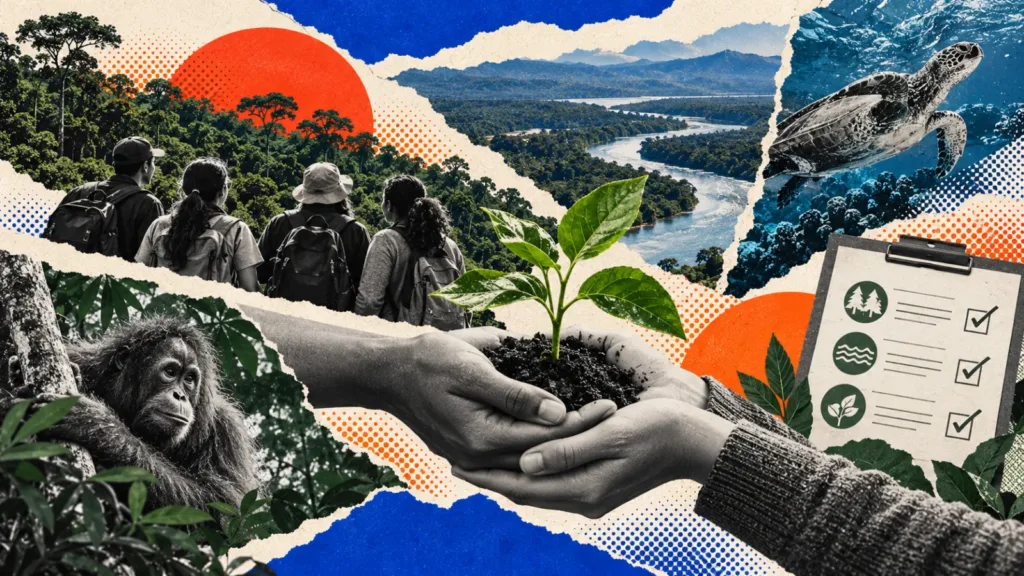
Environmental charities work on problems that are linked by the health of the planet but are not interchangeable. Protecting a rainforest, challenging an unlawful pollution permit, restoring a wetland, defending Indigenous land rights and helping communities adapt to drought can all produce meaningful benefits. They also demand different expertise, budgets, evidence and ways of measuring results. A donor searching for the best environmental charities should begin with a clear question: what change do I want my contribution to help bring about, and what evidence would convince me it is happening?
The right answer will rarely be the organization with the grandest mission statement or the largest tree-planting total. Effective conservation can involve long legal disputes, community negotiations and unglamorous monitoring that never produces a dramatic photograph. Climate work may focus on policy and energy systems rather than planting anything. Direct restoration may be visible but take decades to establish. Assessing environmental giving means understanding these differences before comparing organizations that were not built to solve the same problem.
What This Article Covers
- The main types of environmental charities and what donations support.
- How to assess conservation, climate, restoration and legal advocacy.
- What environmental impact claims can and cannot prove.
- Why land rights, community leadership and safeguarding matter.
- How to make an informed donation without relying solely on rankings or overhead ratios.
Key Takeaways
- A charity’s mission and theory of change should be assessed before comparing its costs with another organization’s.
- Acres ‘protected’ and trees ‘planted’ require definitions, dates and evidence of lasting outcomes.
- Environmental organizations use different approaches, including litigation, community-led protection and direct restoration.
- Indigenous and local community rights are central to many durable conservation strategies.
- Transparent finances, realistic impact reporting and clear governance matter more than a promise of perfect results.
Decide What You Want to Protect
Environmental giving is often grouped under one heading, but its objectives are diverse. A conservation organization may work to secure habitats for endangered species. A climate-focused nonprofit may seek changes in electricity generation, industrial processes or policy. An environmental legal organization may challenge unlawful pollution or defend land protections through courts. A community-based group may help residents monitor their forests and gain legal recognition of land rights. None of these approaches can be judged entirely by the same metric.
Someone primarily concerned about biodiversity might look for credible habitat and species outcomes. A donor motivated by climate change may examine the scale and durability of emissions reductions that a policy or project can reasonably influence. Someone concerned about forest loss could prioritize land tenure, supply-chain enforcement and conservation partnerships. The best environmental charity for one donor may be poorly matched to another’s priorities without being ineffective in its own work.
Donors should also distinguish immediate relief from long-term change. After a natural disaster, providing water, shelter and medical care may be urgent. Long-term watershed protection, resilient infrastructure and land management require different expertise and timescales. A nonprofit that specializes in one should not be presented as a substitute for the other simply because both operate in an area affected by climate hazards.
The most useful first question is therefore practical rather than ideological: what specific harm does this organization seek to prevent or reduce, and what is the plausible path from its activities to that outcome? A charity that can explain this in ordinary language, including what it cannot control, is already giving donors a better basis for judgment.
Four Very Different Ways Charities Protect the Environment
Direct land and water conservation may involve purchasing land, securing conservation agreements, working with authorities or supporting community management. The Nature Conservancy, for example, describes work to conserve lands and waters in partnership with public agencies, communities and others. The strength of such an approach depends on the ecological value of areas concerned, long-term stewardship and whether protections can be enforced.
Legal advocacy addresses the rules that govern environmental harm. Earthjustice, an environmental law nonprofit, uses litigation and legal advocacy to protect health, wildlife and ecosystems and address climate-related issues. Success in this field may involve a court ruling, stronger standards or preventing an unlawful decision. A legal victory is not automatically proof of environmental recovery; implementation and enforcement still matter. Nevertheless, a well-chosen legal case can influence decisions far beyond a single project location.
Community-led forest protection emphasizes the rights and authority of people who live in and depend on forests. Rainforest Foundation US describes partnerships with Indigenous organizations to secure land rights, support forest monitoring and strengthen local institutions. Its approach recognizes that conservation can be undermined when communities are excluded from their own territories or from decisions affecting them. Donors should ask how control, money and recognition are shared with community partners rather than assume the international charity is the sole actor creating results.
Restoration charities work with damaged landscapes. Their programs may include planting native trees, restoring wetlands, protecting soil or rebuilding ecological corridors. These projects can be valuable, but reported outputs need careful interpretation. A tree planted is not a tree surviving ten years; hectares enrolled in a project are not necessarily hectares restored. The organization should explain baselines, maintenance obligations, ecological suitability and how its claims are verified.
How to Read Environmental Impact Numbers
Environmental charities often report large numbers because their work concerns land, water, wildlife and emissions. But ‘acres protected’ can refer to legal designation, community agreements, active monitoring or land where the organization claims an indirect contribution. Each can be meaningful while describing a different achievement. A credible report defines the measure and explains how long the protection is expected to last.
Tree planting deserves especially careful attention. Organizations should distinguish seedlings propagated, seedlings planted, surviving trees and functioning restored habitat. An impressive planting count may conceal low survival, inappropriate species or land-tenure conflicts. Conversely, a project that prevents damage to an intact forest may protect more ecological value without planting a single tree. Donors should not reward whichever activity generates the largest easy-to-photograph number.
Climate impact estimates add complexity. A claimed amount of carbon removed or emissions avoided depends on assumptions about what would have happened without the project, what occurs elsewhere because of it and whether the benefit persists. These questions are often described as additionality, leakage and permanence. They matter because seemingly precise calculations can create a false sense of certainty if the model’s assumptions are not transparent.
Good reporting explains uncertainty. Did the charity measure actual conditions, use a model or rely on a partner’s estimate? Is the baseline comparable? Has a third party reviewed the figures? Are impacts attributed solely to the charity even when governments and communities provided most of the work? Honest answers make it possible to compare claims without treating every technical estimate as an audited fact.
Follow the Money, but Ask What It Buys
Financial transparency is necessary. A donor should be able to find registration details, annual reports, financial statements, leadership information and a clear description of how contributions are used. Charity Navigator examines several dimensions of eligible US nonprofits through its rating framework, while the BBB Wise Giving Alliance publishes standards on governance, effectiveness, finances and fundraising. These tools can help identify questions worth asking; they do not replace independent understanding of a specific program.
An overhead ratio is too crude to settle effectiveness. Environmental litigation requires lawyers, researchers and court costs. Monitoring a remote forest may require equipment, secure communications, local staff and multi-year support. Serious safeguarding and financial oversight are also expenses. An organization that cannot afford these functions may be unable to deliver its stated mission responsibly, however attractive its percentage of ‘program spending’ appears.
Ask whether the charity’s funding is restricted or unrestricted and what happens if a specific project changes direction. Environmental work is affected by government policy, climate conditions, land disputes and market changes, none of which is entirely within a charity’s control. Responsible organizations explain setbacks and why priorities evolve. Publishing only success stories can make a dynamic and uncertain field appear deceptively simple.
The relationship with corporate donors also deserves scrutiny. A conservation project should not automatically be treated as proof that a company’s unrelated operations are sustainable. Donors should examine conflicts of interest, the terms of partnerships and whether an environmental nonprofit retains the independence to criticize harmful practices. Similarly, a corporate offset purchase is not interchangeable with unrestricted philanthropic support.
The Importance of Community Rights
Environmental protection is inseparable from people in many landscapes. A forest can be a source of food, medicine, identity and employment. Conservation efforts that displace residents or disregard customary rights can cause serious injustice. When a charity describes an area as ‘saved,’ a donor should ask who lives there, who made the decisions and what rights those people retain.
Community participation should mean more than attending a consultation. It may involve control over land mapping, conservation priorities, income from sustainable products, financial decisions and grievance procedures. Locally led organizations often have expertise that cannot be imported from a distant headquarters. International partners should explain how funds and authority reach the people responsible for protection on the ground.
This is especially relevant where environmental crime and human exploitation overlap. Illegal mining and logging can involve coerced labor in some settings and can damage livelihoods that communities need to resist exploitative recruitment. But not every environmental offense is human trafficking, and conservation campaigns should avoid unsupported claims that all workers in destructive industries are victims. Evidence has to establish the particular connection.
Not For Sale’s work in Peru illustrates this intersection from a different angle. The organization describes a partnership involving Indigenous communities, the AFIMAD cooperative and forest-related livelihoods associated with its REBBL history. Its stated purpose is to create dignified economic alternatives alongside conservation. A donor evaluating this approach should ask the same questions they would ask of any other project: who owns the opportunity, what income and environmental outcomes are measured, and how do local communities participate in decisions?
Choosing a Charity Without Creating a False League Table
Lists of ‘best environmental charities’ can be useful entry points, but they are often assembled from organizations doing fundamentally different work. One charity’s climate policy influence cannot honestly be converted into the same unit as another’s endangered species monitoring or wetland restoration. An article that ranks them without a clearly defined, transparent method may create the appearance of objectivity without the substance.
A better comparison is based on donor priorities. First identify the issue: forests, oceans, wildlife, pollution, climate systems, community rights or restoration. Then examine the organization’s mechanism for change. Review governance and financial documents, assess the quality of impact evidence, and look for responsible community participation. Finally, decide whether the scale and timescale of the intended outcome match what you want to support.
Do not dismiss small organizations simply because their impact reporting is less polished than that of a global institution, but do not suspend scrutiny either. The relevant questions remain the same: are the activities appropriate, is money handled responsibly, are risks addressed, and is there a credible reason to believe the work benefits the environment and the people affected?
An ongoing donation can be especially valuable when an organization needs to retain staff, monitor land, provide legal support or maintain restoration over several seasons. One-off giving may suit a specific, clearly scoped need. Donors should understand whether their money is allocated to a particular project or to the organization’s broader work and should not be told that an arbitrary contribution guarantees a precise ecological outcome unless the charity can substantiate it.
What Responsible Environmental Giving Looks Like
The practical route is straightforward. Verify that you are on the charity’s official website; examine recent reports and accounts; understand its approach; read independent information where available; and consider whether its claims seem appropriately qualified. A legitimate charity should be able to explain both the costs of doing the work and what success would look like. It should respect the communities involved and avoid using environmental emergency as a pretext for pressure or misleading claims.
Not For Sale accepts support for its environmental protection and social innovation work, alongside its survivor-protection programs. Its official donation page describes those causes and links to further information. Because this article is published by Not For Sale, readers deserve that disclosure. Its work is one option within a much wider environmental sector, and donors should choose the approach that aligns with their priorities after reviewing the evidence.
Environmental giving is most effective when it supports accountability over time rather than a one-day feeling of accomplishment. A healthy forest, a recovering river or a community with greater control over its land may take years to achieve and longer to secure. The best donation decision is the one that understands that timescale and still chooses to invest in the work.
Frequently Asked Questions
What are environmental charities?
They are nonprofit organizations working on issues such as conservation, climate, pollution, land rights, restoration and environmental law, using methods that differ substantially.
Which environmental charity is best?
There is no universal best option. Compare the issue you want to address, the charity’s methods, governance, evidence of outcomes and treatment of local communities.
How can I check whether a charity is legitimate?
Verify its registration and official donation channels, read financial statements and impact reports, and consult relevant independent accountability resources.
Are tree-planting charities effective?
Some can be, but results depend on ecological suitability, survival, long-term stewardship and community involvement. Planting counts alone are insufficient.
Is donating to climate policy better than restoration?
They pursue different objectives and have different evidence challenges. The better choice depends on the donor’s goals and the quality of the specific intervention.
Why do environmental charities work with Indigenous communities?
Indigenous communities often have longstanding relationships with their territories, and secure rights and local leadership can contribute to durable conservation.
Should I choose the charity with the lowest overhead?
No. Effective conservation requires skilled staff, monitoring, governance and long-term support. Evaluate what spending accomplishes, not only its administrative label.
Can an environmental donation help prevent exploitation?
It may contribute where environmental harm and insecure livelihoods are linked through documented mechanisms. Such benefits should be evaluated, not assumed from the word ‘conservation.’
Sources
- Charity Navigator, Understanding Encompass Ratings: https://intercom.help/charity-navigator/en/articles/7932237-understanding-the-encompass-rating
- BBB Wise Giving Alliance, Standards for Charity Accountability: https://give.org/bbb-standards-for-charity-accountability
- The Nature Conservancy, Who We Are: https://www.nature.org/en-us/about-us/who-we-are/
- Earthjustice, About: https://earthjustice.org/about
- Rainforest Foundation US, What We Do: https://rainforestfoundation.org/our-work/what-we-do/
- FAO, Global Forest Resources Assessment 2025: https://www.fao.org/newsroom/detail/global-deforestation-slows–but-forests-remain-under-pressure–fao-report-shows/en
- OECD-FAO, Deforestation and due diligence in agricultural supply chains: https://www.oecd.org/en/publications/2023/07/oecd-fao-business-handbook-on-deforestation-and-due-diligence-in-agricultural-supply-chains_4489399b/full-report/component-5.html
- Not For Sale, Peru: https://wearenotforsale.org/projects/peru/
- Not For Sale, Donate: https://wearenotforsale.org/donate/
Not For Sale
A global movement fighting modern-day slavery and ecocide in 33 countries. Building on the frontlines since 2007.