Brazil’s Election Is Over. The Fight Over the Amazon Is Not.
The reelection of President Luiz Inácio Lula da Silva has been welcomed by many environmental and Indigenous advocates. But protecting the Amazon requires more than a presidential mandate, and the pressures driving deforestation remain powerful.

A vote watched far beyond Brazil
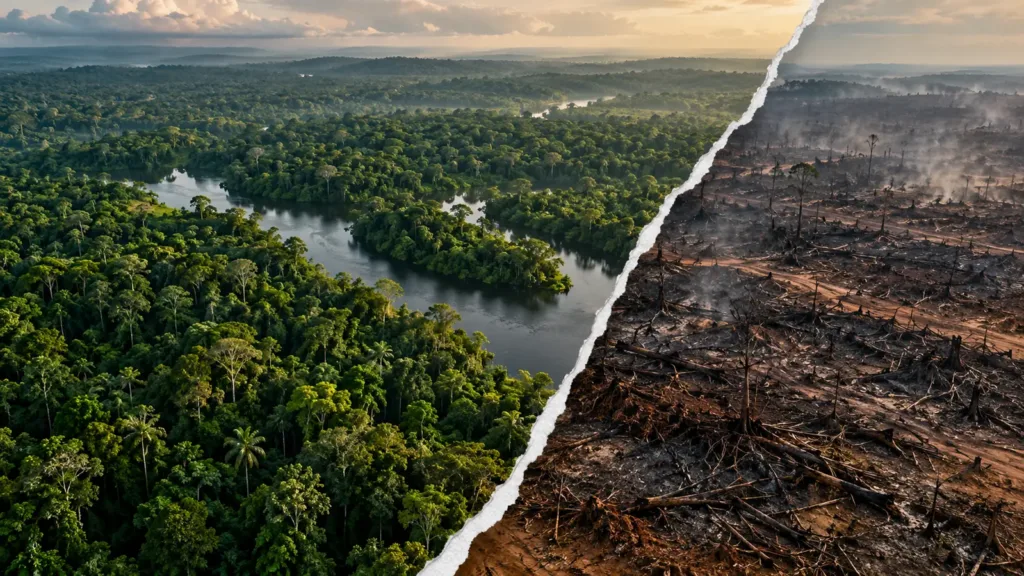
An election in Brazil determines who leads one of the world’s largest economies. It also influences policies affecting the Amazon rainforest, with consequences for Indigenous communities, biodiversity and the global climate. That is why environmental advocates watched the October 25, 2026, presidential runoff so closely, and why the result prompted celebrations that reached well beyond electoral politics.
Brazil’s Superior Electoral Court, the TSE, confirmed that President Luiz Inácio Lula da Silva was reelected with 64,256,232 votes, or 51.79 percent of valid ballots. His opponent, Flávio Bolsonaro, received 48.21 percent, according to official reporting. Associated Press reported on October 27 that environmental and Indigenous advocates welcomed the result as offering the prospect of continued efforts against illegal Amazon deforestation.
The result is clear. Its ecological implications are less straightforward. An administration can strengthen inspection agencies, defend protected areas and support Indigenous rights. It can also face pressure to expand energy, mining, infrastructure and agricultural production. Economic interests, Congress, courts, state authorities and international markets all influence what happens on the ground. A presidential victory changes the political setting but does not solve the underlying conflict over land use.
What This Article Covers
- The confirmed result of Brazil’s October 2026 presidential election.
- Why forest and Indigenous advocates reacted strongly.
- How national policy influences Amazon deforestation.
- What environmental enforcement can and cannot achieve.
- The competing pressures involving agriculture, infrastructure and energy.
- What measurable progress should look like during the next term.
Key Takeaways
- Brazil’s TSE confirmed Lula’s reelection with 51.79 percent of valid votes.
- Environmental advocates view the result as an opportunity for continuity in Amazon protection.
- Election outcomes do not guarantee specific ecological results.
- Enforcement, land rights, economic incentives and public institutions shape deforestation trends.
- Illegal clearing must be distinguished from lawful but disputed development.
- Indigenous participation is essential to fair and durable decisions.
Why the Amazon was part of the election story
The Amazon has unusual importance in global environmental debates because of its biodiversity, carbon storage, climate interactions and the scale of the communities whose lives are connected to it. Yet it is also home to cities, farms, roads, industry and extensive economic activity. Discussions that treat the region as an untouched wilderness erase the people who live there and the political choices they face.
Rates of forest loss are influenced by enforcement, commodity prices, land speculation, transport access, fire and decisions about protected territory. The federal government can change inspection budgets, agency leadership, land-recognition policies and the priority given to illegal operations. State and municipal authorities also have important responsibilities, while courts and Congress can limit or reshape executive action.
The electoral debate therefore concerns more than environmental rhetoric. It is about whether monitoring produces enforcement, whether Indigenous communities can exercise rights over territory, and whether public policy makes forest protection economically possible.
International attention can help bring resources and scrutiny, but overseas observers should avoid assuming that Brazil’s interests are identical to those of foreign environmental organizations. The country has legitimate development concerns, and local communities do not all agree on how those should be pursued.
What the election result establishes
The official count confirms Lula’s reelection. It does not amount to a referendum solely on forest policy. Voters make decisions for many reasons, including wages, public services, security and political trust. It would be misleading to interpret the result as unanimous public consent to a particular conservation plan.
Associated Press described relief and optimism among environmental and Indigenous advocates. Those reactions are newsworthy because previous disputes over deforestation and Indigenous land rights have made presidential policy especially consequential. But celebratory responses should be attributed to the groups expressing them, not presented as an objective forecast of what the new term will achieve.
Policy continuity may make long-term planning easier for agencies and community organizations. It may also give environmental authorities clearer political backing. Whether those opportunities translate into protection depends on budgets, implementation, cooperation with other levels of government and resilience against illegal activity.
The president’s public commitments must be tested against what agencies do and what independent data show, not only against the relief felt on election night.
Why illegal deforestation is difficult to stop
Illegal clearing is often part of a wider land economy. Roads and property speculation can raise the financial reward of converting forest. Timber may be removed before land changes use. Fraudulent documents can make claims about ownership or the origin of commodities difficult to verify. Enforcement personnel may need to operate across immense territories, sometimes facing dangerous conditions.
Satellite monitoring has made new forest loss easier to detect. It has not eliminated the need for field investigation and due process. A clearing visible from space may be illegal, permitted, or subject to an unresolved dispute. Authorities must connect observations to land records, permits and evidence of who was responsible.
Effective action can involve fines, seizures and prosecutions, but those tools work best when there is follow-through. Penalties that remain unpaid, embargoes that are not enforced or investigations that fail to reach financiers may do little to alter incentives. Long-term progress also depends on transparent supply chains and credible land governance.
The election outcome may change enforcement priorities, but structural pressures will remain wherever illegal clearing can still be profitable.
Indigenous rights are not an optional conservation strategy
Indigenous peoples have longstanding relationships with territories throughout the Amazon, and their rights must be considered on their own legal and historical terms. Environmental reporting sometimes treats communities as valuable mainly because their lands contain forests. That reverses the proper order. Rights do not depend on providing a measurable service to the global climate.
Recognition of territory and meaningful participation can also have ecological consequences. Communities often hold knowledge of waterways, wildlife and land use that public agencies may lack. Yet community priorities differ, and some people may support forms of economic development that others oppose. Respecting rights means allowing genuine decision-making rather than recruiting Indigenous voices to endorse a policy chosen elsewhere.
Conflicts over mining, dams, roads and land access will not vanish after an election. The proposed Volta Grande gold mine in Pará, for example, remained subject to a separate October 2026 legal dispute over licensing and Indigenous assessment. That case cannot be used to infer wrongdoing across Brazil’s mining industry, but it illustrates the continuing role of courts and regulatory processes.
Some of the strongest tests of environmental policy occur far from the presidential palace, when an agency must choose whether to enforce restrictions despite political or economic pressure.
The tension between conservation and development
Brazil is a major agricultural producer and an important participant in energy and minerals markets. These sectors create employment and public revenue. They can also bring environmental risks, particularly where infrastructure makes previously remote areas accessible. The policy challenge is not settled by claiming that all development is destructive or that environmental protection always prevents economic opportunity.
Investment in existing productive land, stronger environmental standards and economic opportunities that depend on standing forests may reduce pressure to clear new areas. Such strategies require credible markets, financing and governance. Poorly designed rules can shift costs to small producers while leaving better-connected actors relatively unaffected.
Energy decisions present similar difficulties. Governments may argue that new production is needed for development or fiscal stability while environmental organizations question climate and ecological costs. These debates deserve case-specific examination, including alternatives and distribution of benefits. Party labels are not a substitute for evaluating actual projects.
An administration seeking credibility on the Amazon must confront these contradictions openly. Targets are most persuasive when paired with transparent policy choices and data that allow independent assessment.
How to measure what changes after the election
The simplest measure is forest loss over time, but even that requires care. Monitoring systems distinguish deforestation from degradation and may use different observation periods. Annual changes can be influenced by weather, enforcement, markets and delayed effects of earlier policy. Attribution to one administration should not be assumed from a single annual figure.
Other indicators include action against illegal land clearing, the proportion of penalties effectively enforced, recognition and protection of Indigenous territories, agency staffing, prosecution of organized networks and ecological recovery in previously damaged areas. Tracking threats against environmental defenders and access to justice can reveal whether improvements in aggregate data correspond to safer lives for communities.
Public transparency is essential. Independent scientists, journalists and civil society need access to reliable information so they can evaluate performance without relying exclusively on official claims. That scrutiny should apply regardless of which political party holds office.
The wider world can support forest protection through responsible trade, financial transparency and climate commitments, but it should not expect Brazil to shoulder all costs without a fair discussion of international demand and economic responsibility.
Why local partnerships still matter
Not For Sale’s forest work is in Peru, not the Brazilian election process. Through its partnership with Indigenous communities in the Peruvian Amazon, the organization has supported local approaches connecting environmental protection and livelihoods. The relevant lesson is limited but important: decisions that appear national or global become real through the choices and rights of people living with the forest.
The next Brazilian administration will be judged not only by its speeches about the Amazon but by whether those people can protect their territories and pursue viable futures.
Beyond election night
The reelection result offers continuity and creates expectations. It does not erase illegal land markets, settle licensing disputes or guarantee that biodiversity will recover. Those outcomes depend on institutions that work after the celebration is over.
The Amazon’s future will not be decided by one vote alone. It will be shaped by what Brazil funds, permits, prevents and enforces, and by whether communities closest to the forest have a meaningful place in those decisions.
Frequently Asked Questions
Who won Brazil’s presidential election in October 2026?
Brazil’s electoral authority confirmed that Luiz Inácio Lula da Silva was reelected in the October 25 runoff.
What percentage of votes did Lula receive?
The TSE reported 51.79 percent of valid votes, or 64,256,232 votes.
Why does Brazil’s election matter for the Amazon?
The president influences federal enforcement, protected-area policy, agency resources and approaches to Indigenous rights and land governance.
Did the election guarantee lower deforestation?
No. Deforestation outcomes depend on implementation, economic incentives, weather, legal processes and multiple levels of government.
What did environmental advocates say?
Associated Press reported that environmental and Indigenous advocates welcomed the reelection as a prospect for continued Amazon protection.
Is all Amazon development illegal?
No. Legal development, environmental risk and illegal extraction are different questions that require separate assessment.
What data should be watched?
Independent forest-loss measurements, enforcement results, land-rights decisions, ecological recovery and outcomes for communities are all relevant.
What role do Indigenous communities play?
They hold rights and knowledge tied to their territories and must be able to participate meaningfully in decisions affecting them.
Sources
Not For Sale
A global movement fighting modern-day slavery and ecocide in 33 countries. Building on the frontlines since 2007.