


Ebola and Mining: Everything You Need to Know
22.2 MIN READ
Not For Sale — Analysis · Originally posted June 11, 2026 (Updated June 12, 2026)
In this article:
- What Ebola is and how it spreads
- Where outbreaks occur — and why
- Mining frontiers and ecological disruption
- The labor dimension
- Human trafficking and crisis conditions
- How Ebola impacts mining communities
- The hidden global connection
- What responsible mining looks like
- Beyond the health crisis
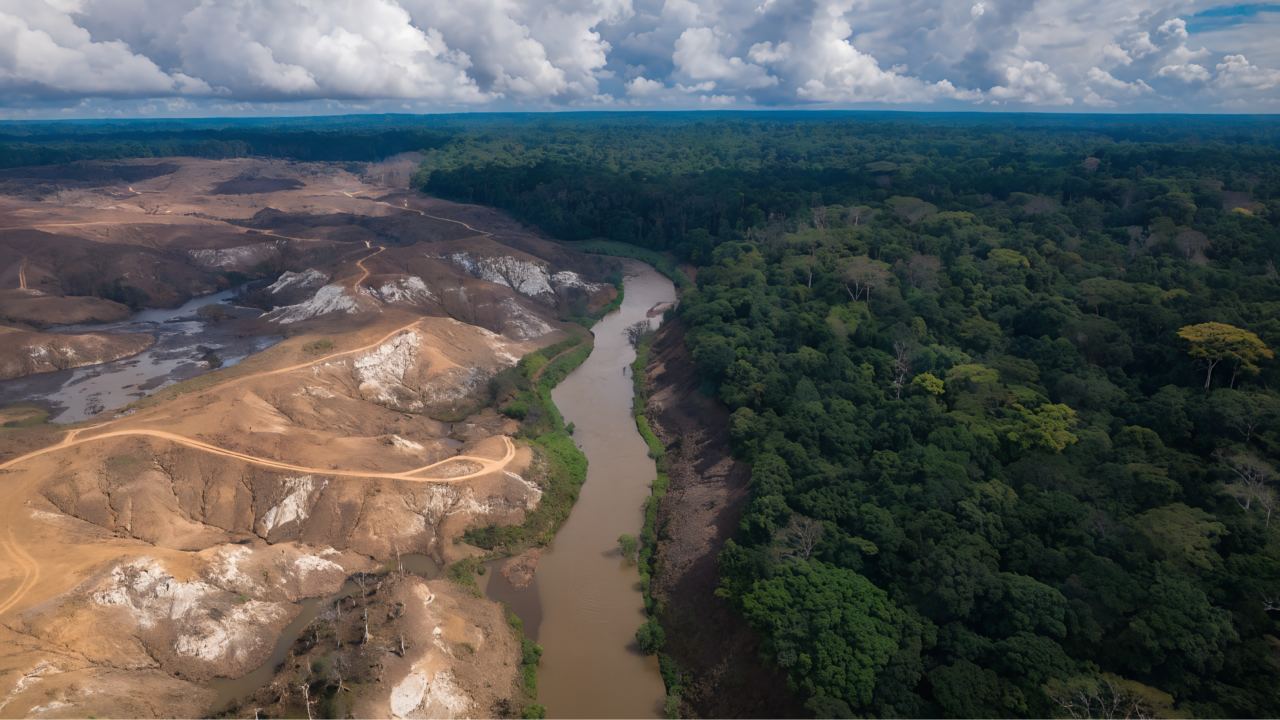
The road begins as a narrow track beneath a canopy of tropical forest before widening into a corridor of exposed earth. Heavy vehicles move through clouds of red dust. Small settlements appear where dense vegetation once stood. Traders arrive carrying supplies. Workers arrive seeking opportunity. New roads push further into landscapes that, only a generation ago, remained largely undisturbed.
In places like these, global forces become visible. The minerals beneath the soil may ultimately find their way into mobile phones, electric vehicles and consumer electronics thousands of miles away. Yet before they become part of a global supply chain, they transform the landscapes and communities from which they are extracted.
At first glance, these environments appear disconnected from one of the world’s deadliest infectious diseases. Yet many regions most affected by Ebola outbreaks are also experiencing profound environmental, economic and social change — and the connections matter.
This does not mean mining causes Ebola. The relationship is neither simple nor direct. Ebola is caused by a virus, and outbreaks begin through biological processes involving animal reservoirs and human transmission. But outbreaks do not occur in a vacuum. They emerge within specific environments, spread through specific communities, and exploit existing weaknesses in health systems, governance structures and economic conditions.

Researchers studying these patterns frequently ask: Why do outbreaks cluster in regions where forests are under pressure? Why are remote communities often first affected? Why do some outbreaks stay localized while others cross borders? And what role do environmental disruption, resource extraction and human mobility play in shaping these risks?
Over the past two decades, demand for minerals, metals and natural resources has driven expanding mining activity, road construction, forest fragmentation and population movement across much of Central and West Africa. The communities most exposed to outbreak risk are typically those with the least healthcare access, the weakest infrastructure and the greatest dependence on fragile local ecosystems. During crises, those vulnerabilities compound: livelihoods disappear, schools close, migration increases, and informal economies expand. In some cases, conditions emerge that increase the risk of child labor, unsafe work and human trafficking.
Not For Sale works in two of the world’s most Ebola-affected regions — the Democratic Republic of Congo and Uganda. Understanding why Ebola emerges where it does is not an abstract question for us. It is the context in which our partners and the communities we serve live every day.
What Is Ebola?
Ebola is a severe viral disease that can cause fever, internal and external bleeding, organ failure and death. It is among the most lethal infectious diseases known to affect humans, with mortality rates varying significantly between outbreaks, healthcare settings and virus species.
Ebola virus disease (EVD) is caused by viruses belonging to the genus Ebolavirus. The disease was first formally identified in 1976 during simultaneous outbreaks in what is now the Democratic Republic of Congo and Sudan — named for the Ebola River, near one of the first recorded outbreak locations. Since then, multiple outbreaks have occurred across Central and West Africa, ranging from small localized incidents to major international public health emergencies.
Symptoms
Symptoms typically begin between two and twenty-one days after exposure. Early signs — fever, severe fatigue, muscle pain, headache — closely resemble many other infections, making initial diagnosis difficult. As the disease progresses, patients may develop vomiting, diarrhea, rash, impaired kidney and liver function, and internal or external bleeding. In many cases, severe dehydration, organ failure and shock become the primary causes of death.
How deadly is it?
Historically, case fatality rates have ranged from roughly 25 to 70 percent, with some outbreaks approaching 90 percent. Outcomes have improved in recent years through earlier detection, better supportive care, vaccines and new therapeutics — but mortality remains exceptionally high, particularly in remote regions where healthcare access is limited.
Multiple species, different risks
Several distinct Ebola species exist. The most significant for human outbreaks has been Zaire ebolavirus, responsible for the deadliest recorded epidemics including the major West African outbreak of 2014–2016. Sudan ebolavirus, Bundibugyo ebolavirus and Taï Forest ebolavirus differ in severity, behavior and geographic range.
The outbreak that changed global awareness
The 2014–2016 epidemic — beginning in Guinea before spreading into Liberia and Sierra Leone — became the largest Ebola outbreak in recorded history: more than 28,000 cases and over 11,000 deaths. It exposed significant weaknesses in global outbreak preparedness and demonstrated how rapidly a local health crisis can become an international emergency. Yet even this epidemic focused public attention primarily on the outbreak itself, rather than the deeper environmental, economic and social conditions that shaped the risk long before the first infection occurred.
How Ebola spreads
Scientists believe Ebola begins with a zoonotic spillover event — a moment when a virus circulating in wildlife infects a human being. Evidence points toward certain bat species as likely natural reservoirs. Once human infection occurs, Ebola spreads through direct contact with bodily fluids.
The search for Ebola’s natural reservoir remains one of the most important and still-unsettled questions in infectious disease research. Researchers have identified Ebola-related genetic material and antibodies in fruit bat populations, and the geographic range of certain bat species overlaps with outbreak regions. The prevailing view is that bats are likely involved in maintaining the virus in nature, though important uncertainties remain.
Potential spillover pathways include hunting wildlife, butchering bushmeat, handling infected animals or contact with contaminated environments. These interactions are not unusual — communities living close to forests have engaged with wildlife for generations. But changes in land use can alter their frequency and nature, a point that becomes central when examining the role of environmental disruption.
Once a human is infected, Ebola can spread through contact with blood, vomit, saliva, sweat, urine, feces, breast milk or semen — and through caring for sick relatives, healthcare settings or traditional burial practices. This is why Ebola outbreaks often affect families and caregivers disproportionately, and why healthcare workers repeatedly find themselves on the front lines.
The people most likely to become infected are frequently those providing support to the sick. The very act of caring becomes a source of risk.
Outbreak control also depends heavily on trust. During several outbreaks, communities responded with understandable suspicion: families feared treatment centers, misinformation spread quickly, and in conflict-affected regions, distrust of authorities further complicated response efforts. Where trust breaks down, transmission becomes harder to contain.
Where Ebola Outbreaks Occur — And Why
Most Ebola outbreaks have occurred in parts of Central and West Africa characterized by dense forest ecosystems, limited healthcare infrastructure and significant interaction between people and natural environments. Recurring patterns suggest that environmental conditions, social structures and public-health capacity all play important roles.
Ebola is not evenly distributed across Africa. Outbreaks have repeatedly emerged within a concentrated belt stretching across parts of Central and West Africa, and the patterns are not coincidental.
The Democratic Republic of Congo
No country has experienced more Ebola outbreaks than the DRC. Its vast tropical forests support extraordinary wildlife populations, including species researchers believe may play roles in Ebola ecology. Many communities live in remote areas with limited healthcare access and challenging transport infrastructure. Conflict and displacement in the country’s east have created additional barriers to public-health response — and it is precisely in this environment that Not For Sale DRC has worked for years, supporting community livelihoods and stability in North Kivu.
Uganda
Uganda has experienced multiple Ebola outbreaks, particularly involving Sudan ebolavirus. Compared with some neighboring countries, Uganda has developed considerable expertise in outbreak response — repeated experience has strengthened surveillance systems and public-health capacity, illustrating that geography alone does not determine outcomes. Institutional preparedness matters enormously.
Not For Sale Uganda has deep roots in communities across the country. Our Uganda Director, Ntakamaze Nziyonvira — known to everyone as TK — was born in the Democratic Republic of Congo and brings firsthand understanding of the region’s interconnected crises. For TK and his team, the relationship between ecological disruption, community vulnerability and disease risk is not theoretical.
|
Not For Sale is on the ground in the DRC and Uganda. In two of the world’s most Ebola-affected regions, our teams work every day to build the economic resilience, community trust and human-rights safeguards that make communities more resistant to crisis — before the next outbreak begins. |
Guinea, Liberia and Sierra Leone
The 2014–2016 epidemic demonstrated that Ebola was not confined to Central Africa. It also showed how borders matter less than human movement: families traveled between communities, workers crossed regions, markets connected distant populations. By the time authorities recognized the scale of the crisis, transmission chains had already expanded significantly. The epidemic exposed decades of underinvestment in healthcare infrastructure while revealing the resilience of local communities and health workers.
Common characteristics across affected regions
Although every outbreak is unique, researchers have identified recurring features: dense forest ecosystems supporting complex wildlife relationships; communities that depend directly on forests for food, fuel and income; remote areas with limited clinics, hospitals and personnel; economic vulnerability that makes it harder for families to absorb health shocks; and high population mobility through migration, trade and labor movement. These characteristics do not cause Ebola — but they shape the conditions in which outbreaks occur and spread.
The importance of landscape change
One of the most significant shifts in Ebola research over recent decades has been growing attention to how outbreak regions are changing — not just where they are. Are forests being fragmented? Are roads expanding into previously remote areas? Are human settlements moving deeper into wildlife habitats? Are extractive industries altering ecosystems? These questions don’t imply simple cause-and-effect, but they recognize that disease emergence often occurs in changing environments, not static ones. This is where mining enters the conversation — not as a direct cause of Ebola, but as one of several forces capable of reshaping landscapes and increasing human-wildlife contact.
Mining Frontiers and Ecological Disruption
Mining expansion can contribute to environmental changes that increase contact between people and wildlife. Roads, deforestation, habitat fragmentation and settlement growth can reshape ecosystems in ways researchers believe may influence zoonotic disease risk. The relationship is indirect — but understanding indirect drivers is often where prevention begins.
A mining project rarely consists only of the mine itself. It requires access roads, worker accommodation, fuel routes, processing facilities and new settlements. Each element extends human activity deeper into previously less-disturbed environments. Roads in particular become corridors — allowing people, goods and economic activity into areas that may previously have experienced relatively limited human presence.
Forest fragmentation and human-wildlife contact
When large forests are divided by roads, settlements or industrial development, wildlife behavior can change. Species alter migration routes. Feeding patterns shift. Animals may spend more time near human settlements. No credible scientist claims that every instance of deforestation automatically increases Ebola risk — nature is more complex than that. But whether repeated environmental disturbance increases the probability of encounters between humans and wildlife reservoirs over time is a question many researchers believe deserves serious attention.
The forest edge effect
As forests fragment, edge habitat increases. These transition zones — where human activity meets natural ecosystems — often become areas of intensified interaction. People collect fuel, gather food and establish small settlements alongside spaces wildlife may also use. From the perspective of infectious disease, that contact matters. Pathogens can only move between species when opportunities exist.
Artisanal mining and informal expansion
Many African mining regions are shaped as much by artisanal and small-scale mining as by industrial operations. These operations are often informal, emerging rapidly around newly discovered deposits. Temporary settlements can grow almost overnight, workers arrive from multiple regions, and environmental oversight is inconsistent. Settlements often develop close to natural environments, food systems may depend partly on local wildlife, healthcare can be scarce, and population turnover is high — each factor shaping vulnerability during an outbreak.
What the evidence says
There is substantial scientific evidence linking environmental disruption to broader patterns of emerging infectious disease — including Nipah virus, Hendra virus, Lyme disease, malaria and various coronaviruses. The evidence regarding Ebola is more nuanced. Scientists broadly agree that ecological conditions matter, and many studies suggest forest fragmentation, land-use change and increased human-wildlife interaction may influence outbreak risk. But no credible body of evidence supports a simple, direct relationship in which mining causes Ebola. The chain is indirect: mining contributes to environmental change, environmental change can influence human-wildlife interactions, and those interactions may affect spillover opportunities. Yet understanding these indirect drivers is often where prevention begins.
The Labor Dimension
Mining regions attract large numbers of workers seeking economic opportunity, creating highly mobile populations, temporary settlements and regional migration networks. These dynamics can influence how quickly diseases spread once transmission begins.
A virus cannot move itself from one community to another. It relies on human networks. The pathways people use to seek work, support families and pursue opportunity often become the same pathways through which infectious diseases travel — and this is particularly relevant in mining regions.
The magnet effect of mining
Where valuable resources are discovered, workers follow — from neighboring villages, distant provinces and across national borders. Some arrive temporarily, others settle permanently. Some work directly in mining; others provide transport, food, accommodation or services. Mining communities often become far more connected than their remote geography might suggest.
Mobility, settlements and health vulnerability
Rapid economic activity can outpace infrastructure: settlements grow faster than healthcare provision, sanitation systems and water supply. When healthcare access is limited, early cases go undetected. When clinics are distant, individuals delay seeking treatment. These challenges are not unique to mining regions, but they become especially visible where economic activity expands faster than public services.
The reality of informal labor
Many workers in artisanal mining operate outside formal employment structures. Income is unpredictable. Social protections are limited. When outbreaks occur, economic survival and health protection come into direct tension. Individuals may face impossible choices: continue working despite risk, stop working and lose income, or travel in search of opportunity elsewhere. These decisions are shaped by necessity — and necessity profoundly influences how communities experience public-health crises.
Outbreaks as economic shocks
When Ebola enters a region, entire local economies can be disrupted. Markets close. Supply chains slow. Trade declines. Movement restrictions may be introduced. The effects can persist long after transmission ends — particularly in regions where households already live close to economic insecurity. A family may survive an outbreak medically but still experience years of financial consequences.
|
Economic resilience is outbreak resilience. Not For Sale’s farm co-ops in eastern Congo give communities an alternative to informal mining — steady income, food security, and the financial buffer that makes the difference when crisis strikes. Your gift makes this work possible. |
Human Trafficking and Crisis Conditions
Ebola does not cause human trafficking. But major outbreaks can create conditions that increase vulnerability to exploitation. Economic collapse, displacement, school closures and weakened institutions all raise risks for children, migrant workers and economically vulnerable populations.
Outbreaks do not occur in isolation. They strike communities already navigating poverty, food insecurity, limited healthcare, weak labor protections and environmental change. Ebola acts less like an isolated disaster and more like a stress test applied to an already fragile system.
Vulnerability is rarely distributed equally
Every major crisis reveals the inequalities that already existed. Some households possess savings; others do not. Some workers have formal employment protections; others survive through informal labor. When an outbreak disrupts daily life, these differences become magnified. The families most affected are often those with the fewest resources to absorb economic shocks.
Children and crisis
One of the most consistent findings across humanitarian emergencies is that children face elevated risks during periods of instability. Ebola outbreaks repeatedly disrupt education. Schools close. Families lose income. Caregivers become ill. Children may lose parents or extended family members. These circumstances increase exposure to hazardous work, child labor, early marriage and trafficking risks. The underlying pattern is familiar: when protective systems weaken, exploitation becomes easier.
Migration and recruitment risks
Economic disruption triggers movement. Individuals leave affected communities in search of opportunity; families relocate. Most migration is legitimate. But periods of uncertainty also create opportunities for deceptive recruitment. Individuals facing severe financial pressure are more likely to accept unsafe work, poor conditions or unverified employment offers. The challenge is not movement itself — it is ensuring that movement occurs within systems capable of protecting people.
Why public health and human rights cannot be separated
Communities do not experience Ebola solely as a virus. They experience it as a disruption to income, education, food security, family structures and social support networks. The broader human consequences often persist long after the outbreak has ended. Communities that are protected economically are often better protected medically, and communities with fewer exploitation risks are better able to recover.
This perspective sits at the heart of the Not For Sale approach. If outbreaks expose vulnerabilities, then preventing future harm requires addressing those vulnerabilities before a crisis emerges — investing not only in healthcare systems, but in economic resilience, worker protections, community development, education and environmental stewardship.
|
When systems fail, children pay the price. Not For Sale works in eastern Congo and Uganda to keep children in school, families financially stable, and communities protected — so that when the next crisis comes, the most vulnerable aren’t left exposed. Your support funds that protection. |
How Ebola Impacts Mining Communities
Mining communities often face unique challenges during outbreaks. Labor mobility, economic dependence on extraction and limited infrastructure can amplify disruption, with consequences extending far beyond health outcomes.
Many mining communities depend heavily on a narrow range of activities — employment, trade, transport and services — with local businesses relying directly or indirectly on extraction activity. When outbreaks disrupt movement and economic activity, the effects ripple outward quickly.
Many mining regions already face healthcare challenges before outbreaks occur: facilities are distant, staffing is limited, resources are stretched. An Ebola outbreak places extraordinary additional pressure on these systems. Clinics become overwhelmed. Healthcare workers face heightened risks. Routine services — maternal health, malaria treatment, childhood illness care — can also suffer, producing indirect health impacts that compound over time.
Education and community trust
School closures were among the most visible consequences of the West African epidemic. For many children, education was interrupted for months; some never returned. Outbreaks don’t simply affect the present — they shape future opportunity, with educational disruption carrying consequences that last years beyond the outbreak itself.
Outbreaks also strain social relationships. Fear spreads. Rumors circulate. Communities with strong social cohesion respond more effectively because cooperation supports public-health efforts. Where trust breaks down, recovery becomes more difficult — and rebuilding that trust takes far longer than containing the virus.
The investment paradox
Mining is often promoted as a driver of development. In many regions, it has delivered jobs, infrastructure and economic growth. But outbreaks reveal an important lesson: economic investment alone is not the same as community resilience. A region may possess significant mineral wealth while still lacking strong healthcare systems, educational infrastructure or social protections. Development cannot be measured solely through production figures.
The Hidden Global Connection
Ebola outbreaks may occur in remote communities, but the forces shaping those communities are often global. Demand for minerals, metals and natural resources connects consumers, investors, manufacturers and governments to regions experiencing environmental change and public-health vulnerability.
Most outbreaks occur far from the cities where global financial decisions are made, from the factories where minerals become products and from the homes where those products are used. Yet distance can be deceptive. The cobalt in batteries, the gold in electronics, the tin and tantalum in countless devices — these materials move through global supply chains that connect remote landscapes to international markets.
Mining provides livelihoods, supports national economies, generates tax revenues and enables technological development. The challenge is recognizing that economic activity creates responsibilities alongside benefits. As demand for critical minerals accelerates — driven by electric vehicles, renewable energy and digital technologies — the questions become more urgent: How should extraction occur? What safeguards are required? How can development support communities rather than simply extract from them?
The COVID-19 pandemic demonstrated that local health events can have global consequences. Ebola operates differently and is far less transmissible — but the broader lesson stands. Health security, environmental stability and economic resilience are interconnected. The conditions that exist in remote mining regions do not remain isolated indefinitely. They influence supply chains, markets, migration and regional stability.
What Responsible Mining Looks Like
Responsible mining is not simply about environmental compliance. It involves protecting ecosystems, supporting community health, strengthening worker protections and building resilience against future shocks.
Resources will continue to be extracted. Minerals remain essential to modern society. The more important question is how extraction takes place — because the difference between responsible and irresponsible development can be profound.
Environmental stewardship. Forests regulate water systems, support livelihoods, protect wildlife habitats and may help reduce unnecessary human-wildlife interactions. Responsible mining minimizes deforestation, limits habitat fragmentation, manages biodiversity impacts and restores disturbed land where possible. Environmental stewardship is increasingly recognized as a public-health issue, not just a conservation one.
Community health infrastructure. Outbreak resilience begins with strong healthcare systems — clinics, trained workers, diagnostic capacity and emergency response. Investment in health infrastructure improves maternal health, child health, disease surveillance and community wellbeing. The same systems that detect Ebola early also improve everyday healthcare outcomes.
Worker protection. Workers with safe employment, fair wages, social protections and healthcare access are more resilient during periods of disruption. Strong labor standards are ethically necessary — and they contribute to broader community stability.
Community partnership and human rights due diligence. Projects that engage communities transparently build stronger relationships and greater resilience. Human-rights due diligence — examining labor conditions, displacement risks, child protection and access to grievance mechanisms — seeks to identify vulnerabilities before harm occurs, a principle equally applicable to public health.
Resilience as a development goal. For decades, development was measured primarily through economic outputs. Today, resilience matters just as much. Can communities withstand shocks? Can institutions function during crises? Development that collapses under pressure was never truly sustainable.
Beyond the Health Crisis
Ebola is unquestionably a health crisis. But it is also a lens through which broader systemic weaknesses become visible. Focusing exclusively on the virus risks overlooking the environmental, economic and social conditions that shape outbreak vulnerability in the first place.
Every Ebola epidemic reveals multiple interconnected systems: environmental, economic, labor, governance and healthcare. When those systems function well, outbreaks are more likely to be detected early, contained quickly and managed effectively. When they function poorly, vulnerabilities compound. The virus exploits those weaknesses — but it does not create them.
Long before the first patient develops symptoms, other processes are already underway. Forests are changing. Economic pressures are increasing. Healthcare systems are under-resourced. Workers are migrating. Communities are navigating poverty and limited opportunity. These conditions do not cause Ebola directly, but they shape the environments in which outbreaks occur — and the severity of their consequences.
The story of Ebola is ultimately a story about relationships: between people and wildlife, between communities and ecosystems, between workers and economies, between local realities and global demand. The virus may be biological. The consequences are profoundly human.
Healthy communities require healthy systems. Resilience requires more than emergency response. Environmental stewardship, human wellbeing and economic progress are not competing priorities — they are ultimately part of the same story.
The challenge for governments, companies, investors and civil society is not merely responding when the next outbreak occurs. It is building a world in which the conditions that amplify vulnerability become less common in the first place. Only then can prevention move beyond containment and become something far more powerful: resilience.
|
Prevention begins long before the first outbreak. Not For Sale has worked in the DRC and Uganda for nearly two decades — building the community resilience, economic alternatives and human-rights protections that reduce vulnerability before crises arrive. That work depends on people like you. |
Sources
- World Health Organization (WHO) — who.int
- Centers for Disease Control and Prevention (CDC) — cdc.gov
- WHO Disease Outbreak News — who.int
- Forest Fragmentation and Ebola Virus Disease Outbreaks — PMC
- Environmental Degradation, Deforestation and Emerging Infectious Diseases — PMC
- Zoonotic Spillover, Deforestation and Wildlife Interaction — MDPI
- US EPA — Land Use Change and Ebolavirus Emergence — EPA
- Artisanal Mining and Community Health in the DRC — PMC
- Diamond Mining Communities and Ebola Vulnerability in Sierra Leone — University of Bath
- International Labour Organization — ilo.org
- UNDP — undp.org
- UNICEF — unicef.org
- World Bank — worldbank.org
- The Lancet — thelancet.com
- Reuters; Associated Press; European Centre for Disease Prevention and Control
Published by NOT FOR SALE June 11, 2026


Sign Up to our Newsletter
Join our movement and get the latest updates, stories, and ways to take action, straight to your inbox.