How Brazil Nuts Support Rainforest Conservation in Peru
In Peru’s Amazon, Indigenous harvesters are turning Brazil nuts into a livelihood that depends on keeping the rainforest standing.

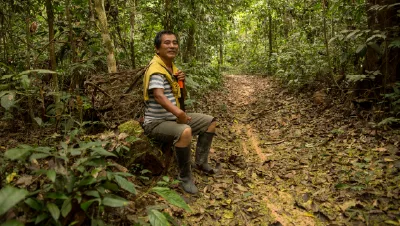
In Peru’s Madre de Dios region, Indigenous harvesters earn income from nuts gathered in the Amazon rainforest. The work of their forest association, AFIMAD, shows why getting the harvest to market matters as much as gathering it.
A Brazil nut starts its journey inside a hard, round fruit that falls from a tree in the Amazon. In Madre de Dios, in southeastern Peru, harvesters collect those fruits from the forest floor, open them, and gather the nuts inside. The tree stays standing and can produce another harvest. When families can earn income from what the forest produces, keeping it standing has a practical economic value. Research on Brazil nut production in Madre de Dios
That is the principle behind work we support in Peru with the Asociación Forestal Indígena de Madre de Dios, known as AFIMAD. The Indigenous-led forest association helps communities bring forest products to market. In practice, that means the conservation story extends beyond the trees. It includes who can transport the crop, who negotiates with buyers, and how much of the value reaches the people who gathered it. Explore Not For Sale’s work in Peru
The forest is part of what produces the harvest
A Brazil nut tree can still stand after the forest around it has been damaged. What happens to its harvest over time is a different question. Researchers followed 126 trees over three harvest seasons in and around Peru’s Tambopata National Reserve. Trees in less degraded forest produced more fruit in two of those three seasons. The relationship varied by year, and the researchers also found that trees tended to produce more fruit where the combined cross-sectional area of nearby trunks was greater. Read the three-season field study
For a family that counts on selling nuts, that distinction matters. A forest can lose some of its ability to support a livelihood even while the trees people harvest from are still visible. The study gives a reason to look at the condition of the forest around those trees as well as the trees themselves. It also shows why the amount gathered in any one year tells only part of the story.
Indigenous producers need a reliable way to reach buyers
A crop can have buyers thousands of miles away and still be difficult to sell from the place where it grows. Transport out of forest communities takes time and money. Producers also need access to buyers, a way to meet their requirements, and enough information to judge whether a deal makes sense. Research in Madre de Dios has documented how seasonal transport difficulties and shifts in the price of Brazil nuts can change the value of the harvest to families. CIFOR’s research on Brazil nut livelihoods
AFIMAD gives Indigenous communities a way to work on those problems together. The regional Indigenous federation FENAMAD describes the association’s role in organizing production and sales and coordinating certification. Not For Sale helped with early funding, training, and technical support, including boats that helped harvesters move their crop to Puerto Maldonado. That transport gave producers more options for where to take the nuts and whom to sell to. FENAMAD’s account of AFIMAD’s work and Not For Sale’s Peru project.
For US readers, there is a concrete example of what that access can mean. In July 2020, Peru’s national forest and wildlife service announced that AFIMAD was preparing its first direct shipment of Brazil nuts to the United States under a contract with a US buyer. The agency said AFIMAD had previously reached the market through another company or in association with other communities. It also described its own technical assistance with certification and finding markets. A contract like that illustrates what market access actually looks like for a producer association. It also shows why a useful account of the trade starts with the people selling the crop. The route a nut takes to a store shelf can tell you who was able to make the deal in the first place. Read the July 2020 announcement from Peru’s forest and wildlife service.
A market for Brazil nuts gives conservation an economic foothold
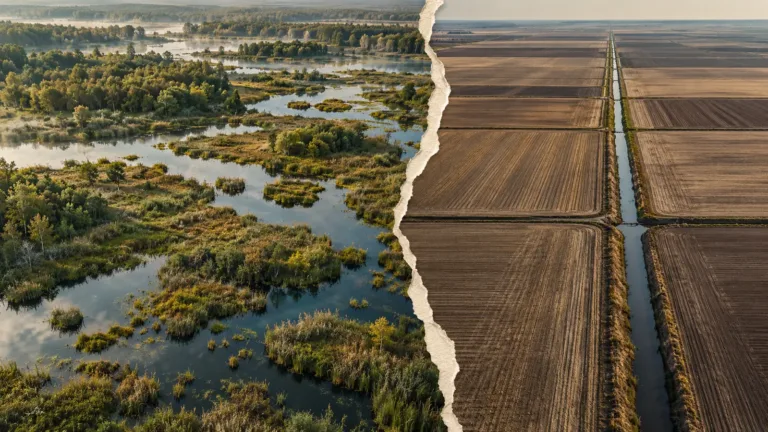
Satellite monitoring has documented extensive forest clearing associated with gold mining in Madre de Dios. Income from Brazil nuts gives communities another way to earn from their land, one that depends on retaining trees and the forest around them. How substantial that income can be depends on the size of the harvest, the price buyers offer, and the cost of getting the nuts to market. Amazon Conservation’s monitoring of mining-related forest loss and CIFOR’s regional study of nut producers.
It helps to ask what different kinds of evidence can tell us. A sale shows that producers reached a buyer. Information about prices and costs can help explain what the sale meant to families. Changes in forest cover over time tell us something different, and attributing those changes to the nut trade takes further evidence. For anyone weighing a conservation claim on a package or in a fundraising appeal, these are useful questions to keep apart. Our guide to evaluating environmental charities explains how to look at what a project does and what its reporting shows.
The same distinction helps explain why there is more than one strand to our work in Madre de Dios. AFIMAD’s work centers on livelihoods tied to the forest. In places where forest has already been lost or degraded, Not For Sale also supports restoration through a project operated by Camino Verde Tambopata, which grows native trees for restoration. And when Indigenous young people face barriers to continuing their education, local organizations have identified a different need again. Our profile of an Indigenous youth hostel in Madre de Dios explains that work and the organizations behind it. Read about forest restoration on the Peru project page.
Support Not For Sale this Giving Tuesday
Not For Sale · December 1, 2026
Support Not For Sale this Giving Tuesday
In Peru, Indigenous harvesters are building livelihoods that depend on a standing rainforest.
This Giving Tuesday, help Not For Sale continue its work to protect people and the places they depend on.

Katie Wilde
More from Katie Wilde