Kenya’s $160 Million Conservation Deal Offers a Different Answer to the Nature Funding Crisis
The Thamani Asili initiative aims to secure long-term support for important Kenyan landscapes through a partnership between government and donors. Its success will depend on funding durability, community rights and measurable conservation outcomes.

A conservation announcement built around duration
Environmental funding often arrives in the form of a short grant, an emergency appeal or a pledge attached to an international summit. Ecosystems, however, do not recover according to a donor’s annual budget cycle. Rangers need continuing support, land-use agreements require years of trust and communities must be able to plan livelihoods beyond a single project.
That is why Kenya’s October 21, 2026, announcement of a $160 million conservation initiative deserves close examination. The program, called Thamani Asili, or “value of nature” in Kiswahili, aims to protect and improve management across approximately 173,000 square kilometers of landscapes that include areas associated with the Great Rift Valley and Maasai Mara. Reuters reported that the plan combines about $80 million in donor support with a similar amount from the Kenyan government over a ten-year period.
The approach is known as Project Finance for Permanence, or PFP. Rather than financing a scattered series of short activities, it seeks to align long-term funding with government commitments and agreed conservation outcomes. The announcement is significant, but it should be understood as a financing agreement and implementation plan, not proof that every hectare is already newly protected or that promised community benefits have been delivered.
What This Article Covers
- What Kenya announced and how the $160 million is structured.
- Why conservation funding needs to last longer than individual grants.
- How Project Finance for Permanence works.
- What is known about the landscapes and proposed beneficiaries.
- The importance of community and land rights.
- How results should be independently measured.
Key Takeaways
- Kenya announced Thamani Asili on October 21, 2026.
- The planned total is $160 million, split approximately equally between donors and government over a decade.
- The initiative targets about 173,000 square kilometers of important natural landscapes.
- Project Finance for Permanence links financing to policy and management commitments.
- Announced protection and beneficiary figures are projections, not measured outcomes.
- Community participation and transparent financial reporting will determine credibility.
What Thamani Asili is intended to do
The program aims to improve the long-term management and conservation of biodiversity-rich areas while strengthening livelihoods and natural-resource governance. Government reporting described a focus on important landscapes and community benefits, with partners including The Nature Conservancy and Enduring Earth.
According to Kenya’s public broadcaster, the initiative is expected to directly benefit about 1.6 million people, with millions more potentially benefiting from improvements in land governance and economic opportunity. These are program projections. They should not be described as people already receiving services, nor should different categories of direct and indirect beneficiaries be added together without understanding the methodology.
Similarly, the target area does not mean all land within it will become a national park or that current residents will be removed. Conservation arrangements can include different legal designations, land-use practices and management structures. Details matter greatly for communities that depend on grazing, agriculture, tourism, access to water or customary use.
The challenge is to create a framework that can produce lasting ecological benefits without treating local populations as obstacles to nature protection.
How Project Finance for Permanence works
PFP is designed around a long-term bargain. Governments and other partners agree on conservation and policy commitments while donors provide financing intended to support implementation over a defined period. The model generally seeks to address the problem of conservation programs that lose funding before they become institutionally sustainable.
The word permanence can create unrealistic expectations. An agreement cannot guarantee that a landscape will never face drought, political change, illegal exploitation or economic pressure. Its value lies in establishing durable financing and governance arrangements that make conservation more resilient over time.
The sequencing is important. Clear policy commitments can encourage donors to release money, while predictable financing can help governments and communities implement those commitments. If either side fails, the model may underperform. Effective accountability therefore requires public milestones, independent oversight and mechanisms to address setbacks.
Unlike a simple donation appeal, this kind of agreement also changes the relationship between conservation finance and state responsibility. Government contributions signal an intention to support public management, rather than leaving protected landscapes dependent entirely on philanthropy. Whether those contributions are additional to existing budgets should be made clear.
Why Kenya’s landscapes matter
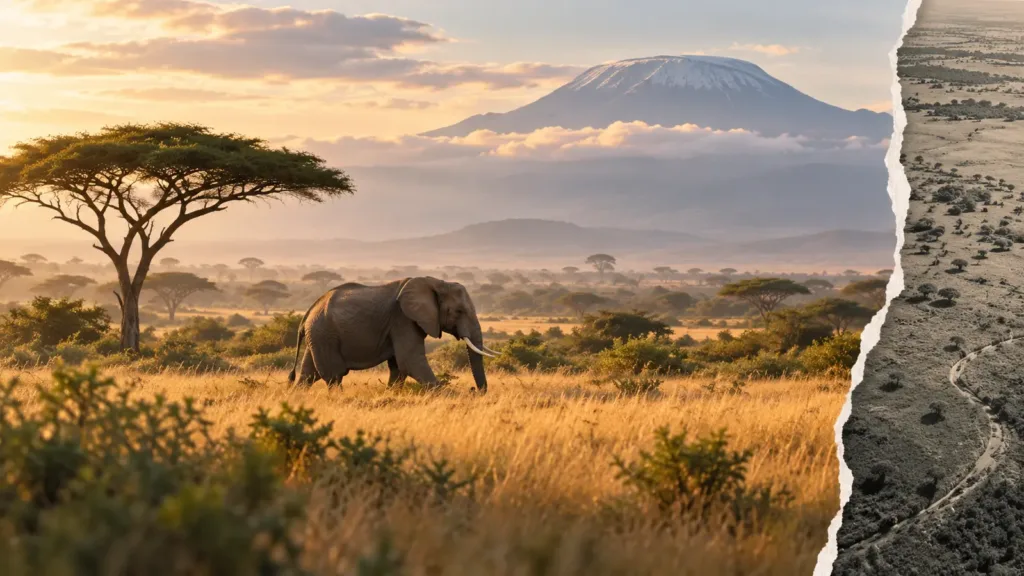
Kenya includes some of Africa’s most internationally recognized wildlife habitats, but biodiversity is not limited to the large mammals familiar from tourism imagery. Grasslands, wetlands, rivers, forests and corridors connecting habitats are essential to ecological processes. Seasonal movement and access to water can be as important as a boundary on a map.
The Maasai Mara and wider Rift Valley landscapes are associated with tourism, pastoral livelihoods and complex forms of land ownership and use. Conservation decisions in these areas can affect people who have managed land for generations. Wildlife can cross private, community and state lands, which means effective management often requires agreements across different authorities and interests.
Protecting habitat also means addressing risks that do not fit a simple poaching narrative. Infrastructure can fragment movement routes. Changing land use can reduce habitat connectivity. Drought and changing rainfall patterns can intensify competition over water and grazing. Economic pressures may lead households to make difficult choices that conservation plans must understand.
The initiative’s value will depend on whether it supports functioning ecosystems and resilient local economies, not simply on the size of the area associated with the agreement.
Communities must shape the terms
Large conservation finance programs can produce benefits such as local employment, improved land management and income linked to healthy ecosystems. They can also create tensions if rules are imposed without meaningful consultation or if benefits flow disproportionately to outside institutions.
The history of conservation in many parts of the world includes exclusion of residents from land they have used for generations. Modern programs need to confront that history. Rights to land and resources should be recognized according to applicable law, and affected communities should have an effective say in management decisions.
The term community benefit is too broad to be a sufficient measure of success. Who receives payments or training? Who can influence budgets? Are women, young people and groups with less political influence represented? What happens when residents disagree about grazing restrictions or tourism development? These questions are not distractions from conservation. They are central to its legitimacy.
Financial commitments should include arrangements for grievance mechanisms and transparent local governance. A community that cannot challenge a decision has limited control even if a project describes itself as participatory.
Financing without inflated claims
The headline $160 million is a commitment structured over ten years. That is not the same as $160 million already disbursed, and it should not be divided by hectares to suggest a simple per-area expenditure without examining what the money funds. Public and philanthropic components may have different timelines and conditions.
The program’s partners should publish clear financial records identifying commitments, transfers, expenditures and administrative costs. Conservation results require separate measures. Spending money does not guarantee that habitats improve, and a favorable wildlife trend may have several causes beyond one project.
Independent evaluation could examine habitat connectivity, wildlife populations where data are reliable, ecosystem condition, access to water, community income and the effectiveness of management institutions. Measurements should use baselines and distinguish changes attributable to the program from wider climate and economic forces.
The use of ambitious population-benefit projections deserves particular scrutiny. Direct support, indirect benefit and the number of people living within a geographical area are different metrics. Honest distinctions will make the initiative more credible if early progress is uneven.
Can the model be replicated elsewhere?
Kenya’s deal arrives during an international debate about inadequate biodiversity finance. Many countries struggle to pay for the recurrent costs of conservation, while climate and development needs compete for public budgets. PFP offers a way to organize financing around a long-term plan, but it is not universally suitable.
Countries differ in fiscal capacity, institutional stability, land-tenure systems and relationships with donors. A plan dependent on external funding may be vulnerable if financing commitments weaken. It can also become distorted if international priorities overshadow local needs.
Replicating the model therefore requires more than copying a financial structure. It means building credible institutions, agreeing on rights and responsibilities, and ensuring that implementation can continue after initial donor attention fades. The partnership must be accountable to citizens as well as funders.
There is no evidence linking this Kenyan announcement to a direct Not For Sale field program. The article therefore does not claim such involvement. Its relevance to the organization’s broader concern about ecocide is that preventing environmental harm often requires durable economic alternatives and community-centered governance, not only action after destruction has occurred.
A better measure of ambition
The size of Kenya’s announcement warrants attention. But its most interesting feature is the attempt to make conservation finance predictable over a decade. That recognizes a simple truth often neglected in international pledges: the ecological task continues after the press conference.
If the funding is delivered, communities are meaningfully involved and outcomes are measured honestly, Thamani Asili could provide useful evidence about how long-term conservation finance works. If not, its impressive headline number will have told us very little about the future of the landscapes it seeks to protect.
Frequently Asked Questions
What is Thamani Asili?
It is Kenya’s long-term conservation finance initiative announced October 21, 2026, intended to support biodiversity protection and community livelihoods.
How much money is involved?
The announced total is $160 million over ten years, with approximately $80 million each from donors and the Kenyan government.
How much land is targeted?
Reuters reported a target area of about 173,000 square kilometers.
What does Project Finance for Permanence mean?
It is a model linking durable financing with government policy and management commitments to sustain conservation over time.
Has all the money been paid?
The announcement describes planned commitments over a decade, not confirmation that the full amount has been disbursed.
Will people be displaced?
The announcement does not establish that. Specific land-use arrangements and their effects on communities require transparent implementation and rights-based assessment.
What wildlife may benefit?
The landscapes include habitats associated with elephants, rhinos, lions and many other species, but actual benefits require monitoring.
How will success be measured?
Through financial transparency, functioning management systems, ecological monitoring, respect for rights and documented community outcomes.
Sources
Not For Sale
A global movement fighting modern-day slavery and ecocide in 33 countries. Building on the frontlines since 2007.