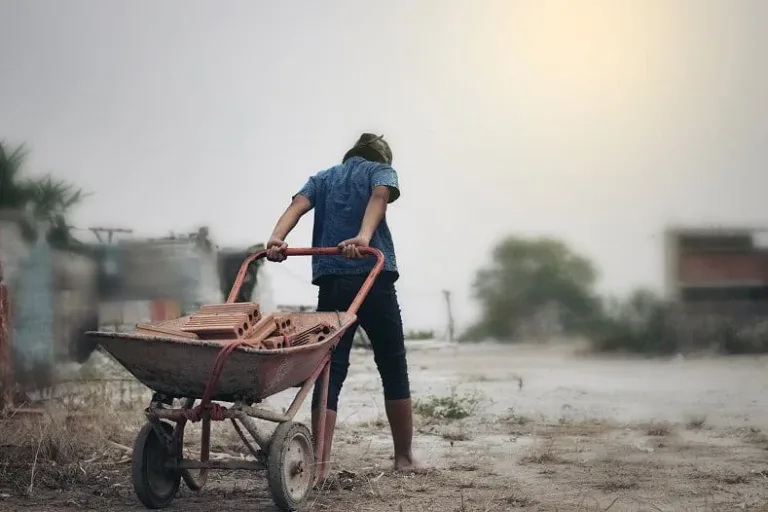
How does social innovation fight human trafficking and ecocide?

Modern-day slavery and ecocide thrive where poverty deepens, opportunity disappears, and ecosystems collapse. Social innovation targets those conditions directly. Building economic alternatives, redesigning supply chains, and creating enterprises that make trafficking structurally harder to sustain and communities structurally harder to exploit.
Modern-day slavery and ecocide do not emerge from nowhere. They are the predictable outcomes of broken systems, systems that concentrate power, obscure supply chains, strip communities of economic alternatives, and leave the world's most vulnerable people with no viable path forward except the one that exploits them.
Not For Sale has witnessed this firsthand. In Peru's Madre de Dios region, indigenous communities were not choosing to destroy their own rainforest. They were being forced into illegal gold mining and logging by debt bondage, trapped by predatory middlemen who engineered loans that could never be repaid. The ecocide was the symptom. The forced labor was the mechanism. The broken value chain was the system. And no shelter, no awareness campaign, and no rescue operation was going to fix it.
What fixed it, or began to, was social innovation.
Creating Economic Alternatives
The first intervention was a boat. A single vessel that allowed Brazil nut harvesters to bypass the middlemen and reach the market directly. Then a fleet. Then a cooperative. Then a certification. Then a global supply chain redesign that eventually became REBBL, a nationwide beverage brand that sources directly from indigenous communities and returns a portion of every sale to Not For Sale's programs on the ground.
This is what social innovation looks like upstream: not charity, but the deliberate reconstruction of a value chain so that the people at the bottom of it gain leverage, ownership, and a reason to protect the ecosystem they depend on rather than destroy it.
Climbing the Value Chain
Deep in the Amazon, a burlap sack of Brazil nuts sells to a middleman for one dollar. At the port, it is worth eight. In Lima, twelve. In New York or London, twenty-five. The community that harvested it could not afford a single boat. That gap, between who produces value and who captures it, is where trafficking lives. Social innovation closes the gap. It asks who is invisible in the chain, who gets paid last, and who carries the risk with none of the upside. Then it builds structures that change those answers.
Building Ecosystems, Not Institutions
The Montara Circle, a two-day gathering of fifty entrepreneurs, investors, and Peruvian community leaders convened by Not For Sale, produced the idea that became REBBL. A beverage company born not from a brand brief but from a mission to stop trafficking in the Amazon. What made it work was not any single organization but the ecosystem built around it: the indigenous-led cooperative, the supply chain partnership, the investment structure, the nonprofit mission, and the community ownership model working together.
Social innovation rarely succeeds as a single institution. It succeeds as an ecosystem, unlikely alliances between corporations, tribal leaders, nonprofits, investors, and local communities, held together by shared governance and a shared goal.
Prevention as the Primary Strategy
Reactive responses to trafficking, rescue, prosecution, rehabilitation, are necessary. But they address harm that has already occurred. Social innovation works upstream, in the conditions that make harm possible. When a community has dignified work, access to markets, legal protections, and ownership of its own resources, trafficking loses its grip. Not because traffickers become less predatory, but because the vulnerability they depend on has been structurally reduced.
This is the operating principle behind every enterprise Not For Sale has built: REBBL in Peru, Dignita in the Netherlands, Regenerate Technology Global in the battery supply chain, and M2i Global in the minerals sector. Each one is a social innovation response to a specific system that was producing harm, redesigned from the inside out.
Dignity as a Design Principle
Entrepreneurs in vulnerable communities don't just need charity. What they lack is access: to capital, to markets, and to the support structures that have been withheld from them.
Social innovation builds toward that access. Not dependency, but ownership. Not relief, but agency. A system redesigned so that the people most affected can create shared value on their own terms.
Not For Sale operates through its Impact Stack, a three-tier model that moves from direct survivor care through root cause research and into scalable enterprise creation. Most organizations stop at tier one. Not For Sale builds all three, in every country where it works.
Not For Sale enters communities at the point of greatest need, providing safe housing, counseling, medical care, legal support, education, and job readiness for survivors and people at extreme risk. This is where the work begins. It is not where it ends.
While delivering direct services, Not For Sale investigates the local economy: why are people here vulnerable? What conditions make trafficking possible? What market-based solution could change them? This research, funded by donations and conducted alongside community leaders, is what separates Not For Sale from every other organization in the field.
The research leads to enterprise. Not For Sale partners with entrepreneurs to build impact businesses that generate dignified, fair-wage jobs, source ethically, and feed revenue back into social programs, so communities become the authors of their own future. REBBL, Dignita, and Regenerate Technology Global all began here.
Modern-day slavery and ecocide are the same crisis. Not For Sale has conserved 753 square miles of Amazon rainforest in Madre de Dios and planted over 505,000 trees across six continents, protecting the ecosystems that vulnerable communities depend on and removing the conditions that force people into environmental destruction.
Not For Sale redesigns supply chains from the inside out, deploying policy, technology, and market solutions to reduce forced labor risk globally. From Peru's Brazil nut trade to minerals and battery supply chains through M2i Global and Regenerate Technology Global, the goal is the same: climb the value chain until the community at the bottom has leverage, ownership, and a reason to stay.
Systems don't change until the story changes. Through The Art of Being a REBBL, a 10-part documentary series with Emmy Award-winning Terra Mater Studios, two decades of research, and keynote work at Stanford, Oxford, Notre Dame, and beyond, Not For Sale is rewriting what the world believes is possible at the intersection of people, planet, and enterprise.
Social innovation stops modern-day slavery and ecocide at their source, by dismantling the conditions that make both possible. Not For Sale has spent nearly two decades proving that the most powerful response to trafficking is not reaction but reconstruction: of value chains, of local economies, and of the systems that determine who has opportunity and who does not.