Human Trafficking in Japan: Thai Child Case Exposes a Gap in the Law
Japanese prosecutors are seeking a six-year prison sentence in the case of a 12-year-old Thai girl exploited in a Tokyo massage business, drawing renewed attention to how Japan defines and prosecutes child trafficking under domestic law.

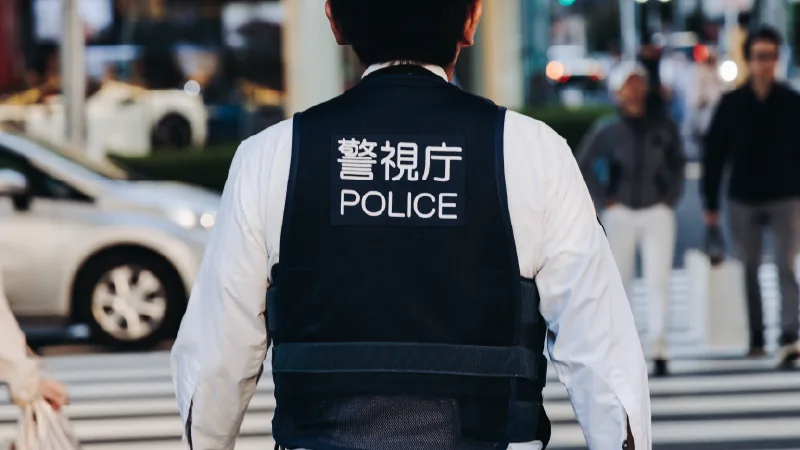
A Tokyo court is considering the case of a massage parlour operator accused of sexually exploiting a 12-year-old Thai girl. Prosecutors are seeking six years in prison, but the case is also raising a wider question: why is conduct treated as child trafficking under international standards so difficult to prosecute as human trafficking in Japan?
Human trafficking in Japan is back under scrutiny after prosecutors requested a six-year prison sentence for the former operator of a Tokyo massage parlour accused of having a 12-year-old Thai girl provide sexual services to customers.
At a hearing on August 6, 2026, prosecutors also sought a ¥2 million fine for Masayuki Hosono, 52. Hosono denies knowing that the girl was a child and has pleaded not guilty. The Tokyo District Court is expected to deliver its judgment on September 15.
The facts alleged in the Japanese proceedings form part of a wider cross-border case. The girl’s mother has already been convicted in Thailand of trafficking her daughter into sexual exploitation in Japan and sentenced to seven years and six months in prison. The child has returned to Thailand and has been receiving care.
Yet the Japanese case has exposed something larger than the conduct of the individuals involved. Earlier this year, Japanese prosecutors reportedly decided not to pursue a specific human-trafficking charge against the massage parlour defendants because they faced difficulties proving that the alleged financial arrangements amounted to the buying or selling of the child under Japan’s Penal Code. The defendants instead face charges including violations of child welfare legislation.
That distinction matters. Under the United Nations definition of child trafficking, it is not necessary to establish that a child was literally bought or sold. The recruitment, transportation, transfer, harboring or receipt of a child for the purpose of exploitation can itself constitute trafficking.
The case therefore poses an uncomfortable question for Japan’s anti-trafficking system: when international law recognizes the trafficking of a child, can domestic criminal law adequately recognize and prosecute all of the people who enable that exploitation?
What This Article Covers
- What happened to the 12-year-old Thai girl brought to Japan in 2025.
- Why Japanese prosecutors are seeking six years in prison for the former massage parlour operator.
- Why the defendant has not been prosecuted under Japan’s specific human-trafficking offense.
- How Japan’s legal definition differs from the international definition of child trafficking.
- What the case reveals about businesses and intermediaries that facilitate sexual exploitation.
- How Japan currently identifies and protects trafficking victims.
- What legal and institutional gaps remain in the country’s response to child trafficking.
Key Takeaways
- Japanese prosecutors are seeking six years’ imprisonment and a ¥2 million fine for former Tokyo massage parlour operator Masayuki Hosono. A verdict is scheduled for September 15, 2026.
- The prosecution alleges that a Thai girl, then aged 12, was made to provide sexual services at the business in 2025. Hosono denies knowing she was a minor and is contesting the charges.
- The girl’s mother was convicted in Thailand of human trafficking and sentenced to seven years and six months in prison.
- Japanese prosecutors reportedly did not add a specific human-trafficking charge against the massage parlour defendants because of difficulties proving a transaction amounting to the purchase or sale of the child.
- Japan’s Penal Code criminalizes buying and selling people, while the UN Trafficking Protocol uses a broader definition that includes recruitment, transportation, transfer, harboring or receipt for exploitation.
- For children, international law does not require proof of force, fraud, coercion or another prohibited “means” in order for conduct to constitute trafficking.
- Japan has a national anti-trafficking action plan and victim-protection measures, but international assessments have repeatedly called for clearer trafficking legislation and stronger identification of child victims.
Why This Story Matters Now
The immediate news is the sentencing request.
On August 6, prosecutors told the Tokyo District Court that Hosono could have checked the girl’s passport to establish her age. Japanese reporting said prosecutors argued that the consequences for the child had been serious and sought six years’ imprisonment and a ¥2 million fine.
Hosono’s defense argues that responsibility for hiring was delegated to another manager and that he did not know the girl’s true age. Hosono has maintained his innocence. No verdict has yet been reached, and those claims will ultimately be assessed by the court.
But the importance of the case extends beyond the sentence prosecutors have requested.
The international and Japanese legal systems appear to approach the trafficking element of the case differently. The girl’s mother has been convicted of human trafficking in Thailand. Japanese authorities also initially investigated the circumstances as suspected trafficking. Yet reporting in June indicated that prosecutors did not pursue additional human-trafficking charges against the Japanese defendants because they could not establish the type of purchase or sale required under the relevant provision of Japan’s Penal Code.
This is not merely a matter of terminology. The way trafficking is legally defined affects who can be prosecuted, which investigative tools are used, how victims are formally identified and how criminal networks are understood.
The Background
The case began in 2025.
According to reporting by Kyodo and Japanese media, the girl traveled from Thailand to Japan with her mother in June 2025 on a short-term visitor visa. She was 12 years old at the time. Authorities say she was subsequently left at a massage business in Tokyo and instructed to provide sexual services.
The girl eventually approached Japanese immigration authorities for help. She was taken into protective care and later returned to Thailand, where she has received support at a government facility.
Her mother was later prosecuted in Thailand. On June 29, 2026, a Bangkok court sentenced the woman to seven years and six months in prison for human trafficking involving her daughter.
In Japan, prosecutors pursued separate proceedings against people connected with the Tokyo business.
Hosono is now standing trial on charges including violation of Japan’s Child Welfare Act. Prosecutors allege that the girl was made to perform sexual acts for customers during the summer of 2025. He denies knowingly employing a child.
These proceedings must therefore be understood carefully. The mother’s trafficking conviction in Thailand is established. The allegations against Hosono remain before the Japanese court and should not be presented as proven until judgment is delivered.
What Is Happening
At the August 6 hearing, prosecutors argued that Hosono could readily have discovered the girl’s real age by checking identification such as her passport.
According to Jiji Press, prosecutors argued that sexual exploitation cannot be eliminated while businesses create environments in which children can be used in this way. They asked the court to impose six years’ imprisonment and a ¥2 million fine.
The defense disputes responsibility. Japanese media reported that Hosono’s lawyers argued that personnel decisions had been handled by a manager and that Hosono did not know the girl was underage. Hosono has also denied knowing her age.
The court’s decision is due on September 15.
There is therefore no Japanese conviction at the time of publication. That legal distinction is essential. What can already be examined, however, is the structure that allowed a child from another country to reach a commercial sexual setting in Tokyo and the legal difficulties authorities encountered when deciding how to prosecute those allegedly involved.
How This Connects to Human Trafficking
Human trafficking is sometimes misunderstood as requiring kidnapping, physical captivity or the literal sale of a person. International law is broader.
The UN Protocol to Prevent, Suppress and Punish Trafficking in Persons defines trafficking through three broad components: an act, such as recruitment, transportation, transfer, harboring or receipt; specified means, such as coercion, deception or abuse of vulnerability; and a purpose of exploitation.
For children, the test is deliberately different.
The protocol states that the recruitment, transportation, transfer, harboring or receipt of a child for exploitation is trafficking even where the prohibited “means” used in adult trafficking cases cannot be demonstrated. A child, for the purpose of the protocol, is anyone under 18.
That means investigators do not need to prove that a child was threatened, deceived or physically forced before recognizing a trafficking offense under the international definition.
The critical elements are movement, recruitment, transfer, receipt or harboring combined with exploitation.
The allegations in the Tokyo case involve several of those concepts: international movement, the alleged transfer of a child into a commercial establishment, accommodation at that establishment and sexual exploitation. The Thai court has already treated the mother’s conduct as human trafficking.
Japan’s domestic criminal framework is more fragmented.
Article 226-2 of the Japanese Penal Code, headed “Human Trafficking”, criminalizes buying another person, buying a minor, buying someone for specified purposes, selling another person and buying or selling someone for international transportation. Other provisions address kidnapping, transportation and delivery of kidnapped or bought and sold people.
Earlier reporting on the current case said prosecutors considered bringing human-trafficking charges but concluded that proving the child had been specifically “bought” from her mother would be difficult.
That illustrates the practical significance of how legislation is drafted. Conduct may display the characteristics of trafficking under the UN framework without fitting neatly into a domestic offense centred on proving a purchase or sale.
The Gap Between International and Japanese Trafficking Law
This concern predates the current case.
Japan became a party to the UN Trafficking Protocol in 2017 and operates a national framework for combating trafficking, most recently through its 2022 Action Plan to Combat Trafficking in Persons. Japan’s Ministry of Foreign Affairs says the plan addresses prevention, prosecution, victim protection and increasingly sophisticated trafficking methods.
However, external assessments have repeatedly questioned whether Japan’s legislation captures trafficking comprehensively enough.
The United States’ Trafficking in Persons assessment of Japan has recommended that the country enact an anti-trafficking law clearly defining trafficking in accordance with the UN Protocol, including child sex trafficking that does not require proof of force, fraud or coercion. It has also raised concerns about inconsistent identification of children exploited in commercial sex as trafficking victims.
That assessment is not itself a court judgment or international ruling against Japan. It is an external government evaluation and should be understood as such. But the concern it identifies is directly relevant to the Tokyo case.
The question is not simply whether conduct can be prosecuted somehow. Japan has child welfare, prostitution, immigration, labor and criminal laws that can be used in exploitation cases. The deeper issue is whether the law identifies trafficking as a complete process, including the recruitment, movement, receipt and exploitation of a person, rather than only particular acts within that process.
Who Is Most at Risk
No single profile defines a trafficking victim.
Japan’s own policing data and international assessments show that trafficking affects Japanese nationals as well as foreign nationals, adults as well as children, and people exploited for labor as well as sexual purposes. Japan’s National Police Agency has reported that a substantial proportion of trafficking victims identified in recent years were Japanese, with children making up a significant share of Japanese victims.
Foreign nationals can face additional vulnerabilities when exploitation occurs across borders.
A person arriving in an unfamiliar country may have limited language ability, little understanding of local law, dependence on another person for accommodation or documents, and no independent support network. These conditions do not automatically mean trafficking has occurred, but they can increase the power available to an exploiter.
For a child, vulnerability is more fundamental. A 12-year-old cannot be expected to negotiate employment, immigration status, accommodation and commercial sexual activity on equal terms with adults.
International trafficking law reflects this reality by removing the requirement to prove coercive means in child cases.
The Tokyo case also demonstrates another difficult reality: trafficking does not always begin with a stranger.
Recruitment or transfer may involve relatives, acquaintances, employers, brokers or other trusted adults. The involvement of a family member does not alter the fundamental obligation of states and institutions to protect a child from exploitation.
The Systems Behind the Harm
Trafficking depends on more than an individual trafficker.
For exploitation to continue, other systems often have to fail or be circumvented: identity checks, border protections, workplace regulation, child safeguarding, victim identification and oversight of businesses where exploitation can be concealed.
The prosecution’s argument that Hosono could have checked the girl’s passport goes directly to one of those safeguards. According to prosecutors, a basic identity check would have revealed her age. The defense disputes Hosono’s responsibility for the hiring process.
The larger issue is whether a business should ever be capable of placing someone into sexualised commercial work without reliably establishing who that person is and whether they are legally permitted to be there.
The case also raises questions about demand.
Trafficking for sexual exploitation ultimately depends on a market in which people are able to profit from commercial sexual activity. Focusing entirely on the person who transported or recruited a victim can obscure the businesses, intermediaries, managers and customers whose actions sustain that market.
Effective anti-trafficking enforcement therefore has to examine the complete chain of exploitation rather than a single transaction.
The Human Impact
Behind the questions of criminal statutes, passports and evidentiary standards is a child.
Reporting indicates that the girl was separated from ordinary systems of childhood, remained in the commercial premises and was sexually exploited by numerous customers before eventually seeking help from immigration authorities herself. She has since returned to Thailand and has been receiving care.
It is important not to reduce her to the abuse she experienced.
Her decision to seek assistance is also evidence of agency. Survivor-centred reporting should recognize both the harm caused and the actions people take to leave exploitation, seek protection and rebuild their lives.
The details of her treatment and recovery should not be published beyond what is necessary to understand the case. The public-interest question is not the intimate detail of what happened to a 12-year-old child. It is how a system permitted the exploitation to occur and whether that system can prevent it happening again.
What Governments and Institutions Are Doing
Japan has significantly developed its anti-trafficking response over the past two decades.
The government operates under the 2022 Action Plan to Combat Trafficking in Persons, coordinated across government agencies. Its stated approach includes prevention, law enforcement, victim identification, protection and international cooperation.
Japan also provides support to foreign trafficking victims, including assistance connected with safe return and reintegration through cooperation with the International Organization for Migration. Government materials describe assistance including medical and mental-health support and help with social rehabilitation.
The National Police Agency distributes information encouraging trafficking victims to seek help, including material in multiple languages, and operates mechanisms through which information about suspected trafficking can be supplied anonymously.
These measures matter.
They also demonstrate why the current case should not be reduced to an assertion that Japan “does nothing” about trafficking. That would be inaccurate.
The more difficult question is whether the country’s legal definitions, victim-identification procedures and enforcement systems have kept pace with the evolving understanding of trafficking itself.
What Still Needs to Change
The clearest issue is legal coherence.
If child trafficking under international law includes recruitment, transfer, harboring or receipt for exploitation without needing evidence of coercion or a literal purchase, domestic legislation should make it possible for prosecutors to address those behaviors directly and clearly.
Japan already criminalizes numerous forms of exploitation. The concern is that these provisions are spread across different laws and may not consistently capture the complete trafficking process.
External assessments have also called for stronger identification of children in commercial sexual exploitation as trafficking victims, clearer national procedures and more consistent access to specialized support.
Victim identification is not an administrative detail.
How authorities classify a person can determine whether they are treated primarily as an immigration offender, a person involved in illegal commercial activity, a witness to another crime or a trafficking victim entitled to specialized protection.
Cross-border cases also require strong cooperation between countries of origin and destination.
The current case has involved criminal proceedings in both Thailand and Japan. That demonstrates the value of transnational investigation, but it also shows what happens when the same factual circumstances encounter different criminal definitions in different jurisdictions.
What Not For Sale’s Perspective Adds
Not For Sale approaches human trafficking as a system of exploitation rather than a collection of isolated crimes.
Cases such as this one demonstrate why prevention has to begin earlier than prosecution. By the time a child is identified inside an exploitative business, multiple protective barriers have already failed.
Prevention means making exploitation harder to organize in the first place. That includes effective child safeguarding, reliable identity verification, informed migration systems, scrutiny of businesses and intermediaries, accessible reporting routes and communities in which people have viable alternatives to exploitative arrangements.
It also requires survivor dignity.
People who experience trafficking should not be defined permanently by what was done to them. Protection should provide the safety, legal support and practical opportunities necessary for people to recover and determine what comes next in their own lives.
The goal is not only to prosecute individual offenders after exploitation occurs. It is to out-create the conditions in which exploitation becomes profitable and possible.
What Readers Can Do
Readers can contribute without turning trafficking into spectacle.
Start by using accurate language. Human trafficking does not necessarily require kidnapping, international borders or physical chains. Learn how recruitment, dependency, deception, abuse of vulnerability and commercial exploitation can operate in ordinary-looking environments.
Share reporting from credible sources rather than unverified social-media claims. Misidentifying trafficking can harm both investigations and victims.
Support organizations that provide survivor-centred services and long-term opportunities, rather than approaches that rely on sensational accounts of abuse.
Businesses should examine how recruitment, subcontracting, identification and safeguarding operate within their own organizations and supply chains.
And where there are credible concerns that a child or adult is being exploited, report those concerns through the appropriate local authorities or specialist services rather than attempting to intervene personally.
The Tokyo proceedings are not yet over. Masayuki Hosono denies the allegations against him, and the Tokyo District Court will decide the Japanese case in September.
But one fact extends beyond the eventual verdict.
A 12-year-old child traveled from Thailand to Japan and ended up in a commercial environment where she was sexually exploited. Her mother has been convicted of trafficking her in Thailand. In Japan, prosecutors have sought a substantial prison sentence against a business operator, yet reportedly concluded that a specific human-trafficking charge could not be established under the evidence and the existing wording of domestic law.
That gap deserves attention.
The effectiveness of anti-trafficking law is not measured only by whether authorities can find some offense with which to prosecute exploitation. It is also measured by whether the law can recognize the whole process that allowed a person to be recruited, moved, received and exploited.
When the person involved is a child, that distinction becomes even harder to ignore.
FAQ
What happened in the Thai child trafficking case in Japan?
A Thai girl who was 12 years old traveled to Japan in 2025 and was subsequently placed in a Tokyo massage parlour where authorities say she was sexually exploited. Her mother has been convicted of human trafficking in Thailand. A former operator of the Japanese business is separately on trial in Tokyo and denies knowingly employing a child.
Who is Masayuki Hosono?
Masayuki Hosono, 52, is the former operator of a Tokyo massage parlour who is standing trial on charges including violating Japan’s Child Welfare Act in connection with the exploitation of the Thai girl. Prosecutors have requested six years’ imprisonment and a ¥2 million fine. He denies knowing that she was underage.
Has the Tokyo massage parlour operator been convicted?
No. At the time of publication, Hosono has not been convicted in this case. He has pleaded not guilty, and the Tokyo District Court is scheduled to issue its judgment on September 15, 2026.
Was the girl’s mother convicted of human trafficking?
Yes. A Thai criminal court sentenced the girl’s mother to seven years and six months in prison in June 2026 for trafficking her daughter into sexual exploitation in Japan.
What is child trafficking?
Under the UN Trafficking Protocol, child trafficking includes the recruitment, transportation, transfer, harboring or receipt of a person under 18 for the purpose of exploitation. Unlike adult trafficking, prosecutors do not need to demonstrate force, fraud, coercion or another prohibited means for the conduct to meet the international definition.
Does human trafficking have to involve crossing a border?
No. International human trafficking law does not require a victim to cross an international border. Trafficking can take place within a town, region or country, as well as across national borders. The defining issue is exploitation combined with the relevant trafficking acts and, for adults, means.
Why wasn’t the Tokyo operator charged specifically with human trafficking?
Japanese reporting said prosecutors considered additional human-trafficking charges but faced difficulty proving that the financial arrangements constituted the purchase or sale of the girl as required by the relevant Japanese Penal Code provisions. They instead proceeded with other charges, including child welfare offenses.
How does Japanese trafficking law differ from international law?
Article 226-2 of Japan’s Penal Code focuses on buying and selling people and related conduct. The UN Trafficking Protocol has a broader framework covering recruitment, transportation, transfer, harboring and receipt for exploitation. For children, prohibited means such as coercion do not have to be demonstrated.
Is human trafficking a problem in Japan?
Yes. Japanese authorities identify trafficking victims involving both sexual and labor exploitation, including Japanese and foreign nationals. Government and international reporting has documented risks involving children, migrant workers and people recruited into commercial sexual exploitation.
What is Japan doing to combat human trafficking?
Japan operates a national anti-trafficking framework through its 2022 Action Plan to Combat Trafficking in Persons. Measures include law enforcement, prevention, public awareness, victim protection and international cooperation, including support for the return and reintegration of some foreign victims.
What are the warning signs of trafficking?
Warning signs can include someone controlling another person’s identification or movements, unexplained debt, threats, inability to leave work, dependence on an employer for accommodation or immigration status, deceptive recruitment, a child engaged in commercial sexual activity, or someone appearing unable to speak freely about their circumstances. No single indicator proves trafficking, and suspected cases should be referred to trained authorities or specialist organizations.
Why does this case matter beyond Japan?
The case illustrates a wider problem in anti-trafficking enforcement: exploitation can cross borders while criminal definitions remain national. When legal definitions differ, behavior recognized internationally as trafficking may be prosecuted under different or narrower offenses in the destination country. Strong international cooperation and compatible definitions are therefore important to preventing gaps in accountability.
Topics in this story
See all topicsNot For Sale
A global movement fighting modern-day slavery and ecocide in 33 countries. Building on the frontlines since 2007.