A 52-Country Police Alliance Targets Global Scam Networks. Can It Also Protect Trafficked Workers?
South Korea's expanding international investigation network is an acknowledgment that online fraud operates across borders. Its success will depend on following criminal profits while recognizing that some people made to carry out scams are victims of trafficking.


The problem no single police force can solve
An online fraud operation may recruit workers in one country, hold them in another, use digital services registered elsewhere and target people across several continents. The money can move through accounts and intermediaries that obscure its destination. By the time an individual victim reports the loss, the relevant evidence may be scattered among jurisdictions with different laws, resources and priorities.
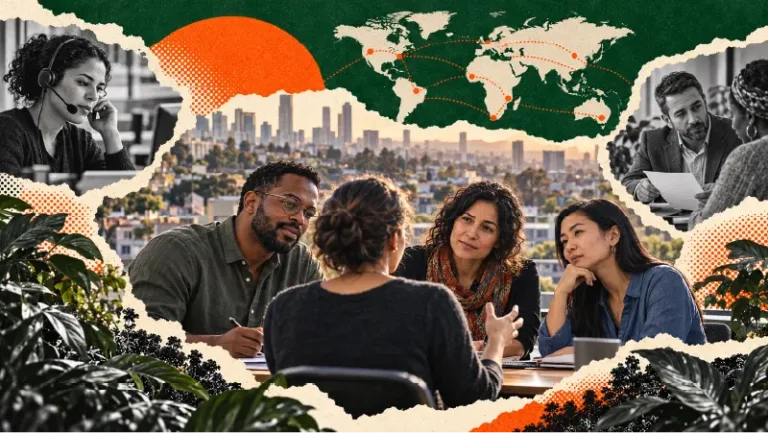
South Korea is attempting to build a coordinated answer. On October 26, 2026, the Korean National Police Agency announced that its International Investigative Cooperation Alliance, or IICA, had grown to encompass 52 countries. The alliance held its first plenary meeting in Incheon from October 21 to 23 and adopted a resolution on principles for joint action against transnational scam crime.
The initiative addresses a genuine investigative problem. It also raises a question that cannot be secondary: how will police distinguish the people directing fraud from workers who may have been trafficked into carrying it out? Across parts of Southeast Asia, evidence has emerged of coercive criminality linked to scam operations. A crackdown that fails to recognize those circumstances may punish the people it ought to protect.
What This Article Covers
- What the South Korean police alliance announced.
- How the network expanded and what its plenary accomplished.
- Why transnational scam operations are difficult to investigate.
- How human trafficking and forced criminality can overlap with fraud.
- What cross-border cooperation must do to preserve evidence and rights.
- How to measure results beyond membership totals.
Key Takeaways
- The IICA grew from its 2025 launch to include 52 countries by October 2026.
- The first plenary met October 21–23, and officials announced the outcome October 26.
- Participants adopted a resolution on cooperation principles rather than a claim of completed dismantling operations.
- Criminal scam networks may rely on both willing participants and trafficked people subjected to coercion.
- Financial investigation, recruitment evidence and safe victim identification are central to effective action.
- Membership and resolutions are beginnings; results must be assessed through cases and survivor outcomes.
What the alliance announced
The Korean National Police Agency said the initiative began in October 2025 with nine countries and participation by international policing partners, including INTERPOL. Within a year, membership had grown to 52 countries. The inaugural plenary in Incheon brought together more than 100 participants from 26 countries and six international organizations.
Those figures require careful interpretation. Membership in an international alliance does not mean that all 52 countries sent delegates to the first meeting. Nor does it establish that every member has committed the same investigative resources or has identical legal powers. The October 23 resolution set principles for joint action, according to the agency, and may support future cooperation. It did not itself represent arrests, confiscated assets or identified trafficking victims.
The initiative’s value will depend on what happens after the meeting: how quickly authorities can exchange legally usable evidence, whether joint investigations reach organizers and financial beneficiaries, and whether the relevant jurisdictions can provide safe assistance to people found in exploitative conditions.
Some forms of cooperation already occur through bilateral arrangements and organizations such as INTERPOL. A new alliance must offer operational value beyond another forum for exchanging general statements.
Why scam crime is organized internationally
Modern online fraud can use familiar tools: social media, messaging services, websites, payment channels and false identities. Some schemes involve relationships built over time, while others rely on impersonation or high-volume outreach. The specifics change quickly, and operations can shift infrastructure when investigators disrupt one platform or location.
Physical scam compounds introduce another layer. Workers may be recruited with promises of employment in technology, customer service or marketing and then ordered to run fraudulent interactions. Some reports describe threats, confinement, debt and punishment. In other operations, people may participate willingly or hold managerial roles. The presence of a worker in a scam office does not establish which of these applies.
Criminal organizers can exploit differences in law and enforcement between countries. Recruitment may be concealed by apparently ordinary employment intermediaries, while fraud proceeds pass through financial systems that do not reveal the underlying coercion. Investigators must piece together recruitment records, travel, communications, payroll, threats and money flows.
That makes cooperation essential, but not simple. Police in one country may be investigating theft or financial fraud, while another is investigating trafficking and a third is considering immigration violations. Without a shared understanding of the full chain, each investigation can miss important evidence.
Victims on both sides of the screen
A person deceived into transferring money to a fraudulent account is a victim of financial crime. A worker threatened into sending the fraudulent messages may also be a victim of trafficking. These harms coexist and should not be treated as competing claims for sympathy.
The concept of forced criminality is particularly important. Trafficked people may be compelled to undertake acts that would ordinarily be criminal. Proper legal assessment must distinguish their circumstances from those of people who knowingly organize or profit from the operation. Blanket arrest or deportation policies can discourage disclosure and destroy evidence about the people in control.
Survivor-sensitive investigation does not require granting immunity automatically to everyone found at a suspect site. It requires individual assessment, access to appropriate support and fair application of applicable legal principles. A person’s conduct and the coercion they may have faced should be considered together.
Those who have been deceived by the online scam also need help, including reporting routes, evidence preservation and accurate information about recovery options. False promises that lost money can always be retrieved can create opportunities for further exploitation through secondary scams.
The strongest response treats trafficking and fraud as linked but distinct investigative questions.
Following the money and the recruiters
Raids on physical compounds can disrupt operations and protect people in immediate danger. They are less effective if organizers can replace equipment and move workers to another location. Financial analysis may help identify who receives the proceeds and how businesses, accounts or intermediaries are used.
Recruitment evidence is equally important. Job advertisements, agency records, travel arrangements, fees and contracts may reveal how people were drawn into the operation. Investigators should examine whether recruitment practices were deceptive, who benefited from them and whether workers retained real freedom after arrival.
Cross-border cooperation can help compare evidence that appears unrelated within one national case. Repeated recruiters, communications infrastructure and payment patterns may connect operations. Such conclusions must still be tested through lawful procedures and should not depend entirely on automated pattern matching.
Evidence standards and data protection differ between jurisdictions. A record collected in one country may not automatically be admissible in another. Cooperation agreements must therefore address chain of custody, legitimate access, privacy and fair trial rights.
An alliance that merely increases the volume of shared personal data without improving its reliability could create new risks.
What protection looks like during an operation
People found in suspected compounds may fear authorities because they have been threatened with criminal punishment, deportation or retaliation against family. Others may distrust officials after previous experiences of corruption or abuse. Identification needs trained interviewers, interpreters and private, safe conditions.
Immediate priorities can include medical assessment, protection from coercive actors and access to independent legal advice. Longer-term needs may involve repatriation when safe and voluntary, immigration assistance, housing, trauma-informed support and work opportunities. The available choices must be explained clearly.
Victims should not be forced into public testimony or media appearances. Their experiences may involve sensitive communications or alleged participation in fraud. Publishing identifying details can create reputational and security harm.
Authorities also have to preserve relevant evidence without treating people solely as sources of witness statements. Financial, digital and documentary evidence can help build cases while reducing pressure on survivors.
Success should be measured partly by the quality and durability of these protections, not only by the number of people removed from a building.
Can international alliances avoid becoming publicity exercises?
Police cooperation announcements are easy to quantify: countries represented, delegates attending and agreements signed. Those figures can signal political commitment but reveal little about operational effectiveness. A smaller investigation that secures compensation, protects survivors and reaches the people directing a network may achieve more than a widely publicized declaration.
An effective alliance needs clear points of contact, rapid lawful information sharing, joint training on trafficking indicators and mechanisms for coordinating investigations when several countries claim jurisdiction. It also needs transparent reporting that does not compromise ongoing cases.
Independent measures could include investigations supported, court outcomes, assets traced and lawfully recovered, numbers of people safely identified and referred, and improvements in the time required to coordinate cross-border evidence. Those measures should distinguish allegation from conviction and referral from confirmed survivor status.
There is no direct evidence that Not For Sale participated in the alliance. The connection to its mission is practical: human trafficking can be embedded in criminal business models, and dismantling those models requires investigating profits while protecting people subjected to coercion.
The next test for a 52-country network
The expansion announced by South Korea acknowledges that transnational fraud cannot be solved by one national police service. That is a valuable starting point. The challenge now is to turn membership into cases that reach organizers across borders without sweeping exploited workers into the same category.
If the alliance can combine financial investigation, lawful evidence sharing and genuine victim protection, its significance will be measured in lives and crimes prevented. If it cannot, 52 names on a membership list will remain only a measure of attendance.
Frequently Asked Questions
What is the International Investigative Cooperation Alliance?
The IICA is a South Korea-led police cooperation network focused on transnational scams and related organized crime.
How many countries are involved?
The Korean National Police Agency reported membership had grown to 52 countries by October 2026.
When was the first plenary meeting?
It took place October 21–23, 2026, in Incheon, South Korea. The agency announced details October 26.
Did the alliance dismantle 52 criminal networks?
No. The figure refers to participating countries, not networks dismantled.
How are scam centers linked to human trafficking?
Some operations have recruited people through deception and compelled them to conduct fraud under threats or other coercive conditions.
Are all workers in scam centers trafficking victims?
No. Individual roles and circumstances must be investigated; some people may be coerced while others knowingly organize crimes.
What is forced criminality?
It is the exploitation of people who are compelled to commit illegal acts, sometimes as a result of human trafficking.
How should international police cooperation be judged?
By lawful investigations, evidence quality, accountability of organizers, disruption of criminal profits and meaningful protection for affected people.
Sources
Not For Sale
A global movement fighting modern-day slavery and ecocide in 33 countries. Building on the frontlines since 2007.