


A New Chapter
5.1 MIN READ

Not For Sale has never worked from a fixed playbook.
From the beginning, our work has lived in a constant state of action and evaluation. Listening, responding, and adapting. We engage where a harm is happening. We aim to faithfully understand the fuller context. Learn from the local community. And we evolve our models as the realities on the ground demand more from us.
This renewed website reflects that truth.
Not because our mission has changed, but because the nature of exploitation has continued to reveal itself more clearly.
When Human Trafficking Destroys the Planet
Over the past several years, one pattern has become impossible to ignore:
More and more, people are being trafficked to be used as the labor force that destroys the planet itself.
Across multiple regions where we work, we have seen enslaved and coerced people forced to:
- Dig in illegal gold and mineral mines that poison rivers and destroy water tables
- Clear-cut forests that once sustained indigenous livelihoods
- Work in lawless extraction zones where violence, debt bondage, and sexual exploitation are normalized
Put bluntly:
Slaves are being forced to do the work of ecocide.
This is why we use that word – ecocide – with intention. < Editorial Note: article for Ecocide Definition. >
What we are witnessing is not accidental environmental harm. It is a systematic process of destruction carried out through human exploitation, often hidden inside global supply chains and illegal economies.
Human trafficking and environmental destruction are not parallel crises. They are interlocked engines of the same system.
Where We’ve Seen This Firsthand
This understanding didn’t emerge in theory. It emerged on the ground through our work.
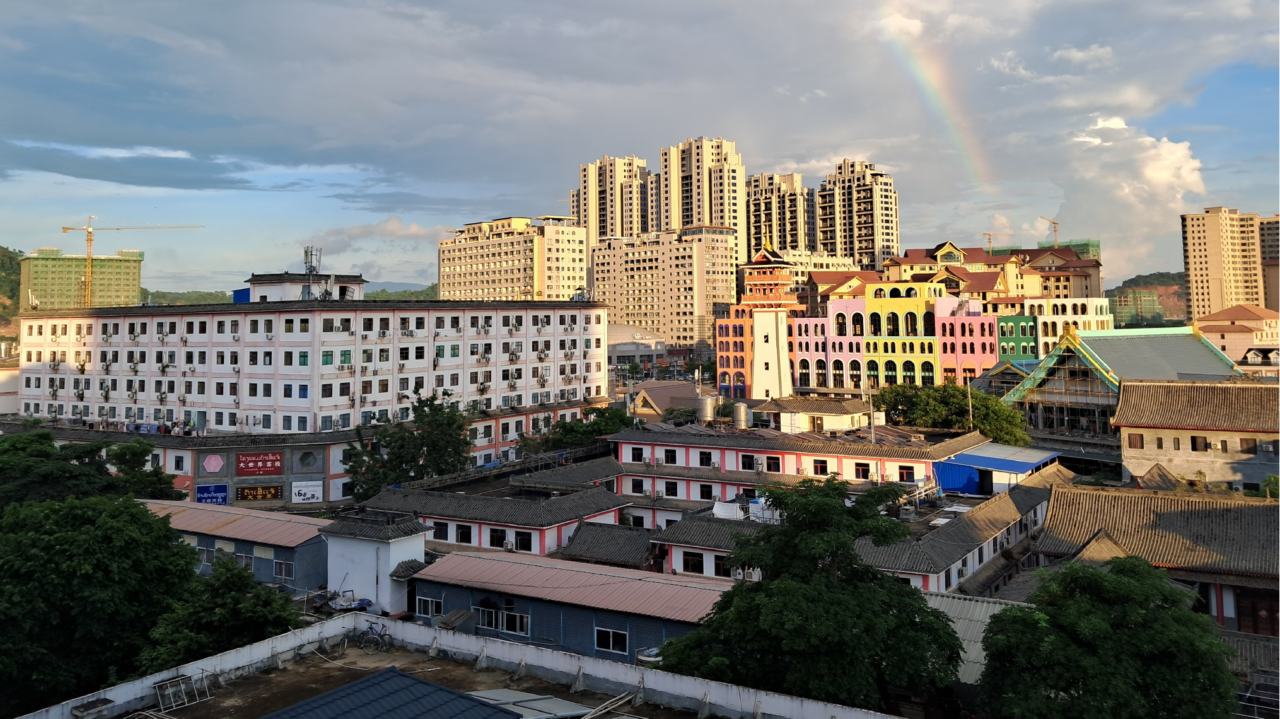
The Golden Triangle (Thailand / Myanmar / Laos)
In border regions marked by lawlessness and “gray zones,” we’ve seen forced labor, cyber-crime compounds, illegal mining, and deforestation converge creating conditions where people are trafficked into criminal and extractive economies with no way out.
→ Golden Triangle: Gray Zones
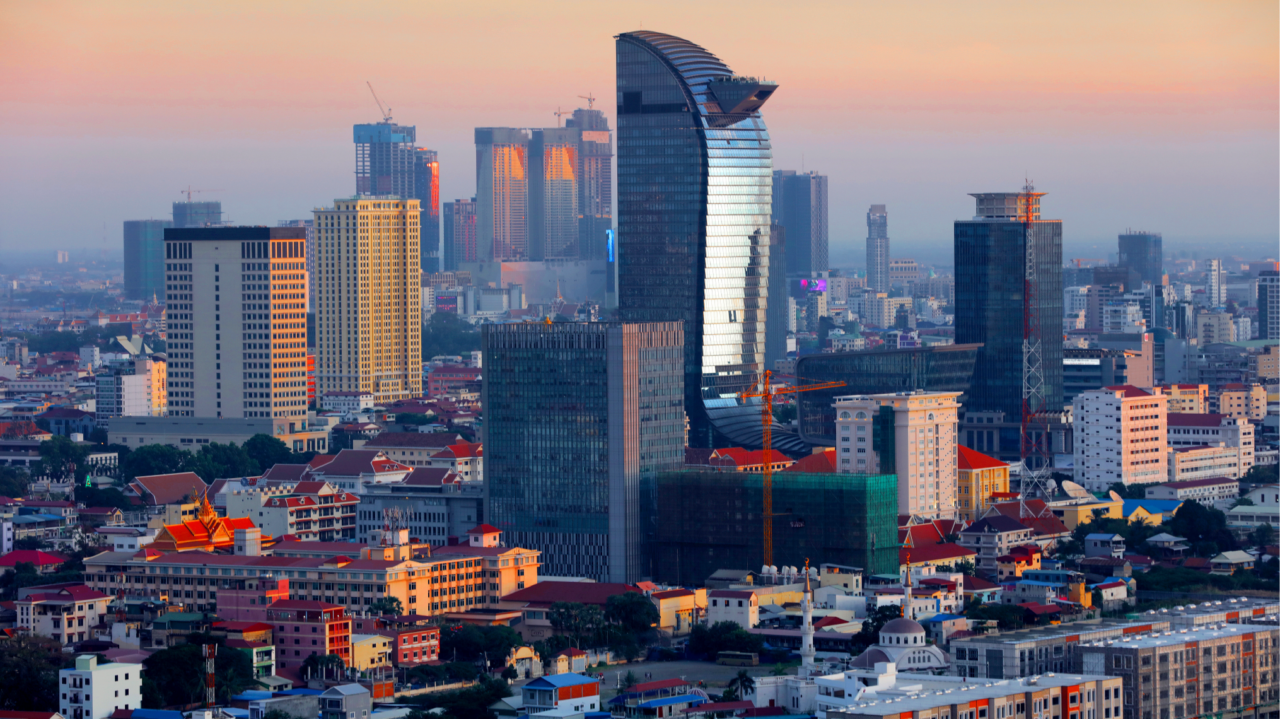
Democratic Republic of Congo
In mineral-rich regions critical to the global tech and energy economy, forced labor and child labor are embedded in extraction systems that devastate land and water while fueling conflict and exploitation.
→ DRC: In conversation with Not For Sale DRC/Uganda Director Ntakamaze “TK” Nziyonvira
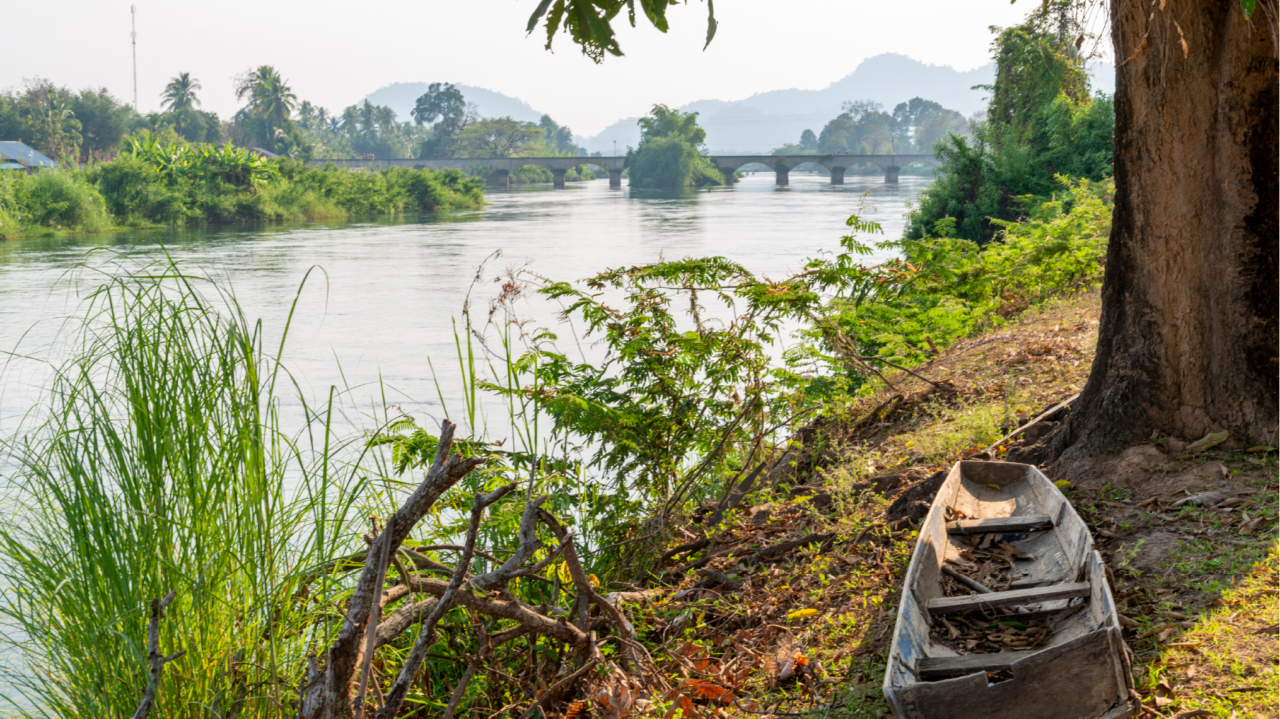
The Peruvian Amazon
Illegal gold mining has poisoned rivers with mercury, torn apart rainforest ecosystems, and turned extraction zones into hubs for forced labor and sexual exploitation – while indigenous communities are pushed toward survival economies.
→ Peruvian Amazon: The Brazil nut economy
Across all of these places, the pattern repeats:
Step One: Environmental destruction collapses livelihoods.
Step Two: Collapse creates social, cultural, and economic desperation.
Step Three: Desperation fuels more trafficking.
Step Four: We loop back to step one.
Why Our Work Has Evolved
Early in our history, like many organizations, Not For Sale focused solely on rescue, protection, and rehabilitation. That work remains essential to Not For Sale – and it always will.
< Editorial Note: Hyperlink the image to the Girls Dorm link: https://wearenotforsale.org/girls-dorm/ >
By standing alongside survivors, indigenous leaders, and frontline partners, we learned something difficult and necessary:
We could rescue people forever and still lose the war if we didn’t change the systems making exploitation profitable.
So our work evolved, upstream and deeper into the root problems themselves.
Toward prevention.
Toward economic alternatives.
Toward redesigning the conditions that traffickers prey upon.
People. Planet. Social Innovation.
This is why today Not For Sale organizes its work across three inseparable and interconnected pillars:
People
We center survivors and vulnerable communities not as recipients of aid, but as leaders, workers, and entrepreneurs – building long-term safety, dignity, and opportunity.
Planet
We name ecocide as a driver of exploitation and work to protect ecosystems as a frontline anti-trafficking strategy – not as a side issue, but as a core intervention.
In addition to protecting 753 square miles of rainforest in the Peruvian Amazon every year through our work there we have proactively planted over 54,000 trees as a means to capture a total of 13,301 tonnes of CO2. More about our thinking and strategy.
Social Innovation
We use every tool available – nonprofit, NGO, enterprise, business, policy, capital, and partnership – to build alternatives that out-compete exploitative systems.
In 2012 we started Not For Sale Netherlands, now called Dignita. Dignita is an example of a blended model that utilizes the non-profit model (the parent Dutch entity) that 100% owns and operates a for-profit business Dignita Restaurants and FAIR Accounting.
Because no single sector can solve this crisis. Blended models are critical to the success and growth of the movement to end human trafficking and ecocide.
Out-Creating Exploitation
These learnings have shaped how we operate – and why we helped build social enterprises alongside our nonprofit work:
- REBBL, proving that ethical sourcing and revenue-sharing can scale global brands while protecting at-risk communities
- Dignita, using dignified work and training to support survivors and refugees through hospitality
- Regenerate Technology Global, confronting the environmental and human costs of the energy transition by redesigning mineral and battery supply chains through recycling innovations
These are not add-ons.
They are interventions.
They exist because charity alone cannot outpace billion-dollar exploitation economies, but better systems can.
Why This Moment Matters
This chapter of Not For Sale is in honor of our past – building on our learnings.
It is an invitation to others to grow their understanding of human trafficking, environmentalism, and even the expression of business itself.
It is the result of everything we have learned through action.
The world is changing. Exploitation is evolving. And the forces driving human trafficking and ecocide are increasingly sophisticated, global, and interconnected.
So we will continue to respond:
in real time,
with humility,
with urgency,
and with moral imagination.
Because the work of ending human trafficking today is inseparable from the work of protecting the planet.
And because freedom – real freedom – requires systems designed to sustain it.
Published on December 18, 2025

Sign Up to our Newsletter
Join our movement and get the latest updates, stories, and ways to take action, straight to your inbox.