


Laos’ GTSEZ Becomes a Global Hub for Cybercrime and Human Trafficking
5.2 MIN READ
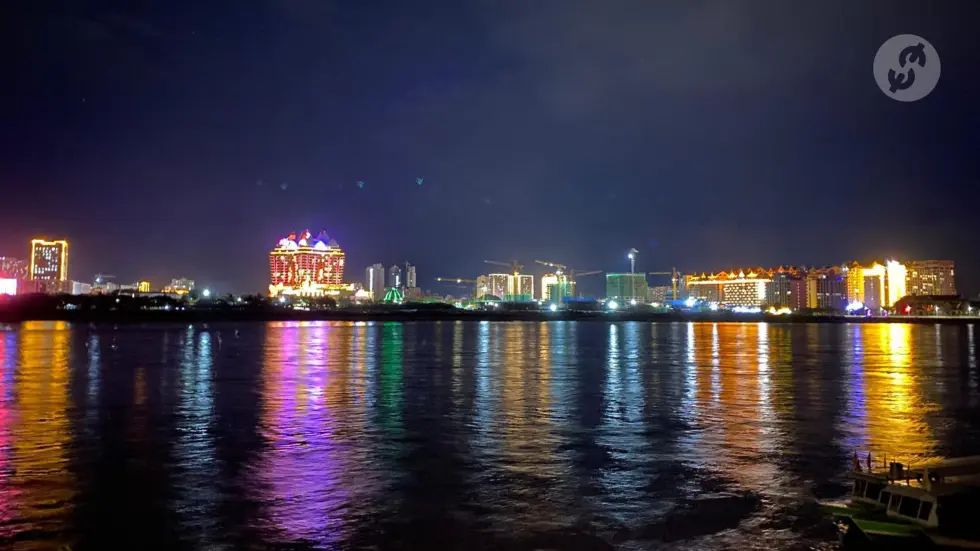
A glittering facade masks a dark, digital empire of exploitation.
From a distance, the Golden Triangle Special Economic Zone (GTSEZ) in northern Laos might resemble a developing success story. Towering glass buildings rise along the Mekong River, promising casinos, hotels, and economic growth. However, when we look more closely, a far more disturbing reality comes into view.
This zone, sitting just across the river from Kru Nam’s shelter in Thailand, where survivors of trafficking find refuge, has become one of the world’s most notorious hubs for cybercrime and human trafficking. And alarmingly, it’s still growing.
The Promise of Development, the Reality of Enslavement
The GTSEZ was established in 2007 as part of a broader initiative to attract foreign investment. More than 90 special economic zones were created throughout the Mekong region, offering investors tax breaks and relaxed regulations. The Lao government granted a 99-year lease to the Chinese-owned Kings Romans Group, empowering it to transform the area into a commercial and tourism hub.
But what began as a development dream quickly morphed into a criminal stronghold.
According to a 2024 report by the United States Institute for Peace, criminal syndicates based in the Mekong region are now stealing upwards of $43.8 billion annually. Much of this staggering sum flows through the GTSEZ via coordinated online scams and human trafficking operations.
The playbook is chilling: traffickers lure vulnerable people with fake job offers. Once individuals arrive, syndicates trap them in heavily guarded scam centers. Under constant threat of violence, these victims are forced to perpetrate fraud across the internet.
From the Ground: A Front-Row Seat to Exploitation
Mark Wexler, CEO of Not For Sale, has witnessed this evolution firsthand.
“I’ve watched as a MASSIVE city is built since I first went in 2007,” Wexler explained. “It’s all built on cyber crime.”
This isn’t a far-off crisis. The GTSEZ lies just a short boat ride from communities where our project, lead by Kru Nam, provides shelter and healing for survivors. Those who escape the clutches of these compounds share harrowing stories. Many describe digital sweatshops, where workers are coerced into scamming people worldwide under 24/7 surveillance.
Without passports, cut off from the outside world, and constantly monitored, victims face unimaginable barriers to freedom. The reality is devastating, a high-tech version of slavery operating in plain sight.
Zhao Wei and the Kings Romans Empire
Chinese businessman Zhao Wei stands at the center of this operation. He founded the Kings Romans Group, the company awarded the long-term lease to run the GTSEZ. While Zhao presents himself as a legitimate developer, the U.S. Treasury Department sanctioned him and his associates in 2018 for running a transnational criminal organization.
The allegations include human trafficking, drug smuggling, wildlife trafficking, and child prostitution.
Despite international scrutiny, Zhao’s operations continue to expand. Government connections and the absence of strong oversight have enabled him to build what many describe as an “autonomous city” with its own rules. The International Crisis Group reported that the GTSEZ’s role as a “storage, trafficking, deal-making, and laundering hub is likely to expand.”
In short, this zone has become a blueprint for digitally fueled exploitation.
A New Era of Slavery: Digital, Scalable, and Hidden in Plain Sight
The face of modern slavery has changed. What once relied on underground smuggling routes now flourishes through encrypted messages, fake job listings, and anonymous crypto payments. The GTSEZ exemplifies this evolution.
Inside the compounds, victims operate under constant threat. Forced to execute romance scams, phishing campaigns, and investment frauds, many have no way out. Syndicates often transfer victims between compounds like property. And since many recruits come from nations like Vietnam, the Philippines, or even Pakistan, their disappearance is hard to trace.
This isn’t just cybercrime. It’s a global labor crisis hidden inside a digital cloak.
Why the GTSEZ Thrives: Silence, Corruption, and Impunity
What allows this criminal ecosystem to thrive? The answer lies in silence, systemic corruption, and global indifference.
The Lao government continues to portray the GTSEZ as a model of economic success. Yet experts argue that corruption and a thirst for foreign investment have led to an environment where human rights abuses go unchecked.
Syndicates operate with near-total impunity. International law enforcement faces significant obstacles, especially given the opaque governance of the zone. As a result, victims often vanish into a system that offers no transparency or justice.
Escaped survivors face stigma and limited legal options. Many lack identification or face charges for crimes they were forced to commit. Meanwhile, those still trapped remain invisible to the outside world.
This Is Not Just Laos’ Problem
Let’s be clear: the crisis at the GTSEZ isn’t confined to Laos. It impacts people and institutions across the globe.
Every online scam, every fraudulent crypto deal, and every phishing email may trace back to these compounds. As long as tech platforms, banks, and governments remain passive, these crimes will persist and proliferate.
We must recognize this model as the new face of human trafficking. Only then can we respond appropriately.
Fighting Back: Real Solutions, Right Now
While the problem is massive, solutions do exist. And they start with people.
Organizations like Not For Sale are leading survivor-centered efforts to provide protection, restoration, and dignity. By supporting shelters like Kru Nam’s, they give people a second chance. More importantly, they challenge the very systems that enable exploitation.
Governments must act, too. That includes sanctioning enablers, increasing oversight, and investing in anti-trafficking technology. International coalitions need to coordinate more effectively to dismantle the infrastructure of cyber slavery.
We Can’t Look Away
The GTSEZ is not a footnote. It’s a red flag.
Its digital slave economy thrives not because we lack solutions, but because we look away. Now more than ever, we must confront this evolving crisis head-on. We must support survivors, challenge the enablers, and push for a world where no one is bought or sold, online or off.
The city across the river is growing. But so is our resolve.
Sources for this article:
-
The Real Deal: Laos’ Golden Triangle Becomes Cybercrime Hotbed (July 2025)
-
U.S. Department of the Treasury: Sanctions Announcements (2018)
-
United States Institute for Peace: Cybercrime in Southeast Asia (2024)
-
International Crisis Group: Mekong Region Criminal Networks Report (2024)
Published on July 28, 2025


Sign Up to our Newsletter
Join our movement and get the latest updates, stories, and ways to take action, straight to your inbox.