Golden Triangle Special Economic Zone (GTSEZ) & Zhao Wei: Gray Zone Case Study
A review of the evidence surrounding Laos’s Golden Triangle Special Economic Zone, from the 2018 sanctions record to recent scam-compound reporting and survivor protection gaps.


Recent investigations inside Laos’s Golden Triangle Special Economic Zone show why tackling scam compounds requires more than raids: people forced into fraud need recognition, protection and a safe future.
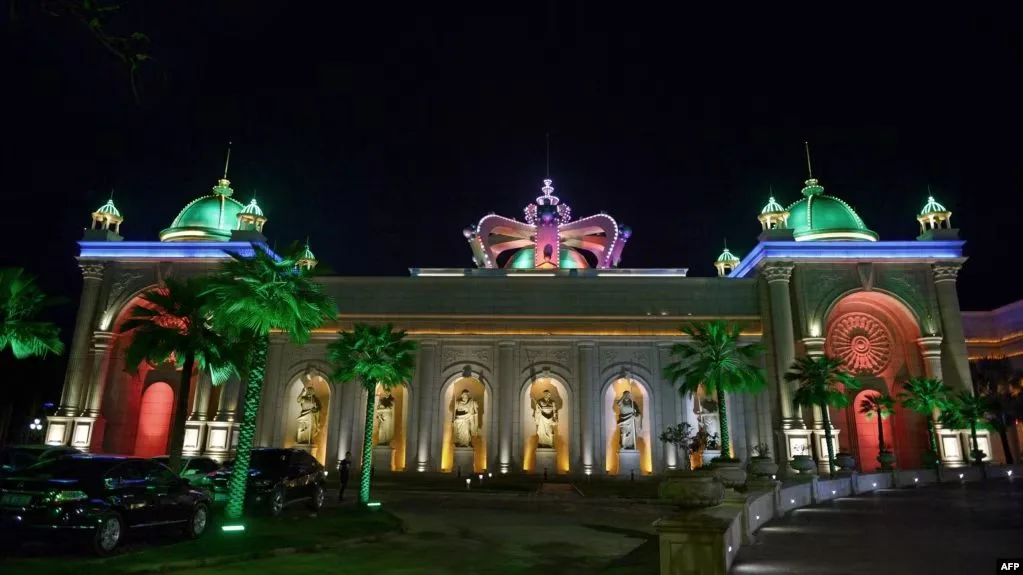
The Golden Triangle Special Economic Zone (GTSEZ) in northern Laos has become a significant case study in the relationship between commercial development, organized crime and human trafficking. Located in the border region where Laos, Thailand and Myanmar meet, the zone is associated with the Kings Romans Casino and businessman Zhao Wei, whose network was sanctioned by the United States in 2018.
The evidence has developed since those sanctions. Investigations published in 2026 have examined exploitation inside the zone’s online scam operations, while international institutions have placed trafficking for forced criminality at the center of their response to the wider regional crisis. Behind fraudulent investment messages and fabricated online relationships can be people whose own freedom has been taken away.
The question is no longer simply whether exploitation has occurred. It is whether enforcement can reach the people directing it, and whether those leaving compounds are recognized as trafficking victims rather than treated only as immigration offenders or participants in fraud.
What this article covers
- Where the GTSEZ is and how it differs from the wider Golden Triangle.
- Zhao Wei, Kings Romans Casino and the historical sanctions record.
- What recent investigations reveal about scam operations inside the zone.
- How forced labor and forced criminality intersect.
- The protection gaps facing people removed from compounds.
- Not For Sale’s prevention work in neighboring northern Thailand.
Key takeaways
- The GTSEZ is a specific development in Laos, not the entire Golden Triangle border region.
- The 2018 Treasury designation and later scam-compound investigations are separate bodies of evidence.
- Agreeing to travel for a job does not amount to consent to exploitation.
- Release from a compound should be followed by assessment, protection and recovery support.
- Regional trafficking figures should not be presented as counts for this one zone.
Where is the Golden Triangle Special Economic Zone?
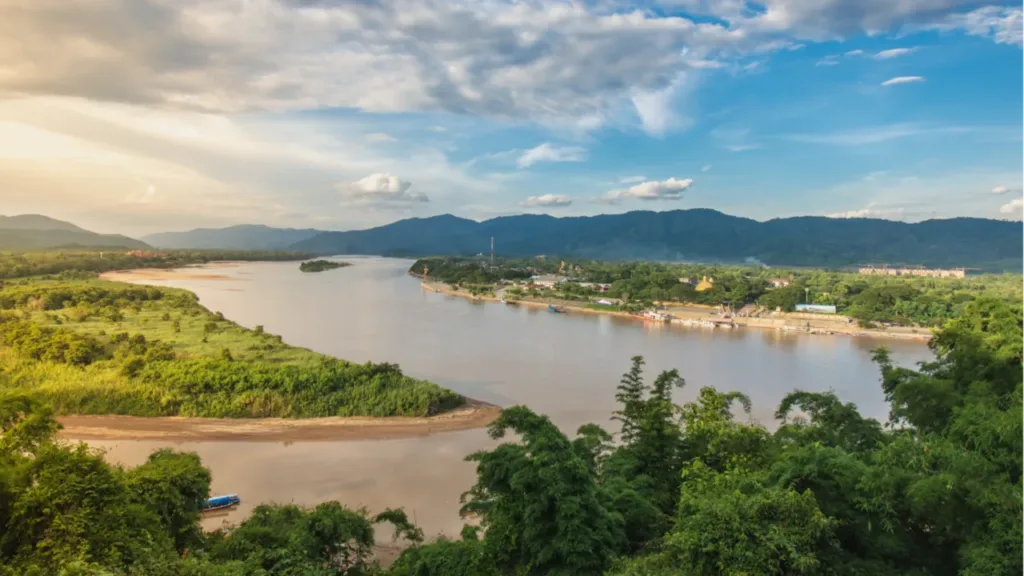
The GTSEZ sits in northern Laos beside the Mekong River, within the wider Golden Triangle borderlands. The distinction between the development and the region matters. Reporting on a compound in Myanmar, a Cambodian enforcement operation or mining elsewhere in the Mekong basin does not automatically describe conditions inside this Lao zone.
Special economic zones are designated areas intended to attract investment through particular commercial or administrative arrangements. That status is not, by itself, evidence of criminality. The concern in this case comes from documented allegations about particular businesses, networks and failures of oversight.
For readers encountering the subject through an online scam, the geographical detail helps explain the international dimension. Recruitment, confinement, financial victims and the movement of money can involve different countries. A response confined to one national investigation may leave other parts of the operation untouched.
Who is Zhao Wei, and why was his network sanctioned?
On January 30, 2018, the U.S. Treasury Department designated the Zhao Wei Transnational Criminal Organization. Treasury described a Laos-based network engaged in drug trafficking, human trafficking, money laundering, bribery and wildlife trafficking, with much of that activity facilitated through Kings Romans Casino. It identified Zhao Wei as exercising de facto control over the GTSEZ.
The designation also covered associated individuals and companies. It froze designated parties’ assets under U.S. jurisdiction and generally prohibited U.S. persons from dealing with them. These are sanctions findings and restrictions, and should be described as such.
That historical record remains important, but it should not be used as a single citation for every subsequent allegation. The growth of online scam compounds needs its own evidence. Keeping the two records separate makes the case study more precise and makes it possible to see how the reported forms of exploitation have changed.
Source: U.S. Treasury, January 30, 2018.
https://home.treasury.gov/news/press-releases/sm0272
What new evidence has emerged in 2026?
In January 2026, WIRED published an investigation based on internal material supplied by a whistleblower from the Boshang scam operation in the GTSEZ. Its reporting described passport confiscation, debt bondage, revenue targets and fines that reduced workers’ earnings. This is evidence about a particular operation, not a census of the zone.
The importance of such reporting lies in its ability to examine the working system: the relationship between recruitment, management, pay and the ability to leave. Calling a person an employee or issuing them a contract cannot settle the question of whether they are free.
Source: WIRED, January 27, 2026.
https://www.wired.com/story/the-red-bull-leaks/
The international policy context has also shifted. The 2026 World Day Against Trafficking in Persons used the theme “Trapped Behind the Scam,” drawing attention to people exploited in scam centers and other forms of forced criminality. This gives the GTSEZ case broader relevance without implying that all regional developments occurred within the zone.
Not For Sale’s reporting on the wider Southeast Asia scam-center trafficking crisis provides further context on how these operations connect across borders.
Source: United Nations Regional Information Centre, 2026.
https://unric.org/en/belgium-world-day-trafficking-persons-2026/
How does a job offer become forced labor?
The crucial issue is free and informed choice. A worker may agree to an advertised job, travel willingly and sign a document, yet discover that the location, duties or conditions were misrepresented. If threats or penalties then prevent them from leaving, the original decision to seek employment does not make the subsequent work voluntary.
The International Labour Organization’s revised 2025 guidance identifies indicators including deception, restricted movement, isolation, violence and abuse of vulnerability. These indicators require careful interpretation and investigation; one sign alone does not automatically establish forced labor.
For an investigator, the practical questions include whether a person can refuse tasks, recover their documents, communicate privately and leave without punishment. Looking only at the presence of computers, accommodation or wages risks missing the coercion that determines the person’s circumstances.
Source: ILO, Indicators of Forced Labour, 2025 revised edition.
https://www.ilo.org/publications/ilo-indicators-forced-labour-1
Why forced criminality requires a different response
Forced criminality describes exploitation in which a person is compelled to commit offenses for someone else’s benefit. In scam operations, the person sending a fraudulent message may be acting under threats, while the recipient suffers financial loss. Both harms need to be investigated.
INTERPOL has cautioned that not everyone working in a scam center is a trafficking victim. Individual assessment matters: organizers, willing participants and coerced workers cannot simply be assigned the same role because they were found in the same building.
A credible investigation therefore needs to establish who controlled the operation, who profited, who recruited workers and who could leave. Evidence of fraud must be considered alongside evidence of coercion. Recognizing trafficking should improve accountability by directing attention toward those responsible for controlling and exploiting others.
Source: INTERPOL, November 26, 2025.
https://www.interpol.int/en/News-and-Events/News/2025/Growing-threat-of-transnational-scam-centres-highlighted-at-INTERPOL-General-Assembly
The gap between removal and recognition
The U.S. State Department’s 2025 Trafficking in Persons Report on Laos identified a striking protection gap. It reported approximately 6,364 potential victims removed from the GTSEZ between September 2022 and December 2024, but only 25 formally identified as victims of unspecified trafficking.
Those figures are historical reporting-period data, not a current population estimate. They nevertheless raise an important question: what happened to people after they left? Removal counts cannot, on their own, establish whether individuals received a trafficking assessment, support or access to justice.
The report also described inadequate labor-law oversight and barriers to monitoring workers in the zone. These findings support an account of weak enforcement; they do not require the claim that Lao law simply ceases to apply there.
Source: U.S. State Department, 2025 Trafficking in Persons Report: Laos, reproduced by ecoi.net.
https://www.ecoi.net/en/document/2130650.html
What does “gray zone” mean in this case?
Not For Sale uses “gray zones” to describe places where exploitation can flourish behind the appearance of legitimate development. The term is useful as an explanation of power and accountability, but it is not a formal legal exemption from national law.
In this case, the relevant questions are concrete. Can inspectors enter workplaces independently? Can workers report abuse safely? Are businesses subject to meaningful scrutiny? Can investigators follow ownership and money beyond the compound gates?
Those questions also prevent a misleading conclusion that every economic zone follows the same pattern. The task is to identify the specific arrangements that allow coercion to persist and to make those arrangements accountable.
Not For Sale’s explanation of what gray zones are explores the broader relationship between development, exploitation and failures of accountability.
The human impact continues after release
In February 2026, the UN Human Rights Office published an updated examination of trafficking into scam operations. Drawing on survivor interviews involving several countries, including Laos, it documented serious abuse and warned that survivors can face further harm after release. Its findings are regional and should not be attributed wholesale to the GTSEZ.
Leaving a compound should begin a process of recovery. A protection response should make room for medical care, interpretation, safe accommodation, legal advice and contact with trusted people. It should also allow survivors to decide how, when and whether to share their experiences publicly.
Recovery cannot be measured solely by a completed journey home. Assessing safety means considering what awaits a person, what support is available and whether the pressures exploited during recruitment remain unresolved.
Not For Sale’s article on forced fraud and sexual violence in scam compounds examines the need for protection that recognizes different forms of abuse.
Source: UN Human Rights Office, February 20, 2026.
https://ghana.un.org/en/310408-un-report-details-grave-abuses-against-those-trafficked-scam-centres
Who needs better protection?
A prevention strategy should consider people seeking work abroad, workers dependent on recruiters and individuals facing insecure migration status or limited access to reliable advice. It should avoid assuming that vulnerability means a lack of intelligence or ambition. Seeking better employment is a reasonable decision; fraudulent recruitment exploits that decision.
INTERPOL’s 2025 update identified trafficking victims from 66 countries as of March that year. That is a finding about the international scam-center phenomenon, not the nationalities or number of people held in this particular zone.
The global reach makes accessible information important. Warnings should be available through channels jobseekers actually use and accompanied by ways to check employers and report concerns. A message that simply tells people not to migrate offers little help to someone who needs safe employment.
Source: INTERPOL, June 2025 update.
https://www.interpol.int/News-and-Events/News/2025/INTERPOL-releases-new-information-on-globalization-of-scam-centres
Environmental harm: keeping the connection precise
Not For Sale also reports on environmental pressures in the wider Mekong borderlands. Those issues belong in the surrounding context, with their own sources and locations. They should not be used to imply that every mining operation and every scam compound shares ownership or that mining revenue necessarily finances a particular fraud business.
For prevention work, the useful question is how to protect families when their circumstances become less secure. A response can examine livelihoods, education and access to assistance without collapsing different crimes into one unsupported account.
Not For Sale’s reporting on illegal mining in the Mekong region examines environmental pressures in the wider borderlands.
What institutions are doing, and what should follow
INTERPOL’s November 2025 resolution recommended stronger intelligence sharing, joint operations, action against illicit assets and improved arrangements for rescue, repatriation and victim support. These recommendations recognize the need to connect financial investigations with protection.
The next test should be implementation. Public reporting ought to distinguish people removed, people screened, victims identified and people receiving assistance. It should also explain outcomes for alleged recruiters and organizers, rather than treating the size of a raid as its only measure of success.
Businesses providing services to high-risk operations should examine how their systems may be used and respond to credible evidence of abuse. Governments should ensure that victims can report exploitation without being automatically punished for acts they were compelled to commit. Across these responses, independent scrutiny matters: an announcement should be followed by evidence that conditions and outcomes have changed.
Not For Sale’s connection to the Golden Triangle
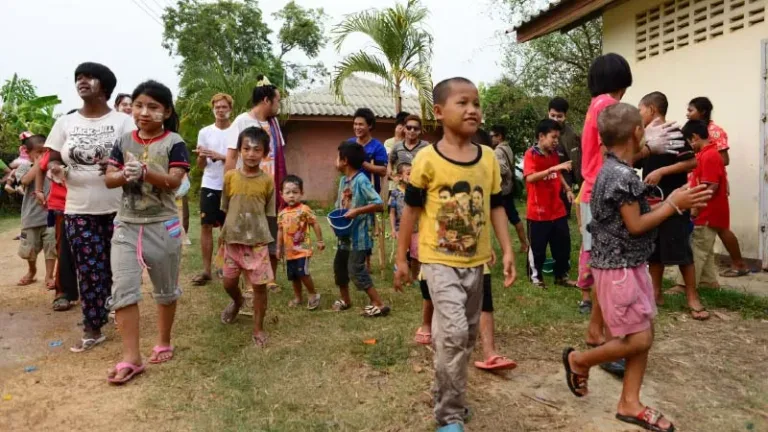
Not For Sale’s work in northern Thailand began with Kru Nam and the protection of children at risk of exploitation. Since 2007, the organization has supported her work. Baan Kru Nam provides safe housing, education, nutrition, medical care and emotional support, alongside outreach to vulnerable border communities.
That work takes place in neighboring Thailand. It should not be represented as control over conditions inside a Lao economic zone. Its relevance is prevention: helping children grow up with safety, education and practical alternatives to exploitation.
Through Not For Sale’s Thailand project, readers can learn more about Baan Kru Nam and the organization’s work protecting children in the border region.
What readers can do
When reviewing an overseas job, seek independent confirmation of the employer, workplace, duties and contract. Be cautious about pressure to travel immediately, unexplained changes of destination or demands to surrender control of documents. Concerns deserve investigation rather than dismissal.
If someone may be trapped, seek advice from a qualified anti-trafficking organization or appropriate consular service through a safe channel. Publicly sharing identifying details or attempting to negotiate directly with suspected traffickers can create risks. For readers following the issue, sharing accurate reporting and supporting long-term prevention are practical ways to contribute.
Support Not For Sale’s work protecting children and building alternatives to exploitation.
The GTSEZ case should be judged through the experiences and rights of the people affected. Commercial growth does not answer whether workers are safe, and a removal operation does not answer whether survivors can rebuild their lives. Meaningful progress requires both accountability for exploitation and a future in which people have the freedom to refuse it.
Frequently asked questions
What is the Golden Triangle Special Economic Zone?
It is a designated economic development in northern Laos, associated with Kings Romans Casino. It is distinct from the wider Golden Triangle region.
Where is the GTSEZ located?
It is in northern Laos beside the Mekong River, in the borderlands near Thailand and Myanmar.
Who is Zhao Wei?
He is the businessman Treasury identified in its 2018 designation as exercising de facto control over the zone.
Why does the article separate sanctions from scam investigations?
They concern different dates and evidence. The historical designation cannot establish every later allegation.
What is forced criminality?
It is exploitation involving coercion to commit offenses for another person’s benefit, including online fraud.
Can someone who accepted a job still be exploited?
Yes. Initial agreement does not establish that the person freely consented to the actual conditions or remained free to leave.
Is everyone found in a scam compound a trafficking victim?
No. Assessment must distinguish coercion from willing participation and organizing roles.
What should happen after someone leaves a compound?
They should receive an appropriate assessment and access to safety, care, advice and recovery support.
What does Not For Sale do nearby?
It supports Kru Nam’s child protection and prevention work in northern Thailand, including Baan Kru Nam.
Topics in this story
See all topics
Mark Wexler
Mark Wexler is Co-Founder and CEO of Not For Sale and a longtime builder of alternatives to the systems that enable modern-day slavery and ecocide.