


Climate crisis: What it has in common with modern slavery
4 MIN READ
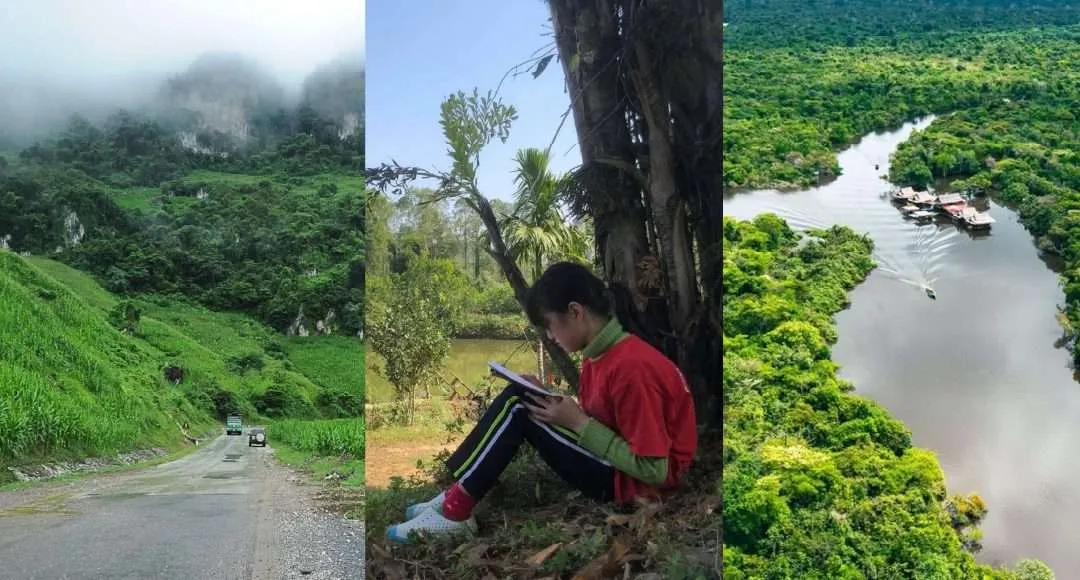
Let’s stop pretending that the climate crisis and modern slavery are separate emergencies.
We talk about the climate crisis like it’s coming for us all equally. Floods, fires, famine – it’s easy to paint a universal picture. But dig just beneath the headlines, and a more uncomfortable truth appears: climate collapse doesn’t just impact the vulnerable more. It creates them. Protecting the planet is key to protecting people.
When people lose everything, traffickers are never far behind. We still stand strong in the fight against human trafficking, and here’s how we’ve expanded our efforts to help more survivors.
Never stop supporting indigenous communities
Our commitment to ending modern slavery has never wavered. We continue to expand our efforts; not shift them. Consider the story of Navea, a young Indigenous woman from the Puerto Luz Native Community in Madre de Dios, Peru.
Rescued in January through our partnership with AFIMAD, Navea was facing the devastating loss of her sight while raising two children and striving to finish her education. Four life-changing surgeries saved her vision and reignited her path forward. You can read more about her in this article about combating modern slavery.
Stories like hers are a powerful reminder that we remain deeply engaged with survivors and vulnerable communities around the world. Our work to combat exploitation is not something we’ve moved away from, but it’s the foundation on which we continue to build, combining it with environmental resilience to protect people and the planet alike.
When the ground disappears beneath you
By 2050, the World Bank estimates that over 216 million people could be displaced within their own countries by climate change. That’s not science fiction. That’s someone’s home underwater. Someone’s crop turned to dust. Someone’s future dismantled, one storm, drought, or wildfire at a time.
Displacement doesn’t just mean movement – it means vulnerability. Families are uprooted. Livelihoods vanish. Borders tighten. When legal pathways close, people take dangerous ones. This is the exact moment traffickers exploit: the chaos of collapse.
The climate crisis and climate change over time doesn’t traffic people. But it makes them infinitely easier to traffic.
Climate crisis + modern slavery = the same system breaking twice
There’s a bitter irony here. The same industries driving environmental destruction – mining, logging, fast fashion, industrial agriculture – often rely on modern slavery to stay profitable.
Take deforestation. Forests in the Amazon, Southeast Asia, and Central Africa are cleared for soy, palm oil, or cattle. The people doing that work? Often unpaid, under threat, or trafficked entirely. The damage runs both ways: nature is exploited, and so are humans.
It’s not a coincidence. It’s a pattern.
Where the land is stripped, so is labor. Where regulation disappears, so does accountability. And when the planet suffers, people do, too – especially those already living on the margins.
Women and children pay first
Climate-linked disasters don’t just displace – they destabilize. And when communities fracture, women and children bear the brunt.
After Hurricane Katrina, reports of gender-based violence spiked. After the 2015 Nepal earthquake, trafficking of girls across borders surged. Climate crises pull safety nets apart, fast. Suddenly, the only option left is the one no one should have to take: selling a child, accepting an offer too good to be true, crossing a border you’ll never legally come back from.
We’ve seen this again and again. The climate crisis doesn’t happen in a vacuum. It happens in the lives of people least responsible for it, and least equipped to recover.
The fight has to be shared
Here’s what we believe at Not For Sale: if your activism ends at the environment, it’s not enough. If your human rights work doesn’t address climate, it’s missing the full picture.
The climate crisis and modern slavery aren’t just connected. They’re compounding. And tackling one without the other is like patching a sinking boat while the storm rolls in.
At Not For Sale, we build resilience – environmental, economic, and human. We support communities before they collapse. We stand in the gap when disaster strikes. And we refuse to accept that some lives are worth saving only after the climate is fixed.
No one left behind
This isn’t about doom. It’s about direction.
We can adapt. We can act. But only if we face the truth: solving the climate crisis requires us to solve for humanity. Because the planet we’re trying to save is home to people we’re letting fall through the cracks.
Let’s stop choosing between nature and neighbor. The fight is the same. And we won’t win it unless everyone comes with us.
• Fight for positive change. Support Not For Sale.
Published on June 4, 2025

Sign Up to our Newsletter
Join our movement and get the latest updates, stories, and ways to take action, straight to your inbox.