Child Trafficking: How It Happens and What Can Protect Children
Child trafficking is often described through exceptional stories of abduction and rescue. Yet the systems that allow children to be exploited are…

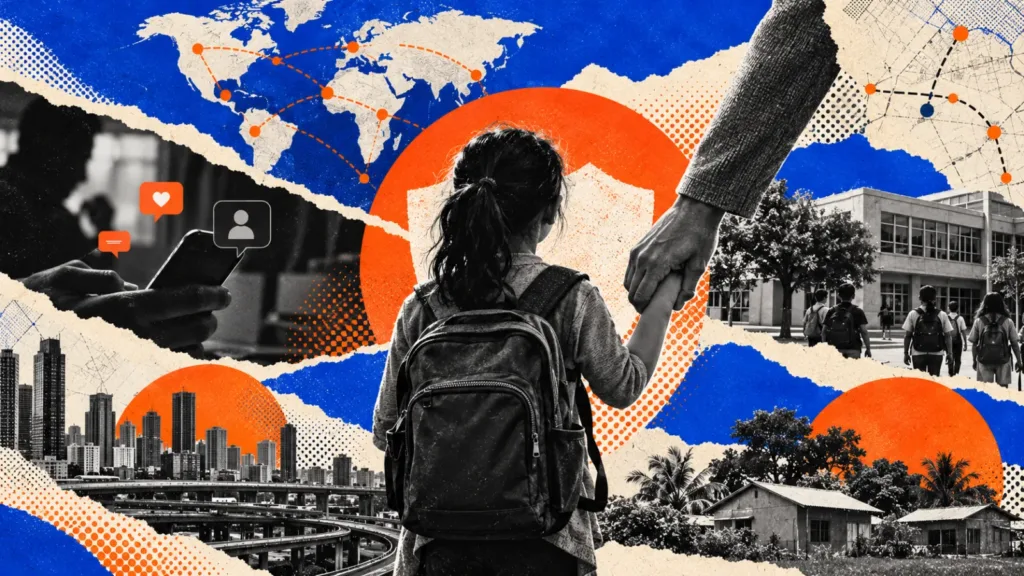
Child trafficking is often described through exceptional stories of abduction and rescue. Yet the systems that allow children to be exploited are frequently ordinary enough to escape attention: a child excluded from school, a family displaced by conflict, an offer of work that conceals coercion, an adult who controls where a young person lives and whom they can contact. Understanding child trafficking means paying attention not only to criminal recruitment but to the failures of protection that make recruitment possible.
Under the United Nations Trafficking in Persons Protocol, a child is anyone under 18. Recruitment, transportation, transfer, harboring or receipt of a child for the purpose of exploitation can constitute trafficking even without proof that force, fraud or coercion was used. That protection reflects a central fact: children cannot be expected to negotiate risk and consent as adults are. It also requires precision. Not every situation of child labor or abuse meets the legal definition of trafficking, though serious harm can occur outside that definition and always deserves appropriate safeguarding.
What This Article Covers
- What distinguishes child trafficking from other forms of child exploitation.
- How labor, sexual and criminal exploitation can affect children.
- Why displacement, documentation gaps and isolation increase vulnerability.
- What the global evidence reveals and what remains unknown.
- How identification, education and long-term care can protect children.
Key Takeaways
- In international law, trafficking in children does not require proof of the coercive ‘means’ element required for adult cases.
- UNODC found a 31 percent rise in detected child trafficking victims between 2019 and 2022.
- Child trafficking includes labor exploitation, sexual exploitation and forced criminality, among other forms.
- Warning signs are not a diagnosis; careful, professional safeguarding is essential.
- Stable housing, documentation, school access, trusted adults and long-term support can address risks that one-time interventions cannot.
The Different Forms of Child Trafficking
A child may be exploited in agriculture, domestic work, construction, manufacturing or informal commerce. Some children experience commercial sexual exploitation; others are forced to beg, carry illegal goods or participate in online fraud. Recruitment into armed groups and other conflict-related exploitation can also overlap with trafficking under relevant legal frameworks. These experiences should not be collapsed into a single narrative because the routes into exploitation and the necessary protection differ.
Commercial sexual exploitation of children is particularly serious because a child’s apparent acquiescence does not make the situation legitimate. The language used in public reporting matters. Calling an exploited child a ‘child prostitute’ can wrongly imply a voluntary occupation and obscure the adults and businesses profiting from the abuse. Legal systems and specialists increasingly emphasize child-centered terms that identify exploitation without blaming the child.
Labor exploitation requires equally careful attention. Hazardous child labor and child trafficking are not identical categories. A child may be working unlawfully or in dangerous conditions without every element of trafficking being established. Conversely, a child in seemingly ordinary work may be controlled through threats, debt, isolation or adult authority. The practical priority is protection from harm while competent investigators determine the legal classification.
Forced criminality is an area of growing concern. A child involved in theft, drug distribution or online scams may be acting under threats or manipulation by adults. Authorities that treat the young person only as an offender risk missing the exploitation behind the conduct. Safeguarding assessments should examine who benefits, who directs the activity, what happens when the child refuses and whether the child has realistic freedom to leave.
Why Children Become Vulnerable
Traffickers exploit circumstances, not a single personality trait. Conflict can separate children from caregivers or interrupt birth registration, schooling and social services. A family’s loss of income may make an apparently generous offer of education or employment more appealing. A child facing discrimination or lacking recognized legal status may struggle to access protections that others take for granted. These conditions do not make trafficking inevitable. They narrow the options available to a child and to the adults trying to keep that child safe.
Documentation is especially consequential. A child without reliable papers may encounter barriers to education, health care and future employment. If institutions cannot readily establish identity, age or family ties, moving across districts or borders can complicate protection. Different countries have different legal provisions, and lack of nationality does not automatically eliminate every service right. But practical barriers can persist even where formal rights exist.
The experience of displacement illustrates how risks accumulate. A child who leaves home during violence or a natural disaster may temporarily live in crowded accommodation, move repeatedly or lose contact with teachers and family members. Recruiters can offer transport or work at precisely the moment reliable information is scarce. A preventive response therefore needs child-friendly registration, safe transport, school continuity and support to caregivers, not merely warnings to avoid strangers.
Online platforms add another layer. Manipulative relationships may start through games, messaging services or social media, but an online conversation alone is not proof of trafficking. The relevant patterns involve escalating control, threats, demands for exploitative activity and attempts to isolate a child from help. Guardians and professionals should pay attention to trust and communication, not rely only on surveillance that can push distress out of sight.
What the Statistics Reveal and Conceal
UNODC reported that the number of detected child trafficking victims increased by 31 percent between 2019 and 2022, according to findings published in its 2024 global report. The United Nations has described children as accounting for roughly one-third of detected trafficking victims in the relevant data. This is evidence of a serious protection challenge. It is not a count of every trafficked child, nor proof that prevalence rose by exactly 31 percent. Detection patterns vary among regions and are shaped by enforcement and reporting capacity.
The ILO’s global estimate of forced labor identified around 3.3 million children in forced labor in 2021. That estimate is produced using methods different from UNODC’s tally of detected trafficking victims. The two datasets cannot be combined or substituted for each other. Forced labor statistics also do not cover every form of harm affecting children, and broad child labor estimates measure another phenomenon again. Readers deserve enough explanation to avoid repeating numbers in ways that distort policy.
Different forms of exploitation may be detected at different rates. Sexual exploitation can be more visible to dedicated trafficking investigators in some jurisdictions, while domestic servitude or exploitation in remote agricultural work may attract less attention. Boys and girls can experience all major forms, even where recorded patterns differ. A child who does not resemble the stereotype used in a public awareness poster may still need urgent safeguarding.
Better statistics will depend on safe child-sensitive reporting, consistent definitions and appropriate research ethics. Asking vulnerable children to repeatedly disclose harm in order to improve a dataset can itself be damaging. Information systems should minimize unnecessary details, protect identities and ensure that evidence collection serves protection rather than publicity.
The Difference Between Noticing and Diagnosing
Teachers, health professionals, social workers, neighbors and employers may encounter possible signs of exploitation. These can include repeated unexplained absences from school, lack of access to caregivers, an adult speaking for a child, restrictions on movement, apparent fear of someone in authority, or changes in accommodation that cannot be explained safely. Such indicators require context. They are reasons to seek trained advice, not a basis for public accusation.
A child may be reluctant to disclose abuse because of threats, loyalty, shame, concern for relatives or fear of authorities. A calm or apparently cooperative manner does not exclude exploitation. Conversely, a young person’s distress or difficult home situation should never automatically be labeled trafficking. Respectful assessment means listening without interrogation, recording concerns accurately and following local safeguarding procedures.
If a child may be in immediate danger, contact local emergency or child-protection services. Outside emergencies, trained safeguarding professionals and national child-help systems are the appropriate points of contact. Do not confront a suspected exploiter, attempt a private rescue, post identifying images or share the child’s story with other families. Even accurate information can increase risk when distributed without consent or a safeguarding purpose.
After identification, a child needs a plan that extends beyond the first safe night. Health care, education, reliable caregivers, legal advice and consistent relationships can make recovery possible. Decisions about accommodation and family contact must be informed by the child’s circumstances and best interests, with appropriate involvement by competent authorities. Children should be heard in decisions affecting them, using language and methods suitable to their age and experience.
Why Education Matters, and Why It Is Not Enough
A functioning school can provide routine, trusted adults and an avenue for detecting distress. Continued education expands later opportunities and may reduce dependence on risky offers of work. But education should not be described as a guaranteed shield against trafficking. Children can be exploited while enrolled, and attendance does not remove dangers posed by violent adults or economic hardship. School systems also need trained staff, accessible reporting routes and policies that do not penalize children for circumstances beyond their control.
Long-term housing and care are critical where family circumstances are unsafe or reunification requires time. The goal is not to turn a protected childhood into permanent institutional dependence. It is to help a child gain safety, skills, relationships, documentation and choices that remain meaningful through adolescence and into adulthood. Success should be judged across years, not solely by the number of children admitted to a program.
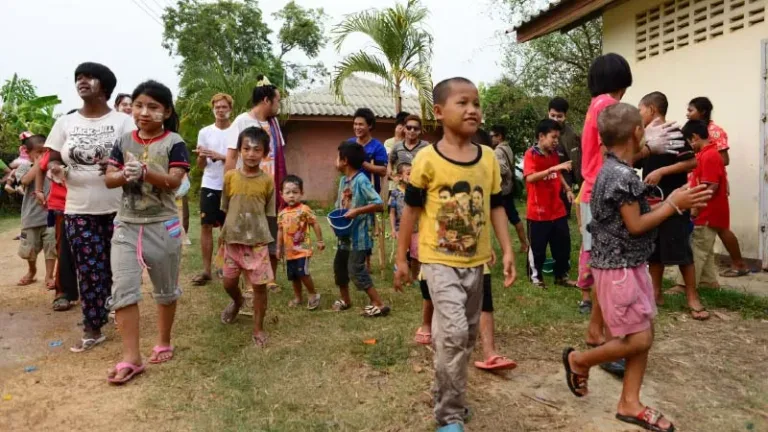
This is evident in the work associated with Kru Nam at Baan Kru Nam in northern Thailand. Not For Sale describes long-term housing, education, nutrition, health care and support for children, including children from stateless and migrant communities. The setting offers an example of protection as continuity rather than a single intervention. It should not be presented as proof that one specific model will work unchanged everywhere; each country has different safeguarding institutions and family circumstances.
The organization is also seeking support for dedicated accommodation for girls as they grow older. This kind of practical need illustrates a broader principle: safeguarding must change as children develop, rather than assume the arrangements suitable for a younger child remain appropriate through adolescence. Readers who want to support such efforts can examine the program’s stated needs and ask how wellbeing, education and long-term stability are assessed.
The Responsibilities Beyond the Family
Governments must enforce laws prohibiting child exploitation, provide accessible identity systems, maintain schooling during displacement, and ensure that children identified in coercive criminal activity are considered for protection rather than automatically punished. Employers and recruiters should be held accountable for exploitative labor arrangements. Technology companies have responsibilities around abuse reporting and platform design, though online controls should be evaluated for effectiveness and unintended consequences.
Communities also matter. Teachers, youth organizations, health workers and culturally informed local partners may be best placed to notice when a child disappears from ordinary systems of care. The strongest response is coordinated, discreet and guided by the child’s interests. Public campaigns can improve recognition, but prevention is ultimately delivered through relationships, institutions and resources that endure after the campaign ends.
A society’s commitment to protecting children is most visible in ordinary places: a classroom that remains accessible after displacement, a legal identity that opens doors rather than closing them, a safe adult who listens, and a service that stays involved beyond the immediate crisis. Those conditions are less dramatic than a rescue photograph. They are also central to making trafficking harder to sustain.
Frequently Asked Questions
What is child trafficking?
It is the recruitment, transfer, harboring or receipt of a child for the purpose of exploitation. Under the UN Protocol, the coercive ‘means’ element required for adult trafficking need not be proved in child cases.
Can a child consent to being trafficked?
No. A child’s agreement to travel or work does not remove the special legal protection afforded to children under the Trafficking in Persons Protocol.
Is all child labor child trafficking?
No. Child labor and trafficking are different legal and statistical categories, although they can overlap and both may involve severe harm.
What are signs of child trafficking?
Possible indicators include unexplained absences, restricted movement, lack of identity documents, adult control, threats or unsafe living arrangements. No checklist proves a case.
Are boys trafficked as well as girls?
Yes. Boys and girls are affected by labor exploitation, sexual exploitation and forced criminality, with different detection patterns across countries.
How does the internet contribute to child trafficking?
Digital services can be used for deception, recruitment, threats and control. Not every online exploitation case is legally trafficking; safeguarding professionals assess the circumstances.
What should I do if I am worried about a child?
Contact appropriate local child-protection or emergency services and follow safeguarding guidance. Do not confront suspected exploiters or share identifying details publicly.
How can charities help protect children?
Credible programs can provide safe accommodation, education, legal assistance, family support and long-term care, while measuring outcomes and respecting children’s privacy and choices.
Sources
- UNODC, International legal framework for trafficking: https://www.unodc.org/e4j/en/tip-and-som/module-6/key-issues/international-legal-framework.html
- United Nations, Understanding human trafficking: https://www.un.org/en/peace-and-security/understanding-human-trafficking
- UNICEF UK, Child trafficking: https://www.unicef.org.uk/what-we-do/protection-from-child-trafficking/
- UN Special Representative on Violence Against Children, Child trafficking: A crime against children: https://violenceagainstchildren.un.org/en/media/24
- NSPCC, Protecting children from trafficking and modern slavery: https://learning.nspcc.org.uk/child-abuse-and-neglect/child-trafficking-and-modern-slavery
- US Youth.gov, How do I identify a victim?: https://youth.gov/youth-topics/trafficking-prevention/victim-identification
- Not For Sale, Thailand: https://wearenotforsale.org/projects/thailand/
- Not For Sale, Northern Thailand safeguarding and statelessness: https://wearenotforsale.org/ecocide/thailand-floods-2026-children-trafficking-risk/
Not For Sale
A global movement fighting modern-day slavery and ecocide in 33 countries. Building on the frontlines since 2007.