The Cali Fund Has Collected Just $7,000. Can Biodiversity Finance Catch Up With Its Promise?
A mechanism intended to share the benefits of commercial use of genetic information is struggling to attract contributions. The dispute at COP17 is about who benefits from nature's information and who pays to protect the systems that produced it.


A fund that reveals a much bigger imbalance
The amount is startling because of the scale of the problem it is meant to address. As governments gathered for the UN biodiversity conference in Armenia, reporting on October 22, 2026, said that the Cali Fund had attracted only about $7,000. This is a mechanism created to direct some of the value generated through use of genetic information back toward conserving biodiversity and sharing benefits. At a time when countries are arguing over the enormous cost of preventing nature loss, the small sum brought a basic disagreement into focus: who should pay when commercial innovation depends on resources developed by the living world?
The Guardian reported that some campaigners criticized companies, including parts of the pharmaceutical industry, for benefiting from nature without contributing sufficiently to conservation. Those are campaigners’ arguments and should be attributed. A low contribution figure does not automatically prove that a particular business violated a legal obligation. Nor does the fund’s current balance represent all spending on biodiversity globally.
The story matters because the Cali Fund addresses a problem that conventional conservation appeals often overlook. Scientific and commercial users can extract value from biological information collected in one place, while the cost of preserving the ecosystems and communities associated with that information may fall elsewhere. The new mechanism tries to rebalance that relationship. Whether it can succeed remains uncertain.
What This Article Covers
- What the Cali Fund is and why it exists.
- The October 2026 report of roughly $7,000 in contributions.
- What digital sequence information means.
- Why commercial benefit sharing is politically contentious.
- How Indigenous peoples and local communities fit into the framework.
- What a credible funding and accountability system would require.
Key Takeaways
- The Guardian reported on October 22 that only about $7,000 had reached the Cali Fund.
- The fund is connected to international negotiations over benefit sharing from digital sequence information on genetic resources.
- A small fund balance does not establish that every commercial user has violated the law.
- Genetic information may contribute to research and commercial applications across several sectors.
- Indigenous and local community participation matters to the fairness of benefit sharing.
- Transparency over contributions and use of funds will be essential to public confidence.
What is the Cali Fund?
The Cali Fund was created under the Convention on Biological Diversity process to support a multilateral approach to sharing benefits from the use of digital sequence information, often shortened to DSI, on genetic resources. The name reflects negotiations associated with the 2024 biodiversity conference in Cali, Colombia. Its policy purpose is to connect commercial uses of biological information with financing for biodiversity and benefit sharing.
In practical terms, researchers can study the genetic sequences of organisms and place data in repositories that support further research. These data can contribute to scientific understanding and, in some cases, commercial development. The information may be used without repeatedly transporting the original plant, animal or microorganism. This creates opportunities for knowledge sharing while raising difficult questions about the fair distribution of benefits.
The term DSI is technical and its scope has been debated internationally. It should not be treated as synonymous with every biological sample, every DNA database or every product in the pharmaceutical sector. A specific company’s relationship to the mechanism depends on how the agreed criteria apply to its activities, size and revenue, as well as the status of implementation.
The fund is one part of a wider effort to finance biodiversity protection. It cannot be expected to replace government budgets, protected-area management, restoration or other conservation finance instruments.
Why genetic information has economic value
Genetic sequences can help researchers understand biological processes, identify compounds and develop methods in fields such as medicine, agriculture and biotechnology. Organisms evolved those traits within ecosystems long before a commercial application existed. Access to scientific data can create public benefits, including faster research and collaboration between institutions.
The debate is not whether researchers should be allowed to study nature. It concerns how monetary benefits should be shared when commercial value arises from information linked to genetic resources. Countries rich in biodiversity, and communities whose territories and knowledge are associated with those resources, have argued that they should not bear conservation costs while value accrues elsewhere.
The difficulty is that value can emerge through many stages. A sequence may be deposited in a public database, analyzed by researchers in several countries, combined with other information and eventually influence a product many years later. Tracing a simple one-to-one payment to a single organism or place may be impractical. A multilateral mechanism seeks an approach that can function at scale.
That practicality is part of its appeal, but it also creates concerns about fairness and accountability. If contributions are too low or rules too weak, the mechanism may fail to generate significant resources. If requirements are poorly designed, they could create burdens that undermine scientific exchange or smaller research organizations.
What the $7,000 figure does and does not show
The amount reported in October is evidence of a strikingly limited financial response at that stage. It is not a measure of the total value businesses derive from biodiversity, the annual global cost of conservation or the amount of all funding flowing through other mechanisms. Comparing it directly with a global biodiversity financing gap can illustrate scale, but those figures refer to different things.
The Guardian’s reporting highlighted criticism of companies that were not contributing to the Cali Fund as advocates hoped. A responsible account must distinguish an ethical argument that users of nature-derived information should pay from a finding that a legal requirement has been breached. That distinction matters for reputational fairness and for the credibility of reform.
It is also necessary to ask whether money has been pledged but not yet transferred, whether criteria for expected contributions are disputed, and whether administrative arrangements affect payments. The fund’s balance at a particular date should be rechecked as new deposits may arrive.
A transparent public dashboard showing receipts, contributors where disclosure is appropriate, eligibility rules and distributions would improve confidence. Without it, public debate can drift toward slogans about corporate responsibility without a reliable picture of actual flows.
Why COP17 has become a test
The seventeenth Conference of the Parties to the Convention on Biological Diversity is taking place as governments face deadlines under the Kunming-Montreal Global Biodiversity Framework. Those commitments include halting and reversing biodiversity loss and mobilizing resources. The Cali Fund is only one mechanism, but it symbolizes the difficulty of turning agreed principles into money and implementation.
Conservation finance frequently involves mismatched incentives. A community may bear the immediate cost of protecting a forest while many economic benefits are distributed far away. Scientific users may need open datasets, while countries providing the original genetic resources seek a fair share of commercial gain. An effective framework must recognize both sets of concerns.
Negotiators have to decide what kinds of companies should contribute, how amounts are calculated, how funds are distributed and what safeguards apply. The answers need to be administratively practical and politically legitimate. A fund that is legally elegant but almost empty will have little ecological effect.
The broader biodiversity conference is also discussing harmful subsidies and species recovery. Those topics are connected by financing but should not be conflated. Redirecting damaging incentives, funding individual species programs and sharing benefits from genetic information address different parts of the nature crisis.
Indigenous communities and the question of benefit sharing
Indigenous peoples and local communities play an important role in protecting many biodiverse landscapes. Some also hold traditional knowledge connected to biological resources. International biodiversity debates have long recognized concerns about the use of genetic materials and associated knowledge without fair participation or benefit sharing.
The Cali Fund does not remove the need to respect community rights or existing legal obligations concerning access and consent. A payment to a global mechanism cannot automatically settle every claim involving a particular territory or form of knowledge. The details depend on applicable frameworks and the circumstances of use.
Benefits also need to reach people in forms they can use. Conservation funding can support local management, restoration, skills and institutions, but poorly designed grants may favor organizations with sophisticated administrative capacity over the communities doing the work. Fair distribution requires accessible procedures, representation and safeguards against misuse.
There are legitimate disagreements about the best way to distribute collective benefits. Some favor broadly allocated conservation finance, while others argue for closer links to the communities or regions associated with the underlying resources. Those tensions deserve public discussion rather than an assumption that any transfer of money is automatically equitable.
Can companies contribute without waiting?
Some businesses may choose to support biodiversity efforts voluntarily while international rules continue to develop. Such contributions can demonstrate commitment, but voluntary systems have familiar weaknesses. Companies under financial pressure may prioritize contributions that deliver reputational value, and there may be little consistency in how payments are calculated.
Mandatory approaches raise different difficulties, including defining covered activities, preventing double counting and providing legal certainty. Governments must also consider how research organizations, smaller innovators and noncommercial science are treated. A policy that deters beneficial research without increasing conservation outcomes would be counterproductive.
Public claims should identify what a company has actually paid or pledged rather than treating participation in a campaign as equivalent to a transfer. Likewise, an apparent absence from a publicly disclosed list should not automatically be treated as proof of noncompliance.
The fund’s administrators and parties to the convention will need reporting standards strong enough to answer basic questions: how much has arrived, where it came from, how much has been allocated, who receives it and what measurable outcomes follow.
Conservation needs more than symbolic money
The financial needs of ecosystems are diverse. Protected areas require staff, monitoring and governance. Damaged forests and wetlands may require long-term restoration. Communities need options for sustainable incomes, and public institutions need enforcement capacity. A single small fund cannot pay for all of that, nor would it be sensible to judge every conservation investment solely by money spent.
The crucial question is whether benefit sharing begins to alter the imbalance between value extracted from nature and resources returned to protect it. The first payments have symbolic importance, but the future performance of the mechanism will depend on contribution levels, fair allocation and demonstrable ecological and social results.
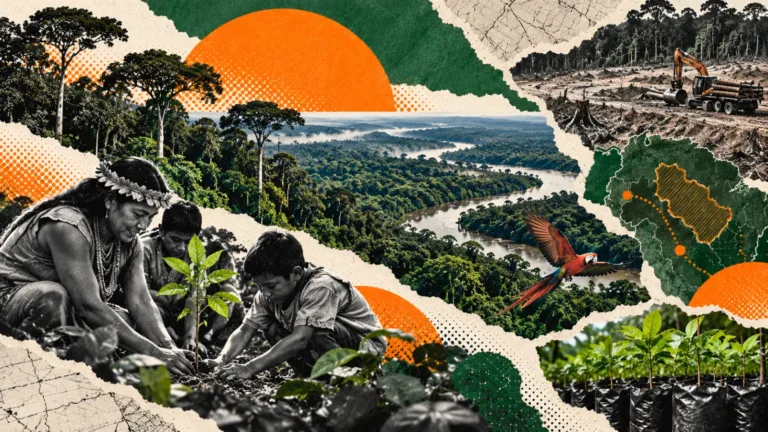
Not For Sale’s Indigenous community partnership in Peru offers a separate example of the importance of local economic alternatives in forest protection. It is not a beneficiary or administrator of the Cali Fund on the evidence available. The relevance is the principle that communities living with biodiversity need meaningful resources and decision-making power, not simply recognition in an international declaration.
What happens next?
COP17 can establish clearer expectations and political momentum, but the fund’s credibility will be built after the conference through published contributions and the use of money. Transparency will determine whether the public can distinguish substantive progress from announcements.
The October report of $7,000 should be a warning, not an endpoint. Scientific knowledge derived from nature can support enormous public benefit. The question is whether the international system can also support the ecosystems and communities that make that knowledge possible.
Frequently Asked Questions
What is the Cali Fund?
It is a biodiversity benefit-sharing fund associated with the use of digital sequence information on genetic resources under the Convention on Biological Diversity process.
How much money had it received by October 2026?
The Guardian reported on October 22 that the fund had attracted about $7,000. That figure may change with later contributions.
What is digital sequence information?
DSI is a policy term used for digital genetic information associated with biological resources. Its precise scope has been subject to international negotiation.
Does the Cali Fund finance all conservation?
No. It is one mechanism within a much wider system of public, private and international biodiversity financing.
Are all pharmaceutical companies required to pay?
It would be inaccurate to make a universal claim. Applicability depends on the agreed mechanism, implementation criteria and relevant obligations.
Does nonpayment automatically mean a company broke the law?
No. Ethical criticism, voluntary expectations and legally enforceable duties are distinct questions.
Why are Indigenous communities relevant?
Many Indigenous and local communities protect biodiverse territories and have rights and interests connected to genetic resources and traditional knowledge.
What would make the fund successful?
Meaningful contributions, transparent governance, fair allocation and verifiable conservation and community benefits would be important measures.
Sources
Not For Sale
A global movement fighting modern-day slavery and ecocide in 33 countries. Building on the frontlines since 2007.