SlaveryMap · Social Innovation
Where Ending Slavery Starts with Seeing It
What We Found
Human trafficking is usually described in abstract statistics. Not For Sale started with something far more specific: a restaurant. David Batstone, the professor and author who co-founded the organization, had eaten there for years before learning that its staff were being held against their will, trafficked into the country and forced to hand their wages back over as rent. The case made national news. For Batstone it made something else: it made the problem personal. If slavery could hide inside a place he ate dinner every week, it could hide anywhere.
What We Set Out to Do
Most Americans at the time still assumed slavery had ended with the Emancipation Proclamation. Before Not For Sale could raise a dollar or change a policy, it needed to do something more basic: prove the problem was real, and prove it was close by. SlaveryMap launched on 1 June 2008 to do exactly that, one documented case at a time.
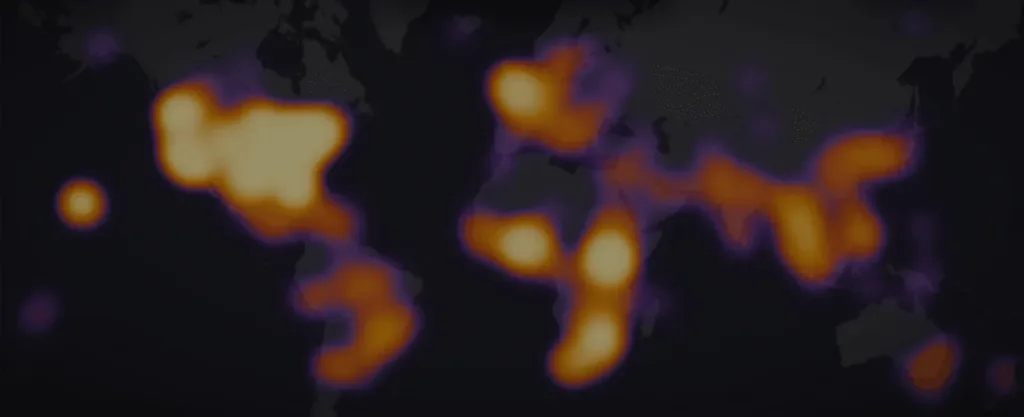
Every point is a documented case, shown with its location deliberately generalized to protect survivors.
What Stands in the Way
By March 2016, eight years after launch, SlaveryMap had logged 1,774 reports. By then the map had also tightened: mapping rights required training through the Not For Sale Academy first, rather than the fully open submissions it started with. Not long after, the original site went quiet. Ten years later it is back online, because the people who kept giving to Not For Sale never stopped believing this tool mattered.
What We Have Built
SlaveryMap today carries investigator-verified cases across 105 countries, drawn from credible news outlets, court records and NGO reports. Soon the collective spirit returns in full: verified investigators, researchers and everyday abolitionists will be able to submit and help confirm new cases directly, the same open model this project started with in 2008.
The method · 2008
Open Source Activism
Tools, Not Rules
SlaveryMap ran on a philosophy Batstone called Open Source Activism, borrowed from the tech industry that was reshaping the internet at the time. Not For Sale would not write the rules or run the whole operation from headquarters. It would give people tools and let local action connect to a global movement. Anyone could submit a case they had seen or uncovered, and the map grew the way an open encyclopedia grows, case by case, refined by volunteers and editors.
What It Reached
Classrooms used it. Journalists cited it. By late 2010 even the US Air Force Academy had reached out about building a project around it. During the 2010 World Cup in South Africa, Not For Sale used the map and printed reporting guides to warn against the trafficking spike that major sporting events attract, an effort credited with helping South African police identify 50 survivors. Behind the map sat a real pipeline: volunteers trained through the Backyard Academy could earn certification as citizen investigators and hand finished tips straight to law enforcement, including a working relationship with the San Jose Police Department’s Human Trafficking Task Force.
Survivor safety · Before anything is published
How Cases Are Verified
One Question First
Every decision behind SlaveryMap starts with the same question: does this put a survivor at risk? Cases are reviewed by Not For Sale investigators and editors, not to confirm the facts alone, but to strip out anything that could identify or endanger the person behind them before a case is ever published.
Generalized by Design
Locations are never shown precisely. Every point on the map is deliberately generalized. Verification here is not a formality. It is the survivor’s first line of protection, and nothing goes live until it clears that bar.
Where it sits · Our work
The First of Three Tracks
Not For Sale’s work now runs on three tracks: people, planet and social innovation. SlaveryMap came first, years before the third of these had a name of its own. Internal notes from as early as 2010 were already using people and planet as working categories.
It remains the clearest example of what social innovation means here: not a program handed down from headquarters, but a tool that puts the ability to see the problem, and to act on it, directly in people’s hands.