Kru Nam Honored Again for Her Work Protecting Stateless Children in Thailand
Not For Sale Project Director Kru Nam has received another major recognition in Thailand for her work protecting marginalized, stateless and undocumented children from trafficking and exploitation, continuing a history of national recognition for the work she has built at Baan Kru Nam in Chiang Rai.


THAILAND
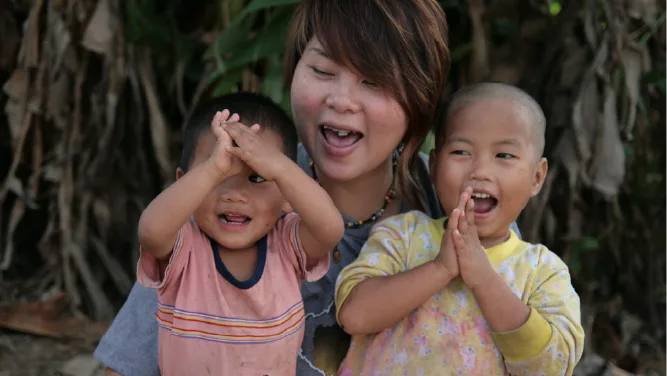
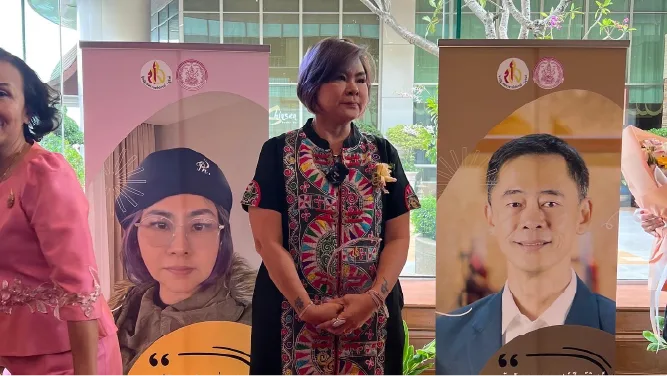
Not For Sale Project Director Kru Nam has been honored in Thailand for her contribution to protecting marginalized, stateless, and undocumented children in Chiang Rai, receiving an annual award recognizing people whose work has made a meaningful contribution to Thai society.
The award promotes volunteerism, community service, and work that supports people who might otherwise be excluded from protection. Kru Nam’s recognition acknowledges her work helping children regardless of ethnicity, caste, or religion, guided by the principles of children’s rights and human rights and, critically, seeking to keep stateless and undocumented children safe from human trafficking.
For Kru Nam, this is not the first time that decades of work protecting children have received national recognition. It is the latest acknowledgment of a body of work that began long before Not For Sale existed and ultimately led to the creation of Baan Kru Nam, the children’s village in northern Thailand where children affected by trafficking, exploitation, and statelessness can find long-term safety, education, healthcare, and support.
Explore Not For Sale’s work in Thailand
“We received this award because we’ve contributed to Thailand by helping marginalized children regardless of caste or religion, based on the principles of children’s rights and human rights, keeping these stateless, undocumented children safe from being trafficked.”
Recognition for a Lifetime of Work
The award is presented once a year to honor people who have contributed to Thailand and to encourage volunteer work and service to society. The Thailand Creative Content Agency (THACCA) identifies qualified individuals whose work has contributed to the country, while the Ministry of Culture organized this recognition specifically to honor people working in social and community service.
Previous recipients have included prominent figures from across Thai society, including performing artists, doctors, and people working in arts and culture, as well as individuals whose work has achieved recognition outside Thailand or who have used media to make a positive contribution to society.
Kru Nam’s inclusion brings the protection of marginalized and stateless children into that same national conversation. Her recognition acknowledges that defending children’s rights is itself an important contribution to Thailand, particularly when those children can be overlooked because of their nationality, ethnicity, or documentation status.
It follows previous national recognition for her work. In 2024, Kru Nam was honored for her contribution to protecting vulnerable and disadvantaged people and for her work combating human trafficking. That recognition followed years of advocacy and frontline work through Baan Kru Nam, reinforcing the significance of a model that has continued even within an exceptionally difficult trafficking environment.
Read Kru Nam’s story: The human rights activist who sparked a global movement
This latest award is therefore another point in a much longer story. Kru Nam is not being recognized for a single intervention or campaign, but for sustained work that has made protecting children in northern Thailand the focus of her life.
From Street Outreach to Baan Kru Nam
Kru Nam’s work began before Not For Sale existed. Originally an artist, she began working with street children in Chiang Mai through painting, using art as a way for children to express experiences they could not easily communicate in words. What emerged revealed lives shaped by exploitation, trafficking, and abuse, and the experience ultimately changed the direction of her life.
Her work evolved from reaching children on the streets to actively protecting those facing exploitation. She eventually moved closer to the Thai-Myanmar border and created a permanent community where children could live safely for the long term. That community became Baan Kru Nam, meaning “Kru Nam’s Home.”
Not For Sale has worked alongside Kru Nam in Thailand since 2007. Today, Baan Kru Nam provides year-round housing, education, nutrition, healthcare, and emotional support for children, including those from stateless and migrant communities. It is designed not simply as a temporary response after exploitation has occurred, but as a place where children can grow up with the stability and opportunities that reduce their vulnerability to trafficking in the first place.
Read more about life inside Baan Kru Nam
The distinction matters. Removing a child from immediate danger is only one part of preventing trafficking. Without a safe home, access to education, trusted adults, healthcare, and realistic possibilities for the future, many of the circumstances that created vulnerability can remain. Baan Kru Nam was built around addressing those conditions over the long term.
Protecting Children Regardless of Their Status
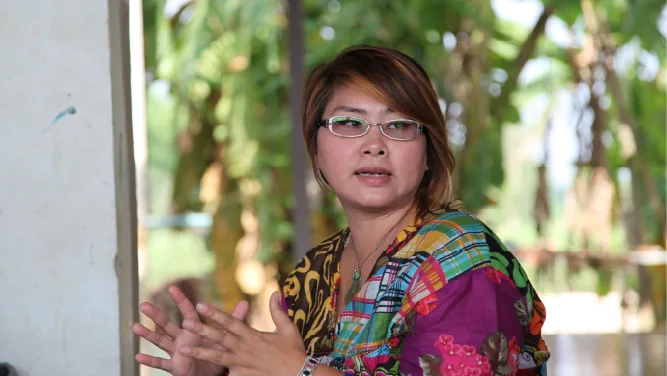
At the center of Kru Nam’s work is a principle that this latest award specifically acknowledges: a child’s right to safety should not depend on ethnicity, caste, religion, or documentation.
Stateless and undocumented children can face particular barriers because they may lack the formal legal identity and access to institutions that other children take for granted. In northern Thailand, where communities and families have long moved across borders connecting Thailand, Myanmar, and Laos, questions of nationality and documentation can profoundly affect a child’s ability to access education, healthcare, and other forms of protection.
The scale of the issue extends far beyond any one community. UNICEF and UNHCR have documented the continuing challenge of childhood statelessness in Thailand and the importance of legal identity in giving children access to education, healthcare, and protection. Read UNICEF and UNHCR’s work on childhood statelessness in Thailand
This is why education has become such an important part of the work at Baan Kru Nam. Protecting children from trafficking is not only about identifying traffickers. It is also about making sure children have a stable alternative to the circumstances that traffickers exploit.
The story of Meta, one of the stateless children supported by Kru Nam, illustrates what that can mean. After meeting Kru Nam as a young child selling flowers on the streets, Meta was given the opportunity to attend school and ultimately continued into higher education. Her story demonstrates why access to education and long-term support can become a powerful form of trafficking prevention.
Read Meta’s story and why the right to education matters
Why This Recognition Matters Now
The environment surrounding Baan Kru Nam has continued to change, but the need for protection has not disappeared. Northern Thailand sits within the wider Golden Triangle region, where Thailand meets Myanmar and Laos. Cross-border migration, displacement, statelessness, and organized criminal activity intersect across parts of the region, while new forms of exploitation have developed alongside older trafficking routes.
Kru Nam has long used the term “Gray Zones” to describe places along the borders between Thailand, Myanmar, and Laos where weak governance and criminal activity can create particularly dangerous conditions for people vulnerable to exploitation.
Understanding those systems is important because trafficking rarely begins with a single isolated criminal act. Vulnerability can build through displacement, poverty, lack of documentation, interrupted education, unsafe migration, and exclusion from legitimate economic opportunities. Criminal networks exploit those conditions.
The U.S. Department of State’s trafficking assessment for Thailand has similarly identified stateless people, ethnic minorities, migrants, and children among populations facing particular forms of trafficking vulnerability, while documenting the continuing use of coercion, deceptive recruitment, debt, and withheld identity documents by traffickers. Read the U.S. Department of State’s Trafficking in Persons profile for Thailand
Further reading: What are Gray Zones and how do they drive trafficking across Southeast Asia?
Recent events have reinforced why long-term community protection remains necessary. Severe flooding in northern Thailand in 2026 again demonstrated how environmental disruption can intersect with existing vulnerabilities, particularly for children and families already living with insecure documentation or limited resources.
Read our recent update on the Thailand floods and trafficking risk
Against that backdrop, recognizing people who have spent years building durable systems of protection matters. Kru Nam’s work does not begin and end when a trafficking case reaches public attention. It is built around creating conditions in which children have somewhere safer to go before exploitation can take hold.
Another Award, but the Same Purpose
For Kru Nam, the importance of the latest award lies in what it represents about the work itself.
“The important thing about this award is that the Ministry of Culture organized it specifically to honor people working in social/community service.”
That places the work of protecting stateless and undocumented children alongside other forms of contribution to Thai society that the award has historically recognized. It also reflects something fundamental about Kru Nam’s approach. Children are not protected at Baan Kru Nam because they possess the right passport, belong to a particular community, or follow a particular religion. They are protected because children have rights.
That principle has guided decades of work, from Kru Nam’s earliest encounters with children on the streets to the community that exists at Baan Kru Nam today. It has also earned her recognition before, including national acknowledgment of her human rights and anti-trafficking work.
The awards matter because they give visibility to that work. What matters more is what continues after the ceremony: children going to school, living in safety, receiving care, and being given the opportunity to build futures in which exploitation is not their only option.
For Not For Sale, this latest recognition of Kru Nam is a moment to celebrate someone whose work helped shape our organization from its beginning, while also drawing attention back to the reason that work exists. Protecting a child from trafficking should never depend on where they were born, the papers they carry, or whether the systems around them recognize them. At Baan Kru Nam, it does not.
Topics in this story
See all topics
Katie Wilde
More from Katie Wilde