Thailand Floods 2026: Renewed Flooding Puts Children and Vulnerable Communities at Risk
As northern Thailand faces renewed warnings for heavy rain and flooding, Kru Nam and the Not For Sale Thailand team are already delivering food and essential supplies to affected communities. The floods are creating urgent practical needs while also deepening the pressures facing children and families already vulnerable to poverty, displacement, statelessness and exploitation. This article examines what is happening now, why the risks extend beyond the immediate disaster, and how supporters can help Kru Nam and the Baan Kru Nam community respond.

BREAKING NEWS UPDATES
As northern Thailand recovers from weeks of flooding, forecasters are warning of another period of heavy to very heavy rain. In Chiang Rai and Nan, Not For Sale Thailand director Kru Nam and the community around Baan Kru Nam are already mobilizing supplies. The immediate priority is getting help to families affected by the floods, but the longer-term concern is what happens when displacement, lost income and interrupted education deepen vulnerabilities that traffickers and exploitative recruiters can exploit.
Updated August 27, 2026
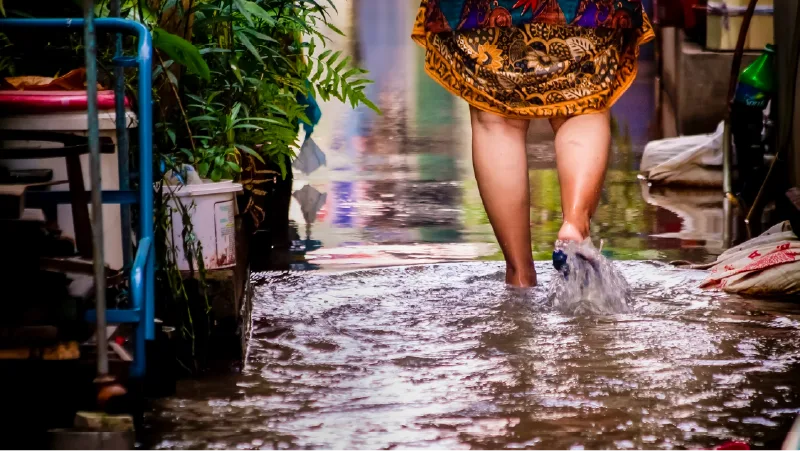
Northern Thailand is facing another dangerous period of weather after weeks of heavy rain, flash flooding and overflowing waterways affected communities across the region. The Thailand floods of 2026 have already reached provinces including Chiang Rai and Nan, damaging homes, disrupting transport and forcing emergency responses in communities where many families were living with economic insecurity long before the rain began. On August 21, Thailand’s Department of Disaster Prevention and Mitigation reported that 73,797 people across 23,823 households had been affected by continuing floods in six provinces, with two deaths recorded in Nan Province. Although conditions had begun to improve in some areas, the danger has not passed. Thailand’s Meteorological Department has since warned that another period of heavy to very heavy rain is expected between August 29 and September 2, with northern Thailand among the areas at risk of further flash flooding, overflowing waterways and landslides.
For Not For Sale, this emergency is also closely connected to the place where the organization’s work began nearly two decades ago. In northern Thailand, Not For Sale works alongside Kru Nam, the activist who established Baan Kru Nam, a children’s village near Mae Sai in Chiang Rai Province. The village provides long-term housing, education, food, medical care and support for children who have survived trafficking or who face serious risks of exploitation, including children from stateless and migrant communities around the Golden Triangle. This week, Kru Nam has also been responding directly to the flood emergency beyond the village itself, traveling into affected areas in Nan Province, purchasing supplies, preparing relief bags and helping move assistance by truck and boat to communities where normal access has been disrupted.
The immediate need is practical. Families need food, transport and basic supplies, and further heavy rain could make reaching some communities more difficult. Yet disasters such as these rarely end when the water recedes. Flooding can destroy household income, interrupt schooling, separate people from established community networks and push families toward increasingly precarious choices. For children already living with statelessness, insecure migration status, poverty or disrupted access to education, those pressures can remove some of the protections that make exploitation less likely. That is why Not For Sale is urgently asking supporters to help Kru Nam and her team continue their response while northern Thailand remains under threat from further rainfall.
What This Article Covers
- What is happening in the Thailand floods in August 2026
- Why northern Thailand remains at risk from further heavy rainfall
- What is happening in Chiang Rai and Nan Province
- How Kru Nam and the Baan Kru Nam community are responding
- Why flooding and displacement can increase vulnerability to trafficking and exploitation
- Why stateless and migrant children can face particular risks during disasters
- How readers can support Not For Sale’s emergency response in Thailand
Key Takeaways
- Flooding had affected more than 73,000 people across six Thai provinces by August 21, with Nan among the most seriously affected areas.
- Thailand’s Meteorological Department is warning of further heavy to very heavy rain between August 29 and September 2.
- Kru Nam and her team are currently delivering food and essential supplies to flood-affected communities in northern Thailand, including Pua District in Nan Province.
- Baan Kru Nam supports children who have survived or face significant risks of trafficking, including children from stateless and migrant communities.
- Floods do not directly cause trafficking, but displacement, lost income, interrupted education and family instability can intensify vulnerabilities that traffickers and exploitative recruiters use.
- Thailand continues to have a substantial stateless population, including more than 150,000 children according to UNICEF data published in 2026.
- Effective disaster response in vulnerable communities requires both immediate relief and longer-term protection.
Why the Thailand Floods Matter Now
August has brought repeated periods of dangerous rainfall to northern Thailand, and the current emergency is not the result of a single isolated storm. Thailand’s official weather reporting recorded flooding in Chiang Rai on August 17 and 18 and in Nan from August 19 through August 23, alongside flooding in several other northern and northeastern provinces during the same period. In Nan, the situation became severe enough for authorities to declare Pua District an emergency disaster assistance zone after flash flooding affected 12 subdistricts and more than 100 villages. Roads, homes and local services have all been affected as water moved through communities across the province.
Pua is also where Kru Nam has been working this week. Updates shared with Not For Sale describe her team preparing further distributions of relief supplies and traveling toward affected communities with bags containing food and other basic necessities. Trucks are being used where roads remain accessible, while boats are needed where floodwater has made ordinary transport impossible. It is a practical, localized response shaped by conditions on the ground rather than a centralized relief operation, and it is taking place while the weather outlook remains uncertain.
The Thai Meteorological Department’s August 27 warning adds to that urgency. From August 29 through September 2, a monsoon trough is expected to move across northern and upper northeastern Thailand while a relatively strong southwest monsoon affects the country. Forecasters have warned that accumulated rainfall could trigger additional flash floods, overflowing waterways and landslides, particularly in foothill areas, near waterways and across low-lying communities. For families already recovering from earlier floods, another spell of intense rain can turn an emergency into a prolonged crisis, particularly where food stocks, savings, crops, vehicles and household possessions have already been lost or damaged.
What Is Happening in Northern Thailand?
The flooding across northern Thailand is being driven by sustained monsoon conditions that have repeatedly brought heavy and very heavy rain to the region. During August, a monsoon trough across northern and northeastern Thailand, combined with the southwest monsoon, created periods of intense rainfall that caused runoff, flash flooding and rivers to overflow their banks. The effects have varied considerably between provinces, but the cumulative picture is one of repeated disruption rather than a single flood event followed by a straightforward recovery.
Nan Province has experienced some of the most serious effects. By August 20, more than 30,000 people had reportedly been affected there, while flooding in Pua disrupted important road connections and transport serving local communities. Two deaths were subsequently reported in the province. Chiang Rai has also experienced flooding during August and remains within the broader northern region exposed to further heavy rainfall. That is particularly relevant to Not For Sale because Baan Kru Nam is located near Mae Sai in Chiang Rai Province, close to Thailand’s borders with Myanmar and Laos, in a part of the country where environmental hazards intersect with migration, statelessness, poverty and long-standing trafficking risks.
The situation remains fluid. Some communities are cleaning up while others are still dealing with water and damaged infrastructure, and further rainfall could change local conditions quickly. This makes access one of the central challenges facing relief organizations and community networks. Food and emergency supplies may be available, but getting them to people becomes more difficult when roads are damaged or submerged. Kru Nam’s current response reflects this reality, combining road transport with boats and adapting distributions according to where assistance can physically reach.
Baan Kru Nam and the Work of Not For Sale in Northern Thailand
Baan Kru Nam exists because the risks facing children in this part of Thailand began long before the current floods. Kru Nam had been working with children affected by trafficking, exploitation and extreme vulnerability before Not For Sale was established, and her work became an important part of the organization’s origins. She eventually created a permanent community near Mae Sai where children could receive not simply temporary shelter but the longer-term stability needed to rebuild their lives.
Not For Sale has worked alongside Kru Nam in Thailand since 2007. Baan Kru Nam now provides housing, education, nutrition, healthcare and ongoing support for children, including those from stateless and migrant communities. The model is based on continuity, because removing a child from an immediate exploitative situation is only one part of protection. Without secure housing, education, documentation, trusted adults and realistic economic opportunities, the conditions that created vulnerability can remain in place.
The location of the village is also important. Northern Thailand forms part of the wider Golden Triangle region bordering Myanmar and Laos, an area shaped by cross-border migration, uneven economic development and complex questions of nationality and documentation. Organized criminal networks also operate throughout parts of the wider Mekong region, creating an environment in which people moving for work or safety can encounter significant exploitation risks. It is within this context that Kru Nam and Baan Kru Nam have developed their work, combining support for children who have already experienced exploitation with attempts to prevent other children from becoming vulnerable to it.
How Flooding Can Increase Vulnerability to Human Trafficking
There is currently no evidence demonstrating that the August floods have caused an increase in trafficking cases in northern Thailand, and it would be wrong to suggest otherwise. The connection between disasters and trafficking is more complicated. Flooding does not create traffickers, nor does displacement inevitably lead to exploitation, but research from international organizations shows that environmental disasters can intensify economic and social pressures that are already associated with trafficking risk.
UNODC has documented how environmental degradation and climate-related disasters can contribute to lost livelihoods, worsening poverty and displacement. When households lose income or are forced to move, people may become more dependent on informal employment, unfamiliar recruiters, migration brokers or offers of work that they would previously have rejected. These circumstances can reduce an individual’s bargaining power and make it harder to assess whether an employment or migration opportunity is safe. The important distinction is that the disaster itself is not the direct cause of trafficking. Instead, it can deepen the circumstances in which exploitation becomes easier.
For children, the risks can be different again. Floods can interrupt education, separate families temporarily, move children away from familiar teachers and community workers, and place them in crowded or unfamiliar accommodation. UNICEF has repeatedly warned that children displaced by disasters can face increased exposure to abuse, exploitation, child labor and trafficking when normal protection systems break down. In northern Thailand, these concerns are particularly relevant for children who already experience barriers linked to poverty, insecure migration status or statelessness.
A family whose income disappears after a flood may become more willing to consider work offered in another province or across a border. A child whose school remains closed may spend longer outside the education system. A young person living without secure documentation may be reluctant to approach authorities or may find formal employment inaccessible. None of these circumstances means exploitation will happen, but together they can narrow the range of safe options available. It is within those narrowing choices that traffickers and exploitative recruiters often operate.
Why Stateless Children Can Face Greater Risks
Statelessness has been one of the structural vulnerabilities at the center of Kru Nam’s work for many years. Thailand has made significant progress in improving legal status and documentation for stateless people, but large numbers of children continue to live without recognized nationality. UNICEF reported in 2026 that more than 509,000 stateless people were recorded in Thailand as of December 2025, including more than 150,000 children.
Lack of secure legal status can affect access to education, healthcare, legal employment and other public services, although the precise effects differ according to an individual’s circumstances and documentation. Research by UNICEF and UNHCR has identified continuing barriers for stateless children in Thailand, including difficulties progressing through education and securing the documentation necessary to access opportunities later in life. Legal identity is therefore more than an administrative issue. It can form part of the wider protection system surrounding a child.
A natural disaster can expose gaps in that system very quickly. When families are displaced, documentation can be lost, schools can close and people may move temporarily into different districts or communities. Children who already have a fragile connection to formal institutions can become even less visible. That is one of the reasons the work at Baan Kru Nam is designed around long-term stability. The aim is not simply to respond when exploitation has already occurred, but to maintain the conditions that reduce the likelihood of children becoming vulnerable again.
The Systems Behind the Harm
Human trafficking is often presented as a crime that begins with an individual trafficker approaching an individual victim. In practice, exploitation frequently develops within a much wider set of circumstances. Poverty can limit choices, as can lack of documentation, interrupted education, migration restrictions and the absence of safe employment. Conflict and displacement can make those pressures more severe, and a disaster can narrow available choices further.
These structural factors are particularly relevant across Southeast Asia, where migration for work routinely crosses national borders and where legitimate recruitment systems can exist alongside informal and exploitative ones. The International Labour Organization and other international agencies have repeatedly highlighted the need for stronger cross-border cooperation because traffickers and exploitative recruiters can operate across jurisdictions while protection systems remain divided between them. This is particularly important in the Greater Mekong region, where people may move between countries because of work, family connections, economic pressure or instability.
Not For Sale has previously examined the growth of what Kru Nam describes as “Gray Zones” around parts of the border region between Thailand, Myanmar and Laos, where weak oversight and organized criminal activity can create conditions for serious exploitation. Those systems existed before the current floods and will continue after them. What flooding can do is place more people in a position where they have fewer resources with which to resist unsafe offers or navigate difficult decisions.
The floodwater therefore does not create the trafficking economy. It collides with an existing one.
Is Climate Change Causing the Thailand Floods?
It is important to distinguish between the immediate causes of the current flooding and the wider climatic trends affecting Thailand. The Thai Meteorological Department attributes the present rainfall to monsoon systems and accumulated precipitation affecting northern and other parts of the country. Without a dedicated scientific attribution study, it would be inaccurate to claim that climate change caused this specific flood event.
The wider climate context nevertheless matters. The World Bank identifies Thailand as highly exposed to physical climate risks including flooding, drought, extreme heat and coastal erosion. Its Thailand Country Climate and Development Report warns that changing climatic conditions are increasing the country’s exposure to disasters and that poorer households are likely to experience disproportionate consequences because they have fewer resources with which to recover.
Floods and storms have historically been among Thailand’s most frequent natural hazards, and the question facing the country is therefore not whether flooding is new, but whether infrastructure, public services and social protection systems are sufficiently prepared for the risks ahead. Stronger flood prevention, early-warning systems, resilient infrastructure and support for vulnerable households all form part of that response.
For Not For Sale, this is where environmental harm and human exploitation increasingly intersect. Environmental pressure can remove livelihoods, force migration and deepen inequality. Those consequences do not automatically create trafficking, but they can alter the economic and social landscape in ways that allow exploitation to flourish. Understanding that relationship is important if prevention is going to address more than the final stage of the crime.
The Human Impact of the Floods
Statistics can establish the scale of a disaster, but they cannot fully describe what recovery means for the people living through it. A flooded household may initially need food, drinking water, medicine and a safe place to sleep, but the costs continue long after the immediate emergency. Families may need to replace clothing, household equipment or transport, repair damaged homes, recover lost crops or survive periods without work. Children may lose school days or move temporarily to another community, while adults may find that jobs or businesses they relied upon are no longer operating.
These consequences accumulate quickly for households with little financial margin. A relatively small loss can become significant when savings are limited, and repeated flooding can make recovery harder each time. This is why immediate relief cannot be understood separately from longer-term vulnerability. Delivering food today may prevent a family from having to take on debt tomorrow, just as restoring access to education can help keep a child connected to adults and institutions that form part of their protection network.
Kru Nam’s response this week has extended beyond Baan Kru Nam into communities experiencing those immediate pressures. Her team has been purchasing supplies, assembling relief bags and moving assistance into affected areas. An update from Pua District on August 26 described preparations for another distribution of around 100 bags before the team set out again. Children and young people connected to Baan Kru Nam have also been helping prepare supplies, turning a community originally created to protect vulnerable children into part of a wider local response.
What Thai Authorities Are Doing
Thailand’s national and provincial authorities have been coordinating emergency responses across affected areas, deploying personnel, monitoring flood conditions and providing assistance to communities at risk. The Department of Disaster Prevention and Mitigation has been involved in response efforts, while government agencies have urged residents in vulnerable locations to follow official warnings, prepare for evacuation where necessary and move essential belongings and documentation away from floodwater.
Authorities have also emphasized the need to provide additional assistance to people who may struggle to evacuate independently, including children, older people and people with disabilities. In Nan, provincial authorities established emergency coordination and information measures while Pua District was declared an emergency disaster assistance area following severe flash flooding.
These official systems are essential during a large-scale emergency, but local networks also play an important role, particularly in remote communities where road conditions can delay outside assistance. People who already know an area can identify which routes remain usable, which households may have been overlooked and where supplies are most urgently needed. Kru Nam’s response sits within this local layer of the wider relief effort.
What Still Needs to Change
Emergency relief can address what a family needs today, but protecting people from exploitation requires planning for what comes next. Disaster response should therefore include child protection alongside physical evacuation, shelter and food. Schools need ways of maintaining contact with displaced children, documentation services need to remain accessible, and migrant and stateless families need to be able to seek support without finding themselves excluded from the systems designed to help them.
Livelihood recovery is also crucial. The longer households remain without reliable income, the greater the pressure to accept work that may involve unsafe recruitment, excessive debt or migration into unfamiliar environments. Supporting families to regain economic stability is therefore not separate from anti-trafficking prevention. It can be one of its most important components.
Thailand will also need to continue investing in resilience to flooding and extreme weather. The World Bank has called for stronger flood mitigation, early-warning systems, more resilient infrastructure and social protection capable of responding quickly when households experience climate-related shocks. For organizations working against trafficking, the lesson is equally important. Prevention cannot begin only when someone has already been exploited. It has to include the social and economic conditions that determine how much choice a person has before a trafficker ever enters the picture.
What Not For Sale’s Perspective Adds
Not For Sale began working in Thailand alongside Kru Nam because her approach recognized that protecting children requires much more than removing them from an immediate dangerous situation. A child also needs somewhere secure to live, access to education and healthcare, trusted adults, legal support where necessary and a realistic path toward an independent future. Baan Kru Nam developed around that understanding and continues to provide year-round support for children who have experienced trafficking or who face serious risks of exploitation.
The current flood response follows the same underlying principle. Kru Nam and her team are not waiting to see whether displacement and financial hardship eventually appear in trafficking statistics. They are responding while families are losing food, income, mobility and security, because those are precisely the moments when vulnerability can begin to deepen.
That does not mean every household receiving flood assistance is at risk of trafficking, nor should emergency relief be presented solely through that lens. Flood victims need support because they have experienced a disaster. Yet in a region where Kru Nam has spent decades working with children affected by exploitation, the value of strengthening families and communities before vulnerability becomes a crisis is already well understood.
An Urgent Appeal to Support Kru Nam and the Thailand Flood Response
Not For Sale is now asking supporters to help Kru Nam and her team continue getting assistance into communities affected by the floods. Supplies are already being purchased and packed, vehicles and boats are being used to reach people where possible, and members of the Baan Kru Nam community are helping support the response. Further rain is forecast, which means the opportunity to move supplies safely into some areas may become more limited.
The current Not For Sale flood appeal estimates that a donation of $15 can provide a relief bag containing rice and dry food, $20 can help transport supplies by boat into communities affected by flooding, and $25 can provide essential supplies for a family. Approximately $1,500 can support a full distribution run, including transport and relief materials. The emergency fundraising window is currently scheduled to close on Saturday, August 29, 2026, making immediate support particularly valuable while Kru Nam and her team are already operating in affected areas.
Those who are able to contribute can support the response through Not For Sale’s dedicated Thailand Flood Relief campaign. Donations will help the team continue providing practical assistance while the situation in northern Thailand develops.
What Readers Can Do
People outside Thailand cannot influence the rainfall, but they can help ensure the response to it is informed, responsible and sustained. Following official weather and emergency information is important, particularly while conditions remain changeable, and readers should be cautious about sharing images, casualty reports or claims that cannot be verified. Supporting organizations that are already embedded in affected communities can also make a practical difference, because those networks often understand local access, needs and vulnerabilities in ways that are difficult to reproduce from outside.
For the Not For Sale community, the most immediate action is to support Kru Nam and the Thailand team while relief operations are underway. The same network that has spent years protecting children through Baan Kru Nam is now helping families respond to a wider emergency. Supporting that work means helping maintain both the immediate flow of essential supplies and the wider community stability that becomes increasingly important when disaster places additional pressure on people who were already vulnerable.
Floodwater eventually disappears from roads, but the consequences of a disaster can remain much longer. They can be found in a family’s lost income, a damaged home, a child’s interrupted education, a destroyed crop or the difficult decisions people are forced to make when savings and security begin to disappear. In communities already navigating statelessness, migration and trafficking risk, those consequences can extend well beyond the moment a flood reaches its highest point.
Northern Thailand is now entering another period of uncertainty. Communities that have spent August evacuating, cleaning and rebuilding are being warned to prepare for further heavy rainfall, while local responders including Kru Nam and her team continue trying to reach families with the supplies they need. The immediate objective is to get help to people before worsening weather makes that harder. The longer-term objective is equally important: ensuring that when disaster narrows the choices available to families and children, safety, community and opportunity do not disappear with them.
That principle has been at the heart of Baan Kru Nam for nearly two decades. Today, in the middle of another emergency in northern Thailand, it matters again.
$1,500 covers a run like tonight’s: gas for the boats and truck, and the materials that go in the bags.
If you’re able to help, the response window for this campaign closes Saturday, August 29.
Topics in this story
See all topics
Katie Wilde
More from Katie Wilde