World Day Against Trafficking in Persons 2026: Why This Year’s Official Human Trafficking Prevention Day Matters
On 30 July 2026, the UN’s World Day Against Trafficking in Persons will spotlight people trafficked into scam compounds and forced to commit online fraud.

World Day Against Trafficking in Persons 2026 falls on Thursday, 30 July. This year, the United Nations Office on Drugs and Crime has chosen the theme “Trapped behind the scam”, focusing global attention on people trafficked into online fraud operations and forced to commit cyber-enabled crimes under coercion, surveillance, debt and fear.
The day is often searched for as World Prevention of Human Trafficking Day or World Human Trafficking Prevention Day, but its official United Nations name is World Day Against Trafficking in Persons. It was created to raise awareness of the situation of trafficking victims and to promote and protect their rights. In 2026, the day arrives at a moment when trafficking is no longer only being discussed in the familiar language of sexual exploitation, forced labour or domestic servitude. It is also being exposed as part of a fast-moving digital criminal economy, where organised crime groups recruit through fake job adverts, move people across borders, lock them inside scam compounds and force them to target a second set of victims online.
This matters because prevention now has to mean more than awareness. It has to mean early identification, stronger labour protections, safer migration routes, better technology governance, financial crime enforcement, victim-centred policing and long-term alternatives for communities pushed into vulnerability by poverty, conflict, displacement and environmental harm.
What This Article Covers
- What World Day Against Trafficking in Persons 2026 is and why it is observed on 30 July.
- Why the official 2026 UNODC theme, “Trapped behind the scam”, focuses on scam compounds and forced criminality.
- How human trafficking is defined under international law.
- What the latest global evidence shows about trafficking, forced labour, children and online exploitation.
- How digital fraud, organised crime, debt, migration risk and weak enforcement are changing the trafficking landscape.
- How environmental harm, displacement and climate pressure can increase vulnerability to exploitation.
- What governments, institutions, civil society and readers can do to support prevention.
Key Takeaways
- World Day Against Trafficking in Persons is the official UN observance held every year on 30 July.
- The 2026 theme is “Trapped behind the scam”, focusing on trafficking for forced criminality in cyber-enabled fraud operations.
- UNODC’s latest global report found a 25 percent rise in detected trafficking victims in 2022 compared with 2019, with forced labour cases rising sharply.
- Children now account for 38 percent of detected trafficking victims, according to UNODC’s 2024 Global Report.
- The ILO, IOM and Walk Free estimated that 50 million people were living in modern slavery in 2021, including 28 million in forced labour and 22 million in forced marriage.
- INTERPOL has warned that human trafficking-fuelled scam centres have expanded beyond Southeast Asia, with victims trafficked from 66 countries into online scam operations as of March 2025.
- Prevention requires action across criminal justice, labour rights, technology platforms, financial systems, migration policy, survivor support and community resilience.
Why This Story Matters Now
The 2026 World Day Against Trafficking in Persons comes at a time when the shape of trafficking is changing in ways that many legal systems, technology platforms and public awareness campaigns have not fully caught up with.
UNODC’s 2026 campaign describes transnational organised crime groups trafficking and exploiting thousands of people, forcing them to take part in industrial-scale financial fraud. The agency links this form of trafficking to cybercrime, financial fraud, money laundering and corruption.
This is not a marginal issue. UNODC says victims are deceived by fake job adverts, transported to illegal compounds, coerced into running online fraud operations and controlled through quotas, surveillance, violence and debt bondage. The scams include romance fraud, crypto fraud and other cyber-enabled schemes targeting people around the world.
The wider evidence is also moving in the wrong direction. UNODC’s 2024 Global Report found that detected victims of trafficking rose by 25 percent in 2022 compared with 2019. Forced labour trafficking rose by 47 percent over the same period. Child victims detected globally increased by 31 percent, with a 38 percent increase among girls.
The numbers do not measure the full scale of trafficking. They measure detected victims, meaning people who have come to the attention of authorities or formal identification systems. Many people remain invisible because they are afraid to report, unable to escape, misidentified as offenders, excluded by migration status, or trapped in sectors and locations where inspection is weak. That is why World Day Against Trafficking in Persons should not be treated as a symbolic date alone. It is a yearly test of whether institutions are keeping pace with exploitation as it evolves.
The Background
Human trafficking is defined in the UN Trafficking in Persons Protocol, often called the Palermo Protocol, as the recruitment, transportation, transfer, harbouring or receipt of persons by means such as force, coercion, abduction, fraud, deception, abuse of power, abuse of vulnerability or payments to a person in control of another person, for the purpose of exploitation.
The definition matters because trafficking is often misunderstood. It does not always involve crossing a border. It does not always involve physical chains. It can happen through manipulation, debt, confiscated documents, threats to family members, psychological control, legal exclusion or the abuse of someone’s need for work, safety or survival.
Modern slavery is a broader umbrella term that includes forced labour, forced marriage, debt bondage and other forms of extreme exploitation. The 2022 Global Estimates of Modern Slavery, produced by the ILO, Walk Free and IOM, estimated that 50 million people were living in modern slavery in 2021. Of those, 28 million were in forced labour and 22 million were in forced marriage.
World Day Against Trafficking in Persons was established by the UN General Assembly through resolution A/RES/68/192. The purpose was to raise awareness of the situation of trafficking victims and promote and protect their rights.
That purpose remains urgent. But in 2026, the focus is sharper. The official theme recognises that some trafficking victims are now being forced not only into labour or sexual exploitation, but into criminal activity, particularly online fraud. This creates a dangerous double harm. People trafficked into scam compounds are victims of trafficking, while people targeted by the scams suffer financial and emotional harm. The same criminal system damages both.
What Is Happening
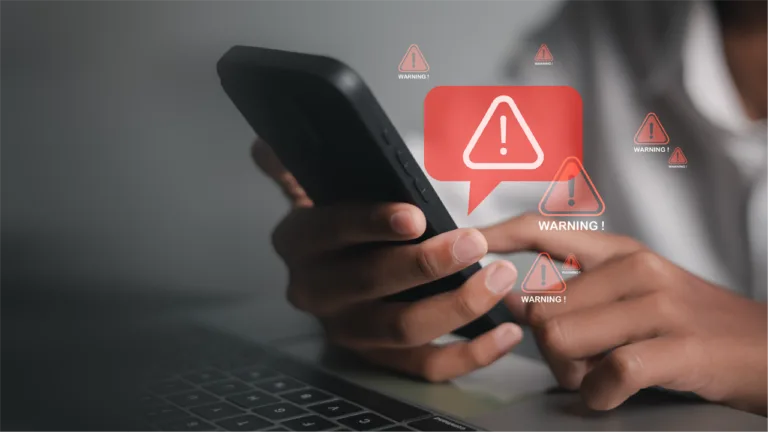
The 2026 theme, “Trapped behind the scam”, focuses on trafficking for forced criminality, especially in online scam operations. According to UNODC, victims are often recruited through fake job adverts promising legitimate work abroad. After arrival, they may be held in illegal compounds and forced to run fraud schemes, including romance scams and cryptocurrency fraud.
INTERPOL has described the expansion of scam centres as a globalising crime trend. Its 2025 update said victims from 66 countries had been trafficked into online scam centres as of March 2025, with 74 percent of identified victims brought to centres in Southeast Asia, the original hub region. INTERPOL also warned that scam centres are increasingly being observed in other regions, including the Middle East, West Africa and Central America.
The mechanics are often similar. A person is offered a job in customer service, sales, technology, translation, hospitality or online marketing. The role appears legitimate. Travel may be arranged. Once the person arrives, the situation changes. Their documents may be taken, movement restricted, debts imposed and communication monitored. They may be forced to meet fraud quotas, punished for failure and threatened if they try to leave.
UNODC estimates that in East and Southeast Asia, financial losses from scams targeting victims in 2023 ranged between US $18 billion and US $37 billion, with a high proportion attributed to scams committed by organised crime groups located in the region.
This is why the 2026 theme is significant. It moves the public conversation away from the idea that human trafficking exists only in physical workplaces, border crossings or private homes. It shows how exploitation now operates through digital platforms, encrypted communications, cryptocurrency flows, online job markets, social media and transnational organised crime networks.
How This Connects to Human Trafficking, Modern Slavery and Exploitation
Trafficking for forced criminality is one of the clearest examples of how modern slavery adapts to profit. The purpose is not simply to exploit someone’s labour in a conventional workplace. It is to force that person to participate in a criminal enterprise that benefits the trafficker.
UNODC’s 2024 Global Report found that trafficking for forced criminality, including online scams, rose from 1 percent of detected victims in 2016 to 8 percent in 2022.
The exploitation can involve several linked forms of control.
Recruitment often begins with deception. Fake job adverts may promise stable work, high salaries, accommodation or travel support. People who are unemployed, underpaid, displaced, indebted or responsible for dependants may be particularly vulnerable to these offers.
Coercion begins when the promised work does not exist, or when the person is moved to a location where they cannot leave freely. Traffickers may impose invented travel debts, confiscate passports, monitor phones, threaten police involvement, use violence or threaten the person’s family.
Forced labour occurs when the person is made to work under threat or penalty. In scam compounds, the work may involve messaging strangers, building fake relationships, promoting fraudulent investment platforms or persuading victims to transfer money.
Forced criminality occurs because the trafficked person is compelled to commit acts that may be illegal, even though they are being controlled by another party. This creates a serious protection problem. If authorities identify the person only as a fraud offender, rather than as a trafficking victim, they may be arrested, detained, deported or prosecuted instead of protected.
The Council of Europe’s anti-trafficking expert group, GRETA, warned in June 2026 that trafficking for criminal exploitation is rising in Europe and is often linked to drug trafficking, property crime, money laundering, document fraud and online scams. GRETA also stressed that failure to identify trafficked people as victims can lead to arrest, prosecution, imprisonment or deportation.
This is a central issue for prevention. A system that criminalises victims makes trafficking easier to sustain. A system that identifies coercion, follows the money, protects survivors and prosecutes those who control the operation is more likely to disrupt the business model.
How This Connects to Ecocide and Environmental Harm
World Day Against Trafficking in Persons is not an environmental observance. But the systems that increase trafficking risk are often linked to environmental harm.
UNODC has identified poverty, conflict and climate as factors leaving more people vulnerable to exploitation. Its 2024 report specifically connects displacement, insecurity and climate change with trafficking vulnerabilities, particularly in parts of Africa where children are more frequently detected as victims.
Environmental harm can increase trafficking risk in several ways. When land is degraded, forests are destroyed, fisheries collapse, crops fail or communities are displaced by storms, droughts or floods, people may lose income and become more dependent on risky migration or informal recruitment. When legal livelihoods disappear, deceptive job offers can become more persuasive. When families are separated by disaster or conflict, children may become easier to recruit or exploit.
There is also a direct link between trafficking and environmental crime. INTERPOL notes that the same routes used to traffic victims to scam centres can also be used to traffic drugs, firearms and protected wildlife species. It has also observed that areas where scam centres have emerged in Southeast Asia are key hubs for trafficking endangered species such as tigers and pangolins.
This does not mean every environmental crisis produces trafficking, or that every trafficking case is linked to ecocide. The evidence is more precise than that. Environmental destruction, climate pressure and extractive economies can weaken the conditions that protect people from exploitation. In places where organised crime, corruption, weak labour enforcement and displacement overlap, trafficking risk rises.
Who Is Most at Risk
People are not trafficked because they are weak. They are trafficked because someone exploits a gap in protection, opportunity, legal status, income, safety or information.
UNODC’s latest global data shows that women and girls remain the majority of detected trafficking victims, accounting for 61 percent of detected victims worldwide in 2022. Girls are still most often detected in trafficking for sexual exploitation, while boys are frequently detected in forced labour and other forms of exploitation, including forced criminality and begging.
Children face specific risks because they depend on adults, institutions and systems for protection. Unaccompanied and separated children, children affected by conflict, children in poverty, children out of school and children without documentation can be especially exposed to exploitation.
Migrants are also at risk, especially when they move through informal channels, owe recruitment debts, lack legal status, cannot access safe work, or fear authorities. In scam-centre trafficking, victims may include educated young adults who believe they are taking legitimate jobs abroad. The risk is not limited to one class, country or profile.
People affected by homelessness, unemployment, disability, addiction, precarious migration status or lack of family support can also face heightened risk of forced criminality. GRETA specifically identified poverty, homelessness, unemployment, precarious migration status, disabilities and addictions as vulnerability factors exploited by traffickers in criminal exploitation cases.
The key point is structural. Trafficking prevention is not only about warning individuals to be careful. It is about reducing the conditions that make exploitation profitable and escape difficult.
The Systems Behind the Harm
Human trafficking is often described as the work of individual traffickers. That is true in part, but incomplete. The harm continues because systems allow it to continue.
The economic system rewards cheap labour and hidden work. The ILO estimated in 2024 that forced labour generates US $236 billion in illegal profits annually. These profits represent wages stolen from workers through coercive practices.
The recruitment system often allows abusive intermediaries to operate across borders. Fraudulent job adverts, recruitment fees, debt and deceptive contracts can pull people into situations they cannot leave.
The digital system enables scale. Criminal groups can advertise jobs, groom victims, impersonate employers, create fake profiles, move money and target fraud victims across borders. INTERPOL has warned that artificial intelligence is being used in some scamming cases, including fake job adverts and deepfake profiles.
The financial system can fail to detect or disrupt criminal proceeds. Scam operations are connected to money laundering and cyber-enabled fraud, which means anti-trafficking work must involve banks, payment platforms, cryptocurrency exchanges and financial intelligence agencies, not only police and social services.
The legal system can misidentify victims. When someone is forced to commit a crime, authorities may see only the offence, not the coercion behind it. GRETA’s warning on non-punishment provisions is important because victim identification directly affects whether a trafficked person is protected or punished.
The environmental and political systems also matter. Conflict, corruption, land loss, climate pressure and weak governance can create spaces where organised crime gains influence and people lose safe alternatives.
The Human Impact
Behind every trafficking category is a person whose choices have been narrowed by force, fraud or coercion.
In scam-centre trafficking, the harm is layered. A person may believe they are travelling for legitimate work, only to find themselves confined, monitored and forced to deceive others online. They may fear violence, debt, arrest, deportation or retaliation against family members. They may be seen by the outside world as a criminal, even when they are operating under threat.
There is also another group of victims: the people targeted by the scams. They may lose savings, homes, relationships and trust. The crime is therefore not a simple story of offenders and victims. It is a coercive system that forces one set of victims to harm another set of victims for the profit of organised crime.
For survivors, the impact can continue after escape. They may need legal protection, immigration support, medical care, trauma-informed services, safe housing, income, family reunification, debt relief and help clearing criminal records or allegations connected to offences they were forced to commit.
A serious prevention agenda must recognise that rescue alone is not recovery. Leaving exploitation is only the beginning of rebuilding safety, autonomy and livelihood.
What Governments and Institutions Are Doing
UNODC says it is supporting efforts across Southeast Asia to strengthen victim identification, investigations and prosecutions connected to trafficking for forced criminality, cyber-enabled fraud and money laundering. It also says it is advising countries on legislative changes needed to prosecute the wider poly-criminality associated with transnational organised crime.
The 2026 UNODC campaign also points to the UN Convention against Cybercrime, adopted by the General Assembly in December 2024, as a framework for faster international cooperation and standardised collection and sharing of electronic evidence in digital crime cases.
INTERPOL has issued warnings on the globalisation of scam centres and has documented operations in which police identified trafficking victims forced into fraud. It has called for stronger information exchange between law enforcement agencies, NGOs and technology companies.
In Europe, GRETA has urged governments to strengthen legal frameworks and practice around the non-punishment of trafficking victims compelled to commit unlawful acts. It noted that 22 of 47 countries evaluated had adopted specific legal provisions concerning non-punishment, while warning that progress remains incomplete.
The European Union continues to collect trafficking data through Eurostat. Its January 2026 update reported 9,678 registered trafficking victims in the EU in 2024, with nearly two-thirds being women or girls. Eurostat also noted that official figures reflect detection and registration systems, meaning they do not measure the total occurrence of trafficking.
These efforts matter, but the gap between policy and protection remains large. Trafficking networks move quickly. Legal systems move slowly. Victim support is often underfunded. Digital evidence crosses borders faster than investigators can obtain it. Prevention requires more than statements of concern.
What Still Needs to Change
First, victim identification must improve. People forced into fraud, theft, drug movement or other criminal activity should be screened for trafficking indicators before they are treated as offenders.
Second, recruitment systems need stronger oversight. Fake job adverts and exploitative labour brokers are central to many trafficking cases. Governments and platforms should treat fraudulent recruitment as an early warning signal, not merely a consumer protection issue.
Third, survivor support must be long term. Safe housing, legal advice, mental health care, immigration protection, education and real employment pathways are not optional extras. Without them, people can be pushed back into vulnerability.
Fourth, financial investigations must become central to anti-trafficking work. Trafficking is profit-driven. Following money flows, freezing assets and prosecuting laundering networks can disrupt the business model more effectively than low-level arrests alone.
Fifth, technology companies need clearer responsibilities. Platforms used for recruitment, grooming, job advertising, messaging, payments or impersonation should be part of prevention and detection, while respecting privacy and avoiding measures that endanger vulnerable users.
Sixth, environmental and economic prevention must be taken seriously. Communities facing land loss, displacement, climate shocks or extractive exploitation need safe livelihoods and legal protection before traffickers arrive with false promises.
Finally, public awareness has to become more accurate. Trafficking is not only a stranger at a border, a locked room or a dramatic abduction. It can begin with a job advert, a direct message, a debt, a disaster, a recruitment fee or a promise of opportunity.
What Not For Sale’s Perspective Adds
Not For Sale’s perspective is rooted in the understanding that modern-day slavery and ecocide are not isolated crises. They are produced by systems that treat people, land and labour as disposable.
That means prevention cannot rely only on rescue, prosecution or awareness. Those are necessary, but they are not enough. Prevention also requires practical alternatives: safer livelihoods, stronger communities, survivor-centred support, responsible supply chains, regenerative environmental work and social innovation that reduces the conditions traffickers exploit.
Not For Sale should not be the centre of this story. The centre is the evidence, the people affected and the systems that allow exploitation to persist. But Not For Sale’s contribution is to keep attention on root causes, not only symptoms. Human trafficking becomes harder to sustain when people have real choices, when communities are not stripped of land and opportunity, when survivors are treated with dignity, and when business models are designed around protection rather than extraction.
What Readers Can Do
Readers do not need to become investigators to take this issue seriously. But they can help create a better information environment and support stronger prevention.
Learn the official language and evidence. Use the term World Day Against Trafficking in Persons and understand that trafficking can involve labour exploitation, sexual exploitation, forced criminality, forced begging, domestic servitude and other forms of coercion.
Be cautious with job offers that promise unusually high pay, rapid overseas placement, unclear employers, upfront fees, pressure to travel quickly or vague contracts. These are not proof of trafficking, but they can be warning signs.
Share verified information from credible sources, especially around 30 July. UNODC encourages individuals, NGOs, governments and the private sector to raise awareness, share helpline information and promote approaches that prioritise the rights, safety and dignity of affected people.
Support survivor-centred organisations and prevention models that provide legal help, safe housing, employment pathways, education, community resilience and long-term recovery.
Ask better questions about supply chains, recruitment practices and digital platforms. Ethical consumer choices alone cannot end trafficking, but informed pressure can support stronger standards and accountability.
If you suspect trafficking, contact local authorities or a specialist anti-trafficking helpline. Do not intervene directly in a way that could endanger the person affected.
World Day Against Trafficking in Persons 2026 is not simply another awareness date. Its theme, “Trapped behind the scam”, reflects a hard reality: trafficking has entered the infrastructure of the digital economy.
The same systems that allow a fake job advert to reach someone in one country can allow a scam to target someone in another. The same networks that move people can move money, wildlife, drugs, weapons and data. The same failures that make people vulnerable to exploitation can make them invisible once they are exploited.
Prevention now has to be as adaptive as the crime itself. It must protect people before they are recruited, identify them when they are coerced, support them after escape and dismantle the systems that make exploitation profitable.
The official human trafficking prevention day in 2026 should be remembered for one clear message: the world cannot fight modern slavery with outdated assumptions. It has to see the whole system, and then change the conditions that allow people to be bought, sold, trapped or used.
FAQ
What is World Day Against Trafficking in Persons 2026?
World Day Against Trafficking in Persons 2026 is the official United Nations observance held on Thursday, 30 July 2026. It raises awareness of human trafficking and promotes the protection of trafficking victims’ rights.
What is the official theme for World Day Against Trafficking in Persons 2026?
The official UNODC theme for 2026 is “Trapped behind the scam.” It focuses on people trafficked into online fraud operations and forced to carry out cyber-enabled scams.
Is World Prevention of Human Trafficking Day the official name?
No. The official United Nations name is World Day Against Trafficking in Persons. Some people search for it as World Prevention of Human Trafficking Day or World Human Trafficking Prevention Day, but the UN observance is World Day Against Trafficking in Persons.
When is World Day Against Trafficking in Persons?
World Day Against Trafficking in Persons is observed every year on 30 July. The day was proclaimed by the UN General Assembly to raise awareness of trafficking victims and promote the protection of their rights.
How is the 2026 theme linked to human trafficking?
The 2026 theme is linked to trafficking because organised crime groups are deceiving people with fake job offers, moving them into scam compounds and forcing them to commit online fraud under coercion, violence, debt and surveillance.
What is trafficking for forced criminality?
Trafficking for forced criminality happens when a person is compelled to commit crimes for the benefit of traffickers. This can include online scams, drug movement, theft, forced begging, money laundering or other unlawful acts carried out under coercion.
Who is most at risk of human trafficking?
People facing poverty, displacement, conflict, insecure migration status, debt, homelessness, unemployment, family separation or lack of documentation can face higher risk. Children, migrants and people excluded from legal work or protection systems may be especially vulnerable.
Why are scam centres connected to human trafficking?
Scam centres can be connected to trafficking when people are recruited through deception, transported or confined, and forced to run online scams. Not everyone in a scam centre is necessarily trafficked, but many documented cases involve coercion, debt bondage, violence and restricted movement.
What are warning signs of trafficking linked to fake jobs?
Warning signs can include unrealistic salaries, vague job descriptions, pressure to travel quickly, requests for recruitment fees, unclear employer details, confiscation of documents, restricted movement, threats, debt or being unable to leave work freely.
What are governments doing about trafficking for online scams?
UNODC, INTERPOL, the Council of Europe and national authorities are working on victim identification, cross-border investigations, cybercrime cooperation, legal reforms and action against organised crime networks. However, gaps remain in protection, enforcement and survivor support.
How does environmental harm increase trafficking risk?
Environmental harm can increase trafficking risk when it destroys livelihoods, displaces communities or pushes people into unsafe migration and informal work. Climate pressure, land loss and conflict can create conditions traffickers exploit.
What can readers do on World Day Against Trafficking in Persons?
Readers can share verified information, learn the signs of trafficking, support survivor-centred organisations, question unsafe recruitment and supply chains, and contact local authorities or specialist helplines if they suspect exploitation.
Sources
United Nations Office on Drugs and Crime, World Day Against Trafficking in Persons 2026:
https://www.unodc.org/unodc/en/endht/index.html
UNODC, World Day Against Trafficking in Persons 2026, Get Involved:
https://www.unodc.org/unodc/en/endht/get-involved.html
UNODC, Global Report on Trafficking in Persons 2024 press release:
https://www.unodc.org/unodc/en/press/releases/2024/December/unodc-global-human-trafficking-report_-detected-victims-up-25-per-cent-as-more-children-are-exploited-and-forced-labour-cases-spike.html
UNODC, Global Report on Trafficking in Persons 2024:
https://www.unodc.org/documents/data-and-analysis/glotip/2024/GLOTIP2024_BOOK.pdf
ILO, IOM and Walk Free, Global Estimates of Modern Slavery:
https://www.ilo.org/publications/major-publications/global-estimates-modern-slavery-forced-labour-and-forced-marriage
ILO, Profits and Poverty: The Economics of Forced Labour:
https://www.ilo.org/publications/major-publications/profits-and-poverty-economics-forced-labour
OHCHR, Protocol to Prevent, Suppress and Punish Trafficking in Persons:
https://www.ohchr.org/Documents/ProfessionalInterest/ProtocolonTrafficking.pdf
INTERPOL, Globalisation of scam centres, 2025:
https://www.interpol.int/en/News-and-Events/News/2025/INTERPOL-releases-new-information-on-globalization-of-scam-centres
Council of Europe, GRETA warning on forced criminality, 2026:
https://www.coe.int/en/web/portal/-/level-of-human-trafficking-for-forced-criminality-rising-in-europe
Eurostat, Trafficking in human beings statistics, January 2026:
https://ec.europa.eu/eurostat/statistics-explained/index.php?title=Trafficking_in_human_beings_statistics
Not For Sale, Human Trafficking FAQ:
https://wearenotforsale.org/faq/
Not For Sale, Social Innovation and Sustainable Change:
https://wearenotforsale.org/learn/why-is-social-innovation-important-for-sustainable-change/
Not For Sale
Related Articles