


Freedom Day, Ten Years Later: From Global Attention to Lasting Impact
8.1 MIN READ
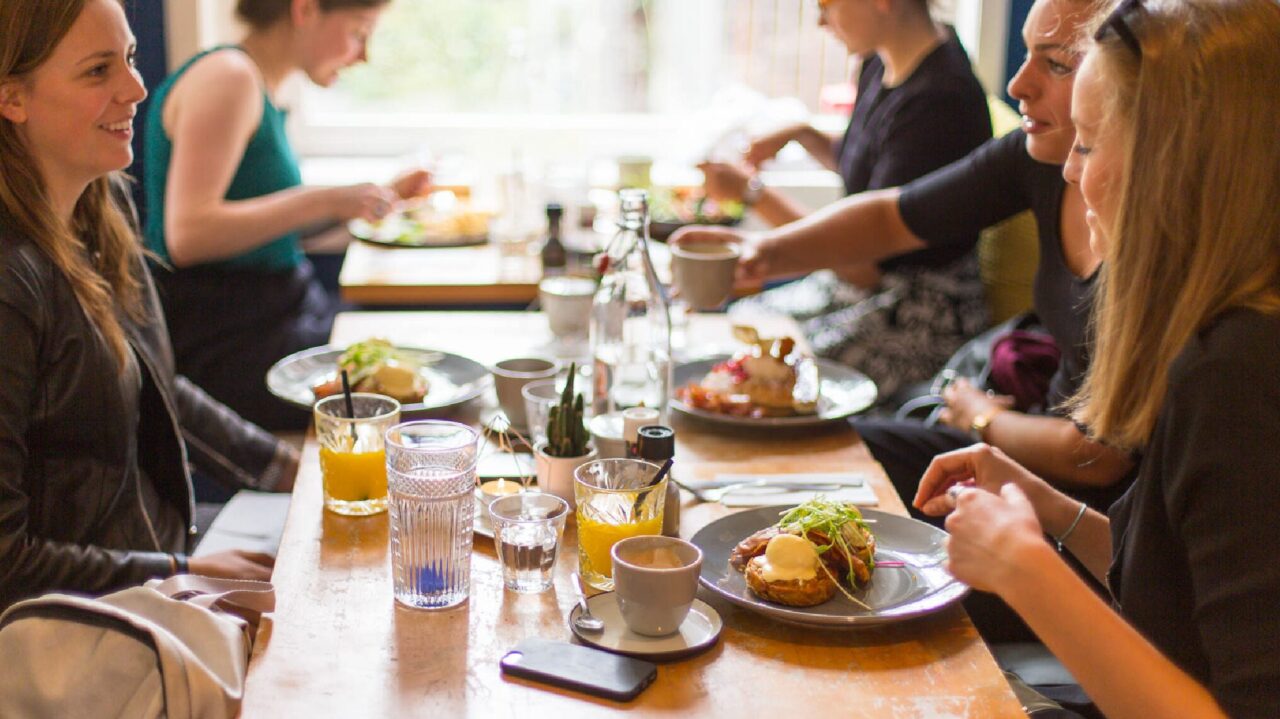
As CNN revisits the meaning of freedom through impact and obstacles, Not For Sale reflects on a decade of partnership with Dignita, and the work that begins after survival.
Every March, CNN’s My Freedom Day invites the world to pause and consider a difficult truth: modern slavery does not belong to history. It exists today, often hidden within familiar economies and ordinary communities. Schools, journalists, and organizations across continents use the moment to amplify survivor voices and ask what freedom really requires.
For Not For Sale, this year carries particular meaning.
Ten years have passed since a survivor’s Freedom Day, a personal milestone that intersected with international reporting when CNN first told the story of Dignita, a then-emerging social enterprise in Amsterdam working to redefine recovery after trafficking.
At the time, the attention felt urgent and necessary. The reporting challenged long-held assumptions about exploitation in Europe, revealing how trafficking could exist not only in distant conflict zones but in regulated urban environments, hidden behind legality and normalcy.
Yet journalism, by nature, captures moments.
Social change unfolds over years.
As CNN’s recent Freedom Day campaigns increasingly focus on impact and obstacles rather than awareness alone, the anniversary offers an opportunity to examine what happens when attention fades and the harder work begins.
Beyond Rescue
Across the anti-trafficking field, one lesson has become increasingly clear over the past decade: rescue is not recovery.
International research from the United Nations Office on Drugs and Crime and the International Organization for Migration consistently shows that survivors leaving exploitation encounter overlapping barriers, disrupted education, immigration uncertainty, trauma recovery, and exclusion from formal labour markets. Without stable employment and community integration, vulnerability can persist long after immediate danger has ended.
These realities shaped Not For Sale’s early partnership with Dignita.
Rather than approaching recovery solely through protection services, the organisation supported an experiment grounded in prevention. The premise was straightforward but ambitious: economic dignity could become a safeguard against future exploitation.
Employment would not be symbolic.It would be professional, structured, and visible.
As explored further in Not For Sale’s recent feature, Dignita at 10: How Not For Sale Helped Build a Survivor-Led Social Enterprise, the intention was never to create dependency but to build pathways toward independence.
Ten years later, that decision continues to shape outcomes.
When the Cameras Leave
The original CNN coverage introduced audiences to a powerful idea, that trafficking could be challenged not only through law enforcement but through opportunity. The story resonated precisely because it disrupted expectation. Recovery was not portrayed as withdrawal from society but as re-entry into it.
What the cameras could not capture, however, was the complexity that followed.
Freedom introduces new obstacles.
Finding housing.
Navigating bureaucracy.
Rebuilding confidence after years of control.
Learning to participate in ordinary workplaces again.
These challenges rarely generate headlines, yet they define long-term recovery.
Over the past decade, Dignita has operated within that quieter space between awareness and stability. Hospitality training programmes, café environments, and educational pathways have created opportunities for participants to rebuild professional identities while reconnecting with community life.
Customers encounter a business first. That choice remains intentional. Participants are recognised as colleagues and professionals rather than defined by past exploitation.
The result is subtle but transformative.
Recovery becomes integrated into everyday society rather than separated from it.
A Decade of Evidence
Anniversaries often encourage celebration, but they also invite evaluation.
Globally, trafficking remains widespread. The International Labour Organization estimates tens of millions of people continue to experience forced labour or forced marriage worldwide, while European law enforcement agencies report evolving criminal networks increasingly exploiting labour shortages and migration pressures.
The obstacles have not disappeared.
In many ways, they have become more complex.
Digital recruitment platforms allow coercion to occur remotely. Debt manipulation replaces visible restraint. Psychological pressure often leaves fewer outward signs of exploitation.
Against this backdrop, Dignita’s tenth anniversary represents something measurable: sustained recovery through economic participation.
Participants have moved into independent careers, higher education, and leadership roles within their communities. Some remain connected to the enterprise as mentors or trainers, extending support to others beginning similar journeys.
Success is not measured by how long someone remains within the programme.
It is measured by how confidently they move beyond it.
Partnership as Practice
For Not For Sale, celebrating Dignita’s anniversary is inseparable from reflecting on partnership itself.
The organisation’s global work has long focused on addressing root causes of trafficking, poverty, exclusion, and lack of opportunity, rather than responding only after harm occurs.
Dignita offered an opportunity to apply those principles within a European context.
Supporting survivor leadership required patience and flexibility. Social enterprises must balance commercial sustainability with social mission, and progress rarely follows predictable timelines. Economic realities, staffing challenges, and shifting public attention have all presented obstacles along the way.
Yet those challenges mirror the broader lessons emerging across the anti-trafficking sector.
Change is incremental.
Trust develops slowly.
Systems adapt through persistence rather than dramatic intervention.
Ten years on, the partnership demonstrates what becomes possible when organisations remain present long after initial visibility fades.
Freedom Reconsidered
Freedom Day now carries a different meaning than it did a decade ago.
At first, freedom may feel like distance from harm.
Over time, it becomes something more expansive, the ability to plan, to belong, and to participate fully in society.
Researchers studying trauma recovery frequently emphasise agency as a central component of healing. Employment contributes directly to that process by restoring routine, independence, and decision-making power.
Within Dignita’s cafés and training programmes, those shifts occur quietly. Conversations unfold between colleagues during busy service hours. Skills develop through repetition. Confidence returns gradually rather than dramatically.
The transformation is rarely visible from the outside.
It is nevertheless profound.
Impact and Obstacles
CNN’s Freedom Day initiatives increasingly encourage communities to move beyond awareness toward measurable action. That evolution reflects a broader understanding across journalism and advocacy alike: stories matter most when they lead somewhere.
Impact requires infrastructure.
Obstacles require honesty.
The past decade has included both.
Economic uncertainty has affected hospitality industries globally. Social enterprises face constant pressure to remain financially viable while maintaining ethical commitments. Survivors continue navigating immigration systems and labour markets that do not always accommodate disrupted histories.
Celebrating ten years therefore means acknowledging resilience rather than perfection.
Dignita exists because people chose persistence.
Participants who rebuilt careers.
Staff who sustained the mission.
Supporters who believed ethical business could challenge exploitation.
And partners willing to invest beyond headlines.
Looking Forward Together
Freedom Day reminds the world that trafficking thrives where vulnerability meets indifference.
The next decade will require deeper collaboration between governments, businesses, and communities willing to rethink how opportunity is created.
Survivor leadership must continue expanding.
Ethical employment models must scale.
Public attention must translate into long-term investment.
For Not For Sale, celebrating Dignita’s tenth anniversary is ultimately a celebration of continuity.
Ten years after CNN helped introduce the enterprise to international audiences, the most meaningful story is not the moment freedom was first recognised.
It is everything built since.
Freedom, as it turns out, is not defined by a single day.
It is defined by what grows afterward.
FAQ’s
What is My Freedom Day?
My Freedom Day is a global student-led awareness campaign launched by CNN that encourages schools and communities to learn about modern slavery and human trafficking. Held each March, the initiative invites young people to explore what freedom means and how individuals can help prevent exploitation worldwide.
What does Freedom Day represent for survivors of trafficking?
For many survivors, freedom is not only the moment exploitation ends. It is the gradual process of rebuilding a life with safety, stability and opportunity. This can include secure housing, meaningful employment, education and supportive community relationships that help restore independence and dignity.
Why is employment important in recovery from human trafficking?
Stable employment plays a crucial role in long-term recovery. Research from organisations such as the International Labour Organization and the International Organization for Migration shows that access to fair work helps survivors regain financial independence, rebuild confidence and reduce the risk of re-exploitation.
What is Dignita and how does it support survivors?
Dignita is a social enterprise based in Amsterdam that provides hospitality training and employment opportunities for survivors of trafficking and exploitation. Through café environments and professional training programmes, participants gain practical skills, rebuild confidence and reconnect with community life.
How is Not For Sale involved in anti-trafficking work?
Not For Sale works globally to address the root causes of human trafficking by supporting prevention, survivor recovery and economic empowerment initiatives. The organisation partners with social enterprises, community programmes and local organisations to create long-term pathways to independence.
Is human trafficking still a global problem today?
Yes. According to estimates from the International Labour Organization, tens of millions of people worldwide are affected by forced labour or forced marriage. Criminal networks continue to adapt, using digital recruitment, debt manipulation and migration vulnerabilities to exploit individuals.
Why do awareness campaigns like My Freedom Day matter?
Awareness campaigns help communities understand how trafficking operates and how individuals can take action. By encouraging education, dialogue and advocacy, initiatives like My Freedom Day aim to mobilise schools, businesses and governments to strengthen prevention efforts and support survivors.
How can individuals help prevent human trafficking?
Individuals can contribute by supporting ethical businesses, raising awareness in their communities, advocating for stronger protections for vulnerable populations, and donating to organisations working to prevent trafficking and support survivors.
Sources
- CNN Freedom Project and #MyFreedomDay campaign materials
- CNN International — Dignita feature (2016)
- International Labour Organization — Global Estimates of Modern Slavery
- United Nations Office on Drugs and Crime — Global Reports on Trafficking in Persons
- International Organization for Migration — Reintegration research
Published by NOT FOR SALE March 5, 2026


Sign Up to our Newsletter
Join our movement and get the latest updates, stories, and ways to take action, straight to your inbox.