


6 of the biggest dangers facing children in Thailand and how you can help
6.7 MIN READ
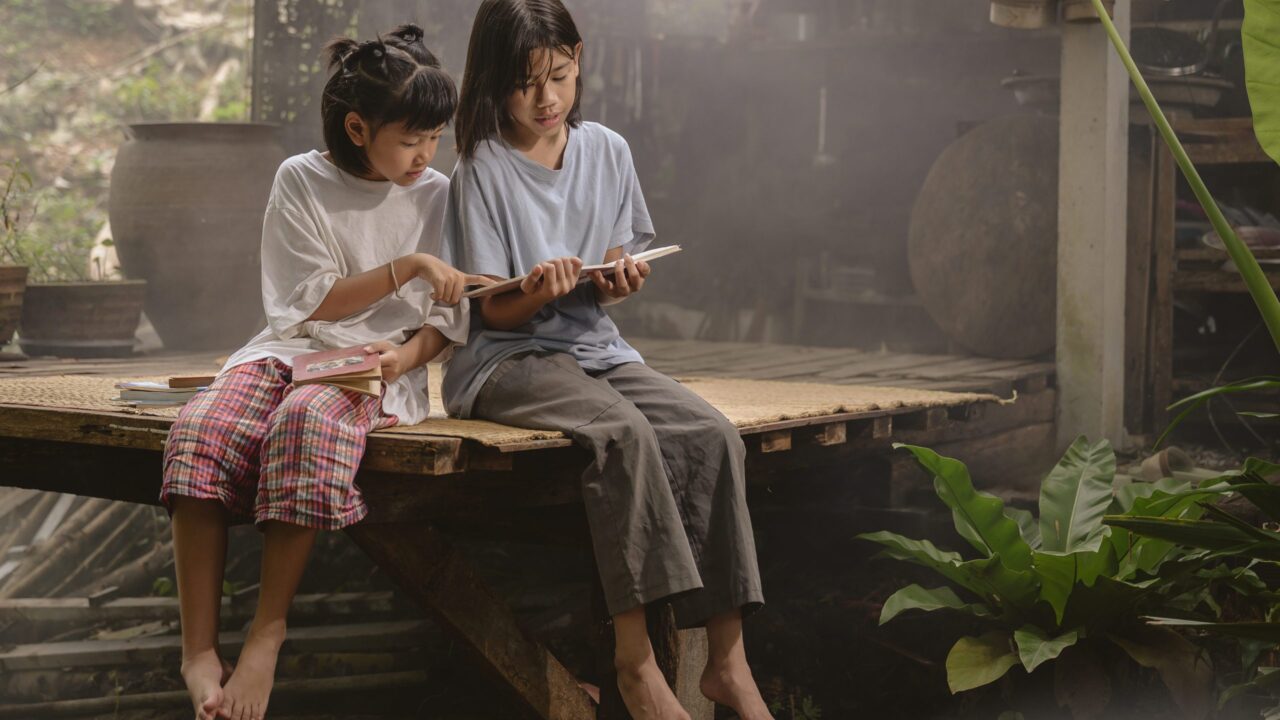
Thousands of children in Thailand grow up without legal identity. Statelessness means no birth certificate, no recognized nationality and, often, no protection.
When a child is invisible to the system, they become visible to those who exploit it.
From forced labor to online grooming, this invisibility exposes children to dangers that span borders and industries.
These are six of the greatest threats faced by stateless children in Thailand today and how we can work together to change their future.
1. Lack of legal identity and statelessness
Statelessness is the first and most powerful driver of risk. Without citizenship, children cannot access education, healthcare, or safe employment. This leaves them vulnerable to exploitation and abuse.
More than 169,000 children in Thailand are officially stateless (UNICEF). Not For Sale has helped house many to give them a better start in life, but this is only the beginning.
Many come from hill-tribe or migrant communities along the northern borders.
Their lack of documentation makes them easy targets for traffickers, who rely on the fact that no one will come looking for them.
Without help, statelessness erases opportunity and it erases protection.
Help Not For Sale house more stateless children.
2. Human trafficking and sexual exploitation
Once invisible, children become easy prey for traffickers. Thailand remains a regional hub for the commercial sexual exploitation of children, both in person and online.
Hill-tribe and migrant girls are disproportionately targeted because of poverty and statelessness.
Exploitation occurs in bars, karaoke venues, massage parlors, and increasingly through livestreaming platforms.
Traffickers often disguise recruitment as legitimate work or education offers, deceiving families desperate for income.
This cycle of deception and control traps children in systems designed to silence them.
Donate to fund the construction of more safe shelters for girls.
3. Forced labor and debt bondage of children in Thailand
Stateless children are frequently drawn into exploitative labor where oversight is minimal and pay is non-existent.
The U.S. Department of Labor reports that children in Thailand are used in agriculture, fisheries, construction, and street vending, often under threat or coercion.
Without papers, these children have no legal recourse if they’re abused or underpaid.
Families facing extreme poverty may be tricked into sending children away to “work off” supposed debts, only to lose contact entirely.
Forced labor is one of the most entrenched and hidden forms of modern slavery in Thailand’s informal economy.
Fight forced labor by stamping it out at the source.
4. Street life and criminal recruitment
For stateless children who flee abuse or lose their families, life on the streets offers no safety.
Thousands of children in Thailand live unsheltered in urban areas such as Bangkok, Chiang Mai, and Chiang Rai.
Street children are frequently exploited by gangs for begging, theft, drug distribution, or sexual acts.
With no legal guardian, no home, and no ID, they become both victim and scapegoat within the criminal system.
The absence of protection quickly becomes a pipeline into organized crime and lifelong exploitation.
Build a world without the threat of child exploitation.
5. Online exploitation and grooming
As internet access spreads, traffickers no longer need to travel. They recruit, coerce, and exploit children through social media and chat apps.
Thailand has become a global hotspot for the production and live streaming of child sexual abuse material.
Predators target stateless or unmonitored children, who are less likely to be noticed missing.
Sextortion, digital grooming, and online coercion are increasingly common in rural and border communities.
Even the digital world has become a place where children without identity are used and erased.
Help us create more social impact businesses that create positive futures.
6. Child marriage and coercive unions
In some remote or marginalized areas, early marriage is seen as a way to secure a girl’s future or ease family hardship, but it often hides exploitation.
Stateless girls are especially vulnerable because they cannot access education or formal work.
Many are married off to older men, sometimes across borders, under the guise of tradition or protection.
These marriages can conceal trafficking, domestic servitude, and sexual violence.
Child marriage removes choice, education, and safety, locking girls into a lifetime of dependency and abuse.
Donate to Not For Sale and offer more children education and safety.
Why stateless children face the highest risk
Statelessness multiplies every other risk. Without the right to education, protection, or movement, these children live in constant uncertainty. They cannot travel safely, report crimes, or prove who they are.
As a result, they become the easiest children to exploit, and the hardest to find when they disappear.
This is where community-led intervention makes the difference. By working alongside local partners in northern Thailand, Not For Sale supports safe housing, education access, and citizenship pathways that pull children out of danger before exploitation begins.
How you can help
Every child deserves the chance to be seen, counted, and protected.
When you support Not For Sale, you help fund:
- Safe homes and education for stateless children in northern Thailand.
- Outreach teams that prevent trafficking before it begins.
- Long-term community programs that rebuild dignity and independence.
We invite you to be part of the solution for the future of children in Thailand.
Frequently Asked Questions
What is statelessness in Thailand?
Statelessness means a person has no nationality in the eyes of governments; no country legally recognizes them as a citizen. In Thailand, many stateless children are born in hill-tribe or migrant communities along the northern borders. Without legal identity, they cannot access education, healthcare, or protection, leaving them vulnerable to trafficking and exploitation.
Why are stateless children in Thailand more at risk of trafficking?
Without identity papers, stateless children are invisible to the legal system but visible to traffickers. They can’t report crimes, cross checkpoints safely, or prove their age. This makes it easier for traffickers to deceive, recruit, or move them without detection.
How does child trafficking happen in Thailand?
Traffickers exploit poverty, lack of education, and legal invisibility. Children may be lured with false promises of jobs or schooling, then forced into labor, sex work, or criminal activity. Some are trafficked internally, while others are sent across nearby borders to Myanmar, Laos, or Cambodia.
How does Not For Sale help children in Thailand?
Not For Sale works with local leaders such as Kru Nam in northern Thailand to protect children from exploitation. The program provides safe housing, access to education, and long-term community support. It also helps children gain citizenship or legal recognition, turning invisibility into empowerment.
What can I do to support children at risk in Thailand?
You can help by supporting Not For Sale’s work on the ground. Donations fund safe homes, education, and outreach that prevent trafficking before it starts. Even small contributions help restore dignity and create pathways to freedom for stateless children.
What is modern slavery, and how is it different from human trafficking?
Modern slavery is an umbrella term for situations where people are exploited and cannot refuse or leave because of threats, coercion, or deception. Human trafficking is one form of modern slavery. It involves recruiting, transporting, or harboring people for exploitation. Stateless children in Thailand are at risk of both.
Can stateless children go to school in Thailand?
Thailand allows some stateless children to attend school, but barriers remain. Many families don’t know their rights or live too far from schools that accept undocumented children. Programs supported by Not For Sale bridge this gap, ensuring children receive education regardless of citizenship status.
What progress is being made to end statelessness in Thailand?
The Thai government has pledged to reduce statelessness through registration and citizenship reforms. However, complex documentation processes, limited awareness, and regional inequality still prevent many children from gaining nationality. Local NGOs and Not For Sale are working directly with communities to close those gaps.
Why is ending statelessness key to ending child exploitation?
When a child has legal identity, they gain protection, visibility, and access to opportunity. A birth certificate or ID isn’t just paperwork – it’s a shield. Ending statelessness cuts off one of the main pipelines into exploitation and modern slavery.
Published by NOT FOR SALE November 10, 2025


Sign Up to our Newsletter
Join our movement and get the latest updates, stories, and ways to take action, straight to your inbox.