


Children’s right to education: Meta’s story
4.5 MIN READ
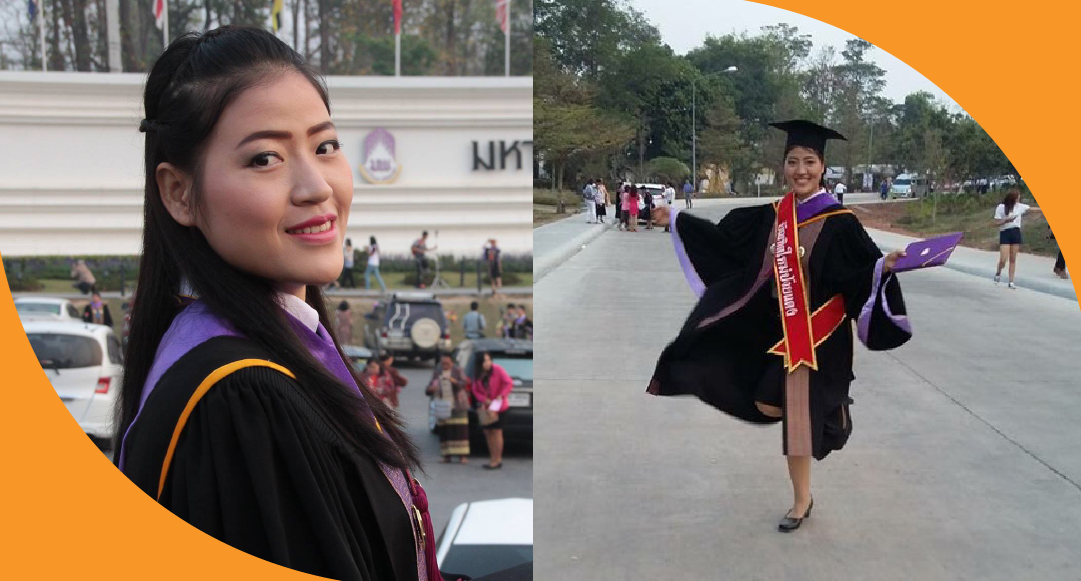
An individual’s right to education is a vital start on a life of fulfilment, freedom, and independence. Yet, for millions around the world, access to learning remains out of reach due to poverty, trafficking, conflict, and systemic inequality. The opportunity for learning is one of the most powerful tools to break cycles of exploitation and create pathways to freedom.
This is Meta’s story – the first stateless person to attend university in Thailand. She’s now an inspiration to those she works with, fighting the exploitation and vulnerabilities that she herself has overcome.
United Nations on children’s right to education
Article 26 of the 1948 Universal Declaration of Human Rights states that: “Everyone has the right to education. Education shall be free, at least in the elementary and fundamental stages. Elementary education shall be compulsory. Technical and professional education shall be made generally available and higher education shall be equally accessible to all on the basis of merit.”
The article continues: “Education shall be directed to the full development of the human personality and to the strengthening of respect for human rights and fundamental freedoms. It shall promote understanding, tolerance and friendship among all nations, racial or religious groups, and shall further the activities of the United Nations for the maintenance of peace.”
That, however, is often not the case in parts of the world. According to the United Nations it is estimated that 69 million children are not in school and approximately one adult in six is unable to read or write. Two out of three illiterate adults are women. With support from Not For Sale, Meta’s made sure she’s not one of them.
Stateless children and their access to education
The majority of street children living in northern Thailand come from the borders of Thailand and Myanmar, meaning that they’re not recognized as citizens by either government.
Being stateless means that they’re denied access to education, healthcare, or employment. This means that every one of these children is incredibly vulnerable to exploitation.
Meta was a stateless orphan on the streets of Chiang Mai before she met Kru Nam of Not For Sale Thailand.
“I could see that Meta was in danger,” explains Kru Nam. “We came across her in 1998. She was about six years old then. She couldn’t even speak Thai, she could only smile.”
“When I met Kru Nam, I was travelling around selling flowers in the main part of town; in pubs and bars,” Meta tells us. “Every day I would see her in the area. She would spend time with all of us street children. Sometimes she would teach us or show us DVDs – that sort of thing.
“Kru Nam came to see me to ask me if I wanted to go to school. I told her that I would like to study. She told me: ‘If that’s the case, then pack your bags and I will take you to school.’”
Kru Nam continues: “I drove Meta in my car straight away to Mae Hong Son. That very day, we went straight to her new school.”
The Not For Sale Children’s Home
Over time, Meta’s student life developed alongside her volunteer work while living at the Not For Sale Children’s Home in Thailand. Here, thanks to Kru Nam, many stateless children are protected from abuse and exploitation. They get food, shelter, the opportunity to go to school, and develop essential life skills.
Meta continued to inspire others with her journey of improvement. She wasn’t done with embracing her newfound right to education. Meta continued to volunteer, studying hard and went on to become the first stateless person to attend university in Thailand.
“At first, I didn’t know anything about university,” she explains. “Kru Nam said that she would like me to go. I just thought that Kru Nam has always known the best thing for me, so I leapt at the opportunity and I got in.
“I chose to study social work because I have spent all my life involved in it. You could say my whole life has been social work, because Kru Nam has been helping me since I was a child.
“I try to use my own story to inspire the children. In the past, I’ve gone through the same things they’re going through. I hope they see me and think ‘she was like me and has still been able to get her education.”
Paying it forward so more people can embrace their right to education
It’s this inspiration that’s enabling more stateless and vulnerable children in Thailand to exercise their right to education. What’s more, with Meta still working in the Not For Sale Children’s Home, she’s the perfect example of giving back to a community and understanding the challenges they face.
Kru Nam says it better than anyone else can… “Today I always say to Meta, she is the role model for all the younger kids here. They’re all looking up to her.”
That’s a level of freedom for more kids that money can’t buy, all earned through hard work.
• Support Not For Sale to offer more children around the world the right to education.
Published by NOT FOR SALE March 10, 2025


Sign Up to our Newsletter
Join our movement and get the latest updates, stories, and ways to take action, straight to your inbox.