The City Behind the Screen: TK Nziyonvira on Goma, Conflict and the Work of Not For Sale DRC
Not For Sale CEO Mark Wexler speaks with TK Nziyonvira about Goma, the conflict in eastern DRC, and why dignified local livelihoods are one of the strongest answers to modern-day slavery.

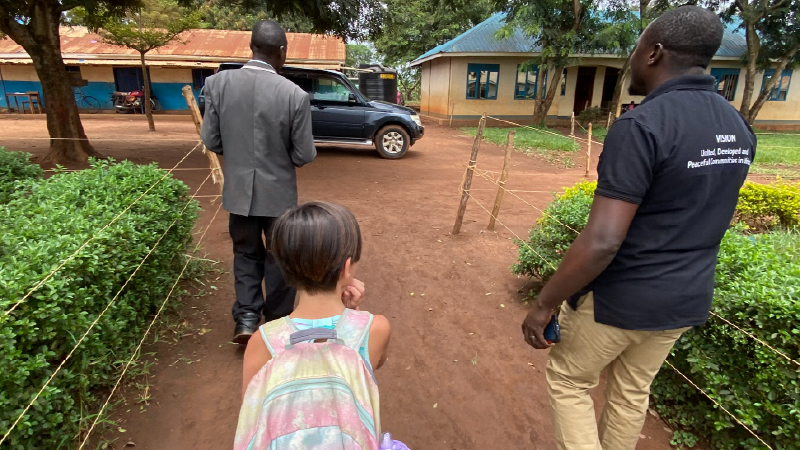
Not For Sale CEO Mark Wexler speaks with Ntakamaze Nziyonvira, known as TK, about Goma, the conflict in eastern DRC, and why dignified local livelihoods are one of the strongest answers to exploitation.
The future is often described in clean language: electric vehicles, artificial intelligence, battery storage, smartphones, renewable infrastructure. But behind many of the technologies shaping that future sits a harder truth.
In eastern Democratic Republic of Congo, communities live at the centre of a global extraction economy that most of the world rarely sees, while also facing the overlapping pressures of armed conflict, displacement and recurring public-health emergencies, including Ebola. Minerals move outward. Poverty, violence, disease risk and exploitation remain.
In January 2025, the armed rebel group M23 took control of Goma, a major city in eastern DRC. Since then, banks have remained closed, moving money has become difficult, livelihoods have been badly damaged and the cost of living has risen sharply. Local life has been shaped by the hard divide between government-held and rebel-held areas, with limited cooperation and deep mistrust on both sides.
Not For Sale DRC was not created in response to a news cycle. The work was already there before the fighting reached Goma. The team in Goma remains there now, rooted in their own community and continuing their work in some of the hardest possible conditions.
To understand what is happening, why it matters, and what an alternative can look like, Not For Sale CEO Mark Wexler spoke with Ntakamaze Nziyonvira, known as TK, who is originally from the DRC and leads Not For Sale’s work across the Great Lakes region.
Mark Wexler: TK, thank you for speaking with us. Can you begin by helping readers understand what changed when M23 took control of Goma?
TK Nziyonvira: Thank you for having me.
The situation in Goma became extremely difficult. When M23 took control of the city in January 2025, daily life changed very quickly. People were cut off from basic systems they depend on. Banks closed. Moving money became very difficult. Businesses were badly affected. Families who were already under pressure suddenly had fewer ways to survive.
When money cannot move, everything becomes harder. People cannot access savings. Traders struggle. Families cannot buy what they need. Even when food or goods exist, the price can be too high for many people.
The cost of living has gone up because the area is divided. Government-held areas and rebel-held areas do not easily cooperate. Each side is cautious because of the risk of attack. That makes movement, trade and normal economic life much more difficult.
For ordinary people, this means more poverty, more uncertainty and more pressure on families who were already living with the effects of years of war.
Mark Wexler: What does that pressure look like for families day to day?
TK Nziyonvira: It affects every part of life.
A family may have had a small business before. They may have depended on daily trade, farming, transport or informal work. When the banks close and the economy slows down, those livelihoods can collapse very quickly.
Parents then have to make very difficult decisions. How do they buy food? How do they pay for school? How do they keep children safe when there is insecurity around them? Poverty rises because people lose the small systems that allowed them to manage each day.
This is one of the things people far away may not always understand. Conflict is not only the moment of fighting. It is also what happens afterwards, when the structures of normal life stop working. It becomes harder to earn, harder to move, harder to plan and harder to protect children.
Mark Wexler: Not For Sale DRC has worked in the region since before the current phase of the war. What does it mean for the team to still be there?
TK Nziyonvira: The team in Goma is part of the community. This is not a group of people coming in from outside for a short time. They were there before the war, and they remain there now.
They have adapted to very difficult conditions. They continue because the work matters and because the community matters. They are not staying for attention. They are staying because this is their home, their community and their responsibility.
Of course, safety is always taken seriously. The team continues to assess the situation carefully and would move only if the security situation made it impossible to remain. But the intention is to keep serving the community for as long as they can.
That commitment is very important. In a crisis, people need to know that someone has not forgotten them.
Mark Wexler: Why does the work of Not For Sale DRC focus so strongly on livelihoods and cooperatives?
TK Nziyonvira: Because vulnerability often begins when people have no safe way to survive.
If families cannot earn an income, if farming collapses, if children cannot continue school, if the only economy around them is shaped by mining, armed groups or displacement, then people become much easier to exploit. Traffickers and armed groups look for that vulnerability. They use poverty, fear and lack of opportunity.
The cooperative model gives people another option. It helps communities build local livelihoods that are dignified and more resilient. In Masisi District, Not For Sale DRC has supported cooperative members with training in modern farming techniques and financial literacy, as well as farming tools and seed capital. The goal is to improve food security and income stability.
This work is not separate from preventing trafficking. It is prevention. When people have a reason and a means to stay, the recruiters and traffickers lose their opening.
Mark Wexler: Many readers will know the DRC because of minerals such as cobalt, copper and gold. How should they understand the connection between minerals, conflict and exploitation?
TK Nziyonvira: The DRC is very rich in resources, but many communities living near those resources remain very poor.
The minerals from Congo are connected to the global economy. They are used in phones, batteries, vehicles and other technologies that people use every day. But the communities around extraction often face the worst consequences: conflict, environmental damage, displacement and exploitation.
This is why the world cannot treat the DRC as far away. The minerals powering modern life come from real places, with real people living there.
When armed groups and criminal networks compete for territory and resources, civilians pay the price. People are displaced. Children become more vulnerable. Forced labor and sex trafficking can follow the mines, the fighting and the collapse of livelihoods.
The same system that damages the land can also conscript the people. That is why environmental destruction and modern slavery cannot be separated here.
Mark Wexler: Not For Sale often describes modern slavery and ecocide as connected crises. Is eastern DRC one of the clearest examples of that?
TK Nziyonvira: Yes. In eastern DRC, those two issues are deeply connected.
When land is destroyed by extraction, people lose the ability to live from that land. When forests are damaged, water is polluted or farming becomes impossible, families are pushed toward risk. They may move. They may accept dangerous work. Children may be pulled away from school. Communities become easier to exploit.
Conflict also makes public-health crises harder to manage. When people are displaced, when health services are disrupted and when communities cannot move safely, outbreaks such as Ebola become much harder to prevent and contain.
So the problem is not only one mine, one armed group or one outbreak. It is a system. The same conditions that allow environmental destruction also create openings for forced labor, trafficking and recruitment by armed groups.
That is why the answer has to be bigger than emergency response. It has to include economic alternatives, community stability and the restoration of local livelihoods.
Mark Wexler: What is the counter-model that Not For Sale DRC is trying to build?
TK Nziyonvira: The counter-model is to help people build a life outside the systems that exploit them.
Not For Sale has worked for nearly two decades in the Peruvian Amazon, supporting regenerative local economies that protect people and the environment at the same time. In the Great Lakes region, the same logic applies.
If the extractive economy makes people vulnerable, then local, regenerative livelihoods can help protect them. Farming cooperatives, food security, financial literacy and community savings are not small interventions. They are ways to reduce dependency on dangerous economies.
When families can grow food, earn income and build savings, they have more choices. When young people see a future outside the mine or the militia, recruitment becomes harder. When communities are organized through cooperatives, they become more resilient.
This is how you begin to out-create exploitation. You do not only tell people what to avoid. You help build something better.
Mark Wexler: For someone reading this in the United States, Europe, Australia or elsewhere, why should Goma matter?
TK Nziyonvira: Goma matters because we are all connected.
People may feel that the crisis is far away, but the resources from the DRC are part of the global economy. The phone in someone’s hand, the battery in a vehicle, the systems behind the technology we use every day may be connected to minerals from Congo.
The question is whether the world is willing to look honestly at the human cost behind those supply chains.
People in Goma and eastern DRC want peace. They want safety. They want to work, send their children to school and live with dignity. They do not want to be known only through war or minerals.
The international community has a role to play by paying attention, by supporting work that creates real alternatives and by asking harder questions about the systems that make this crisis profitable for some people and unbearable for others.
Mark Wexler: What do you want people to understand about the team continuing this work in Goma?
TK Nziyonvira: I want people to understand that they are part of the community they serve.
They are not doing this work from a distance. They know the families. They know the streets. They know what has changed and what people are facing. Their commitment is not abstract.
In a place where many systems have broken down, continuing to show up matters. It tells people that they are not invisible. It tells them that there is still a future beyond conflict and extraction.
That is what Not For Sale DRC is trying to protect: the possibility of a different future.
Mark Wexler: What kind of support is most needed now?
TK Nziyonvira: The need is both immediate and long term.
Families need stability. Communities need livelihoods. Children need protection and education. People need ways to earn a living without being pushed toward exploitation or recruitment.
Supporting Not For Sale DRC means supporting that alternative. It means helping communities build food security, strengthen cooperatives and create local economies that reduce vulnerability.
The world often responds when there is an emergency. But the deeper work is what happens before and after the emergency. It is the work of keeping communities strong enough that exploitation has less room to grow.
Monday Morning Question
What would change if the world looked at its phones, batteries and technologies and saw not only innovation, but the people and land behind them?
Goma is not a distant crisis. It is part of the same global system that powers modern life while too often hiding the cost from view.
Not For Sale DRC is working to build a different answer: regenerative local economies, stronger communities and dignified livelihoods that reduce vulnerability to trafficking, forced labor and armed-group recruitment.
Support Not For Sale’s work in the DRC and help communities build an alternative to the mine, the militia and the systems that profit from exploitation.
Support our work in the DRC.
To watch the interview in full, click here.
Not For Sale
Related Articles