Peru and climate change: why protecting forests means protecting livelihoods
Peru’s role in the fight against climate change extends from its Andean glaciers to the forests and rivers of the Amazon. Protecting…

Peru’s role in the fight against climate change extends from its Andean glaciers to the forests and rivers of the Amazon. Protecting these ecosystems matters beyond the country’s borders, but their future also depends on what happens to the people who live within them. Land rights, safe work and a reliable income belong in the same conversation as carbon and biodiversity.
For 15 years, Not For Sale’s Peru team has worked alongside Indigenous Andean and Amazonian communities, supporting the development of sustainable businesses. Its latest project update places a central question at the heart of that work: how can people build secure livelihoods from the environments they care for, without sacrificing their land, knowledge or freedom?
That question has become increasingly urgent as evidence of environmental damage accumulates. Peru’s 2023 national glacier inventory recorded the loss of approximately 56 percent of the country’s glacier area over six decades. Separately, satellite analysis published in September 2025 documented extensive gold-mining deforestation across the Peruvian Amazon. These are different pressures, requiring different responses, but both affect the resources on which communities depend.
The connection between environmental protection and human dignity is therefore practical. Conservation must consider whether people have secure rights, access to services and work they can freely choose. Efforts to prevent exploitation must also consider what happens when land, water and established livelihoods are damaged.
What this article covers
- Why Peru’s forests, mountains and rivers matter for climate and biodiversity.
- What glacier loss and gold-mining expansion reveal about environmental pressures.
- How damage to livelihoods can intersect with exploitation.
- Why Indigenous land rights and knowledge matter to conservation.
- How Not For Sale’s Peru team approaches community enterprise.
- What stronger protection and responsible business should involve.
Key takeaways
- Climate protection in Peru involves both conserving ecosystems and safeguarding the livelihoods that depend on them.
- Peru’s 2023 glacier inventory reported approximately 56 percent glacier-area loss over six decades. This does not mean the country has lost all its freshwater reserves.
- MAAP’s September 2025 assessment recorded 139,169 hectares of gold-mining deforestation across the Peruvian Amazon by mid-2025.
- Environmental damage and forced labor are distinct harms that can occur within the same extractive economies.
- Regional research by FAO and FILAC links formally recognized collective Indigenous land rights with lower deforestation.
- Sustainable community businesses can contribute to prevention, but they must operate alongside enforceable rights, public services and protection from coercion.
Why this story matters now
The Peru project’s work addresses a question that conservation plans cannot answer through protected-area boundaries alone: how can communities benefit from keeping the environments around them healthy? People also need economic opportunities that do not depend on degrading their surroundings or accepting exploitative working conditions.
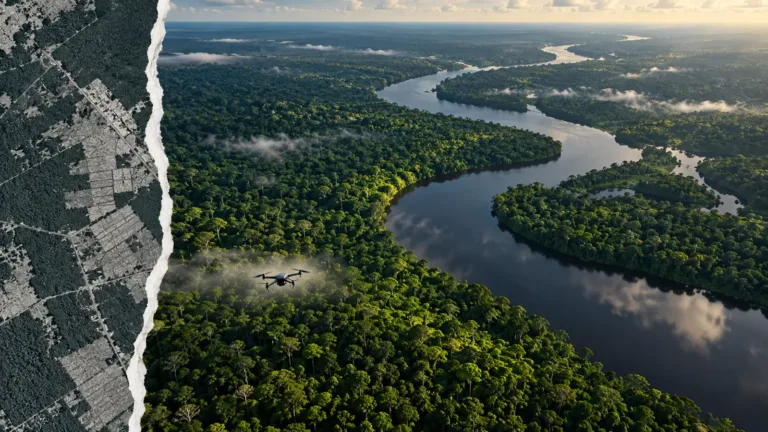
The Monitoring of the Andean Amazon Project, known as MAAP, reported in September 2025 that gold mining had spread across nine regions of the Peruvian Amazon. Its assessment recorded 139,169 hectares of mining-related deforestation by mid-2025, with 97.5 percent in Madre de Dios. It also documented mining activity in 225 rivers and streams. These figures describe the monitoring period covered by the assessment, rather than a live count for 2026.
The glacier evidence has a different timeframe. The 2023 national inventory, produced by Peru’s glacier and mountain ecosystem research institute, INAIGEM, measures long-term retreat. Together, these assessments show why an account of Peru’s environmental importance must move beyond descriptions of exceptional scenery. It must address the conditions under which people can continue living and working safely within these landscapes.
Why Peru’s ecosystems matter beyond its borders
Peru contains coastal, Andean and Amazonian environments. Its ecological importance cannot be reduced to a single biodiversity ranking or a claim that one country determines the planet’s climate. The more useful starting point is the range of functions these ecosystems perform: forests store carbon and support water cycling, mountain ecosystems influence water availability, and biological diversity sustains relationships between species and their environments.
The Intergovernmental Panel on Climate Change’s assessment of tropical forests examines the interacting threats posed by climate change and land-use change. For Peru, this means forest protection involves more than preventing tree clearance. It also requires attention to degradation and the resilience of the ecosystems that remain.
Manú National Park illustrates the country’s ecological range. UNESCO describes a protected landscape extending from high elevations into tropical lowlands, with globally significant biodiversity. Its World Heritage recognition dates to 1987. The park demonstrates what conservation can preserve, but its protected status should not suggest that all Peruvian forests enjoy equivalent security or that designation resolves the needs of surrounding communities.
Beyond protected areas, the future of forests depends on decisions about land ownership, infrastructure, production and trade. Those decisions also shape whether communities can maintain their livelihoods and exercise meaningful control over their territories.
What is happening to Peru’s glaciers and forests?
INAIGEM’s 2023 inventory reports that Peru contains 68 percent of the world’s tropical glaciers and has lost approximately 56 percent of its glacier area over six decades. The distinction between tropical glaciers and all glaciers is essential. Peru’s share of tropical ice does not make it the holder of the world’s largest freshwater reserves.
Glacier retreat should not be described as the immediate disappearance of every water source. Water security depends on the whole catchment, including precipitation, wetlands, groundwater, infrastructure and demand. The inventory nevertheless identifies glacier loss as a serious concern for the ecosystems and territories that depend on this water. It provides a measurable basis for concern without requiring exaggerated claims.
In the Amazon, mining produces a more direct form of landscape change. MAAP’s assessment distinguishes forest clearance from mining in rivers, where damage may not be captured by a deforestation total. Counting hectares of lost trees alone cannot describe all the consequences for waterways or communities. Environmental monitoring needs to follow both land and water.
The distinction matters for protection. A response focused only on forest boundaries may overlook activity in rivers. A response focused only on mining equipment may overlook the commercial arrangements that make destructive extraction profitable.
How environmental harm connects to exploitation
Environmental degradation does not automatically produce human trafficking. Nor does poverty mean a person will be trafficked. The connection concerns exposure and power: when people lose a dependable livelihood or face restricted access to land and services, offers of work can become harder to assess or refuse. Prevention must examine those circumstances without presenting exploitation as inevitable.
There is documented evidence of labor abuse within Peru’s extractive economy. The US Department of Labor lists Peruvian gold among goods produced with child labor and forced labor. Its country findings identify exploitation risks in mining regions. This supports scrutiny of labor conditions alongside environmental damage, although it does not establish that every mine or every gold shipment involves coercion.
The International Labour Organization defines forced labor through coercion and the absence of genuine voluntary consent, including the freedom to leave. Its revised 2025 indicators identify warning signs such as deception, restriction of movement, withheld wages and abusive debt. Unsafe work and low wages require attention in their own right, but a finding of forced labor needs evidence about control and consent.
For prevention, the relevant question is therefore not simply whether a job exists. It is whether a person understands the terms, receives the agreed payment and can leave without threats or penalties. A livelihood that depends on an employer controlling transport, debt or access to help may provide income while leaving the worker with little practical freedom.
Environmental destruction is also a livelihood issue
Gold mining can damage forests and waterways while creating health risks beyond the worksite. The United Nations Environment Programme explains that mercury used in some small-scale gold extraction can enter air, land and water, persist in the environment and move through food chains. Pollution therefore concerns people who have never worked in mining, as well as miners and their families.
Environmental harm and exploitation should be investigated together where the evidence warrants it, while retaining their distinct meanings. A polluted river requires an environmental and public-health response. A worker prevented from leaving requires protection from coercion. Where both occur, treating either as an isolated problem can leave people exposed to the other.
Not For Sale’s wider concern with ecocide brings attention to severe destruction of ecosystems. The evidence discussed here documents forest loss, pollution and labor abuse. These findings warrant action without requiring an unproven legal allegation that a particular operation has committed ecocide.
For communities, these issues are connected through everyday life. Protecting the environment in which people live must include protecting their ability to obtain food, earn an income and make decisions without intimidation or coercion.
Who is most at risk?
The risks concern circumstances rather than identity alone. Children need protection from exploitation; workers need enforceable rights and accessible routes to assistance; communities facing insecure tenure need effective recognition of their land. Indigenous people should not be described as inherently vulnerable when the pressures arise from exclusion, encroachment or failures of protection.
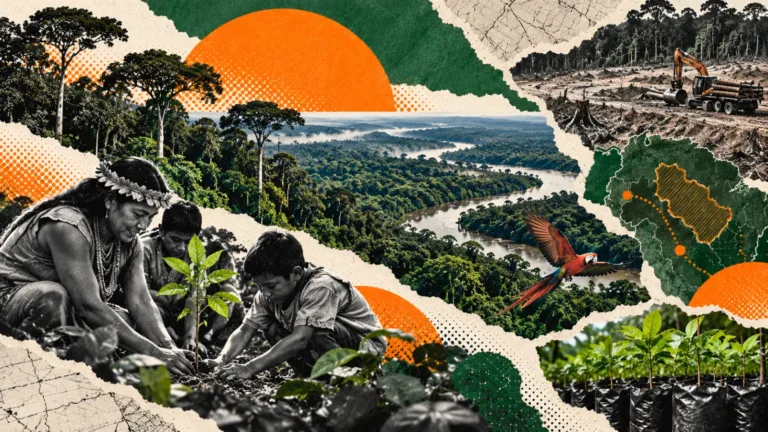
Nor should communities be portrayed only through the harms they face. Not For Sale’s Peru team emphasizes knowledge, enterprise and local leadership. People who maintain relationships with a forest or farming landscape are decision-makers with their own priorities, rather than simply beneficiaries of an outside conservation plan.
Effective protection must take those priorities seriously. It should enable communities to shape economic opportunities and conservation decisions, including the ability to refuse arrangements that would compromise their rights.
The systems behind the harm
Conservation and labor protection both face an economic problem when the financial rewards from extraction flow outward while the costs remain local. A serious response must ask who purchases the material, who finances production and who is responsible for checking its origin and working conditions. Responsibility cannot stop at the worker at the beginning of a supply chain.
MAAP recommends stronger gold traceability, environmental obligations and supervision. These recommendations point toward scrutiny of the commercial system alongside enforcement at mining sites. They also underline why a claim of responsible sourcing needs evidence capable of connecting production to trade.
The same scrutiny belongs in businesses presented as sustainable alternatives. Useful questions include who sets prices, who owns the enterprise and how costs and profits are distributed. Reaching a global market is not, by itself, evidence of a fair outcome. A business should be judged by the terms it creates for producers as well as by the environmental claims attached to its products.
For community enterprise, commercial success must therefore be considered alongside ownership and working conditions. An opportunity is more useful when it strengthens people’s ability to make decisions about their lives and land.
Indigenous knowledge and the ability to choose
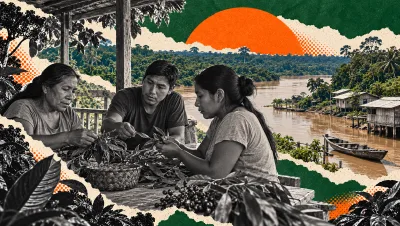
The Peru team describes working across rivers, villages, cultures and languages, with an emphasis on listening and helping communities develop businesses. Its update highlights a concern that local knowledge has not received the recognition it deserves. The team wants the value of community activities to become more visible and producers to gain access to markets.
That ambition raises questions of consent and ownership. Communities should be able to decide what knowledge they share, how it is used and who benefits. Recognition cannot be limited to acknowledging that knowledge exists while leaving commercial decisions in someone else’s hands.
The update also emphasizes the importance of biological and agricultural diversity in responding to changing conditions. This supports a wider question about how to protect knowledge and resources without treating them simply as assets available for outside use.
A community’s ability to refuse an unsuitable commercial arrangement is part of the freedom the project seeks to support. Respecting knowledge requires respecting the people who hold it, including their authority over its use and their choices about their future.
What governments and institutions are doing
Existing institutional responses include environmental monitoring, protected areas and international climate commitments. INAIGEM’s inventory provides evidence for water and mountain ecosystem planning. UNESCO recognition draws attention to Manú’s conservation importance. UNDP reports that Peru submitted its third nationally determined contribution in November 2025, setting out a climate target for 2035.
These measures address different parts of the problem. A climate pledge does not itself protect a worker, and a protected-area designation does not replace effective enforcement. The practical test is whether commitments are accompanied by resources, accountable institutions and accessible protection for people facing harm.
Indigenous land rights are another important part of that response. A 2021 review by the Food and Agriculture Organization of the United Nations and FILAC, drawing on more than 300 studies, found lower deforestation in Indigenous and Tribal territories where collective rights were formally recognized.
The finding supports tenure security as a conservation measure. It also challenges approaches that expect communities to protect forests without legal backing or public investment. Recognizing rights must be accompanied by the means to exercise them.
What still needs to change
Protection needs to last beyond individual interventions. Environmental enforcement should be connected to labor inspection and appropriate support for people experiencing exploitation. Business development should be connected to community decision-making so that commercial opportunities strengthen, rather than displace, local control.
Projects also need evidence proportionate to their claims. Not For Sale’s Peru update describes an approach and a history of engagement, but does not provide beneficiary totals, income measurements or independently evaluated conservation results. Assessing progress requires looking beyond the number of businesses started or products sold.
Useful measures include whether earnings are reliable, participation is voluntary and environmental commitments are met. They should also consider whether communities retain authority over decisions and whether people have more freedom to leave unsuitable work.
Such questions do not diminish the value of community enterprise. They help establish where it is working, what needs adjustment and which barriers require a response from governments or other institutions.
How Not For Sale approaches the work in Peru
Not For Sale’s Peru team describes 15 years of engagement with Indigenous Andean and Amazonian communities. Its work includes helping develop sustainable businesses alongside people from the communities themselves, connecting freedom, dignity and environmental sustainability through practical economic opportunities.
The approach places livelihoods within the wider effort to prevent modern-day slavery. Its central proposition is that conservation and exploitation prevention must consider the same everyday question: what choices are available to the people whose lives depend on this place?
A livelihood can contribute to prevention when it gives people more control over their working lives. It cannot substitute for land rights, protection from violence or public services. Keeping those limits clear helps ensure that responsibility for structural problems is not placed on communities themselves.
The project’s emphasis on listening also matters. Community enterprise should begin with people’s priorities and knowledge, rather than an assumption that an outside organization already knows which business or conservation model they need.
What readers can do
Readers can share verified reporting, ask businesses how they trace gold and other forest-linked products, and look for evidence behind sustainability claims. Useful answers explain where materials come from, how suppliers are checked and what happens when abuse is identified. General assurances are less informative than a process that can be examined.
When supporting community initiatives, ask how participants influence decisions and how benefits are assessed. The value of a project should be considered through the rights and opportunities it creates, as well as the story told about it.
Protecting privacy matters too. Identifying people who face exploitation or threats can create further risks. Concerns about suspected abuse should be referred through appropriate local protection channels rather than investigated through confrontation.
Protecting ecosystems means protecting the conditions for a dignified life
Peru’s environmental importance is clear, but a credible account must include the people whose livelihoods are bound to its mountains, forests and rivers. Not For Sale’s work places community knowledge and economic opportunity within that wider picture, recognizing that environmental protection must be compatible with a secure and dignified life.
The task is to make that protection tangible through secure rights, work people can freely choose and businesses whose benefits can be demonstrated. Healthy ecosystems and dignified livelihoods both depend on institutions and markets that value what communities sustain.
Frequently asked questions
Why is Peru important in the fight against climate change?
Peru contains Amazonian forests, Andean glaciers and diverse ecosystems. Forest conservation and protection of mountain water systems contribute to climate resilience alongside reductions in greenhouse-gas emissions.
How much glacier area has Peru lost?
INAIGEM’s 2023 national inventory reported approximately 56 percent glacier-area loss over six decades. The figure describes glacier area, not the loss of every glacier or all national freshwater resources.
Does Peru hold most of the world’s glaciers?
No. The 2023 inventory states that Peru contains 68 percent of the world’s tropical glaciers. Tropical glaciers are a specific category, distinct from the world’s total glacier cover.
How is gold mining affecting the Peruvian Amazon?
MAAP’s September 2025 assessment recorded 139,169 hectares of gold-mining deforestation by mid-2025 and mining activity in 225 water bodies. Mercury use in some extraction processes creates additional pollution risks.
How does environmental damage relate to human trafficking?
Damage to livelihoods can increase exposure to exploitative recruitment, but trafficking is not an inevitable result. The relationship must be assessed through evidence about recruitment, coercion and exploitation in each setting.
Is all gold mining in Peru associated with forced labor?
No. The US Department of Labor identifies forced labor and child labor in Peruvian gold production, but that finding does not establish abuse at every mine. Individual operations require investigation.
Why do Indigenous land rights matter for forests?
FAO and FILAC’s 2021 regional review found lower deforestation in Indigenous and Tribal territories with formally recognized collective rights. Tenure security helps support community authority over land.
What does Not For Sale do in Peru?
Its 2026 project update describes 15 years of engagement with Indigenous Andean and Amazonian communities and support for developing sustainable businesses. The approach connects livelihoods, dignity and environmental sustainability.
Can sustainable businesses prevent exploitation?
They can contribute by expanding access to freely chosen livelihoods. Their effects require evaluation, and business development must work alongside enforceable rights, public services and protection from coercion.
How can readers assess a responsible sourcing claim?
Ask for evidence of material origins, supplier checks, labor safeguards and responses to identified harm. A credible claim should describe an accountable process rather than rely only on a sustainability label.
Topics in this story
See all topicsNot For Sale
A global movement fighting modern-day slavery and ecocide in 33 countries. Building on the frontlines since 2007.