Xinjiang’s Economic Expansion Revives a Difficult Question About Forced Labor and Global Trade
New reporting describes rising investment, tourism and trade in China's Xinjiang region despite unresolved human rights concerns. Economic growth and allegations of coercion must be examined together, without assuming every business or worker is implicated.

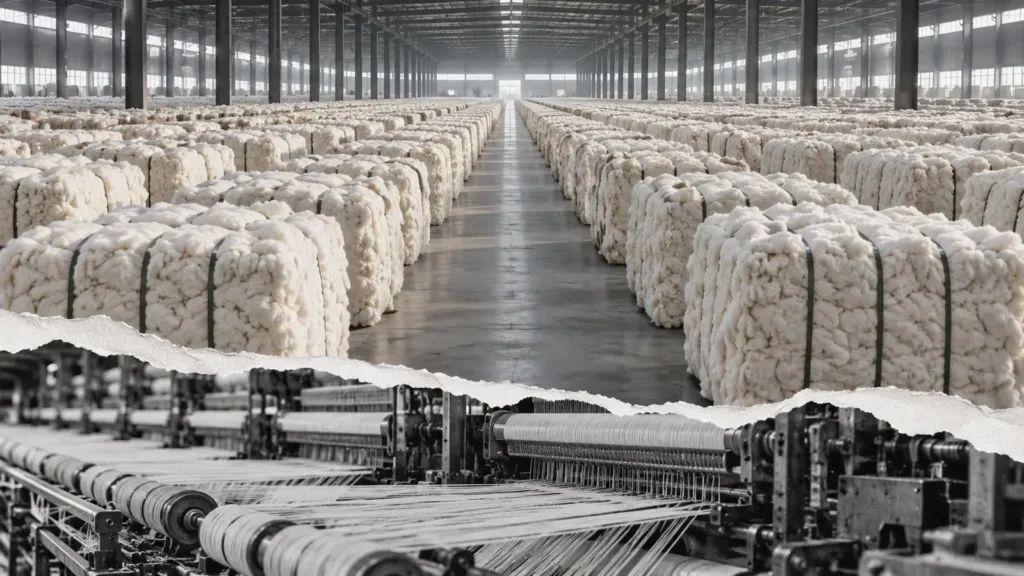
Economic growth is not a human rights verdict
New airports, railways, hotels and energy projects can suggest a region confidently looking toward the future. In Xinjiang, in China’s far west, such signs of economic growth exist alongside longstanding concerns about restrictions on Uyghurs and other predominantly Muslim communities. The two realities cannot be made to cancel each other out. Investment does not disprove allegations of coercion, and the existence of serious human rights concerns does not establish that every commercial transaction in the region involves forced labor.
On October 23, 2026, The Wall Street Journal published an account of Xinjiang’s expanding commercial role. The report described increased trade, infrastructure investment, tourism, energy development and international transport links despite years of criticism concerning detention, surveillance, cultural restrictions and labor practices. Chinese authorities maintain that their policies support security, stability and prosperity and reject allegations of systemic abuses.
The story matters for people far beyond Xinjiang because global supply chains can separate consumers from the circumstances in which materials and products are made. A business may buy through several intermediaries without a clear account of every production stage. Human rights due diligence therefore requires more than a statement that suppliers comply with local law.
What This Article Covers
- What October 2026 reporting says about Xinjiang’s economic expansion.
- The human rights findings and allegations that form the background.
- How forced labor risk differs from proof concerning a specific employer.
- Why supply-chain tracing is difficult.
- The legal and commercial consequences of opaque production.
- What credible due diligence and worker protection require.
Key Takeaways
- New reporting describes significant commercial development and rising trade in Xinjiang.
- The UN human rights office’s 2022 assessment documented serious concerns regarding treatment of Uyghurs and other Muslim minorities.
- China disputes allegations of systemic human rights abuses and presents development policies as beneficial.
- Forced labor risk is a reason for investigation and due diligence, not proof of wrongdoing by every identifiable company.
- Employment may be coercive even where wages or economic activity exist, depending on whether workers can freely refuse or leave.
- Reliable evaluation requires independent evidence and attention to restrictions that can make worker interviews unsafe or unreliable.
What the new reporting describes
The Wall Street Journal characterized Xinjiang as increasingly central to China’s commercial and logistical ambitions. Its reporting pointed to expanded trade, energy infrastructure, tourism and investment, including transport links that could connect the region more closely to neighboring countries and markets.
Such projects have economic significance. Infrastructure can create jobs and improve connections. The question is how benefits are distributed and whether residents can exercise rights freely. A region may experience rising production and investment while some communities remain subject to serious restrictions. Economic indicators alone cannot answer questions about freedom of movement, cultural autonomy, labor choice or access to remedy.
The October report also raised the issue of diminishing international attention. Sanctions and import controls adopted by some governments have not stopped commercial development. That does not necessarily mean those measures are ineffective in every respect, but it highlights the limitations of external trade policy when national investment and alternative markets continue to grow.
Reports of new commercial entrants should not be turned into accusations against particular businesses without specific evidence. Presence in Xinjiang is not itself a finding of forced labor. The fair question for a company is what operations it has, how it assesses risk and what it can substantiate about recruitment and working conditions.
The background of the human rights allegations
In 2022, the Office of the United Nations High Commissioner for Human Rights published an assessment concerning Xinjiang. It described serious human rights concerns involving arbitrary and discriminatory detention, restrictions on fundamental freedoms and allegations connected to labor and employment schemes. The office concluded that the extent of certain detentions may constitute international crimes, particularly crimes against humanity.
Those findings were not a criminal conviction of an individual or business. They represented the assessment of a UN human rights body based on the information available. The Chinese government rejected the assessment and has consistently defended its policies as measures of counterterrorism, vocational training, poverty reduction and development.
Independent access to the region and affected people has been a central issue. Researchers and journalists have described difficulties obtaining reliable information, while individuals may face risks when discussing sensitive experiences. Those circumstances complicate the ordinary process of verifying working conditions through interviews.
The legal and factual questions are specific. Detention, cultural restrictions, labor transfers and employment arrangements may involve different policies and populations. A responsible article should not merge all reported abuses into one undifferentiated allegation or imply that every Uyghur person has had the same experience.
What makes work forced?
Forced labor is work or service exacted under a menace of penalty and not offered voluntarily, as defined in the International Labour Organization’s framework. It is not established merely by low wages, state sponsorship or membership in a particular ethnic group. Nor is a formal employment contract enough to rule it out.
Indicators may include restrictions on leaving, threats, coercive recruitment, retention of identity documents, withholding of wages or penalties for refusing work. In settings where state authority and employment are closely connected, meaningful consent can be especially difficult to assess. A worker may appear to agree while fearing consequences for declining.
The presence of vocational training or poverty-alleviation goals does not settle the question. Such programs can have legitimate purposes, but the actual freedom and treatment of participants must be evaluated. Independent interviews, documentary evidence and the ability to leave an arrangement safely are relevant.
Conversely, claims that every person employed in an industry is forced to work are unsupportable without evidence. The challenge is to recognize credible systemic concerns while avoiding blanket judgments about individuals whose circumstances have not been examined.
The supply-chain problem
Products often pass through multiple processing stages. Raw materials may be extracted or grown in one place, processed elsewhere and incorporated into finished goods in another country. Changes of ownership and origin documentation can obscure upstream relationships. This complexity matters for sectors in which Xinjiang has a commercial role, including agriculture, energy-related materials and manufacturing.
An importer may have a contract with a direct supplier that appears satisfactory yet lack visibility of subcontractors and input sources. Audits can help, but their quality varies. A factory visit arranged in advance may reveal little about recruitment coercion, especially where workers are not free to speak privately.
Meaningful due diligence requires mapping suppliers, examining the origin of materials and evaluating credible reports of systemic risk. Where independent verification is not possible, companies should be honest about that limitation. A blanket assurance that no forced labor exists, unsupported by evidence, is not a reliable substitute for investigation.
Trade rules differ by country. Some jurisdictions impose import restrictions or presumptions concerning certain goods and regions. Businesses should check the current applicable legal framework rather than assume that a policy in one market applies globally.
Development and coercion are not mutually exclusive
One of the hardest questions in reporting on Xinjiang is how to discuss economic change without minimizing people whose rights may have been violated. Increased incomes or improved transport may be real for some residents. They do not erase claims of discrimination or arbitrary detention. Equally, human rights concerns should not be used to deny the agency or ordinary economic aspirations of those living in the region.
The issue is whether development occurs within conditions that allow people to make meaningful choices. Can workers refuse a placement? Can families maintain cultural and religious practices? Can people challenge mistreatment independently? These questions are not answered by the opening of a new hotel or a reported increase in exports.
International debate is often polarized between a narrative of unqualified modernization and one of total repression. Careful journalism must resist both simplifications. Evidence should be attributed, government denials fairly stated and uncertainty acknowledged where independent verification is limited.
Human rights protection also includes due process and safeguards against collective blame. Residents of Xinjiang should not be stigmatized by assumptions about their ethnicity or regional origin. Responsibility for abuses, where established, belongs to those responsible for policies and acts, not to populations as a whole.
What governments and companies can do
Governments have tools ranging from diplomatic engagement and independent monitoring to customs enforcement and import restrictions under applicable law. Those choices carry legal and economic consequences and should be evaluated for effectiveness, unintended effects and the protection of affected people.
Companies can undertake risk-based tracing, seek credible independent information, evaluate recruitment processes and establish mechanisms for addressing harm. They should not rely on coercive worker interviews or superficial assurances. If meaningful verification is impossible, that is a material risk to disclose and manage.
Remediation is complicated when workers cannot safely report concerns. A company’s public announcement that it has exited a supplier may reduce its own exposure without resolving what happens to workers. Responsible approaches should consider those effects while refusing to normalize exploitative practices.
Civil society and researchers need safe access to evidence. They also have a duty to avoid exposing vulnerable people through careless publication of names, workplaces or communications. Documentation is most valuable when it strengthens accountability without increasing danger.
This story has no direct, verified connection to a Not For Sale field project in Xinjiang. The organization works to confront modern-day slavery, but its role should not be inflated merely to attach a program mention to an important global news topic.
The question behind the investment figures
Xinjiang’s economic expansion may reshape trade routes and commercial supply chains. It has not resolved the serious human rights questions raised over years by the UN, researchers and affected communities, nor has international criticism stopped investment.
The next stage of reporting must examine both realities with rigor. Development should be measured not only in trade, infrastructure and output, but in the ability of the people doing the work to make free choices and exercise their rights.
Frequently Asked Questions
What is the new Xinjiang story in October 2026?
The Wall Street Journal reported October 23 on expanding trade, energy, infrastructure and tourism in Xinjiang amid unresolved international human rights concerns.
What did the UN say about Xinjiang?
The UN human rights office’s 2022 assessment described serious concerns about detention, restrictions and labor-related allegations; it said certain detention practices may amount to international crimes.
Does China accept the forced labor allegations?
Chinese authorities reject allegations of systemic abuse and defend their policies as supporting security, training and prosperity.
Does operating in Xinjiang prove a company uses forced labor?
No. Regional presence alone does not establish misconduct. Companies should assess documented risks and substantiate their supply-chain claims.
What is forced labor?
Under the ILO framework, it involves work exacted under a threat of penalty when the person has not offered themselves voluntarily.
Why are audits difficult?
Recruitment chains can be opaque, and workers may not be able to speak freely or independently, undermining conventional audit methods.
Which products may involve Xinjiang supply chains?
The region is involved in several agricultural, energy and manufacturing sectors. The origin and conditions of any specific product require verification.
What should buyers and companies do?
Apply relevant laws, trace high-risk supply chains, seek credible evidence, disclose limitations and consider effective remediation where harm is found.
Sources
Not For Sale
A global movement fighting modern-day slavery and ecocide in 33 countries. Building on the frontlines since 2007.
Related Articles