Indonesia’s 2026 Forest Fires Expose the Limits of Fighting Smoke After It Starts
Rain has eased some Indonesian fire hotspots, but officials warn conditions remain dangerous. The 2026 fire season is a reminder that peatland drainage, land management and public health cannot be treated as separate problems.

When the rain comes, the fire problem does not necessarily end
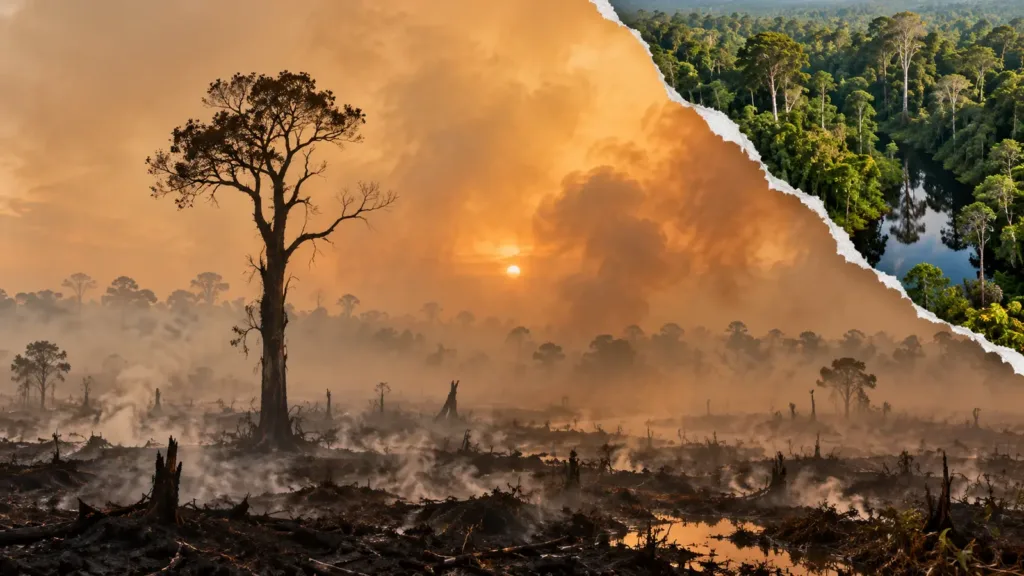
Rain was beginning to reduce fire hotspots in parts of Indonesia when officials offered an unusually cautious assessment on October 22, 2026. The number of detected hotspots had eased, according to reporting by Reuters, but the rainfall was still insufficient to remove the threat. That distinction sits at the center of Indonesia’s 2026 forest-fire crisis. A short spell of wet weather can quiet the smoke without changing the conditions that allow fires to return.
Indonesia’s fires are often described through satellite images, haze maps and the number of aircraft deployed to fight flames. Those measures are useful during an emergency, but they can obscure what is happening below ground. On peatland, a fire can burn through organic soil accumulated over centuries. Drainage makes that material unusually vulnerable. When peat catches fire, suppressing visible flames does not necessarily extinguish smoldering beneath the surface.
The stakes reach beyond the area burned. Residents may breathe smoke for weeks. Children, older adults and people with respiratory conditions can face particular health risks. Schools and transport may be disrupted. Wildlife habitat deteriorates, and carbon stored in soils enters the atmosphere. Where haze crosses borders, the environmental problem becomes a diplomatic one as well.
What This Article Covers
- What Indonesian officials reported about fire conditions in October 2026.
- Why peatland fires behave differently from ordinary surface fires.
- How drainage, land use and extreme weather interact.
- The health, climate and ecological consequences of recurrent haze.
- The difference between an environmental disaster and a criminal offense.
- What long-term prevention would require.
Key Takeaways
- Reuters reported on October 22 that Indonesia’s fire hotspots had eased, but officials said rainfall was not yet sufficient.
- Satellite hotspot readings indicate possible thermal anomalies; they are not automatically a count of confirmed fires or hectares destroyed.
- Drained peat is difficult to extinguish once ignited and can release substantial pollution.
- Weather influences the severity of a fire season, but land and water management influence vulnerability.
- The existence of fire does not establish that an individual or company committed an environmental crime.
- Lasting prevention requires monitoring, peat rewetting, accountable land management and protection for affected communities.
What happened in October
The latest update emerged during a difficult Indonesian fire season. Officials described an improvement in hotspot conditions linked to rain while emphasizing that the situation remained precarious. The warning reflects the variability of rainfall across the archipelago. One district may see showers sufficient to dampen vegetation while another remains dry, and the deeper layers of drained peat may still lack enough moisture.
Hotspot figures should be read with care. Satellite instruments detect elevated surface temperatures or other thermal anomalies, and authorities then use additional information to assess whether a reading reflects active fire. Cloud cover, satellite overpass times and detection thresholds affect what is recorded. A fall in hotspot numbers is encouraging, but it does not prove that all fires are extinguished or that smoke exposure has ended.
Likewise, comparisons with previous years need consistent measurement periods and definitions. Some reporting characterized the 2026 season as particularly severe compared with recent years. That context is significant, but a reader should distinguish annual burned-area estimates, fire counts, hotspot readings and air-quality measurements. They describe related but different dimensions of the crisis.
The most immediate public-health question is what people are actually breathing. Haze can contain fine particulate matter that penetrates deep into the lungs. Local pollution readings, medical guidance and the duration of exposure matter more to a family deciding whether children should be outdoors than a national tally of hotspots.
Why peat makes Indonesia particularly vulnerable
Peatlands form when waterlogged conditions slow the decomposition of vegetation, allowing layers of organic material to accumulate. In a functioning peat ecosystem, a high water table helps keep that carbon-rich soil saturated. Drainage canals alter the balance. They may be cut to make land easier to access, cultivate or develop, but they also expose peat to air and allow it to dry.
Dry peat can ignite and burn below the surface. This makes suppression expensive and technically demanding. Firefighters may need sustained water supplies and access to places that are difficult to reach. Aerial water drops can help manage flames in vegetation while doing less to address buried smoldering. Rewetting and canal management can be crucial to reducing future risk.
Not every Indonesian forest fire is a peat fire, and not all land-use fires share a single cause. Lightning, deliberate burning, accidents and fires that spread from neighboring areas can all play roles depending on location and season. Investigating a fire’s origin requires ground evidence and reliable land-tenure records. It is unsound to assume criminal responsibility from a satellite image alone.
The long-standing concern is that land-use systems can make entire landscapes easier to burn. Where forests have been fragmented, drainage canals are widespread or enforcement of burning restrictions is inconsistent, an unusually dry period can have consequences far beyond a single ignition.
The connection with climate change
Climate change does not explain every fire or replace the need to investigate individual causes. It can, however, influence heat, rainfall variability and the severity of dry conditions in regions already vulnerable to fire. Weather systems such as El Niño also affect Indonesian rainfall. Their interaction with longer-term warming and land alteration makes fire seasons difficult to understand through a single factor.
Peat creates a feedback problem. A drained peatland can become more prone to burning, and burning releases carbon that would otherwise remain stored in soil. Recurrent fire can degrade the landscape, making restoration harder and undermining the natural functions that keep it wet. A brief reduction in flames can therefore coexist with a worsening ecological balance.
Protecting intact peatlands is often more straightforward than repairing heavily drained ones. Restoration requires hydrological planning, enforcement, community participation and long-term funding. Blocking a drainage canal without understanding downstream livelihoods or water movement can create unintended consequences. Durable work must fit the entire landscape.
What haze does to communities
Air pollution is frequently presented as a regional average. The human experience is less uniform. A person working outdoors may have little control over exposure. A household may lack filtration or a room that can be kept relatively free of smoke. Children may miss school. An older person with an existing respiratory illness may need care in a clinic under additional pressure during a haze episode.
The smoke itself can cross administrative and national boundaries, meaning the source of emissions and the place of exposure are not always the same. That is why haze has repeatedly become an issue within Southeast Asian regional cooperation. Forecasting and data-sharing are important, but communities also need timely and comprehensible health advice, accessible care and credible information about when conditions are safe.
Workers and small landholders can face competing pressures. A family earning its income from agriculture may be asked to stop practices while having little access to alternatives. That does not excuse unlawful burning, but it explains why prevention built only around punishment may fail. Addressing land conflicts, financing sustainable practices and enforcing rules fairly can be more durable than emergency declarations.
Is this ecocide or an environmental crime?
The scale of a fire does not, by itself, establish that a legal crime has occurred. Deliberate illegal burning, breaches of environmental permits, negligence and other offenses may be investigated under applicable Indonesian laws when supported by evidence. Responsibility may be contested, and individual allegations need careful attribution. The word ecocide is often used in advocacy to describe severe environmental harm, but it should not be presented as a court’s legal finding when none has been made.
There is a related but distinct issue of labor exploitation. Seasonal workers, land-clearing crews and migrants may work under difficult conditions in agricultural and forestry supply chains. Certain circumstances can raise risks of coercion or debt bondage. Still, the presence of haze or land conversion is not evidence that trafficking occurred. Any such connection must be reported from a specific investigation, not inferred from the environmental crisis.
This restraint strengthens environmental accountability. It allows journalists to describe severe, documented damage without weakening the story through unproven accusations against particular people or businesses.
The problem with judging success only by extinguished fires
Emergency response matters. Fire crews protect lives and property and can prevent damage from spreading. Weather forecasts and satellite monitoring help target resources. But annual fire management becomes a cycle of crisis if it is not supported by investment before the dry season.
Meaningful measures include peat water-table monitoring, restoration of degraded areas, independent audits of land management, clarity over land rights and public access to credible air-quality information. Officials should be able to assess whether interventions prevent ignition, reduce burned area, limit smoke exposure and protect biodiversity over several years.
There is also a governance question. Where several agencies are responsible for forests, agriculture, land tenure, water and health, no single institution may be accountable for all the consequences of drainage and fire. Coordination has to survive beyond the weeks when haze dominates the news.
Cross-border cooperation should focus on consistent measurement and practical prevention. When pollution moves across national boundaries, reliable disclosure of source regions and health impacts can matter as much as diplomatic statements. Independent researchers, affected communities and public-health authorities all have roles in testing official claims.
What would a different response look like?
The most useful starting point is to treat peatland water as protective infrastructure. A functioning wetland reduces fire vulnerability while supporting biodiversity and storing carbon. Its value is seldom captured in the economics of short-term conversion. Policies that reward drainage and rapid clearing can undermine prevention programs funded by other parts of government.
A second priority is to help communities participate in decisions about their land. Local experience of flooding, drought, canal use and fire spread can improve restoration plans. Participation should be meaningful rather than a consultation held after key decisions have already been made.
A third priority is public transparency. A reported reduction in hotspots is news, but it should be accompanied by data about verified fires, burned area, air quality, response capacity and the condition of peatlands. Those measures make it harder for temporary rain to be mistaken for structural progress.
Not For Sale has reported on Indonesia’s peat-fire crisis because the destruction of ecosystems and the health of communities are inseparable. Its direct project experience in other parts of Southeast Asia should not be misrepresented as operational involvement in Indonesian firefighting or peat restoration. The connection here is the wider principle that ecological protection must include the people whose lives depend on the landscape.
The warning after the rain
Indonesia’s immediate task is to contain current fires and protect people from dangerous smoke. Its longer task is to make another severe season less likely. That requires attention to what lies beneath a hotspot: soil, water, land rights, economic incentives and the capacity of public institutions.
Rain can interrupt a disaster. It cannot, on its own, repair the decisions that left a landscape ready to burn.
Frequently Asked Questions
Are Indonesia’s forest fires still active in October 2026?
Officials reported on October 22 that hotspots had eased with rain, while warning that rainfall was still insufficient to eliminate fire risk. Conditions vary by region.
What is a peat fire?
A peat fire burns carbon-rich organic soil, sometimes below the surface. It can be difficult to extinguish and can continue smoldering after visible flames diminish.
Why are peatlands drained?
Drainage can be associated with agriculture, access roads and land development, but it also lowers the water table and increases the risk of fire.
Are satellite hotspots the same as confirmed fires?
No. Hotspots are satellite-detected thermal anomalies. They require interpretation and, where possible, verification alongside other data.
Can Indonesian haze affect neighboring countries?
Yes. Smoke can move across borders depending on winds and weather, creating regional air-quality and public-health concerns.
Does climate change cause all the fires?
No. Ignition sources and land-use practices matter. Climate change and weather patterns can influence conditions that make fires more severe.
Are all forest fires illegal?
No. Criminal responsibility depends on circumstances and applicable laws. The presence of a fire does not establish who caused it or whether an offense occurred.
What is the best long-term prevention?
Peat rewetting, protection of intact ecosystems, responsible land management, effective enforcement, local participation and consistent monitoring all play important roles.
Sources
Not For Sale
A global movement fighting modern-day slavery and ecocide in 33 countries. Building on the frontlines since 2007.