Peru Project Update: Equipping a New Indigenous Youth Hostel in Madre de Dios
Not For Sale Project Director Ricardo Dawson reports from Madre de Dios, where a new $16,000 contribution is helping equip a youth hostel for Indigenous students, the latest chapter in a partnership with local communities that has continued for more than a decade.
PERU: PROJECT UPDATE
A new $16,000 contribution from Not For Sale is helping equip a youth hostel in the Peruvian Amazon, giving Indigenous students from remote communities a place to live, study and continue their education.
Here in Madre de Dios, young people are beginning to return from their holidays, and that means the new youth hostel is beginning to come to life.
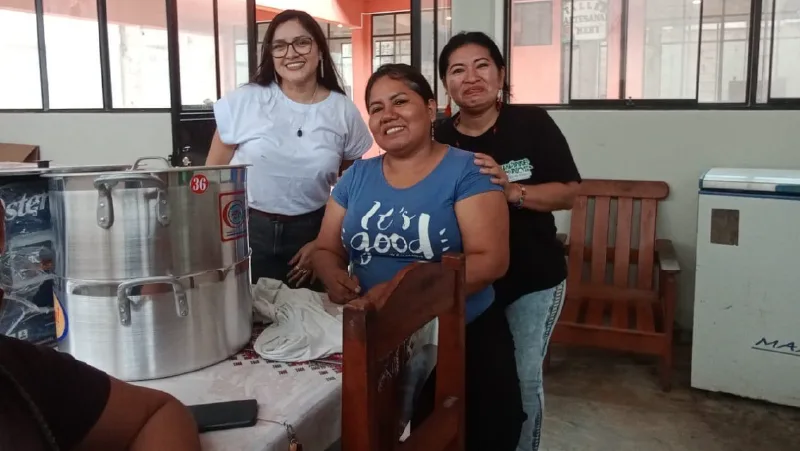
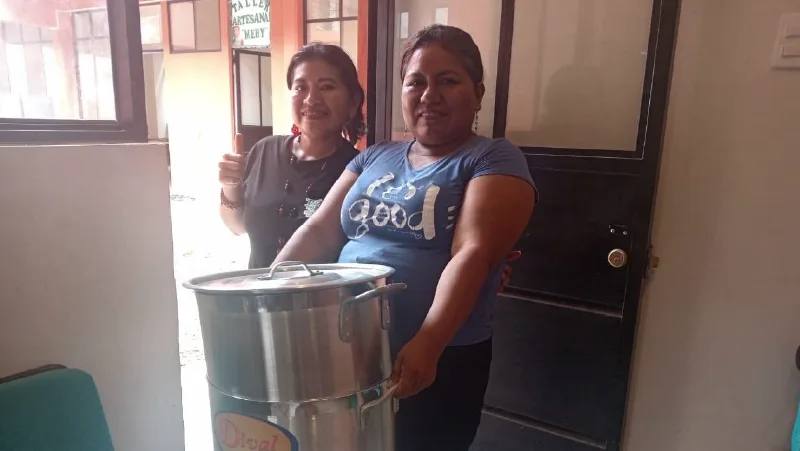
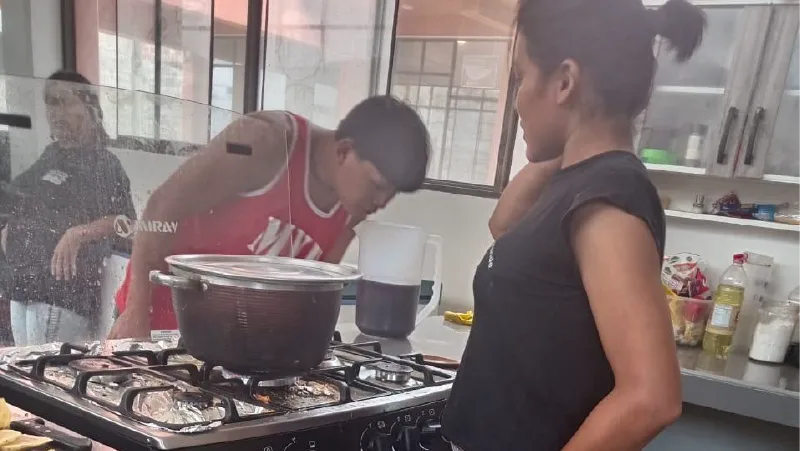
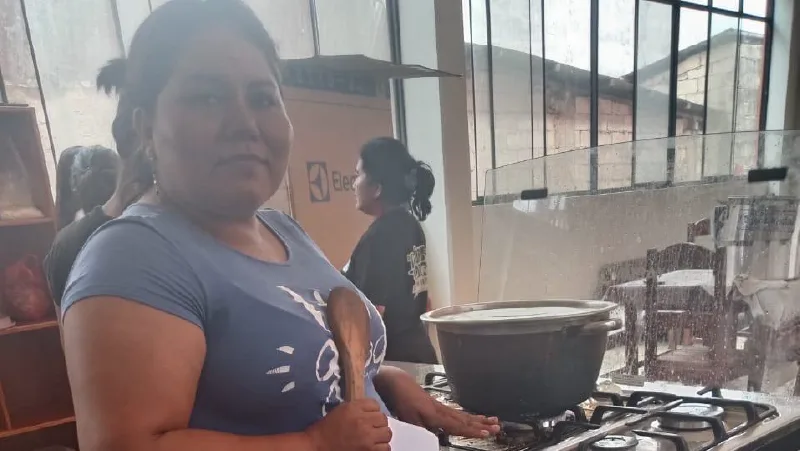
Over the past few weeks, much of my time has been spent on things that can look very ordinary from the outside: buying cooking equipment, finding the right utensils, arranging deliveries and making sure everything is installed properly. In the photographs from our latest visit, you can see some of what has already arrived. There are large cooking pots, a new stove and supplies that will become part of the everyday life of this hostel.
These are simple things, but they matter enormously. A hostel cannot function on good intentions. Young people need somewhere they can cook and eat, somewhere they can sleep properly and somewhere they can study. Our current contribution of $16,000 is helping put that basic infrastructure in place.
The kitchen is the first stage. Next, we will furnish the dining room, followed by the bedrooms.
For Not For Sale, however, this is not simply a story about buying furniture. It is another step in a relationship with the Indigenous communities of Madre de Dios that has developed over many years, and one that I believe helps explain what long-term partnership can actually look like.
Why the youth hostel matters
Madre de Dios is an enormous and predominantly rural region of the Peruvian Amazon. Covering roughly 84,000 square kilometers, it contains communities spread across a landscape of rainforest and river systems where access to education can involve challenges very different from those faced by a student living close to a school in a city.
For some young people from Native communities, continuing their education means spending time away from home. Having safe accommodation is therefore not separate from education. It is part of what makes education possible.
That has long been an important part of Not For Sale’s work in Peru. Our programs have supported housing, school fees, supplies and other forms of assistance intended to help young people remain in education, while our wider work has sought to strengthen the economic opportunities available to their families and communities.
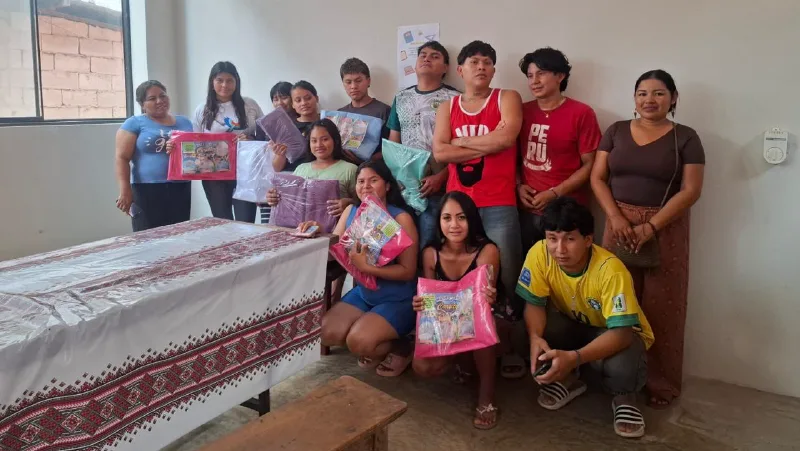
The hostel continues that approach. The equipment we are purchasing now means that when students arrive, there is a functioning place waiting for them. They can eat there, sleep there, attend school and return to an environment where they can study. That is why I see a cooking pot or a bed differently when I am buying it here. The object itself is not the outcome. What matters is what it allows a young person to do.
A $16,000 contribution, and more still to do
This latest Not For Sale contribution totals approximately $16,000, and both FENAMAD and AFIMAD have been extremely pleased to see the new equipment arriving.
Our partners are grateful for what has been provided, but there is still considerably more that needs to be done. Completing the hostel requires more furnishings and equipment, particularly as we move from the kitchen into the dining room and bedrooms.
I have said many times that, in my experience here, “for every dollar Not For Sale invests, the communities receive two, and sometimes four.” I do not mean that as an audited financial calculation. I mean that I have repeatedly watched a well-placed contribution create something larger around it. An initial investment can unlock community participation, strengthen an organization, enable another opportunity or help infrastructure serve people for years beyond the moment when it was purchased. The value does not always stop at the price written on the receipt.
Understanding FENAMAD and AFIMAD
To understand why this partnership matters, it is important to understand the two Indigenous organizations involved, because FENAMAD and AFIMAD have quite different roles.
FENAMAD, the Federación Nativa del Río Madre de Dios y Afluentes, is the regional representative federation of Indigenous peoples in the Madre de Dios river basin. It was created by Indigenous communities themselves to represent their collective interests, channel proposals and demands to the Peruvian state and civil society, defend fundamental and collective rights and promote the wellbeing of Indigenous communities. FENAMAD says it represents 37 communities belonging to seven Indigenous peoples and also works to defend the rights of Indigenous peoples living in isolation and initial contact.
It is therefore better understood as an Indigenous representative federation than as a conventional regional government. Its work spans territorial rights, Indigenous governance, education, health, environmental protection, legal advocacy and the defense of self-determination.
AFIMAD, the Asociación Forestal Indígena de Madre de Dios, has a different purpose. It is an Indigenous forest association focused on creating sustainable economic opportunities from the standing rainforest. Today, AFIMAD says it brings together around 200 Indigenous families who protect approximately 57,000 hectares of forest and work with products including sustainably harvested Amazonian Brazil nuts.
AFIMAD is also part of FENAMAD’s organizational structure as one of its technical units, meaning the two bodies are closely connected while remaining distinct. FENAMAD provides the broader regional structure for Indigenous representation and rights, while AFIMAD is much more directly concerned with forest livelihoods, production and economic development.
That distinction matters because Not For Sale’s relationship in Peru has never been based on imposing one solution from outside. We have been able to work alongside organizations that already understand their communities, their forest and their priorities far better than anybody arriving from somewhere else could.
A partnership built year after year
The donation we are making now follows support provided year after year since 2012. That consistency matters.
Communities are often presented with projects that appear for a short period, provide something useful and then disappear. What FENAMAD and AFIMAD increasingly recognize in Not For Sale is something different: a partner that continues to come back.
Over time, the relationship has expanded far beyond individual donations. Not For Sale helped provide seed funding and management support for AFIMAD as an Indigenous cooperative model, strengthening a Brazil nut supply chain that creates economic value from keeping the rainforest standing rather than destroying it. Our wider Peru work has included education, housing, community development and economic alternatives in a region where illegal mining and exploitation have created enormous pressures.
This is part of the philosophy behind Not For Sale’s broader social innovation model. Immediate assistance matters, but we also have to ask what enables people and communities to become more secure over the long term.
A bed in a hostel can help someone remain in school. Education can create more choices. A functioning Indigenous enterprise can provide families with income that does not require destroying the forest. Stronger community organizations can give people greater ability to protect their territory and represent their own interests. Those things are connected.
From education to Indigenous leadership
One of the reasons I believe so strongly in this long-term approach is that we have already seen what can grow from it. More than a decade ago, the Native Community of Palma Real asked Not For Sale for assistance in helping its young people continue their education. We helped cover school fees and housing for more than 30 children from the community. One of those young people was Aydee Silva Chaeta Saavedra.
Aydee went on to qualify as a registered nurse and was later appointed to the Governing Board of FENAMAD. Her story is important not because Not For Sale can claim responsibility for what she achieved. Aydee’s achievements are her own. What it demonstrates is what becomes possible when talented young people are given the opportunity to continue their education and determine their own futures.
When I look at the young people arriving at this hostel today, that history is very much in my mind. We cannot know where each person’s education will take them. That is precisely the point. Education creates possibilities that should belong to them and only them.
Freedom and dignity are bigger than a donation
AFIMAD and FENAMAD appreciate the furniture and equipment that Not For Sale is providing, but what has become important to me is that they no longer see our contribution simply in terms of the objects being donated.
They see the relationship as something that can help create greater freedom and dignity for the people they represent. Those are big words, and I do not use them casually. Freedom, in this context, means having genuine choices. It means a young person being able to continue studying. It means a family having an economic alternative to an exploitative industry. It means an Indigenous community having greater control over its resources and its future.
Dignity means that these solutions are built with people rather than for them. That distinction has shaped what Not For Sale has learned in Madre de Dios.
Protecting people and protecting the Amazon are the same story
There is another reason the success of these communities matters far beyond Peru.
Madre de Dios contains some of the most extraordinary rainforest on Earth, but it also sits on the frontline of illegal gold mining, deforestation, mercury contamination and other forms of environmental destruction. FENAMAD’s work itself places territorial protection, self-determination and sustainable management of the forest at the center of Indigenous wellbeing.
Not For Sale’s recent reporting on illegal gold mining in Peru and its connections to forced labor explains why we cannot neatly separate the human and environmental sides of this problem. Illegal mining can destroy forests and contaminate waterways, while the economies surrounding extraction can also create conditions for forced labor, trafficking and sexual exploitation. At the same time, when communities lose sustainable livelihoods from the forest, economic vulnerability can increase.
I wrote recently about this wider pressure in our update on the environmental and human-rights crises facing the Amazon. From illegal logging and mining to pollution, fire and changing weather patterns, the pressures on the communities here are not abstract. They affect food, water, income, health and the ability of people to remain securely on their land.
This is why supporting Indigenous communities is also part of protecting the forest.
The people who have lived with these ecosystems for generations are not simply beneficiaries of Amazon conservation. They are among its most important custodians.
What happens next
For now, our work at the hostel continues.
The kitchen equipment is arriving and being installed. The next task is the dining room, and then we will move into the bedrooms. There will be more purchases, more deliveries and inevitably more practical problems to solve along the way, but I think it is important to occasionally stop and recognize what those ordinary tasks represent.
This $16,000 contribution is one more investment in a relationship that has continued year after year. It is one more way of telling our partners at AFIMAD and FENAMAD that Not For Sale is still here. Most importantly, it is helping create a place where another group of young Indigenous people can live while they study and pursue whatever future they choose for themselves.
The need is greater than what we have provided, and we have more work to do, but the hostel is taking shape, and soon, the young people it was built for will be the ones filling it.
Ricardo Dawson
Project Director, Not For Sale Peru
Topics in this story
See all topics
Ricardo Dawson
Peruvian abolitionist and Not For Sale's Peru country director, based in Madre de Dios, where he has led the organization's work with Amazon communities since 2007.