How Conflict is Shaping Ebola Outbreaks in Eastern DRC
Discover the complex intersections of Ebola outbreak mining regions with human trafficking. Learn how these crises impact lives and what actions can be taken.

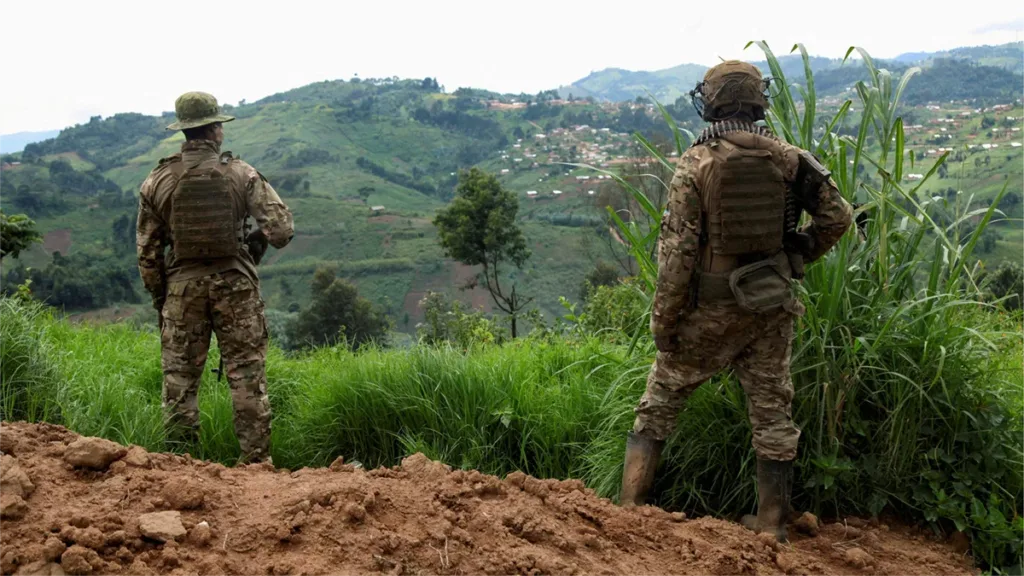
Key takeaway: Conflict does not create Ebola, but it can turn an outbreak into a far larger human crisis. In eastern Democratic Republic of Congo, Ebola is currently spreading through a landscape already fractured by armed violence, displacement, mistrust, overcrowded camps, weak health systems, mining mobility, and chronic humanitarian neglect. The result is not just a medical emergency. It is a protection emergency, a trust emergency, and a warning about what happens when communities are asked to survive war and disease at the same time.
What This Article Offers
This article explains how conflict shapes Ebola outbreaks in eastern DRC, why the current Bundibugyo Ebola outbreak is so difficult to contain, and what the crisis reveals about displacement, public health, community trust and human vulnerability. It draws on current reporting from the World Health Organization, the London School of Hygiene & Tropical Medicine, ECDC, CDC, Reuters, UNHCR and humanitarian sources to show that Ebola response cannot be separated from the conditions in which people live.
For Not For Sale, this matters because health crises do not exist in isolation. When families flee violence, lose income, become separated from support networks or are pushed into informal work and unsafe migration, the risk of exploitation grows. Ebola is not only a virus moving through bodies. It is moving through systems already under pressure.
What Is Happening in Eastern DRC?
The current Ebola outbreak in eastern Democratic Republic of Congo is caused by the Bundibugyo virus, one of the Ebola virus species capable of causing severe and often fatal disease in people. The outbreak was officially declared in May 2026 in Ituri province, in the northeast of DRC, close to Uganda and South Sudan. It has since spread across affected areas of Ituri, North Kivu and South Kivu, with Uganda also reporting cases linked to cross-border movement.
As of late June 2026, the numbers have risen sharply. European health authorities reported more than 1,100 confirmed cases in DRC, with more than 300 deaths. Ituri remains the center of the outbreak, accounting for the overwhelming majority of cases. The situation is changing rapidly, and health officials have warned that the confirmed numbers may not fully capture the true scale of transmission.
That matters because Ebola is a disease where time is everything. The faster responders can identify a case, isolate the patient, trace contacts, test samples, protect health workers and safely bury the dead, the better the chance of stopping transmission. But in eastern DRC, every part of that chain is made harder by conflict.
This is the central story: the virus is dangerous, but the conditions around the virus are what allow it to spread.
Why Conflict Changes the Course of an Ebola Outbreak
An Ebola outbreak in a stable, well-resourced setting is already a major public health emergency. An Ebola outbreak in a conflict zone is something else entirely. Conflict breaks the systems that outbreak response depends on: roads, hospitals, trust, local leadership, security, water, sanitation, food access and basic communication.
In eastern DRC, many communities have lived for years with armed groups, roadblocks, extortion, displacement and attacks on civilians. Health facilities are not always safe. Humanitarian teams may be blocked from reaching affected zones. Families may move repeatedly, not because they want to travel, but because staying still has become dangerous. This constant movement makes contact tracing extremely difficult.
Ebola control relies on knowing who has been exposed. Health workers need to find contacts, monitor them for 21 days, test people who become symptomatic, and isolate confirmed cases quickly. But when people are displaced, hiding, crossing informal borders, moving through mining areas, or fleeing violence, the map of transmission becomes blurred. A person exposed in one health zone may fall ill in another. A contact may leave a camp before health workers arrive. A patient may avoid treatment because they fear isolation, stigma, or never seeing their family again.
In a conflict setting, the question is not simply, “Where is the virus?” It is, “Who can safely reach the people affected by the virus, and will those people trust them when they arrive?”

The Role of Displacement and Overcrowded Camps
Eastern DRC is home to one of the world’s largest displacement crises. Millions of people have been forced from their homes, with large numbers living in North Kivu, South Kivu and Ituri. Many are in formal or informal displacement sites, while others live with host communities already struggling with poverty, food insecurity and limited health services.
Displacement camps create conditions where Ebola can move more easily. This is not because displaced people are the problem. They are not. They are people trapped in a crisis they did not create. The problem is the environment: crowded shelters, shared sanitation, limited clean water, weak isolation capacity, poor access to healthcare and fear of being moved again.
In some camps, hundreds of people may share a small number of toilets. Open defecation may occur where facilities are overwhelmed. Families live close together, often in temporary shelters with little privacy. If someone develops fever, fatigue, vomiting or diarrhea, the symptoms may initially look like malaria, cholera, typhoid or another common illness. By the time Ebola is suspected, multiple people may already have been exposed.
This is why humanitarian access is not a side issue. It is central to disease control. If health workers cannot enter camps safely, they cannot trace contacts. If families cannot isolate safely, they may continue caring for sick relatives at home. If burial teams cannot operate with community consent, unsafe burials can become a major driver of transmission. If people fear that reporting symptoms will separate them from their children or expose them to violence, they may hide illness until it is too late.
A displaced person does not need another lecture about risk. They need protection, food, water, information, dignity and a reason to believe that asking for help will not make them less safe.
Why Trust Is as Important as Testing
Ebola response often sounds technical: surveillance, diagnostics, isolation, infection prevention, contact tracing. These tools matter. But in eastern DRC, technical systems only work when they are carried by trust.
The London School of Hygiene & Tropical Medicine has emphasized that mistrust and misinformation during outbreaks in DRC are deeply tied to lived experience: years of conflict, political instability, under-resourced healthcare, and the sudden arrival of money and international attention during epidemics. For communities that have watched hospitals struggle for years, the sudden mobilization of outside agencies can feel confusing or even suspicious. People ask a painful but rational question: why does help arrive when the world fears a virus, but not when we are living through violence, hunger and displacement?
That question sits at the heart of many Ebola responses. When communities see white tents, protective suits, vehicles, security forces and restrictions on burial practices, they may not see care. They may see control. They may see outsiders arriving to manage a disease while the deeper suffering of the community remains unaddressed.
Mistrust can then turn into resistance. Some families may hide sick relatives. Some may refuse testing. Some may bury loved ones secretly. Some may attack treatment centers or vehicles, not because they are irrational, but because fear, grief and historical neglect have created a combustible environment.
This does not excuse violence against health workers. Health workers are risking their lives to save others. But if the goal is to stop Ebola, response teams must understand why people resist. Trust is not built with posters alone. It is built by listening, employing local people, respecting community leaders, providing transparent information, supporting survivors, protecting families and treating communities as partners rather than obstacles.
Attacks on Health Workers and Treatment Centers
During the 2018 to 2020 Ebola outbreak in North Kivu and Ituri, the world saw how violence can derail outbreak control. That epidemic became the second largest Ebola outbreak on record and killed more than 2,200 people. Health workers faced repeated attacks, treatment centers were targeted, and operations were suspended in some areas.
Those memories matter because they are not distant history. They shape the current response. In 2026, reports have again described attacks on health facilities, patients fleeing isolation, threats against medical personnel and community anger around burial practices. Every attack creates a public health consequence. If a treatment center is burned, patients scatter. If burial teams are threatened, bodies may remain in homes or be buried unsafely. If health workers are abducted, attacked or forced to withdraw, surveillance weakens.
Ebola spreads through direct contact with the bodily fluids of a symptomatic person or the body of someone who has died from the disease. This means caregivers, health workers and family members are at particular risk. Safe isolation and safe burials are not bureaucratic rules. They are lifesaving interventions. But when those interventions are imposed without trust, they can become flashpoints.
The lesson from eastern DRC is clear: security cannot be treated as separate from health, and health cannot be delivered as if conflict were background noise. In a place where violence is part of daily life, outbreak response must be designed around safety, consent and local legitimacy from the beginning.
Mining Mobility and the Spread of Disease
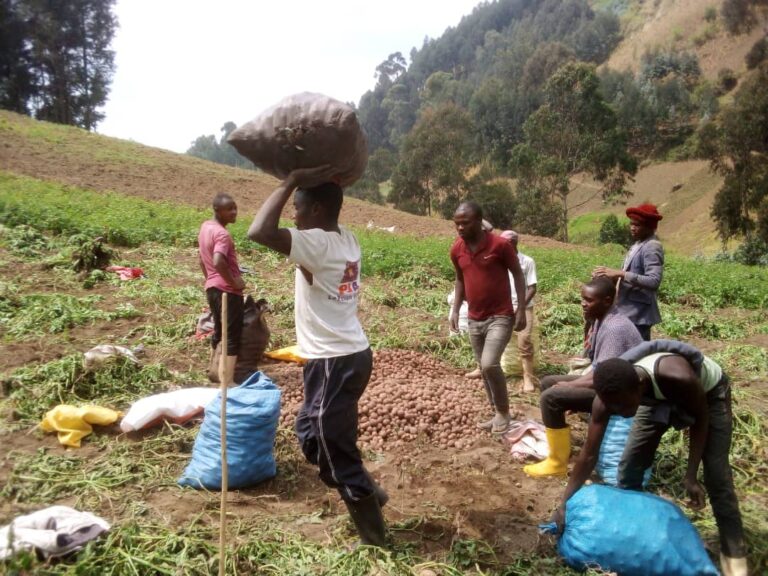
Another factor shaping the current outbreak is mobility connected to mining. Parts of Ituri and eastern DRC are shaped by formal and informal mining economies. Workers may move between sites, towns, border areas and home communities. Some are young men traveling from other parts of the country. Others work in precarious, informal conditions with limited access to health services or stable accommodation.
This kind of movement can complicate contact tracing. A miner may not have deep local ties in the place where he works. He may sleep in temporary housing, move between sites, or return home when sick. If he becomes infected, health workers may struggle to identify who he had contact with. If he leaves before symptoms are recognized, transmission may be seeded elsewhere.
Mining economies also matter because they often exist in the same spaces where exploitation, coercion and informal labor risks are already present. It is important not to overstate the evidence. Ebola does not automatically create trafficking. But crisis conditions can increase vulnerability. When income disappears, borders tighten, movement becomes more desperate, and families lose protection, people may be more likely to accept dangerous work, fall into debt, rely on unsafe brokers or move through informal routes.
This is where public health and anti-trafficking work overlap. Both are concerned with systems that fail to protect people. Both recognize that vulnerability is produced by conditions: poverty, displacement, insecurity, lack of services and absence of safe choices.
Why Bundibugyo Ebola Is Especially Concerning
The Bundibugyo virus is less familiar to many people than the Zaire Ebola virus, which caused the 2014 to 2016 West Africa epidemic and the 2018 to 2020 eastern DRC outbreak. That distinction matters because vaccines and treatments developed for Zaire Ebola do not automatically solve a Bundibugyo outbreak.
Health authorities have stated that there is currently no approved vaccine or specific treatment for Bundibugyo virus disease. That does not mean care is impossible. Supportive treatment can save lives by managing dehydration, organ complications, bleeding, secondary infections and shock. Experimental therapies and candidate vaccines are being assessed. But the absence of an approved vaccine raises the stakes for the basics: early detection, isolation, contact tracing, infection prevention, community engagement and safe burials.
Bundibugyo Ebola can be difficult to recognize early. Initial symptoms may include fever, fatigue, muscle pain, headache and sore throat. These symptoms overlap with other illnesses common in the region. Without laboratory testing, it can be hard to distinguish Ebola from malaria or other febrile diseases. In an under-resourced or conflict-affected health system, that delay can be deadly.
This is why decentralized testing matters. If samples must travel long distances through insecure areas, results are delayed. If results are delayed, isolation is delayed. If isolation is delayed, transmission continues. In outbreak response, a lost day can become a lost chain of contacts.
Cross-Border Risk: DRC, Uganda and South Sudan
The geography of the outbreak adds another layer of complexity. Ituri sits near borders with Uganda and South Sudan, and communities across the region are connected by trade, family relationships, labor movement, transport routes and informal crossings. People do not stop moving because a border exists on a map.
Uganda has reported cases linked to movement from DRC, including imported infections and limited secondary transmission. Health authorities have also monitored contacts and strengthened readiness. The risk to South Sudan and other neighboring areas remains a concern because cross-border movement is part of daily life. Preparedness cannot stop at national borders.
This is one of the reasons WHO and Africa CDC launched a continental preparedness and response plan. Ebola control in this context requires coordination between governments, regional bodies, community leaders, humanitarian agencies and local health systems. A fragmented response creates gaps. A patient may cross a border. A contact list may not be shared quickly. A rumor may spread faster than official information. A trading route may become a transmission route.
The answer is not blanket fear of movement. Movement is how people survive. The answer is safer movement: screening, information, testing, dignified care, cross-border coordination and protection for people who might otherwise avoid official systems.
The Human Cost Behind the Numbers
Outbreak statistics can numb the public. Cases. Deaths. Contacts. Health zones. But behind each number is a person with a family, a body, a history and a set of choices shaped by conditions most of the world never sees.
A mother caring for a sick child may become exposed before Ebola is suspected. A health worker may treat a patient without knowing the diagnosis. A displaced family may be told to isolate in a shelter where isolation is impossible. A miner may keep working despite symptoms because missing a day’s pay means not eating. A burial team may be attacked because a grieving family believes their loved one is being taken from them. A child may lose a parent and become more vulnerable to abuse, labor exploitation or recruitment.
This is why the word “outbreak” can be too small. Ebola in eastern DRC is not only an epidemiological event. It is a mirror held up to overlapping failures: insecurity, underinvestment, weak health systems, humanitarian access constraints and the world’s limited attention to long-running crises.
If the international community responds only with emergency funding once the virus is already spreading, it will always be late. Real prevention begins earlier: in strong local health systems, safe livelihoods, conflict reduction, clean water, trusted community networks, survivor support, and protection systems that keep people safe before disaster arrives.
What Must Happen Next?
First, the outbreak response must be locally led and deeply community-based. Community health workers, faith leaders, women’s groups, youth leaders, survivor networks and local organizations should not be treated as messengers for a plan designed elsewhere. They should help shape the plan itself.
Second, humanitarian access must be protected. Health teams cannot stop Ebola if they cannot reach displacement camps, mining communities or insecure health zones. Civilians and responders must be protected from armed violence, and all parties must allow safe passage for medical and humanitarian work.
Third, public health response must be paired with basic survival support. Families cannot follow isolation guidance if they have no food. Displaced communities cannot reduce transmission if they lack water and sanitation. People cannot trust health authorities if they are asked to comply with rules while their wider suffering is ignored.
Fourth, the response must protect children and vulnerable adults. Ebola can leave children orphaned, separated from caregivers or pushed out of school. Economic shock can increase exposure to child labor, unsafe migration, early marriage and trafficking risks. Protection teams should be integrated into outbreak response, not added after harm has already occurred.
Fifth, donors must move quickly and transparently. Funding delays cost lives. The gap between pledged money and delivered resources can determine whether treatment centers, testing systems, contact tracing teams and community programs operate at the scale needed.
Finally, the world must stop treating eastern DRC as a place that only matters when a disease threatens to cross borders. The people of Ituri, North Kivu and South Kivu deserve safety, healthcare and dignity regardless of whether the crisis has global implications.
Conflict shapes Ebola outbreaks in eastern DRC by weakening every defense that public health depends on. Violence pushes people from their homes, blocks humanitarian access, disrupts healthcare, fuels mistrust, complicates contact tracing and forces families into impossible choices. The current Bundibugyo outbreak is therefore not just a test of medical response. It is a test of whether the world can protect people living at the intersection of war, disease and displacement. To stop Ebola, responders must do more than chase the virus. They must address the conditions that allow it to move: insecurity, overcrowding, poverty, mistrust and the absence of safe choices. In eastern DRC, prevention begins with protection.
Still interested in learning more? Read our ‘Everything You Need To Know About Ebola article, here.
Frequently Asked Questions
What is the current Ebola outbreak in eastern DRC?
The current outbreak is an Ebola outbreak caused by the Bundibugyo virus. It was declared in May 2026 in Ituri province, northeastern DRC, and has since affected areas of Ituri, North Kivu and South Kivu, with linked cases reported in Uganda.
How does conflict make Ebola outbreaks worse?
Conflict makes Ebola outbreaks worse by displacing people, limiting access to healthcare, damaging trust in authorities, making contact tracing harder, increasing insecurity for health workers, and disrupting safe burials and isolation.
Why is eastern DRC so vulnerable to Ebola outbreaks?
Eastern DRC is vulnerable because it combines ecological risk, high population movement, conflict, weak health infrastructure, displacement, mining mobility, border connectivity and under-resourced public services. These factors make detection and response harder.
Does conflict cause Ebola?
No. Ebola is a viral disease that can spill over from wildlife to humans and then spread person to person through contact with bodily fluids. Conflict does not cause the virus, but it creates conditions that help outbreaks grow.
Why is the Bundibugyo strain concerning?
Bundibugyo Ebola is concerning because there is currently no approved vaccine or specific treatment for this virus species. That makes early detection, isolation, supportive care, contact tracing, infection prevention and community trust especially important.
Why are displacement camps high risk during Ebola outbreaks?
Displacement camps can be high risk because they are often overcrowded, under-served and difficult for health teams to access. Limited sanitation, shared facilities and lack of safe isolation space can increase transmission risk.
Why do some communities resist Ebola response teams?
Resistance often grows from fear, grief, misinformation and long-standing mistrust rooted in conflict, neglect and unequal access to healthcare. Some communities question why international resources arrive during outbreaks while everyday health needs remain unmet.
What role do safe burials play in stopping Ebola?
Bodies of people who die from Ebola can remain highly infectious. Safe and dignified burials reduce the risk of transmission while allowing families to mourn with respect. Burial protocols must be explained clearly and carried out with community consent.
How is Ebola connected to human trafficking risk?
Ebola does not directly cause human trafficking. However, outbreaks can intensify vulnerability by disrupting income, separating families, closing schools, increasing unsafe migration and weakening protection systems. These conditions can create opportunities for exploitation.
What is needed to stop Ebola in eastern DRC?
Stopping Ebola requires rapid testing, isolation, treatment, contact tracing, safe burials, infection prevention, community engagement, humanitarian access, protection for health workers, and support for displaced families. It also requires addressing the conflict and instability that make outbreaks harder to control.
Sources
London School of Hygiene & Tropical Medicine
https://www.lshtm.ac.uk/newsevents/news/2026/how-conflict-shapes-ebola-outbreaks-eastern-drc
World Health Organization — Disease Outbreak News: Ebola virus disease, Democratic Republic of the Congo
https://www.who.int/emergencies/disease-outbreak-news/item/2026-DON608
World Health Organization — North Kivu and Ituri Ebola outbreak archive
https://www.who.int/emergencies/situations/Ebola-2019-drc-
ECDC — Ebola outbreak in the Democratic Republic of the Congo and Uganda
https://www.ecdc.europa.eu/en/ebola-outbreak-democratic-republic-congo-and-uganda
Centers for Disease Control and Prevention — Ebola outbreak situation summary
https://www.cdc.gov/ebola/situation-summary/index.html
UNHCR — Democratic Republic of the Congo country page
https://www.unhcr.org/where-we-work/countries/democratic-republic-congo
Reuters — Ebola patients flee attacks on Congo health facilities, hobbling response
https://www.reuters.com/business/healthcare-pharmaceuticals/ebola-patients-flee-attacks-congo-health-facilities-hobbling-response-2026-05-25/
World Health Organization — Africa CDC and WHO launch joint continental Ebola response plan
https://www.who.int/news/item/05-06-2026-africa-cdc-and-who-launch-joint-continental-ebola-response-plan