The book that sparked a movement
Written by David Batstone, Co-Founder of Not For Sale. The investigation that became a book, and the book that became a global movement.
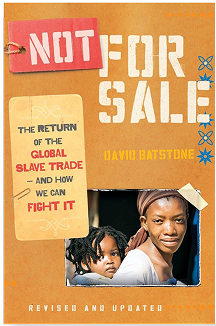
Finding slavery in my own back yard
Before Not For Sale became an organization, it was a confrontation with reality. Co-founder Dr. David Batstone discovered that human trafficking was operating out of a restaurant in his own community.
What had seemed like a distant global issue was happening locally, embedded in everyday life. He refused to look away.
Message everyone you know about this book. Let's make slavery history!
The discovery that changed everything
For several years, my wife and I dined regularly at an Indian restaurant near our home in the San Francisco Bay Area. Unbeknownst to us, the staff at Pasand Madras Indian Cuisine who cooked our curries, delivered them to our table, and washed our dishes were slaves.
It took a tragic accident to expose the slave-trafficking ring. A young woman found her roommates, seventeen-year-old Chanti Prattipati and her fifteen-year-old sister Lalitha, unconscious in a Berkeley apartment. Carbon monoxide, emitting from a blocked heating vent, had poisoned them.
The roommate called their landlord, Lakireddy Reddy, the owner of the Pasand restaurant where the girls worked. Reddy owned several restaurants and more than a thousand apartment units in northern California.
When Reddy arrived at the girls’ apartment, he refused to seek medical assistance. Instead, he and several associates wrapped the unconscious sisters in a rolled carpet and carried them to a waiting van. They then attempted to force the roommate into the vehicle as well, but she resisted and managed to prevent being taken.
A local resident, Marcia Poole, happened to be passing by in her car at that moment and witnessed a bizarre scene: several men toting a sagging roll of carpet, with a human leg hanging out of the side. She slowed down her car to take a closer look and was horrified to watch the men attempt to force a young girl into their van.
Poole jumped out of her car and did everything in her power to stop the men. Unable to do so, she stopped another passing motorist and implored him to dial 911 and report a kidnapping in progress. Thankfully, the police arrived just in time to arrest the abductors.
Chanti Prattipati sadly never regained consciousness; she was pronounced dead at the local hospital. A subsequent investigation revealed that Reddy and several members of his family had used fake visas and false identities to traffic potentially hundreds of adults and children into the United States from India. He forced the labourers to work long hours for minimal wages, money that they returned to him as rent to live in one of his apartments.
The Reddy case is not an anomaly. Nearly two hundred thousand people live enslaved at this moment in the United States, and an additional 17,500 new victims are trafficked across our borders each year. Attorneys from the U.S. Department of Justice have prosecuted slave-trade activity in ninety-one cities across the United States and in nearly every state of the nation.
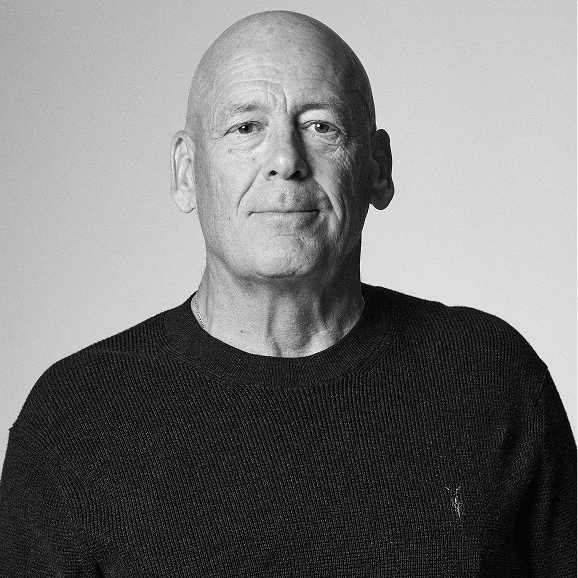
David Batstone
Dr. David Batstone is Professor Emeritus at the University of San Francisco and a leading voice on business ethics and social responsibility. His book Saving the Corporate Soul received the prestigious Nautilus Award for Best Business Book in 2004.
He has appeared regularly in USA Today’s Weekend Edition as “America’s ethics guru” and served as Senior Editor of the business magazine Worthwhile.
As co-founder of Not For Sale, David continues to support and advise the organisation’s mission to address exploitation and strengthen community resilience.
Human trafficking is sustained by vulnerability.
The core insight of the book still guides our work today. Not For Sale therefore focuses on four fronts.